
PUBLIC FINANCE MANAGEMENT ACT: INDEX TO SUBSIDIARY LEGISLATION
Finance (Control and Management) (Public Stores) Regulations
Public Finance Management (General) Regulations
FINANCIAL REGULATIONS
[Section 18]
[RETAINED AS PER S.15 OF INTERPRETATION AND GENERAL PROVISIONS ACT]
Arrangement of Regulations
Regulation
PART I
PRELIMINARY
1. Title
2. Effective date
3. Interpretation
4. Regulations
PART II
AUTHORITIES FOR EXPENDITURE
5. Available funds authorities
PART III
ESTIMATES PROCEDURE
6. Form of estimates
7. Draft estimates
8. Presentation of estimates to National Assembly
9. Appropriation Act
10. Treasury Authorities
11. Provisional Warrant
12. Finance circular of authority (provisional)
13. Treasury Authority
14. Procedure if provision inadequate
15. Supplementary expenditure
16. Transfer of savings
17. Supplementary estimates
18. Copies to Auditor-General
19. Restrictions on expenditure
20. Annual recurrent authorities
21. Capital estimates
PART IV
GENERAL ACCOUNTING RESPONSIBILITIES
22. Accounting units
23. Returns and reports
24. Inspections
25. Responsibilities of controlling officers
26. Reports by accounting officers
27. Claims of questionable validity
28. Responsibilities of accounting officers
29. Erasures in accounts
30. Mutilated currency
31. Register of cheques and cash
32. Approval of accounting systems and forms
33. Observance of orders by controlling officers
34. Delegation of responsibility
35. Audit queries
36. Below-the-line accounts
37. Balancing of below-the-line accounts
38. Banking of cheques and cash
39. Reconciliation of bank accounts
40. Checking of cash
41. Checking of computer documents
42. Dates and times of submission of computer documents
43. Payments at end of financial year
44. Procedure at end of financial year
45. Public Accounts Committee
46. Memoranda for Public Accounts Committee
47. Internal audit
48. Controlling officers not relieved of responsibility
49. Responsibilities of internal auditors
50. Reports by internal auditors
51. Preservation of accounting records
PART V
SAFES, STRONG BOXES, CASH BOXES AND SPECIE BOXES
52. Definition of “safes”
53. Responsibility for obtaining safes
54. Care of safes
55. Responsibility for keys
56. Duplicate keys
57. Handing over of keys prohibited
58. Original keys
59. Control over duplicate keys
60. Inspection reports
61. Transfer within Ministries
62. Transfer between Ministries
63. Loss of keys
64. Private moneys in public safes
65. Register
66. Weekly check
67. Cash in transit
PART VI
BANK ACCOUNTS AND CHEQUES
68. Bank accounts and bank signing arrangements
69. Instructions to banks
70. Use of public money
71. Cheque forms
72. Security of unused cheques
73. Lost cheques
74. Signing of cheques
75. Overdraft
76. Acceptance of cheques
77. Security of cheques received
78. Dishonoured cheques
79. Cancellation of licences
80. Cheques on accounts outside Zambia
81. Cashing of Government cheques
82. Bank statements
83. Audit of cheques
84. Security of cheques in payment for goods supplied on Local Purchase Orders
PART VII
RECEIPT FORMS
85. Definition of “receipt form”
86. Issue of receipts
87. Obtaining receipt forms
88. Auditor-General to be informed
89. Checking receipts received
90. Register of receipt forms
91. Transfer of receipts
92. Consecutive issues
93. Unused and surplus receipts
94. Destruction of obsolete receipts
95. Recording of destruction of obsolete forms
96. Reporting of loss of or damage to receipt forms
97. Monthly check of unused receipt forms
98. Handing over certificates to record receipt forms
99. Notice to public about official receipts
100. Completion of receipts
101. Cancelled receipts
102. Method of cancelling receipts
103. Office of issue of receipts
104. Consecutive receipts
105. Free issue of receipt form
106. Duplicate licences
107. Certified copies of receipt forms
108. Transfer and destruction of receipt forms
PART VIII RECEIPT OF REVENUE
109. Private use of revenue prohibited
110. Receipts to be issued
111. Receipt forms
112. Legal tender
113. Foreign currencies
114. Remittance of foreign currency
115. Classification of revenue
116. Cash books
117. Bringing revenue to account
118. Deposits to the Main Account
119. Cash surplus
120. Revenue collectors not to open mail
121. Recovery of overpayments
122. Revenue not to be credited to suspense account
123. Abandoned revenue
PART IX
REFUNDS OF REVENUE
124. Authority for refunds
125. Refunds of stamp duty
126. Vouchers for refunds
127. Court fees and fines
128. Classification of refunds
PART X
CONTROL OF EXPENDITURE AND PAYMENTS
129. Authorities by warrant
130. Authorities on vouchers
131. Record of commitments
132. Payments on behalf of other Ministries
133. Date of payment
134. Payment vouchers
135. Details on payment vouchers
136. Preparation of vouchers
137. Signing of vouchers
138. Panel of signing officers
139. Responsibilities of officers signing vouchers
140. Recoverable payments
141. Suppliers’ invoices to be attached
142. Mislaid invoices
143. Mislaid requisition forms
144. Payments on incorrect certificates
145. Payees outside Zambia
146. Methods of payment
147. Security of open cheques
148. Periodic payments
149. Responsibilities of cheque signatories
150. Delivery of cash or cheques
151. Identification of payees
152. Daily accounting for payments
153. Issue of travel warrants
154. Responsibility of officers signing warrants, etc.
155. Extraordinary payments
156. Custody of original documents
157. Loss of payment vouchers
PART XI
PAYMENT OF SALARIES AND WAGES
158. Day of payment
159. Calculation of salary
160. Salaries and wages not to be paid in advance
161. Adjustment of salary or other moneys due to death, etc.
162. Salaries of convicted officers
163. Method of payment and deductions: Divisions I and II
164. Method of payment
165. Dispatch of salary cheques
166. Deduction of rent for official quarters
167. Payment scales and rates: officers other than those in Divisions I and II
168. Gross salary and deductions to be charged
169. Salary records
170. Unclaimed wages
171. Security precautions with regard to payment of wages
172. Leave salary
173. Attendance records
PART XII
IMPRESTS
174. Types of imprest
175. Special imprests outside Zambia
176. Authority to issue imprests
177. Sub-imprests
178. Amount of standing imprest
179. Amount of special imprest
180. Special imprests: limitation
181. Restriction in use of imprests
182. Register of Imprests
183. Banking of imprests
184. Field Cash Book
185. Reimbursement of standing imprests
186. Retirement of special imprests
187. Retirement of standing imprests
PART XIII
HANDLING AND TAKING OVER
188. Handing-over procedure
189. Safe keys
190. Discrepancies on handing over
191. Handing-over certificate
PART XIV
LOSSES OF PUBLIC MONEY AND STORES
192. Definition of “losses”
193. Investigation of loss
194. Write-off by controlling officer
195. Report by controlling officer
196. Write-off by Secretary to the Treasury
197. Assessment of claim against defaulting officer
198. Representations by officer
199. Decision of Secretary to the Treasury
200. Admission of liability
201. Failure to admit liability
202. Monthly deductions
203. Officers leaving the service
204. Statement to Attorney-General
PART XV
REMITTANCES OF CASH
205. Remittances to a bank or other office
206. Remittances received
PART XVI
SI 398 of 1969,
SI 156 of 1971,
SI 186 of 1979,
SI 97 of 1987,
SI 69 of 1990,
SI 36 of 1991,
SI 102 of 1991.
[Regulations by the Minister]
PART I
PRELIMINARY
These Regulations may be cited as the Financial Regulations.
These Regulations come into operation on the 12th September, 1969.
In these Regulations, unless the context otherwise requires—
“accounting officer” means any officer or other person concerned with the collection, receipt, custody, issue or payment of public or other moneys, stores, stamps, investments, securities or negotiable instruments, whether the property of the Republic or entrusted to the Republic or to any officer in his capacity either alone or jointly with any other officer;
“accounting unit” means a section established on the authority of the Secretary to the Treasury to maintain the accounts of a Ministry or of a number of Ministries or a branch of a Ministry which has an official designated in the estimates of expenditure as a controlling officer;
“advance” means any recoverable sum of money issued to any person where such advance is in the public interest and is repayable at some future date;
“below-the-line accounts” means suspense accounts which include advances, deposits, imprests, remittances and special funds;
“collector of revenue” means any officer charged, temporarily or permanently, with the duty of collecting any type of Government revenue;
“controlling officer” means an officer designated by the Minister as officer in charge of a head of expenditure in any one financial year and charged with the duty of controlling expenditure on any public service under that head;
“internal auditor” means any person designated as such by the Secretary to the Treasury;
“Ministry” means the Ministry of Finance;
“personal emoluments” means the salaries and allowances of all monthly paid civil servants and members of the Teaching Service.
These Regulations and such subsequent regulations as may be issued from time to time under the authority of the Act supersede previous Financial Orders and Financial Regulations.
PART II
AUTHORITIES FOR EXPENDITURE
5. Available funds authorities
A controlling officer may not cause or permit any expenditure to be incurred, unless funds are available under one or more of the following authorities—
(a) The issue of a circular by the Secretary to the Treasury to the effect that a Provisional Warrant has been signed by the President.
(b) A Treasury Authority (Recurrent Expenditure) (Finance Form 5) issued by the Secretary to the Treasury when the General Warrant has been signed.
(c) A Treasury Authority (General) (Finance Form 4) issued by the Secretary to the Treasury conveying authority for the transfer of funds between items or for the provision of additional funds for a sub-head/item.
(d) A Treasury Authority (Establishments) (Finance Form 13) issued by the Secretary to the Treasury in respect of variations in posts or provisions in the “personal emoluments” sub-head.
(e) An approved Capital Expenditure Requisition (Finance Form 1) signed by the Secretary to the Treasury.
PART III
ESTIMATES: PROCEDURE
The estimates of capital and recurrent expenditure laid before the National Assembly in accordance with the provisions of the Constitution shall be set out as follows—
(a) The total expenditure shall be shown under the head of expenditure in respect of which a controlling officer shall be designated.
(b) Under each head of expenditure there shall be shown sub-heads.
(c) The first sub-head under each head of recurrent expenditure shall be the estimated expenditure on personal emoluments in respect of such head of expenditure and there shall be annexed to the estimates a supporting document entitled an “Establishment Register” which shall be deemed to be part of the estimates and which shall show, in respect of each head of expenditure, the grades and salary scales of the posts included in the sub-head for personal emoluments.
(d) Except in the case of the sub-head “personal emoluments”, there shall be shown items of expenditure in respect of each sub-head of recurrent expenditure.
The submission of draft recurrent estimates will be called for in an annual estimates circular issued by the Secretary to the Treasury. Controlling officers will frame their draft estimates in the form in which they are to be rendered, including supporting schedules and other details required in the circular.
8. Presentation of estimates to National Assembly
The draft estimates will be examined in the Ministry and, where necessary, amendments will be made before the estimates are laid before the National Assembly by the Minister.
Following the passing of the Appropriation Act under section 109(2) of the Constitution and the issue of the General Warrant by the President, expenditure shall be limited to the amounts included in the approved estimates.
Treasury Authorities for expenditure will be issued by the Secretary to the Treasury.
Under Article the Constitution, the President may issue a Provisional Warrant to cover expenditure necessary to carry on the services of the Government for any period, not exceeding four months beginning at the commencement of a financial year, before the Appropriation Act for that financial year is passed. This warrant will authorise payment of all personal emoluments, pensions and other charges which become due in respect of expenditure for existing establishments, of inescapable, recurrent commitments and any other items which are specifically defined in the Treasury Authorities. No other expenditure may be incurred outside these limitations. Furniture, stores, vehicles or equipment of any kind will not be bought, nor will new posts be filled until the Secretary to the Treasury has issued a Treasury Authority to controlling officers, even if provision for these services and purchases has been included in the estimates.
12. Finance circular of authority (provisional)
The fact that the Provisional Warrant has been signed will be conveyed to controlling officers by a circular issued by the Secretary to the Treasury. This circular will constitute the authority for controlling officers to incur or permit expenditure within the limitations in regulation 11.
On receiving the General Warrant from the President, the Secretary to the Treasury will, by the issue of a Treasury Authority (recurrent expenditure), authorise controlling officers to incur and commit expenditure during the current financial year within the amounts set out in the estimates for that year.
14. Procedure if provision inadequate
The Appropriation Act authorises expenditure under separate main heads, but payments will be allocated to the individual sub-heads and items shown in the printed estimates. Should it become apparent that the provision is inadequate, action must be taken in accordance with regulations 15, 16 and 17.
When the expenditure is of a nature which was not envisaged when the estimates were prepared, or when the excess expenditure on an item cannot be met from savings on another item under the same sub-head, the controlling officer will submit to the Secretary to the Treasury an application for Supplementary Provision, together with a Treasury Authority (General) completed at Part 2. This application will show savings from any other sub-head under the same head, or evidence that the additional expenditure will result in a corresponding increase in revenue.
If the excess expenditure on one item can be met from savings on another item within the same sub-head, an application for Treasury Authority will be submitted for approval to the Secretary to the Treasury.
Applications for Supplementary Provision which have the support of the Secretary to the Treasury will be submitted by him to the National Assembly in accordance with the Constitution. When the National Assembly has approved the Supplementary Provision and a Warrant has been signed by the President, the Secretary to the Treasury will issue an appropriate Treasury Authority to the controlling officer concerned.
The Secretary to the Treasury shall send copies to the Auditor-General of all Supplementary Provision Warrants and Treasury Authorities immediately after authorisation.
19. Restrictions on expenditure
The Secretary to the Treasury may impose a restriction on expenditure under any sub-head or item appearing in the estimates. The controlling officer will be informed of the reason for the restriction and the circumstances under which he can apply to have the restriction removed or varied. Approval for complete or partial removal of a restriction will be conveyed by the issue of a revised Treasury Authority (recurrent) by the Secretary to the Treasury.
20. Annual recurrent authorities
All authorities to incur expenditure under the recurrent estimates expire on the last business day of the financial year to which they refer. No payment may be made against these authorities after that date.
Instructions regarding the capital estimates will be issued from time to time by the Secretary to the Treasury.
PART IV
GENERAL ACCOUNTING RESPONSIBILITIES
Each accounting unit shall be under the control of the controlling officer.
Controlling officers shall submit from time to time such returns and reports, as may be required by the Secretary to the Treasury, of revenue collected by them or funds expended under a head for which they are responsible. This will include “below-the-line accounts” under their control.
Controlling officers will make arrangements for periodic checks of cash and stamps held by accounting units or branches thereof under their control. These checks should be carried out at irregular intervals and as frequently as possible, preferably at least four times a year. Checking officers will be required to sign legibly at the point of check in the cash book or register covering the check.
25. Responsibilities of controlling officers
The controlling officer shall be responsible for keeping accounts in accordance with any order issued or approved by the Secretary to the Treasury; for the accuracy of these accounts and for the safe custody of all public money entrusted to him. He shall ensure that officers accounting for revenue and expenditure for which he is responsible, comply with these Regulations and any supplementary instructions issued by him pursuant to these Regulations.
26. Reports by accounting officers
Accounting officers shall be responsible for—
(a) reporting to the controlling officer if it appears that any head, sub-head or item is likely to be overspent;
(b) drawing the attention of the controlling officer to delays and shortages in the collection of revenue, for which the controlling officer is responsible; to any advance or imprest account which they are unable to clear at the time that it should be cleared; to any deposit account which has become dormant and to any weakness in the accounting system employed, or in the internal checks applied to accounting transactions.
27. Claims of questionable validity
Accounting officers shall refer to their controlling officers any claim of an unusual nature, or any claim the validity of which is doubtful and any claim in respect of expenditure which, in their opinion, is not provided for in the approved estimates. In the event of an accounting officer receiving instructions to make a payment which he is not satisfied is covered by a financial authority, he shall state his objection in writing to his controlling officer:
Provided that, if an instruction is then given in writing by the controlling officer, a payment may be made or accepted, and responsibility for the payment then rests with the controlling officer, who will be held personally liable. After making the payment, the accounting officer shall inform the Auditor-General and the Secretary to the Treasury of the circumstances.
28. Responsibilities of accounting officers
The responsibilities of an accounting officer shall be—
(a) to account for receipts and disbursements of public money in accordance with these Regulations;
(b) to see that proper arrangements are made for the safekeeping of public moneys, securities, stamps, stamp dies, revenue counterfoil receipts, licences, warrants and all forms of requisition;
(c) to collect punctually all revenue and other public money which it is his duty to collect;
(d) to bring to account promptly under the correct head and sub-head all public money which he collects or which is paid to him;
(e) to check regularly all cash and stamps in his charge and to verify the amounts with the balances shown in the cash book or stamp register;
(f) to bring to account promptly any revenue in cash or stamps found in his charge in excess of the balances shown in the cash book or stamp register;
(g) to make good any shortage in cash or stamps for which he is responsible;
(h) to ensure that all disbursements made or incurred by the issue of payment vouchers, orders, warrants, requisitions or any other documents are properly authorised;
(i) to charge in the accounts under the proper head or accounting allocation all expenditure when it occurs;
(j) to ensure the satisfactory control of the funds warranted to him by maintaining a record of commitments incurred by his controlling officer;
(k) to prepare and dispatch promptly all financial statements and returns in the form and manner prescribed;
(l) to see that his books of account are correctly posted and kept up to date;
(m) to report in writing to his controlling officer any apparent defect in the procedure of revenue collection, any apparent waste and any extravagance in expenditure which comes to his notice in the course of his accounting duties;
(n) to produce when required by the Secretary to the Treasury, or by the Auditor-General, all books and records or accounting documents in his charge;
(o) to reply promptly and fully to any observations or queries received from the Auditor-General, from the Secretary to the Treasury or from his controlling officer;
(p) to exercise strict supervision over all officers under his authority, and by the maintenance of efficient checks to take precautions against fraud and nugatory expenditure;
(q) to bring to the notice of his controlling officer any incompetence, carelessness or insubordination on the part of his staff;
(r) to study the convenience of the public and institute such arrangements as may be properly made to facilitate the transaction of business with the public.
No erasures may be made in accounts. Corrections must be made by striking out the incorrect figures and writing the correct figures above them. The corrections must be made in such a way that the original figures are still legible. Corrections must be initialled by the officer who makes them. On no account may alterations be made to figures which have already been audited.
Accounting officers should not accept mutilated Zambian currency, but they may assist the public by informing them where to obtain a replacement of any mutilated currency of which they are the Lawful owners. Mutilated notes and coins can be replaced on application to the Bank of Zambia. An “Application for Replacement of Mutilated Currency” Form (obtainable from local banks) should be sent with the mutilated currency to the General Manager, Bank of Zambia, P.O. Box 80, Lusaka.
31. Register of cheques and cash
Officers responsible for dealing with incoming mail which contains money shall keep a Register of Cheques and Cash (Accounts Form 61A) for the purpose of recording details of remittances received.
32. Approval of accounting systems and forms
(1) The procedures and systems, including the use and introduction of forms, adopted by Ministries for controlling their expenditure shall be subject to the prior approval of the Secretary to the Treasury. Each accounting unit will keep such books of account as are prescribed from time to time by the Secretary to the Treasury.
(2) A register of all official accounting documents will be kept by the Secretary to the Treasury.
33. Observance of orders by controlling officers
Controlling officers are personally responsible for the observance of all instructions issued by the Secretary to the Treasury.
34. Delegation of responsibility
When it is necessary for any officer to delegate to another officer any financial duty for which he is responsible, he will ensure that the delegation, its scope and duration, is in clear and specific terms.
All observations or queries raised by the Auditor-General must be answered promptly and fully.
With the approval of the Secretary to the Treasury, controlling officers may operate such “below-the-line accounts” as are necessary for the efficient management of the financial operations under their control. “Below-the-line accounts” will not be used, in any circumstances, for receipts and payments which can properly be allocated to revenue or expenditure in the first place, nor will they be used for holding amounts charged to recurrent expenditure in one year for subsequent payment in the next financial year.
37. Balancing of below-the-line accounts
The balancing and reconciliation of “below-the-line accounts” must be carried out, and all outstanding items cleared, at the end of each month.
38. Banking of cheques and cash
All cheques and cash received will be banked not later than the business day following the day of receipt. In no circumstances will funds be allowed to accumulate in accounting units.
39. Reconciliation of bank accounts
Controlling officers will forward to the Secretary to the Treasury within 14 days of the end of each month the following form of reconciliation:
|
K |
n |
|
| Cheques outstanding for the previous month | ||
| Add cheques drawn during the month | ||
| Sub-total | ||
| Less cheques presented during the month | ||
| Cheques outstanding at the end of the month |
The total of cheques outstanding at the end of the month must agree with the total of the schedule of unpresented cheques attached to this reconciliation. The date of issue and the number and amount of each unpresented cheque will be shown.
Controlling officers will check, not less than once monthly, any cash held by their accounting units and will ensure that the cash balance is at all times correct. Personal cheques which are cashed from an imprest will be redeemed for cash or credited to the Imprest Banking Account on the first banking day after the cashing of the cheque. Post-dated cheques will not be accepted.
41. Checking of computer documents
(1) Documents will be submitted by each accounting unit for computer processing in the manner prescribed from time to time by the Secretary to the Treasury. Only documents required for punching purposes will be submitted. Supporting documents not intended for punching will be retained by the originating accounting unit.
(2) A register will be kept by each accounting unit of all documents submitted to and returned by the Data Processing Unit in the Ministry, showing the dates and times of dispatch and receipt of documents.
42. Dates and times of submission of computer documents
Dates and times of submission of documents will be laid down from time to time by the Secretary to the Treasury. These dates and times must be strictly adhered to and must not be altered except with the approval of the Secretary to the Treasury.
43. Payments at end of financial year
(1) All accounts received before the last day of the financial year must, as far as possible, be paid before the accounts are closed. This means that, where reimbursements are required from other accounting units or other organisations, they will be notified in time to permit those organisations to make payment before the end of the financial year. Similarly, all moneys received before the end of the financial year must be brought to account before the accounts are closed.
(2) Special arrangements will be made by the Secretary to the Treasury to ensure that transactions appearing in Agents’ Accounts are notified to accounting units up to the latest possible date that will enable the transactions in the last month of the financial year to be charged to the correct votes before the accounts are closed.
(3) The Stores Department will normally close its accounts with accounting units on the 14th December and will send out invoices accompanied by a statement up to the closing date. These invoices will be charged against Ministerial suspense accounts and will be cleared by accounting units against expenditure votes before the closing of the main accounts for the financial year.
(4) Requisitions held by the Stores Department which cannot be filled before the date of closing of the Stores Accounts will be a first charge against the accounts of requisitioning Ministries in the following financial year.
44. Procedure at end of financial year
The procedures to be followed by accounting units at the close of the financial year are set out hereunder. It will be the responsibility of the controlling officer to see that action called for is taken at the appropriate times and that returns are submitted within the stated periods—
(a) At the close of business on the last day of the financial year, all cash books will be ruled off, signed and dated by the responsible officers.
(b) The accounts will be closed in the normal manner, as for an ordinary month end, but supplementary accounts will be opened by accounting units only for the purpose of adjusting misallocations, for the transfer of revenue and/or expenditure to other accounting units and for final entries on the closing of the accounts.
(c) Any revenue or expenditure (recurrent or capital) which appears in the accounts of one accounting unit but which is controlled by another, will be transferred. Only revenue and expenditure actually controlled by an accounting unit will appear in the accounts of that unit for clearance to the “Surplus and Deficit Account” maintained in the books of the Ministry under the procedure described in paragraph (g).
(d) Dummy codes will not be used in any circumstances or for any reason.
(e) Should the recoveries under items of “Appropriations-in-Aid” be in excess of the approved estimate for the year, the amount of the excess will be credited to the revenue item “Excess Appropriations-in-Aid”.
(f) The final closing of the accounts will be made not later than one month after the last day of the financial year.
(g) Immediately after the final closing of the accounts, accounting units will transfer all items of Recurrent and Capital Revenue and Expenditure to the “Surplus and Deficit Account” in the books of the Ministry. The final control balance for each unit will reflect only the balances outstanding on “below-the-line accounts”.
(h) Within two months of the end of the financial year, statements of revenue and expenditure and “below-the-line accounts”, together with balance sheets and accounts of all funds, will be submitted in quadruplicate by all accounting units to the Ministry for inclusion in the Financial Report. All statements, balance sheets and accounts will be signed personally by controlling officers. A circular minute detailing special requirements will be issued by the Secretary to the Treasury.
Controlling officers may be required to submit to the Public Accounts Committee memoranda on subjects which concern their Ministries and which are mentioned in the Report of the Auditor-General on the accounts for the preceding year.
46. Memoranda for Public Accounts Committee
Controlling officers who are required to submit memoranda to the Public Accounts Committee will ensure that these memoranda reach the Clerk of the National Assembly 14 days before the notified date on which the Public Accounts Committee is to sit. The following form of memorandum will be used, and controlling officers will personally sign all such memoranda:
PUBLIC ACCOUNTS COMMITTEE
Report of the Auditor-General on the Public Accounts for the year ended …………….., 20 ……..
(memorandum by the Controlling Officer, Ministry of……………………………….)
Paragraph No.* ………………… Subject ……………………….
……………………………. Body of Memorandum Date ………………………
………………………….. Controlling Officer
*This refers to the appropriate paragraph in the Auditor-General’s Report.
Twenty copies of each memorandum will be sent to the Clerk of the National Assembly who will be responsible for forwarding copies to the Secretary to the Treasury and the Auditor-General.
Internal audit teams will be provided for specified accounting units by the Secretary to the Treasury.
48. Controlling officers not relieved of responsibility
The existence of internal audit teams will not relieve controlling officers or any other accounting officers of their individual responsibilities, nor will it remove the need for normal checks within Ministries or Departments.
49. Responsibilities of internal auditors
Internal auditors will be directly responsible to the controlling officers of the Ministries in which they are provided. The programme of checks to be carried out by internal auditors will be laid down by the Secretary to the Treasury in consultation with controlling officers and with the Auditor-General, and will cover all accounting procedures and documentation. Generally, internal auditors will ensure—
(a) that the work entailed in the receipt and payment of public money has been properly carried out under proper supervision;
(b) that the safeguards for the prevention or prompt detection of fraud or loss of stores, cash or other Government assets, are adequate;
(c) that accounting forms are properly protected, recorded and regularly checked;
(d) that the duties of members of accounting staff are changed from time to time;
(e) that a satisfactory system exists for the checking of computer input and output;
(f) that the system for the control of the receipt, issue and use of stores is adequate;
(g) that the recording of the assets is up to date and correct;
(h) that returns of revenue or expenditure required by controlling officers are correctly prepared and promptly submitted.
50. Reports by internal auditors
Although internal auditors are expected to correct on the spot any errors discovered, thereby reducing the necessity for written reports, any reports which are made in writing by internal auditors will be addressed to the controlling officer of the Ministry concerned, the Secretary to the Treasury and the Auditor-General.
51. Preservation of accounting records
The following accounting records will be preserved for the periods shown:
(a) Main cash books and ledgers-10 years.
(b) Receipts of all types-10 years.
(c) Payment and Journal Vouchers-7 years.
(d) Establishment and salary records required for superannuation purposes-60 years from the date on which a pensionable officer leaves the service.
These documents will be sent to the National Archives two years after they have ceased to be in use for either audit or other purposes. Controlling officers will ensure that documents are in proper order before they are sent to the archives.
PART V
SAFES, STRONG BOXES, CASH BOXES AND SPECIE BOXES
The following instructions refer to safes, strong boxes, cash boxes, specie boxes issued for the safe custody of cash and similar forms of secure containers issued by Government, all of which shall be referred to as “safes” for the purposes of these Regulations.
53. Responsibility for obtaining safes
Controlling officers are responsible for obtaining safes from the Ministry for use in their offices and branches.
The following conditions cover the care and maintenance of safes—
(a) no work or alteration of any kind may be carried out on a safe except with the permission of the Secretary to the Treasury.
(b) small safes and strongboxes used as safes must be built into the structure of the building in which they are housed.
(c) cash boxes must be locked in a safe or a fixed container when not in use.
(d) any safe boxes in use by an officer on tour must be secured against theft by means of a chain and padlock fixed to some immovable or heavy object.
Officers are personally responsible for keys of safes in their charge.
When a safe or vault door is fitted with two or more locks, no single officer will in any circumstances hold all keys. More than one key to a safe will be issued only when there are two or more officers at the office in which the safe is installed. In the event of the departure of one of the key-holders before a relief arrives, the officer leaving the station will unlock the lock for which he holds a key and personally return this key under registered cover to the controlling officer of his Ministry.
57. Handing over of keys prohibited
A key will not be handed to a person who is not the official key-holder and a safe will not be opened except by the officer responsible for it. He must be present for the whole of the time it remains open.
Only original keys issued by the Secretary to the Treasury will be held. In no circumstances may any officer have a duplicate key made.
59. Control over duplicate keys
Except as may be otherwise authorised, all duplicate keys of safes will be held by the Secretary to the Treasury.
Inspection reports by internal auditors or other inspecting officers must include a list of safes in the offices under inspection. The serial numbers of keys must be recorded in these reports.
61. Transfer within Ministries
All transfers of safes between Departments must be notified immediately to the Ministry.
62. Transfer between Ministries
The transfer of safes between Ministries is not permitted without the prior approval of the Secretary to the Treasury.
When the key to a safe is lost—
(a) the loss will be reported immediately to the controlling officer concerned, and to the local police;
(b) the safe will be sealed and the room in which it is kept must be locked. If an exceptionally large sum is in the safe, arrangements must be made for the posting of a guard;
(c) the officer responsible for the safe custody of the key may be called upon to make good the cost of repairs and replacement of the key.
64. Private moneys in public safes
No private money or articles may be kept in a safe provided for the safe-keeping of public moneys.
A register must be kept of articles other than cash, account books and receipt forms deposited in a safe. The register must be signed by the depositing officer (other than the key- holder) when depositing or withdrawing any such article.
Officers responsible for safes must verify the contents at least once each week. The register will be initialled on each occasion of check.
Whenever cash is taken to or collected from a bank or other office, the responsibility for safe custody of the cash in transit rests with the officer charged with conveying the cash to or from the bank or other office.
PART VI
BANK ACCOUNTS AND CHEQUES
68. Bank accounts and bank signing arrangements
The opening of, or a change in, any signatory of an official bank account for any purpose requires the authority of the Secretary to the Treasury on Accounts Form 49. The purpose for which the bank account is required must be stated in a minute submitted with Accounts Form 49 by the controlling officer.
No instructions in regard to the operation of an official bank account may be issued except by the Secretary to the Treasury.
In no circumstances may public money be credited to a private bank or savings account.
Cheque books and cheque forms for use with official bank accounts will be obtained through controlling officers from the Strongroom Superintendent of the Ministry.
72. Security of unused cheques
Cheque books and cheque forms must be kept secure under lock and key when not in use. An officer will be made responsible for the custody and control of the stock of unused cheque forms. That officer will maintain a record of receipts and issues in a register (Accounts Form 103), and will ensure that all unused cheques are retained in his custody.
(1) In the event of a cheque being lost, whether the cheque is unused or has already been issued, the accounting officer must notify all local banks and head offices of all banks. In the case of the loss of a cheque which has been issued, a “stop order” must be sent to the bank on which it was drawn.
(2) Before a replacement cheque is issued for an open or crossed cheque which has been lost, or stolen from the payee, he is required to sign an indemnity in the following form:
CERTIFICATE OF INDEMNITY
In consideration of the issue to me of a replacement cheque No. ………………………….. for the sum of ………………………… in payment of ………………………….. which I have lost (or which has been stolen), I agree to indemnify the Government against any loss whatsoever in connection therewith and I agree to refund the sum of ……………………………….. in the event of the original cheque No. …………………… being negotiated.
Signed …………………………………………………………………..
NAME IN BLOCK CAPITALS ……………………………………….
Date ………………………………………………………, 20 ……….
Official Address ……………………………………………………..
……………………………………………………………………………..
……………………………………………………………………………..
……………………………………………………………………………..
The value of the replacement cheque must be debited to expenditure.
(1) Cheques drawn against official bank accounts must be signed by two or more authorised signatories except where, with the approval of the Secretary to the Treasury, cheque signing machines are used; in which case one authorised signatories will suffice.
(2) The responsibilities of signatories are laid down in Part X.
[Am by SI 69 of 1990.]
Government bank accounts must not be overdrawn, and a temporary advance must not be obtained from a bank without the prior written permission of the Secretary to the Treasury. In the event of an official account becoming overdrawn without proper authority, the officer responsible will be called upon to refund any bank charges incurred by Government as a result of the overdraft.
Cheques may, at the discretion of accounting officers, be accepted in payment of licences, fees, taxes and other payments due to Government. Before acceptance of a cheque, an officer will satisfy himself as to the identity of the person presenting the cheque and ensure that—
(a) the cheque is not post-dated or out of date;
(b) the amount in words and figures agree;
(c) the cheque is correctly signed and dated by the drawer;
(d) alterations of any kind are covered by the full signature of every signatory to the cheque.
77. Security of cheques received
Cheques received should be made payable to the Government of Zambia and crossed “Account payee only”.
When a cheque is dishonoured, the amount of the cheque will be debited to “Advances- Dishonoured and Returned Cheques” in the accounts of the Ministry concerned. Immediate action will be taken to secure prompt reimbursement of the amount owed, which must be credited to the account “Advances-Dishonoured and Returned Cheques”.
If a dishonoured cheque was originally received in payment of a licence or permit and the officer issuing such licence or permit has been unable to effect recovery within such time as is considered reasonable, but not exceeding 14 days from the date of return of such cheque, he shall declare the licence or permit to be invalid, on the grounds of non-payment of the prescribed fee, and, at the same time, he shall inform the police or other appropriate authority. In cases where it proves to be impossible to obtain reimbursement of a dishonoured cheque, the matter shall be referred to the Solicitor-General.
80. Cheques on accounts outside Zambia
Cheques, travellers’ cheques or other negotiable instruments drawn on banks outside Zambia may be paid into local bank accounts. If, for any reason, foreign cheques are not acceptable to local banks, these cheques shall be sent to the accounting unit for clearance through the Ministry. In all cases, the receiving officer shall issue a receipt for the amount paid by cheque.
81. Cashing of Government cheques
(1) At stations where there are no banking facilities, Government cheques may be exchanged for cash by accounting officers.
(2) Controlling officers may authorise in writing limited facilities for the encashment of officers’ private cheques where this is conducive to efficiency. Accounting officers will, however, act with great care as they may be called upon to make good the amount of any dishonoured cheque for which they are unable to obtain reimbursement. The privilege should be withdrawn immediately from any officer whose cheque is dishonoured.
(3) With the exception covered by sub-regulation (1) collectors of revenue or other accounting officers who receive public money may not cash cheques from public money held by them.
All officers authorised to keep official bank accounts must arrange for statements to be provided regularly by the bank. Bank statements made up to the close of business on the last day of every month will be obtained. All entries on the bank statement will be checked with the cheque backing sheet and, at the end of each month, a return will be prepared in the form prescribed in regulation 39 giving a reconciliation of the balance of the bank account with the balance shown in the cash book. This return will be submitted to the controlling officer.
Paid and cancelled cheques will be held for audit.
84. Security of cheques in payment for goods supplied on Local Purchase Orders
All cheques drawn in payment for goods supplied on Local Purchase Orders should be crossed “Account payee only”. The only exception to this rule is in the case of a payee known to have no banking account. Stamps showing this restrictive crossing will be supplied on application by the Government Printer.
PART VII
RECEIPT FORMS
85. Definition of “receipt form”
The term “receipt form” includes all receipts, licences, permits, certificates, discs or tokens used in the collection of revenue or other moneys.
(1) All licences, permits, certificates, discs, tokens and other documents for which payments are received will be issued on or with the prescribed forms.
(2) A “General Receipt” (Accounts Form 40) will be used in cases where a special receipt form is not prescribed.
(1) Supplies of receipt forms will be obtained only from the Strongroom Superintendent of the Ministry, by the submission of a requisition. In no circumstances will any officer make arrangements for the printing or alteration of receipt forms other than through the Secretary to the Treasury.
(2) Receipt forms will be issued only to Government accounting officers or to local authorities.
88. Auditor-General to be informed
The Auditor-General will be informed of all issues and transfers of receipt forms.
89. Checking receipts received
All receipt forms must be checked immediately they are received to ensure that they are complete and correctly numbered. Any forms which are defective must be returned to the Strongroom Superintendent without delay. The Advice of Issue of Licences, Revenue Stamps and Receipt Books (Accounts Form 45) must be receipted and returned immediately to the Strongroom Superintendent with a report of any discrepancies, which must be copied to the Auditor-General and the controlling officer.
Every officer required to hold receipt forms will keep a Register (Accounts Form 103) in which the receipt and issue of all receipts forms must be promptly entered. These registers will be obtained from the Government Printer.
Books of receipt forms will normally not be transferred from one holder to another. If in an emergency such a transfer becomes necessary, the transfer must be reported immediately to the Auditor-General and the controlling officer.
Receipt forms will be used in consecutive order, within the sequence of numbers of receipts held by one officer.
93. Unused and surplus receipts
Surplus stocks of completely unused receipt books which are not obsolete should be listed and returned by registered parcel post to the Strongroom Superintendent. Copies of lists will be sent to the Auditor-General and to the controlling officer.
94. Destruction of obsolete receipts
Complete unused books of obsolete receipts will be destroyed at the office in which they are held. The destruction of the receipt books will be carried out in the presence of the accounting officer in charge, and another officer who will check that the unused receipt books are complete, and that all receipts are in fact unused. Certificates of destruction, listing the serial numbers of all receipt forms destroyed, must be signed by both officers. The original of the certificate of destruction will be filed by the officer responsible for the custody of the forms and copies must be sent to the Auditor-General and the controlling officer.
95. Recording of destruction of obsolete forms
Whenever surplus stocks of receipt books are returned to the Strongroom Superintendent or whenever obsolete forms are destroyed, the fact should be recorded in the Register (Form 103).
96. Reporting of loss of or damage to receipt forms
If a book of receipts or part of a book is lost or damaged, the holder will report immediately to his controlling officer with copies to the Auditor-General and to the Secretary to the Treasury.
97. Monthly check of unused receipt forms
A check of unused receipt forms will be carried out at least once a month by the holder, who must record in the Register the date of check and sign the entry.
98. Handing over certificates to record receipt forms
When one officer hands over to another, handing/taking over certificates must be signed by both officers for receipt forms. The officer taking over should sign immediately below the last entry in the Register.
99. Notice to public about official receipts
A printed notice obtainable from the Ministry must be displayed in all offices where revenue of any type is received, to bring to the attention of the public the need for them to obtain an official receipt for every payment made by them.
Receipt forms must be completed either in ink or in indelible pencil. Counterfoils will contain exactly the same details as appear on the original receipt form. They should be date-stamped at the time of issue and will not be altered in any way.
If a wrong entry is made on a receipt, the form must be cancelled and dealt with in the manner prescribed in regulation 102.
102. Method of cancelling receipts
When a receipt is cancelled, the original and all the copies must be cancelled, and the cancellation signed by the holder of the book. The original receipt will be kept in the receipt book. The duplicate will be included with other duplicate receipts which accompany the Revenue Cash Book.
103. Office of issue of receipts
Every receipt form and counterfoil will be printed or stamped with the official stamp of the office of issue and will be signed by the issuing officer.
Officers receiving payments from collectors of revenue must ensure that numbers of receipt forms issued by the collectors run consecutively. If no satisfactory explanation is forthcoming for any missing forms, the matter will be reported without delay to the controlling officer of the Ministry concerned.
105. Free issue of receipt form
When a free issue is made of a receipt form for which a fee would normally be payable, the following certificate will be endorsed by the issuing officer on the form and its counterfoil or copies:
“I certify that this (licence) is issued free under the provisions of
……………………………………………………………………………..
……………………………………………………………………………..”
In no circumstances may a duplicate of a licence be issued unless approval for such issue is specifically provided in any Law or regulation.
107. Certified copies of receipt forms
If a certified copy of a receipt form is required, this will be made on plain paper and headed “certified copy”. In no circumstances will another receipt form be used as a copy for an original receipt previously issued.
108. Transfer and destruction of receipt forms
It is strictly forbidden to transfer used receipt forms from one accounting unit to another, or to destroy the counterfoils and copies of used receipt forms until after they have been examined by the Auditor-General.
PART VIII
RECEIPT OF REVENUE
109. Private use of revenue prohibited
Officers are not permitted to use public revenue, temporarily or otherwise, for any private purpose whatsoever.
A receipt form must always be issued by the receiving officer whenever a sum of public money is received.
All receipts must be vouched for on the form prescribed by statute or regulation.
The notes and coins issued by the Bank of Zambia constitute legal tender in the Republic. No other currencies may be accepted without the specific authority of the Secretary to the Treasury.
Applications must be made to the Secretary to the Treasury for general permission to accept specified foreign currency notes, travellers’ cheques or cheques drawn on foreign banks at current rates of exchange.
114. Remittance of foreign currency
Foreign currencies which are not acceptable to local banks will be remitted to the accounting unit for onward transmission to the Ministry, and may not, under any circumstances, be paid to a commercial bank or exchanged for Zambian currency.
115. Classification of revenue
All revenue will be brought to account under the appropriate sub-head of the revenue estimates.
Collectors of revenue will keep a cash book which must be written up daily. Accounts Form 47B provides for the collection of revenue under four headings but where more columns are required Accounts Form 47A will be used.
117. Bringing revenue to account
Collectors of revenue are required to bring to account daily the whole amount of their collections. Controlling officers will institute checks to ensure that this is done.
118. Deposits to the Main Account
The following facilities will be used to enable deposits to be made to the Main Banking Account with the Bank of Zambia. Revenue will be deposited—
(a) where daily banking facilities exist, either directly with the Bank of Zambia or indirectly by mail transfer through a commercial bank;
(b) where a banking agency or mobile banking service exists, by mail transfer through the agency to the Bank of Zambia on every opening or visit;
(c) where no banking facilities exist, by obtaining a commission-free money order for the cash received. This money order and any cheques will be sent by registered post to the Bank of Zambia for deposit to the Government’s Main Account.
If it is found that a collector of revenue has a surplus of cash, this must be brought to account and credited to the “Miscellaneous” sub-head of the revenue estimates under “Finance” (“Fees of Court”, etc.).
120. Revenue collectors not to open mail
An officer who is responsible for issuing receipts must not be concerned in opening mail or keep a register of incoming remittances.
Receipts in respect of the recovery of overpayments or erroneous payments should be credited to the vote from which the payment was made, unless the payment was made in a previous financial year, in which case the receipt should be credited to the item provided in the revenue estimates “Finance-Miscellaneous” (under “Fees of Court”, etc.). Recoveries of overpayments or erroneous payments made from the Capital Fund should be credited to the Capital sub-head from which the payment was made, unless that sub-head has been closed, in which case the credit should be made to the “Other Miscellaneous Receipts” head of Capital Revenue.
122. Revenue not to be credited to suspense account
Revenue collected in any one year shall not be credited to a deposit account with the object of transferring it to revenue in the following year.
Revenue may be abandoned only with the approval of the Secretary to the Treasury. An application for this authority must give the sum of the revenue, the date on which it was due, the action taken to collect it and the reasons why it was not possible to collect it. A copy of the application will be forwarded to the Auditor-General. Should the Secretary to the Treasury authorise the abandonment of the revenue, a copy of his authority will be forwarded to the Auditor-General.
PART IX
REFUNDS OF REVENUE
A controlling officer may authorise a refund of revenue only if—
(a) approval for a refund of revenue is made under legislation or other authority for which his Ministry is responsible;
(b) a refund must in equity be made, e.g. where a tax or a fee has been paid twice in error.
Applications to the Ministry for authority to refund stamp duty will be supported, whenever possible, by the stamped documents in respect of which the refunds are sought.
Payment vouchers relating to refunds of revenue must quote the authority for the refund. The number of the receipt on which the revenue was originally collected will be quoted on the payment voucher. The original of the receipt should be attached to the payment voucher.
Court fees and fines may be refunded by the Registrar of the High Court or by the Judge or magistrate of the Court to which the fees or fines were paid.
128. Classification of refunds
(1) Refunds of revenue for the Department of Taxes and the Department of Customs and excise shall be debited to the sub-head of revenue to which the amount to be refunded was originally credited.
(2) All other refunds of revenue shall be charged against the expenditure vote “Finance Recurrent Department Charges: Refunds of Revenue”. No payment shall be charged against this vote without prior authority of the Secretary to the Treasury.
[Am by SI 42 of 1976.]
PART X
CONTROL OF EXPENDITURE AND PAYMENTS
As the Approved Estimates of Recurrent and Capital Expenditure are not in themselves authority to spend funds, any payments which are charged to expenditure provided for in the estimates may only be made by warrant-holders who are officers holding one of the following authorities—
(a) A Treasury Authority or warrant issued by the Secretary to the Treasury.
(b) A warrant issued by a controlling officer to a warrant-holder in his Ministry.
(c) A sub-warrant issued by a warrant-holder.
All payment vouchers must contain the authority against which expenditure is incurred, e.g. warrant number, or Law or special minute.
There is no necessity to keep a commitment ledger. A box-file will be used instead as follows—
(a) one or more box-files will be kept for the purpose of filing the triplicate copy of each Local Purchase Order, the “number 3” copy of each stores requisition, and a copy of each indent, contract, or other record of commitment;
(b) once the order has been paid, the relevant Local Purchase Order, etc., will be removed from the commitment file to its final storage place. The commitment file should be kept at the office where payment is made but, if this is not appropriate, it should be kept at the ordering office and the copy order removed from the file at the time an approved payment voucher is dispatched to the paying office;
(c) a part-payment will be recorded as such on the face of the relevant Local Purchase Order, indent, etc.;
(d) a manual or machine list will be prepared at each month-end, showing the total value outstanding against each item of a sub-head. When added to the expenditure to date, the totals will be compared with the “Amount Authorised” column of the estimates.
132. Payments on behalf of other Ministries
No payments will be made against the vote of another Ministry without an authority, usually in the form of a warrant or sub-warrant issued by that Ministry. This prohibition applies to Zambia Missions abroad which will not make payments to officers without specific authority in writing from the Ministry concerned.
The date of payment will govern the date of record of a transaction in the accounts, unless specific authority to the contrary is given by the Secretary to the Treasury. Unexpended portions of a vote during the year may not be drawn and placed on deposit for the purpose of setting aside funds as a reserve to meet payments in the next financial year. On the other hand, expenditure properly chargeable to the accounts of a financial year will, so far as possible, be made within that year and will not be deferred for the purpose of avoiding an excess on the authorised provision for the year in which authority should have been obtained by Supplementary Provision.
(1) All payments must be vouched for on one of the following forms:
Accounts Form 2: A wages payment voucher.
Accounts Form 5: A general payment voucher.
Accounts Form 44: A claim and payment voucher used for travelling on duty including mileage and subsistence.
(2) Accounts Form 69 which provides payees with details of the payments should be used in conjunction with Accounts Form 5.
135. Details on payment vouchers
All vouchers must be complete and all details must be filled in, including coding allocations, dates, numbers, quantities, rates, distances and authorities.
Vouchers will be typewritten or made out in ink or indelible pencil. All copies must be legible.
The original of a payment voucher will be signed by a controlling officer, a warrant-holder or by any officer authorised by them to sign on their behalf. The name of the officer signing and his designation will be printed below his signature. Copies will be initialled by the signing officer or stamped with his name stamp.
138. Panel of signing officers
A list of accounting or other officers authorised in writing to sign vouchers on behalf of warrant-holders will be sent by controlling officers to the Auditor-General and amended from time to time. Normally, these signing officers should not be below “executive” rank.
139. Responsibilities of officers signing -vouchers
The officer signing a voucher or document certifies the accuracy and validity of the payment. He must therefore ensure that—
(a) all deductions due to be made from salaries or wages have in fact been made;
(b) the goods have been supplied or the services provided as certified by the receiving officer;
(c) the prices charged are either according to contract or approved rates, or are fair and reasonable according to current local rates;
(d) the payment is covered by proper authority and is a proper charge to public funds;
(e) the calculations are correct;
(f) the persons named as payees are those entitled to receive payment;
(g) the voucher is properly allocated to a head, sub-head and item;
(h) payment of the amount stated on the voucher will not cause an excess over the amount allocated to him.
Officers signing vouchers which relate to payments which are recoverable are responsible for ensuring that proper arrangements exist for the recoveries to be made.
141. Suppliers’ invoices to be attached
Vouchers relating to purchases must be supported by the suppliers’ invoices. Payment will not be made on statements of account only. On no account will requisitions for local supplies be issued in arrear if goods have already been supplied. In such cases, the responsible officer will certify the voucher giving reasons for the failure to issue a requisition.
Should an original invoice be mislaid, a duplicate will be obtained from the supplier. The duplicate will be clearly marked “Copy Invoice”. A certificate that payment has not previously been made will be recorded on the voucher by the officer making the payment, after he has satisfied himself that payment of the account has not in fact been made.
143. Mislaid requisition forms
In no circumstances will a duplicate requisition form be issued if an original has been mislaid. Payment will be made against the supplier’s copy invoice which will be endorsed with the serial number of the requisition form against which the supply of goods or services was made, and the certificate required by regulation 142 will be recorded on the payment voucher.
144. Payments on incorrect certificates
In the event of any unauthorised payment being made in consequence of an incorrect certificate on a voucher, the certifying officer may be held responsible and may be surcharged with the amount involved.
(1) With the exceptions stated in sub-regulation (2), the normal method of payment to payees outside Zambia will be through the Secretary to the Treasury. Ministries with inter-departmental clearance (IDC) facilities will forward to the Secretary to the Treasury the following documents duly completed—
(a) Accounts Form 5.
(b) Accounts Form 69.
(c) An appropriate IDC.
Originators without IDC facilities will substitute a cheque for an IDC in paragraph (c).
(2) Payments by missions abroad for the maintenance and staff salaries of those missions are made direct by them.
Payments will be made by cheque or cash, whichever is the more economical and convenient. If made by cheque, the cheque will be made payable to those to whom payment is due. Each cheque must be crossed, except in the following circumstances—
(a) Open cheques may be issued in the case of standing imprests and for the net total of vouchers in respect of wages to be paid in cash to junior employees and labourers. These cheques will be made payable to the order of the title of the post held by the officer responsible for drawing the cash and paying the wages. For the guidance of banks and Government offices at which cheques will be cashed, the name of the responsible officer will be added in brackets.
(b) Open cheques payable to the order of the payee may be issued for personal imprests and, on request, for salaries, wages and other personal payments due to Government employees.
When an open cheque is issued, a receipt or acknowledgement of the cheque will be obtained from the payee before the cheque is handed over or, if the cheque is sent by mail, it will be sent by registered mail and the number of the registered slip recorded on the payment voucher.
148. Responsibilities of cheque signatories
Provided that there is no loss of discount for prompt payment, accounts for the same supplier may be grouped and paid at least once every month. Should any discount be lost owing to delay in the passing of accounts for payment, the officer responsible may be called upon to refund the amount to Government.
All signatories of cheques are responsible, when signing, for ensuring—
(a) that original documents (invoices, salary sheets, claim forms, etc.) are attached;
(b) that the original documents are all stamped “Paid” by means of a special stamp obtainable from the Ministry, and that the cheque number is correctly shown within the “Paid” stamp;
(c) that the relevant Payment Voucher (Accounts Form 5) is fully and properly completed;
(d) that the cheques are correctly made out in every respect.
150. Delivery of cash or cheques
Only in the following circumstances may payments be made other than to the persons or firms to whom payment is due—
(a) On the written authority of the person or firm to whom the payment is due or on the production of a power of attorney or letter of administration.
(b) In cases where the timely payment of wages to an employee is impracticable and delay would cause hardship, a paying officer may on his own responsibility make payment to a third party who will give a receipt for the payment. The paying officer will also satisfy himself that the payee receives the payment due to him.
(c) In cases where payment is made to a duly appointed receiver, an official receiver, a trustee in bankruptcy or to a third person under a Court order.
Paying officers and officers who are witnesses to a payment will satisfy themselves that the person claiming the payment is in fact the person authorised to receive the money. If necessary, they will require the production of a National Registration Card.
152. Daily accounting for payments
All payments will be entered into the books of account on the day the payments are made.
(1) Fares and transport charges for travel or the consignment of stores will be met by the issue of the following warrants or requisitions:
Rail – Rail warrant:
Accounts Form 29 (Passengers); Accounts Form 30 (Goods).
Road-Road transport requisition; Accounts Form 33 (b).
Air-Requisition for Official Passage by Air:
Accounts Form 33 (c).
(2) These warrants and requisitions must be fully and accurately completed, particularly with regard to the following details when applicable—
(a) The purpose of the journey must be stated and it is not sufficient to use only the words “on duty”
(b) The ages of all children must be entered.
(c) Whenever a concession fare can be claimed, completed concession vouchers must be attached to the warrant when it is presented for the issue of a ticket.
(d) The conditions of service on which the officer travelling is employed must be clearly endorsed on the warrant/requisition.
(e) The actual weight of baggage to be carried must be entered on a warrant/requisition. It is not sufficient merely to indicate on the warrant/requisition the maximum amount of baggage which can be transported at Government’s expense.
(f) Where it is stated in General Orders, or any other regulation, that an officer may transport a limited amount of baggage by passenger train and the remainder by goods train, separate warrants will be issued. The number of the warrant issued for the transport of personal effects by goods train must be entered in the appropriate space on the warrant issued for the effects to be carried by passenger train.
154. Responsibility of officers signing warrants, etc.
Officers signing warrants, requisitions and stores orders are approving the expenditure of public funds and they will be responsible, therefore, for seeing that the proper authority exists for the expenditure thus incurred. They will also be responsible for ensuring, in the case of passenger fares, that officers are entitled to the free fare and that all appropriate concessions are claimed. Any excess expenditure incurred as a result of the failure to observe regulations may be surcharged against the officer who signed the warrant, requisition or stores order.
Payments which are extraordinary in that they are not covered by normal regulations or procedures, e.g. compensation for loss of or damage to private property, require the prior approval of the Secretary to the Treasury.
156. Custody of original documents
(1) Payment vouchers with supporting documents, and any other forms which support a charge entered in the accounts, will be carefully filed, secured against loss, and be readily available for audit.
(2) Access to the documents should be restricted to those officers authorised by the accounting officer to make reference to them. In no circumstances will the documents be removed from the files in which they are kept.
If a payment voucher is lost a properly certified duplicate will be obtained. If this is not possible, the expenditure will be treated as unvouched and written application must be made immediately to the Secretary to the Treasury, with a copy to the Auditor-General, for authority for the payment to stand as a charge to public funds. The application will provide the following details—
(a) the number and date of the voucher;
(b) the amount of the payment;
(c) the allocation of the charges;
(d) the name of the payee;
(e) the nature of the payment;
(f) an explanation as to why the voucher was lost;
(g) whether the cheque issued was crossed or open;
(h) whether the cheque was endorsed or receipted by the payee; and in respect of purchases:
(i) the purchase order number and date;
(j) the invoice number and date;
(k) a certificate that the goods have been received and brought on charge.
The controlling officer is required to certify that, after making a thorough check, he has been satisfied that the payment is authentic and that the payee has received the payment which the original voucher covered.
PART XI
PAYMENT OF SALARIES AND WAGES
Salaries and monthly wages will be paid on the last working day of each month or according to any staggered dates which the Secretary to the Treasury may from time to time approve.
Salaries are payable in monthly instalments calculated at one-twelfth of the annual rate. Salaries for a part of any month will be calculated in proportion to the number of days in that particular month, e.g. salary for eight days in April would be eight-thirtieths of the monthly rate.
160. Salaries and wages not to be paid in advance
Except as provided for in General Order 205, an officer will not be granted an advance of salary or wages.
161. Adjustment of salary or other moneys due to death, etc.
Any contingency which is likely to affect an officer’s salary (e.g. his death, suspension or dismissal) will be notified immediately by the controlling officer to the senior officer in charge of salaries in the Ministry. The latter will then be responsible for ensuring that timely and correct adjustments are made to the officer’s salary, pension or gratuity.
162. Salaries of convicted officers
Any balance of salary or other moneys due to an officer who has been convicted of misappropriation of Government funds or theft of Government property or who has been dismissed, leaving sums owing to Government (including losses of cash or stores which are under investigation), may not be paid without the authority of the Secretary to the Treasury.
163. Method of payment and deductions: Divisions I and II
A separate salary record card for each Division I and II officer in the Service will be kept by the Ministry. The salaries of Division I and II officers are paid by the Ministry on the basis of information supplied by the Secretary to the Treasury (Establishments) and the controlling officer of the Ministry in which those officers are serving. Officers will make arrangements regarding the method of payment, and the permissible voluntary deductions, through their controlling officers.
Payment of salary may be made direct to the credit of an officer’s account at any commercial bank or building society in Zambia, or by cheque. Payment of the net amount due, after statutory and permissible deductions have been made, will be made in one sum; there will not be a part-payment to the credit of a bank account with the balance paid by cheque or otherwise.
165. Dispatch of salary cheques
All open cheques will be dispatched under registered cover or delivered against personal signatures. Salary cheques will be forwarded, in bulk, from the Ministry to controlling officers. A signature, followed by the signing officer’s printed name and rank, will be required for the total number of cheques received. These will be listed by serial numbers. Controlling officers will be responsible for the distribution of these cheques and for obtaining the payees’ signatures in acknowledgement of receipt of the cheques. When cheques are dispatched to officers in charge of out-stations, for redistribution, Distribution Lists (Accounts Form 139) will be used and addressees will be responsible for obtaining the payees’ signatures. The lists, when completed, will be returned immediately to the sender who will retain them as a permanent record. If it is necessary to post the cheque direct to the actual payee, the remittance will be posted under registered cover and the registration number will be inserted against the entry in the Distribution List.
166. Deduction of rent for official quarters
Rent for official quarters will be deducted from salary at the full rate unless exemption or reduction has been claimed and approved. The responsibility for claiming reduced rent or exemption, including exemption during periods of vacation leave, rests with the officer concerned. Claims will be made direct to the Ministry with a copy to the officer’s controlling officer. Accounts Form 133, 134 or 135, as appropriate, will be used for this purpose. Recovery of rent in respect of non-civil servants will be the responsibility of the employing Ministry.
167. Payment scales and rates: officers other than those in Divisions I and II
Salaries and wages of employees other than those in Divisions I and II of the Civil Service will be paid by the Ministries in which they are employed, in accordance with scales and rates laid down by the Permanent Secretary (Establishments).
168. Gross salary and deductions to be charged
All authorised deductions will be entered on the payment vouchers in the appropriate column against the name of each employee concerned. The gross emoluments will be charged against the relevant sub-head and deductions will be credited to the appropriate account.
(1) Controlling officers will arrange for salary records to be maintained in respect of all employees who are not officers in Divisions I and II. A Salary Record Card will be maintained.
(2) When an employee is transferred and the transfer involves a change of pay office, his salary record will be made up to date and transferred to his new office.
If an employee does not draw his wages at the normal time of payment, the wages due to him will be held for a period of seven days. If still unclaimed, the cash will be brought to account. A general receipt will be issued, crediting the unpaid wages to the expenditure vote from which the wages were drawn.
171. Security precautions with regard to payment of wages
(1) Controlling officers will ensure that standing instructions are issued in writing for security precautions to be taken in the handling of money for the payment of wages.
(2) Except in the case of offices staffed by only one accounting officer, controlling officers will ensure that proper instructions are issued covering the internal check over the preparation of wage sheets and the payment of wages. In particular—
(a) officers responsible for entries on the wage sheets, for checking and for paying will sign for their particular responsibilities on the face of the wage sheets;
(b) each operation in connection with the preparation of wage sheets will be checked by an officer other than the officer who carried out the original operation;
(c) payment will take place in the presence of an officer who knows the recipients. The paying officer should, where practicable, be an officer not concerned with the preparation and checking of wage sheets.
Net salary for the full period of leave will be paid by cheque not less than 14 days before the officer goes on leave, and will be calculated up to the last day of the month preceding his return from leave, unless he elects to receive his salary in the normal manner (i.e. to a local bank).
Controlling officers will ensure that there is an adequate system of control over the employment of labour. In particular, they will ensure that detailed instructions are issued to record and check the attendance of employees and that overtime is recorded separately, showing the hours authorised and the hours actually worked.
PART XII IMPRESTS
There are two types of imprest—
(a) Standing imprests-which are normally issued to facilitate the payment of wages and to enable minor local purchases to be made when it is not possible for payment to be made through an accounting unit;
(b) Special imprests-which are of a temporary nature, are issued for the purpose of providing officers with funds to meet expenses when travelling on duty.
175. Special imprests outside Zambia
Special imprests may not be issued in respect of tours outside Zambia without the authority of the Secretary to the Cabinet to the Government.
176. Authority to issue imprests
Standing imprests may be issued by controlling officers. Both types of imprest must be limited in total to the amount which the Secretary to the Treasury has authorised for this purpose to each Ministry.
Holders of standing imprests may, on their own authority, issue a part of their imprest to a subordinate to be used as a sub-imprest for the purpose for which it would have been proper for the holder of the standing imprest to have used it. Sub-imprests must be recouped from and retired to the holder of the standing imprest and will always be retired when the holder of the standing imprest hands over to another officer. Holders of sub-imprests will maintain a Field Cash Book (Accounts Form 39) to record payments and receipts in the same manner as holders of standing imprests.
178. Amount of standing imprest
The amount of each standing imprest should normally be limited to the monthly requirements in each case, but if it is desirable to recoup the imprest more frequently, this is permissible.
179. Amount of special imprest
The amount of a special imprest issued to meet expenses while travelling on duty will be limited to the amount which an officer will be eligible to claim for the period of absence from his station. If the period of absence on duty outside Zambia is not definitely known, the officer may be given an official Letter of Credit which will authorise any Zambian Mission abroad to pay the amount shown on the Letter of Credit as due to the officer. The Letter of Credit may include any official entertainment allowance authorised before the officer leaves Zambia.
180. Special imprests: limitation
In no circumstances will any officer be issued with another special imprest when there is already a special imprest outstanding in his name. Any officer authorising a second imprest before the first is retired will be liable to be surcharged with the whole amount of both imprests.
181. Restriction in use of imprests
Imprests will be used only for the purposes for which they are issued and on no account will they be used for personal expenditure or for making advances of salary or wages.
A record will be kept in a Register of Imprests (Accounts Form 17) of the issue and retirement of all imprests. The instructions printed on the front cover of the Register will be complied with by all officers authorised to issue imprests.
Where banking facilities are available, officers authorised to hold a standing imprest of two hundred kwacha or more will open an official bank account unless authority to the contrary is given by the controlling officer of the Ministry concerned. Official bank accounts may also be opened for imprests of less than two hundred kwacha if this is considered desirable. Imprest bank accounts may not be overdrawn. An imprest holder is responsible for the safe custody of his imprest cheque book.
Holders of standing imprests must record all payments and reimbursements in a Field Cash Book (Accounts Form 39). On each occasion that a reimbursement of the imprest is requested, the total of expenditure since the last reimbursement and the balance of cash on hand will be entered. These two amounts will equal the value of the original imprest issued. Revenue receipts will not be entered into the Field Cash Book, but will be deposited with the Government Main Account with the Bank of Zambia in accordance with the procedure outlined in regulations 116 to 118.
185. Reimbursement of standing imprests
Standing imprests will be reimbursed by the submission of the tear-off copies of the Field Cash Book folios, supported by properly completed original payment vouchers, to the office from which the imprest was obtained. The amount reimbursed to the imprest holder will equal the total sum of the vouchers submitted less any rejected vouchers.
186. Retirement of special imprests
Special imprests will be retired immediately the purpose for which they are issued has been fulfilled. Provided that an imprest issued to an officer to meet expenses when travelling on duty is restricted to the amount which he will be entitled to claim on return to his station, the claim voucher will clear the imprest. If the imprest is not cleared within 24 hours of the imprest holder’s return, the issuing officer will instruct, in writing, the officer in charge of the Salaries Section of the Ministry (in the case of Divisions I and II) and other imprest holders paid by the Ministry to deduct the whole of the amount outstanding from the salary of the imprest holder for the next month. In the case of Division III, the same arrangements will be made for local recovery.
187. Retirement of standing imprests
Standing imprests will be retired at the end of the financial year, unless authority for their retention into the next financial year has been given by the controlling officer who authorised their issue. In these cases, it is necessary for the imprest holder to produce proof of his imprest as at the close of business on the last working day of the financial year. Accounts Form 16 will be used for this purpose.
PART XIII
HANDING AND TAKING OVER
The following procedure will be followed on every occasion on which an accounting officer hands over to another accounting officer—
(a) Any cash books and stamp registers for which the handing-over officer is responsible will be ruled off and balanced with cash and stamps on hand, and the balance of the cash book or stamp register will be entered, dated and signed by both officers. If possible, all cash should be banked by the handing-over officer before the hand-over.
(b) The officer handing over will hand to the officer taking over, a list of all “below-the-line account” balances, made up to the end of the previous month showing dates, names, amounts and types of transaction.
(c) A check will be made by both officers that the balance of unused receipt books recorded in the Receipt Book Register is on hand and both officers will sign and date the register to this effect. A note should be made of all unused fixed-fee receipts on issue to collectors of revenue which are not available for examination at the time of handing and taking over. It will be the duty of the officer who is taking over to see that all used receipt forms have been brought to account.
(d) Stores records will be ruled off, and both officers will check that these agree with the physical stocks on hand; individual stock sheets will then be dated and signed by both officers.
(e) The officer handing over is responsible for seeing that the expenditure and commitment records in his control are up to date and these records will be dated and signed by both officers.
The key of each safe (as defined in Part V) will be handed to the officer taking over as soon as the contents have been verified.
190. Discrepancies on handing over
Any discrepancies revealed in the course of handing over will be acknowledged in writing by the officer handing over. The officer taking over will make a report to his controlling officer.
On completion of the hand-over, a certificate will be signed to the effect that the requirements of this Part have been fulfilled. One copy of this certificate will be kept by the officer taking over; the others will be retained by the officer who has handed over.
PART XIV
LOSSES OF PUBLIC MONEY AND STORES
(1) For the purposes of this Part, losses of public money may occur when an officer, through wilful default or gross neglect of duty—
(a) fails to collect any money, whether revenue or other payment, due to Government;
(b) makes, causes or permits an unauthorised, unvouched or incorrect payment of public money for which he is responsible by virtue of his office; this includes fraud, forgery, misappropriation, theft and burglary;
(c) causes or permits damage to or destruction or loss of any public buildings, equipment, vehicles, stores, fittings or furniture:
(d) causes or permits personal injury or damage to property in circumstances which render Government liable to third parties in respect of such injury or damage.
(2) Immediately a loss of any kind is discovered, the officer in whose office the loss occurred will—
(a) advise his immediate supervising officer, by the quickest means, of the nature, extent and date of the loss. This will then be confirmed by him in writing;
(b) institute investigations on the spot;
(c) report the loss to the local police when this is necessary, e.g. in the case of a burglary.
This officer will carry out an investigation. At the conclusion of the investigation he will report the loss on Accounts Form 92 to his controlling officer, attaching a Police Report where necessary (see the Second Schedule).
194. Write-off by controlling officer
The controlling officer will consider the case in the light of the circumstances set out in Accounts Form 92. If the loss amounts to fifty kwacha or less, the controlling officer may authorise the loss to stand as a charge against public funds if he considers that there is no case for a charge of wilful default or gross neglect of duty against any officer concerned with the loss. The case file will be retained by the controlling officer for inspection by the Auditor-General and by the Secretary to the Treasury, and a copy of Accounts Form 92 will be sent to each of those two officers for information.
195. Report by controlling officer
If the loss amounts to over fifty kwacha or if the controlling officer considers that the loss was due to the wilful default or gross neglect of duty of any officer, whatever the amount of the loss, then he will forward his recommendations in paragraph 12 of Accounts Form 92 to the Secretary to the Treasury, with a copy to the Auditor-General indicating whether, in his opinion, there is a case for a surcharge against the officer or officers concerned.
196. Write-off by Permanent Secretary
The Secretary to the Treasury may, if he considers that there has been no wilful default or gross neglect of duty by any officer, authorise the loss, or part thereof, to be charged to public funds.
197. Assessment of claim against defaulting officer
If the Secretary to the Treasury considers that the loss was due to wilful default or gross neglect of duty, he will assess what amount should, in his opinion, be attributed to default or negligence of any officer, and he will send to the officer a notice of assessment of claim and the amount thereof. In no circumstances will this assessment exceed the amount of the actual loss suffered.
198. Representations by officer
The officer to whom the assessment is sent may, within 21 days after receipt by him of the assessment, make representations in writing direct to the Secretary to the Treasury—
(a) admitting the liability in full;
(b) admitting the liability in part;
(c) denying the liability.
In the cases of paragraphs (b) and (c), he may make representations with a view to obtaining a full or a partial cancellation of the liability attributed in the notice of assessment to his own wilful default or gross neglect of duty.
199. Decision of Permanent Secretary
(1) If the Secretary to the Treasury does not receive representations within 21 days, or if he receives representations from the officer and he considers that the officer should be liable in terms of the notice of assessment, he will determine whether the liability shall be in full or whether it shall be reduced in the light of the representations made by the officer. In either case, the Secretary to the Treasury will send a demand in writing for payment of the sum for which he considers the officer liable.
(2) If the Secretary to the Treasury considers that the circumstances of the case justify a cancellation of the full assessment against the officer, then he shall notify the officer of this cancellation in writing.
If, upon receipt of the demand for payment, the officer admits his liability in writing he may either pay the sum assessed in one sum, or he may consent to recovery of the sum assessed from his salary or pension, or both.
201. Failure to admit liability
If an officer to whom a demand has been sent fails to admit liability within 10 days after receipt of the demand, the Secretary to the Treasury will prepare a statement setting out the facts upon which the demand was based, attaching copies of the notice of assessment of claim and the demand for payment. The statement will disclose the status of the officer concerned in the loss, his length of service, his monthly salary and pension and his length of employment in the position held at the time of the loss.
The Secretary to the Treasury will fix the monthly rate of deductions which shall not exceed one-quarter of the gross monthly salary or pension, or both.
203. Officers leaving the service
If an officer who has consented to recovery of an assessed sum under regulation 197 dies, resigns or is dismissed from the service of the Government before the full sum has been recovered, then any balance still due shall be a charge against any sum owing to him or to his estate.
204. Statement to Attorney-General
The Secretary to the Treasury will send the statement referred to in regulation 201 to the Attorney-General.
PART XV
REMITTANCES OF CASH
205. Remittances to a bank or other office
When it is necessary to remit notes or coin to a bank or to another office and it is not convenient or possible to use the commission-free money order service, the following instructions will apply—
(a) A remittance will be made up by the officer responsible for the cash and, whenever possible, will be checked and signed for as correct by a second officer. Remittances will be securely packed and, if sent by post, the packages will be registered. Specie boxes will be supplied at the beginning of each financial year on application to the Secretary to the Treasury for use in transporting coin.
(b) At the time when the remittance is made, advice of the remittance will be sent separately to the bank or office to which it has been dispatched, and a copy will be enclosed with the remittance. The advice will contain the official designation of the sender and the addressee, the total amount of the remittance, its composition by denominations of notes and coin, the date of dispatch, and the method of dispatch.
Remittances received from a bank or other office will be checked at once by the officer responsible for receiving the cash, if possible in the presence of a second officer. Any discrepancy will be reported immediately by telephone or telegraph to the bank or office from which the remittance has been received, and will be confirmed at once in writing. If there is an irrecoverable shortage in a remittance received, or if the remittance does not arrive at its destination, then the remitting officer will take immediate steps to report the shortage in or non-arrival of the remittance as a loss of public money under Part XIV.
PART XVI
[Revoked by S.I. No. 102 of 1991.]
FIRST SCHEDULE
[Revoked by SI No. 102 of 1991].
SECOND SCHEDULE
[Regulations 193 and 195]
ACCOUNTS FORM 92
REPORT ON A LOSS OF PUBLIC MONEY/STORES
(To be used for losses of money, stamps or stores; damage to Government property, buildings, equipment and vehicles; losses caused by failure to collect revenue; unauthorised or unvouched payment of public money. NOT to be used for damage to the person or property of third parties; these will be dealt with by memorandum. To be submitted in triplicate by the Supervising Officer.)
Supervising Officer’s File No.
MINISTRY/DEPARTMENT
PART A – Report by Supervising Officer to Controlling Officer under
[Regulation No. 193]
|
1. FULL NAME of Supervising Officer |
1. |
|
2. Official Designation and Address |
2. |
|
3. Office and/or place where the loss occurred |
3. |
|
4. Date on which the loss occurred 20 ….. |
4. 20…. |
|
5. Date loss was reported to me 20… |
5. 20… |
|
6. Nature of loss K n |
|
|
Money |
6. K n |
|
Stamps |
|
|
Stores |
|
|
Property |
|
|
Sub-Total |
|
|
less amount recovered or repaid |
|
|
7. POLICE REPORT |
7. |
|
(a) Was the loss reported to the Police? |
(a) YES/NO* |
|
(b) If it was, give the date of report 19 |
(b) . 20… |
|
(c) If it was not reported, explain why not, e.g. petty loss already made good |
(c) . |
|
(d) If Police Report available |
(d) 3 copies to be attached |
|
(e) If not available, give date of written request or a Report |
(e) 20… |
|
8. COURT PROCEEDINGS |
8. |
|
(a) Was anyone prosecuted? |
(a) YES/NO* |
|
(b) If so, who? |
(b) . 20… |
|
(c) With what result? |
(c) . |
|
(d) If Court Record available |
(d) 3 copies to be attached |
|
(e) If not available, give date of written request for Court Record |
(e) 20… |
|
9. RESULT OF INVESTIGATION |
9. |
|
What were the precise circumstances in which the loss occurred? Were normal precautions taken to prevent it? |
|
|
If not, why not and which officers were involved? |
|
|
Were there any unusual circumstances which led to the loss? What checks were carried out and when? |
|
|
What security arrangements were in existence, and were they adequate? |
|
|
Give any further information which is relevant, including measures taken to prevent a recurrence. |
|
|
NOTE: |
|
|
The acid test of negligence is whether an officer deals with public property and money as carefully as he would deal with his own private property or money. |
|
|
10. RECOMMENDATION |
10. |
|
Give the full names and official designations of officers involved in the loss |
|
|
*(a) I recommend penalised in any way. |
(a) that no officer be surcharged or/ |
|
*(b) I recommend surcharge of: K n |
(b) Officer’s name K n |
|
*(c) I recommend disciplinary action of |
(c) . |
|
11. Signature of Supervising Officer: Official Designation: |
11. |
|
Date: |
20….. |
*Delete whichever is not applicable.
PART B – REPORT BY CONTROLLING OFFICER TO SECRETARY TO THE TREASURY, MINISTRY OF FINANCE, UNDER REGULATION NO. 195
(To be submitted to the Secretary to the Treasury, Ministry of Finance, for consideration, with a copy to the Auditor-General, for all losses of K50 or more and in all cases in which a surcharge is recommended. In the case of a loss of less than K50, if the Controlling Officer’s decision is that it should “stand as a charge to public funds”, a copy will be sent to the Permanent Secretary, Ministry of Finance, and the Auditor-General for information, endorsed to that effect in 12 (c) below.)
Controlling Officer’s File No. …………………………………
12. *(a) I agree with the recommendation/s in PART A.
*(b) I disagree with the recommendation/s in PART A, for the following reasons:
(c) my recommendations are:
Signature of Controlling Officer
Official Designation
Date…………………………….
* Delete whichever is not applicable.
FINANCE (CONTROL AND MANAGEMENT) (PUBLIC STORES) REGULATIONS
[Section 18]
[RETAINED AS PER S.15 OF INTERPRETATION AND GENERAL PROVISIONS ACT]
Arrangement of Regulations
Regulation
PART I
PRELIMINARY
1. Title
2. Interpretation
3. Supersession of previous Regulations
PART II
GENERAL PROVISIONS
4. Responsibility for accounting arrangements
5. Responsibility of controlling officers
6. Personal responsibility of purchasing officer and stores officer
7. Officers to exercise strict economy in use of public stores
8. Loss of public stores
9. Authority for unallocated stores
10. Inspection of public stores, etc.
PART III
PURCHASES AND TENDERS
11. Application of Financial Regulations
12. Liability of purchasing officers
13. Sources from which public stores shall be obtained
14. Local purchases in Zambia
15. Purchases from outside Zambia
PART IV
BOOKS AND FORMS OF ACCOUNTS
16. Responsibility of officers to account for public stores
17. Books and forms of accounts
18. Allocated Stores Ledger
19. Arrangement of stores accounts
20. Local Purchase Order
21. Numbering of payment vouchers
22. Stock Bin Cards and Kardex system
23. Register of Stores Ordered and Received
24. Register of Consumable Stores
25. Return of Consumable Stores
26. Stores Demand, Issue and Receipt Voucher
27. Stock Receipt Cost Sheet
28. Posting of stores ledgers
29. Preparation of stores requisitions, local purchase orders, etc.
30. Signing of requisitions, local purchase orders, etc.
31. Safeguarding of requisitions, local purchase orders, etc.
PART V
SUPERVISION AND CUSTODY OF PUBLIC STORES
32. Supervisory officers
33. Protection of public stores
34. Arrangement of public stores accommodation
35. Inspection of stores accounts
36. Submission of records
37. Annual verification of public stores
38. Report of loss, damage, etc., by heads of department
39. Return of unserviceable or excess public stores
40. Action on report of loss of, damage to, etc., public stores
PART VI
RECEIPT OF PUBLIC STORES
41. Checking of public stores received
42. Entries to be made in figures and words
43. Acknowledgement of receipt of public stores
44. Public stores required for immediate use
45. Returned public stores
46. Converted or manufactured stores
47. Stock Discrepancy Report and Claims Register
48. Authority for payment for stores received
PART VII
ISSUE OF PUBLIC STORES
49. Purposes for which public stores may be issued
50. Prohibition of issue of public stores for private use
51. Issue of public stores
52. Issue of public stores for sale or write-off, etc.
53. Transfers of allocated stores
54. Packing of public stores
PART VIII
UNALLOCATED STORES
55. Authority for and limit of unallocated stores
56. Receipt and costing of unallocated stores
57. Issue of unallocated stores
58. Cash sales accruing from sale of unallocated stores
59. Revision of issue price
60. Unallocated stores account
61. Monthly financial statement
62. Annual Tabular Summary
63. Annual Stock Valuation Certificate
PART IX
PLANT AND VEHICLES
64. Interpretation
65. Purchases of plant and vehicles
66. Plant and vehicles records
67. Ministerial and Departmental records
68. Transfer of plant or vehicles
69. Transfer within Department
70. Inspection of plant, vehicles and records
71. Responsibility for supervision of plant and vehicles
72. Unserviceable plant or vehicles
73. Wilful neglect or misuse
74. Maintenance of plant and vehicles
75. Periodic checks
76. Servicing of vehicles
77. Director to issue bulletins
78. Maintenance and repair by private firms
79. Officers liable for excess costs
PART X
TOOLS AND EQUIPMENT
80. Interpretation
81. Tools and Equipment Control Officer
82. Tools and Equipment Control Ledger
83. Inventory of Plant, Tools and Equipment
84. Personal responsibility of officers
85. Periodic checks of tools and equipment
86. Loss of tools or equipment to be reported
87. Write-off of tools or equipment
88. Hand-over of tools or equipment
PART XI
OFFICE AND MACHINERY
89. Interpretation
90. Plant, Tools and Equipment Control Ledger
91. Transfer of office machinery
92. Purchase of office machinery
93. Applications for supply of office machinery
94. Issue of office machinery
95. Office Equipment Maintenance Service
96. Repairs and overhauls
97. Minor repairs and adjustments
98. Unserviceable office machinery
99. Register of office machinery on charge
100. Cost of transporting office machinery
101. Surplus office machinery
102. Removal of office machinery from Government offices
103. Loss or theft of office machinery
PART XII
BOARDS OF SURVEY, STANDING ACCIDENTS BOARD AND PROVINCIAL STANDING ACCIDENTS COMMITTEE
104. Boards of Survey
105. Special Boards of Survey
106. Appointment of Boards of Survey
107. Composition of Boards of Survey
108. Notifications
109. Forms to be used
110. Attendance of officer in charge of stores
111. Ledgers, etc., to be entered up-to-date
112. Duties of Annual Boards of Survey
113. Inspection of storage premises
114. Report of Board of Survey
115. Request for appointment of Annual Board of Survey
116. Procedure for disposal of unserviceable and surplus stores at Foreign Missions
117. Copies of authority for disposal of unserviceable or surplus stores to be sent to Auditor-General
118. Circumstances where Annual Board of Survey not necessary
119. Request for Special Board of Survey on unserviceable stores
120. Standing Board of Survey
121. Composition of Standing Board of Survey
122. Report of Standing Board of Survey
122A. Standing Accidents Board
122B. Composition of Standing Accidents Board
122C. Proceedings of Standing Accidents Board
122D. Procedure for reporting Accidents
122E. Representations of police officer
PART XIII
WRITE-OFF AND DISPOSAL OF UNSERVICEABLE STORES, DISCREPANCIES, LOSSES, ETC.
123. Unserviceable expendable stores
124. Other unserviceable stores
125. Stores surplus to requirements
126. Report on losses of, or damage to, public stores
127. Processing of loss report
128. Discrepancies
129. Authority to write off stores
130. Action on receipt of authority to write off
PART XIV
SALE OF PUBLIC STORES
131. Authority for sale of public stores
132. Sales to be on cash basis
133. Classification of sale proceeds
134. Sale of surplus and unserviceable stores
135. Trading accounts
PART XV
TRANSPORT OF PUBLIC STORES, LOSSES IN TRANSIT, CLAIMS, ETC.
136. Clearing of public stores arriving from outside Zambia
137. Responsibilities of officers for clearing consignments
138. Responsibility for lodging claims
139. Time limit for claims
140. Minimum amounts to be claimed
141. Discrepancies to be entered in Claims Register
142. Follow-up of claims
143. Transport of public stores to be economical
144. Return of public stores
145. Responsibility of officers dispatching public stores
PART XVI
FURNITURE, FURNISHINGS AND EQUIPMENT
‘A’ HOUSEHOLD EQUIPMENT
146. Appointment and duties of Quarters Officer
147. Appointment and duties of Furnishings Officer
148. Responsibility of tenant
149. Occupation of quarters
150. Vacation of quarters
151. Deficiencies or damages, etc.
152. Security of contents of unoccupied quarters
153. Distribution and control of furniture, etc.
154. Marking of furniture
155. Write-off of unserviceable furniture
‘B’ OFFICE FURNITURE
156. Interpretation
157. Office furniture for institutional buildings
158. Office furniture for non-institutional (common-user) buildings
159. Internal control of office furniture
160. Supply of air-conditioning units
161. Supply of safes, strong boxes and strongroom, doors, etc.
162. Fixtures and fittings not to be removed on movement of offices
163. Handing over by Ministry or Department
164. Scales of office furniture
165. Repairs and renovations
‘C’ SPECIALISED FURNITURE AND EQUIPMENT FOR INSTITUTIONS
166. Institutional furniture and equipment
167. Control of office furniture
PART XVII
HANDING OVER OF PUBLIC STORES
168. Handing and taking over of public stores
169. List of surpluses or discrepancies
170. Request for Board of Survey before taking over
171. Checking of public stores in absence of out-going officer
172. Hand-over of tools and equipment
173. Hand-over of furniture
PART XVIII
IVORY AND OTHER GOVERNMENT TROPHY
174. Interpretation
175. Categories of ivory and trophy
176. Registration stations for ivory and trophy
177. Ivory and trophy records
178. Certificate of ownership
179. Registration of “legal” ivory or trophy
180. Registration of “illegal” ivory or trophy
181. Registration of imported ivory or trophy
182. Disposal of Government ivory or trophy
183. Fixing of prices for ivory or trophy
184. Losses arising from deterioration of ivory or trophy
185. Sale proceeds to be credited to revenue
PART XIX
MEDICAL SUPPLIES
186. Interpretation
187. Responsibility for medical supplies
188. Registers to be maintained
189. Requisition of medical supplies
190. Losses or damages to consignments in transit
191. Handing over and taking over of medical supplies
192. Appliances
193. Application of other provisions of Regulations
SI 122 of 1983,
SI 127 of 1986,
SI 204 of 1986,
SI 69 of 1995,
SI 40 of 1999.
PART I
PRELIMINARY
These Regulations may be cited as the Finance (Control and Management) (Public Stores) Regulations.
In these Regulations, unless the context otherwise requires—
“accounting unit” means a section responsible for the maintenance of the accounts of a Ministry or a number of Ministries or a branch of a Department of a Ministry;
“allocated stores” means public stores purchased for use in connection with specific works or for departmental purposes, the cost of which is immediately chargeable directly to the appropriate head, sub-head and item of expenditure;
“Auditor-General” means the Auditor-General appointed under the provisions of the Constitution;
“Board” means the Standing Accidents Board established under paragraph (d) of regulation 122A.
“Committee” means the provincial Standing Accidents Committees established under paragraph (b) of regulation 122A and “Committee” shall be construed accordingly;
“controlling officer” means an officer designated by the Minister as officer in charge of a head of expenditure in any one financial year and charged with the duty of controlling expenditure on any public service under that head;
“head of department” means an officer in charge of a branch or Department within a Ministry;
“internal auditor” means any person designated as such by the Secretary to the Treasury;
“Minister” means the Minister responsible for finance;
“Secretary to the Treasury” means the Secretary to the Treasury, Ministry of Finance;
“purchasing officer” means an officer who is authorised to sign an order for the purchase of any goods or for the requisition of any service;
“store-keeper” means any officer responsible for the receipt, custody and issue of public stores;
“stores officer” means any officer whose responsibilities include—
(a) supervision of store-keepers;
(b) checking the records, registers and accounts of store-keepers or verifying the stocks held by them; and
(c) maintenance of stores accounts;
“stock verifier” means any person designated as such by the Secretary to the Treasury;
“vote holder” means any officer to whom a controlling officer has delegated responsibility for the expenditure under a particular sub-head or sub-heads;
“unallocated stores” means stores of a general nature which are not required at the time of purchase for specific work or departmental purposes but which are acquired as stock to be issued and charged to various works and services as required.
3. Supersession of previous Regulations
These Regulations shall supersede all previous Stores Regulations and Stores Orders and shall be read in conjunction with the Financial Regulations.
PART II
GENERAL PROVISIONS
4. Responsibility for accounting arrangements
(1) The Secretary to the Treasury shall be responsible for general stores accounting, but, a controlling officer may, with the written approval of the Secretary to the Treasury and subject to the provisions of these Regulations, issue supplementary instructions governing public stores of any particular nature held under his control.
(2) Copies of all supplementary instructions issued under sub-regulation (1) shall be sent to the Secretary to the Treasury and the Auditor-General.
5. Responsibility of controlling officers
Every controlling officer shall be responsible for—
(a) observance of all instructions issued by the Secretary to the Treasury;
(b) ensuring that an efficient system exists for the administration and control of public stores under his supervision; and
(c) ensuring that all his subordinate officers whose duties involve responsibility for public stores are conversant with these Regulations.
6. Personal responsibility of purchasing officer and stores officer
Every purchasing officer and stores officer shall be personally responsible for the due performance of his duties and for any inaccuracies in the accounts rendered by him or under his authority.
7. Officers to exercise strict economy in use of public stores
Every officer shall exercise strict economy in the use of public stores and all supervising officers shall ensure that expenditure of a wasteful or extravagant nature on public stores is not permitted.
(1) For the purpose of this Part, loss of public stores shall be deemed to have occurred if an officer, through wilful default or neglect of duty, causes or permits damage to, or destruction or loss of, any public stores, equipment, vehicles, fittings or furniture.
(2) Immediately a loss of public stores is discovered, the officer in charge of such public stores shall—
(a) advise his immediate supervising officer, by the quickest means, of the nature, extent and the date of the loss;
(b) confirm his advice in writing;
(c) institute investigations on the spot; and
(d) report the loss to the local police where an offence is suspected to have been committed.
9. Authority for unallocated stores
(1) Subject to the provisions of sub-regulation (2), unallocated stores may only be held by a controlling officer or any other officer under his control if he is specifically authorised in that respect under Part VIII of these Regulations.
(2) The Secretary to the Treasury may prescribe conditions for the receipt, custody and issue of, and accounting for, unallocated stores and may also modify or revoke, at any time, the authority so given.
10. Inspection of public stores, etc.
(1) The following categories of officers shall at all reasonable times have the right to inspect public stores and books, records and accounts relating to such public stores, that is to say—
(a) the Auditor-General or any officer authorised by him;
(b) an internal auditor;
(c) a stock verifier; or
(d) any officer authorised by the Secretary to the Treasury.
(2) Every officer concerned shall give the inspecting officer the necessary facilities for inspecting such public stores and relevant documents.
(3) The officer carrying out an inspection shall give a receipt to the person from whom any books, records and other documents have been taken away for further investigations.
PART III
PURCHASES AND TENDERS
11. Application of Financial Regulations
Except as otherwise provided for in these Regulations, the provisions of Part XVI of the Financial Regulations and the First Schedule thereto shall apply to procedures governing purchases and tenders under these Regulations.
12. Liability of purchasing officers
(1) Every purchasing officer must ensure that—
(a) funds are available for the purchasing or requisitioning of public stores under a properly authorised provision of heads of expenditure;
(b) the public stores ordered shall not be in excess of normal departmental requirements; and
(c) due care is exercised in the preparation of all requisitions, orders and indents.
(2) Any purchasing officer who fails to comply with the provisions of this regulation may be held liable for any excess costs incurred as a result of such failure.
13. Sources from which public stores shall be obtained
(1) All public stores, vehicles, plant and other items shall be obtained from the following sources—
(a) in the case of items shown in the Government Stores Catalogue for the time being in force, from the Government Stores or from the nearest depot of the Government Stores, as the case may be, by submitting a requisition on the Requisition, Issue and Receipt Voucher (Misc. Form 1B);
(b) in the case of motor vehicles, plant, machinery, device, tools and spare parts, from the Mechanical Services Department by submitting a requisition on the Requisition, Issue and Receipt Voucher (Misc. Form 1B);
(c) in the case of specially headed stationery or printed forms, from the Government Printing Department by submitting a requisition on Misc. Form 1;
(d) in the case of medical supplies and drugs, from the Medical Stores of Zambia Limited, a limited company registered under the Companies Act;
(e) in the case of typewriters and office machines, from the Office Equipment and Maintenance Section by submitting a requisition on the Requisition, Issue and Receipt Voucher (Misc. Form 1B);
(f) in the case of any other items not mentioned in this sub-regulation, from the Department which has been authorised by the Government to stock such items by submitting a requisition on the Requisition, Issue and Receipt Voucher (Misc. Form 1B).
(2) Save as provided for in sub-regulation (1), no purchasing officer shall obtain public stores from any other source except in the following circumstances—
(a) where such public stores are not available at the Government Stores or other authorised sources of supply and a certificate to that effect is obtained from the officer in charge of the organisation concerned;
(b) where circumstances are so urgent as to render it not reasonably practicable to purchase public stores from the Government Stores or other authorised sources of supply and the reasons therefor are recorded in writing.
(3) Where an officer purchases public stores from another supplier in terms of paragraphs (a) and (b) of sub-regulation (2), he shall, forthwith, make a report to that effect to his immediate supervisor and where it appears that the circumstances under which he acted were not so urgent as to justify the action taken, or that the need for public stores in question could have been foreseen in time for them to be purchased normally from authorised sources, the purchasing officer may be held liable for any additional expenditure which may have been incurred as a result of his action.
(1) Subject to the other provisions of these Regulations, local purchases of public stores shall be made on Local Purchase Order (Misc. Form 1A) which shall be completed in quadruplicate and copies thereof shall be distributed as follows—
(a) the original and duplicate copies shall be sent to the supplier of the goods;
(b) the triplicate shall be filed in accordance with the instructions contained in the Financial Regulations; and
(c) the quadruplicate shall remain in the book.
(2) The agreed or quoted prices obtained by a pro forma invoice where necessary shall be inserted in the appropriate column.
(3) The requisitioning officer shall ensure that he obtains from the supplier the original copy of the Local Purchase Order (Misc. Form 1A) together with the invoice for the goods which shall be used to support the payment for the goods.
(4) In the case of purchases by the Mechanical Services Department, the Local Purchase Order (Misc. Form 1A) shall be completed in quintuplicate and the copies thereof shall be distributed as follows—
(a) the original and duplicate copies shall be sent to the supplier of the goods;
(b) the triplicate shall be filed to support the commitment ledger;
(c) the quadruplicate shall be sent to the Mechanical Services Department (Stores Receipt Section); and
(d) the quintuplicate shall remain in the book.
15. Purchases from outside Zambia
(1) Requests for public stores to be obtained from sources outside Zambia shall be processed in accordance with the procedure laid down in the Schedule to the Financial Regulations.
(2) Wherever possible, supplies shall be procured through Government appointed purchasing agencies.
(3) Indents for supplies from Government purchasing agencies shall be signed by the controlling officer personally before submission to the Central Supply and Tender Board.
PART IV
BOOKS AND FORMS OF ACCOUNTS
16. Responsibility of officers to account for public stores
Every stores officer or any other officer having in his charge any public stores or other articles of public property must keep and maintain records of the receipt and issue of such public stores.
17. Books and forms of accounts
The books and forms prescribed in the Schedule hereto shall be the books and forms of accounts which shall be used by every Ministry and Department for the purposes of these Regulations.
The Allocated Stores Ledger (Misc. Form 54) shall be the principal book of accounts where entries shall be made from the original documents relating to all public stores transactions.
19. Arrangement of stores accounts
(1) A separate account shall be maintained for each item of the public stores and the accounts shall be arranged in accordance with the groups and classifications adopted for the public stores.
(2) Each account shall be given a folio number or other distinguishing mark.
Subject to the other provisions of these Regulations, the Local Purchase Order (Misc. Form 1A) shall be used for all the local purchases of public stores.
21. Numbering of payment vouchers
(1) All payment vouchers supporting entries in the Allocated Stores Ledger (Misc. Form 54) shall be serially numbered, filed and bound in numerical sequence.
(2) There shall be maintained separate files for each type of payment vouchers.
(3) Every payment voucher shall bear a reference to the stores ledger folio to which it relates.
22. Stock Bin Cards and Kardex system
(1) Every store-keeper shall maintain a Stock/Bin Card (Acts Forms Nos 148 and 148A) for each item of stock on which shall be recorded all movements and balances of stock-in-hand, and in the case of a large organisation, a Kardex or other similar system may, with the approval of the Secretary to the Treasury, be used instead of the Stock/Bin Card (Acts Forms Nos 148 and 148A).
(2) Every Stock/Bin Card shall be attached to the bin, shelf or container where the public stores are held or in a container kept close to the stock.
(3) All movements of public stores shall be recorded on the Stock/Bin Card (Acts Forms Nos 148 and 148A) as soon as any transaction has been effected and the entries so effected shall be in addition to those made in the Allocated Stores Ledger (Misc. Form 54).
23. Register of Stores Ordered and Received
There shall be kept and maintained a Register of Stores Ordered and Received (Accounts Form 151) in which shall be recorded details of all public stores received.
24. Register of Consumable Stores
(1) Every officer in charge of a hospital, hostel, school, prison or other similar Government institution shall keep and maintain a Register of Consumable Stores (Accounts Form 159) in which shall be recorded details of all consumable stores and fuel received.
(2) Public stores recorded in the Register of Consumable Stores (Accounts Form 159) may not be recorded in the Allocated Stores Ledger (Misc. Form 54) or the Register of Stores Ordered and Received (Accounts Form 151).
25. Return of Consumable Stores
Every officer-in-charge of a hospital, hostel, school, prison or other similar Government institution shall, at the end of each month, prepare and forward to the head of department concerned, a Return of Consumable Stores (Accounts Form 159) (reverse).
26. Stores Demand Issue and Receipt Voucher
(1) A Stores Demand, Issue and Receipt Voucher Allocated/Unallocated (Accounts Form 154) shall be prepared for all allocated stores received from whatever source, except where the supply is from a Government agency in which case the Requisition Issue and Receipt Voucher (Misc. Form 1B) shall be prepared instead.
(2) The Stores Demand, Issue and Receipt Voucher or the Requisition Issue and Receipt Voucher as the case may be, shall be returned to the issuing officer immediately after the public stores have been received and checked.
A Stock Receipt Cost Sheet (Accounts Form 160) shall be prepared for every consignment of unallocated stores.
The posting of stores ledgers shall, where possible, be carried out by accounting officers who are not responsible for the actual custody of the public stores.
29. Preparation of stores requisitions, local purchase orders, etc.
When preparing requisitions, local purchase orders, or other similar documents, a line initialled by the officer signing the document shall be drawn across the form immediately below the last item and a diagonal line shall be drawn through the remaining blank portion of the form so as to prevent any unauthorised additions being made to the entries already appearing on the form.
30. Signing of requisitions, local purchase orders, etc.
All requisitions, local purchase orders or other similar documents shall be signed by two officers one of whom shall be the officer immediately responsible for the requisition of public stores required and the other, whose name and designation must be shown on the order, shall be of a supervisory rank.
31. Safe-guarding of requisitions, local purchase orders, etc.
Books containing requisitions, local purchase orders or other similar documents shall only be issued to controlling officers who shall keep and maintain a record of their serial numbers and details of their distribution.
PART V
SUPERVISION AND CUSTODY OF PUBLIC STORES
(1) Controlling officers shall appoint officers at their respective headquarters to be directly responsible for the supervision and control of departmental stores.
(2) In the case of outstations, the senior representative of each Department shall be directly responsible for the supervision and control of the departmental stores within his Province or District.
33. Protection of public stores
(1) Every stores officer or other officer having charge of public stores shall be personally responsible for the safe custody and preservation of such public stores and shall guard against damage and deterioration.
(2) Care shall be taken to ensure that dangerous and highly inflammable goods are kept in a safe manner and that Laws or regulations governing the storage of fuels, chemicals, explosives, or dangerous drugs are complied with.
(3) Where the storage facilities provided are considered to be inadequate or unsatisfactory in any respect, the officer-in-charge of such storage facilities shall report to the controlling officer immediately.
34. Arrangement of public stores accommodation
Officers-in-charge of public stores must ensure that stores are kept in the neatest, cleanest and most easily countable manner and that adequate steps are taken to preserve and protect such public stores against deterioration from climatic conditions or destruction from vermin and other harmful things.
35. Inspection of stores accounts
(1) Every supervising officer shall inspect the stores accounts of his Department as frequently as necessary and in any case not less than twice in a year.
(2) The frequency of inspections shall be determined by the size of the public stores and the number of transactions taking place in that Department.
(3) The inspection shall include—
(a) a test verification of the additions in the Allocated Stores Ledgers and a comparison of the ledger entries with the relevant issue and receipt vouchers;
(b) a test comparison of the Allocated Stores Ledger and balances shown on the Stock/Bin Cards;
(c) a check of the condition of the goods in stock and the manner in which they are stored.
(4) Additional frequent checks of items shall be made by a controlling officer or such other officer delegated by him in writing to ascertain the correctness of the stores records.
(1) An officer appointed to carry out inspection and check shall submit a full report of the findings to his controlling officer.
(2) Copies of the reports submitted under sub-regulation (1) shall be sent to the Secretary to the Treasury and to the Auditor-General and the appropriate regional head of the Auditor-General’s Office.
37. Annual verification of public stores
All stocks of public stores shall be completely verified at least once in a year by a duly appointed stock verifier or Board of Survey.
38. Report of loss, damage, etc., by heads of department
Heads of department shall report immediately to their controlling officers any loss, damage or deterioration of public stores in their charge and shall similarly report any discrepancy between the ledger or inventory balance and the actual stock.
39. Return of unserviceable or excess public stores
Officers-in-charge of public stores shall render to their controlling officers at such intervals as may be necessary and in any case at the end of every financial year, a detailed return of—
(a) unserviceable stores held by them; and
(b) public stores held in excess of requirements.
40. Action on report of loss of, damage to, etc., public stores
Controlling officers receiving reports made under regulations 38 and 39 shall take such action as may be required under Part XIII of these Regulations to adjust the loss or discrepancy as the case may be.
PART VI
RECEIPT OF PUBLIC STORES
41. Checking of public stores received
(1) All public stores received shall be unpacked carefully, checked as to quantity and condition, and details thereof shall be entered in books of account immediately such public stores are received.
(2) The checking shall be carried out against the relevant packing or delivery note and issue note where appropriate.
(3) In the case of the Lusaka depot of the Government Stores the delivery note shall be obtained from the supplier in quadruplicate and the copies thereof shall be distributed as follows—
(a) the original copy shall be retained by the Receipts Section;
(b) the duplicate shall be sent to the Accounts Section together with the Stock Receipt Cost Sheet (Accounts Form 160) and the Daily Receipt Register (Stores Form No. 71);
(c) the triplicate duly, receipted, shall be sent to the supplier to enable him to raise the necessary invoice; and
(d) the quadruplicate shall be given to the supplier for his record.
(4) The Stock Receipt Cost Sheet (Accounts Form 160) shall be prepared for every consignment of unallocated stores received.
(5) In the case of the Lusaka depot of the Government Stores, copies of the Stock Receipt Cost Sheet (Accounts Form 160) shall be prepared in quintuplicate and copies thereof shall be distributed as follows—
(a) the original copy shall be sent to the Machine Room for posting;
(b) the duplicate shall be sent directly to the Accounts Section together with the Daily Receipt Register Stores Form No. 71;
(c) the triplicate shall be taken to the Accounts Section through the Chief Stores Officer concerned;
(d) the quadruplicate shall be sent to the buyer for his record; and
(e) the quintuplicate shall remain with the Receipts Section.
42. Entries to be made in figures and words
All entries relating to quantities and prices of goods supplied and entered in local purchase orders, delivery notes, invoices, daily registers and the Stock Receipt Cost Sheets shall be written in both figures and words.
43. Acknowledgement of receipt of public stores
Where public stores are dispatched by a Government agency, the receiving officer shall acknowledge receipt of the items by signing a copy of the Stores Demand, Issue and Receipt Voucher Allocated/Unallocated (Accounts Form 154).
44. Public stores required for immediate use
(1) Public stores received for immediate use on a work or service such as building materials, motor vehicle spare parts or foodstuffs shall be recorded in the Register of Stores Ordered and Received (Accounts Form 151) or the Register of Consumable Stores (Accounts Form 159) as appropriate and the Stores Demand, Issue and Receipt Voucher Allocated/Unallocated (Accounts Form 154) shall be certified to the effect that such public stores have been taken into immediate use.
(2) A reference to the work or service for which the public stores have been used shall also be endorsed on the voucher.
(1) Unused and used allocated public stores returned, if suitable for re-use for their original purpose, shall again be taken on charge in the Allocated Stores Ledger.
(2) If such public stores are found not to be suitable for re-use, they shall be kept separately and brought on charge in a separate “Surplus Stores Account” in the Allocated Stores Ledger (Misc. Form 54) pending authority for disposal in accordance with Parts XIII and XIV of these Regulations.
46. Converted or manufactured stores
The receipt voucher for converted or manufactured articles received shall quote, wherever practicable, the number of the Stores Demand, Issue and Receipt Voucher on which the original articles or goods for conversion were issued. Care must be taken to ensure that the quantities of articles or goods received are correct and consistent with the quantities originally issued.
47. Stock Discrepancy Report and Claims Register
(1) A Stock Discrepancy Report (Accounts Form 152) and Claims Register (Accounts Form 173) shall be prepared by the officer receiving public stores in respect of loss, shortages or breakages of consignment received.
(2) The Stock Discrepancy Report (Accounts Form 152) shall be entered into the Claims Register (Accounts Form 173) and shall be pursued until the claim is settled.
48. Authority for payment for stores received
(1) The Stores Demand, Issue and Receipt Voucher Allocated/Unallocated (Accounts Form 154) or, in the case of unallocated stores, the Stock Receipt Cost Sheet (Accounts Form 160), shall constitute the authority for the payment for suppliers’ invoices or the acceptance of debits for public stores.
(2) Every accounting officer responsible for passing invoices for payment or accepting debits for public stores must ensure that such public stores have been received and taken on charge before approving payment or accepting the debit therefor.
PART VII
ISSUE OF PUBLIC STORES
49. Purposes for which public stores may be issued
Public stores may only be issued in the following circumstances—
(a) for the execution of civil works or other Government services;
(b) for transfers between stores depots;
(c) for authorised conversion into manufactured articles;
(d) for sale where such sale is authorised under these Regulations; and
(e) for destruction or write-off where such destruction or write-off is authorised under these Regulations.
50. Prohibition of issue of public stores for private use
The issue of public stores on loan for private use is prohibited except on written authority of the Secretary to the Treasury in which case the borrower shall be held liable for any loss or damage to such public stores as may be assessed by the Secretary to the Treasury.
(1) Every officer issuing public stores shall ensure that he obtains from the receiving officer a receipted copy of the Requisition, Issue and Receipt Voucher (Misc. Form 1B).
(2) The issuing officer shall ensure that public stores are handed over to the requisitioning officer or his authorised representative and, where necessary, he may demand proof of identity of the requisitioning officer or his representative and may record particulars of such identity on all copies of the Requisition, Issue and Receipt Voucher (Misc. Form 1B).
52. Issue of public stores for sale or write-off, etc.
The issue of public stores for sale or write-off is prohibited except as provided for in Parts XIII and XIV of these Regulations.
53. Transfers of allocated stores
Transfers of allocated stores from one Ministry or Department to another shall be dealt with in the same way as the issue and receipt of public stores, and entries in the records shall be supported by Stores Demand, Issue and Receipt Voucher Allocated/Unallocated (Accounts Form 154).
(1) All officers issuing public stores shall ensure that articles are suitably packed and correctly labelled to prevent damages in transit and facilitate safe delivery.
(2) Packing cases, hessian and other packing materials received by Government Ministries and Departments and which are suitable for re-use and which are no longer required by the receiving Ministries and Departments shall be sent to the nearest Government Stores depot as soon as possible after receipt.
PART VIII
UNALLOCATED STORES
55. Authority for and limit of unallocated stores
(1) The establishment of stocks of unallocated stores shall require prior approval of the National Assembly after due application therefor has been submitted by the controlling officer.
(2) Such applications shall state—
(a) the reasons for making such applications; and
(b) the nature of the public stores required.
(3) Where the National Assembly approves the application it shall be the responsibility of the controlling officer to ensure that the maximum value of stocks authorised to be held is not exceeded.
56. Receipt and costing of unallocated stores
(1) The costing of unallocated stores shall be carried out at the time of receipt.
(2) The Stock Receipt Cost Sheet (Accounts Form 160) shall be prepared for such consignment taking into account the landed cost of the goods and overhead expenses.
57. Issue of unallocated stores
(1) All issues of unallocated stores shall be recorded on Requisition, Issue and Receipt Voucher (Misc. Form 1B).
(2) The Requisition, Issue and Receipt Voucher (Misc. Form 1B) shall be prepared in sextuplicate and distributed as follows—
(a) the original shall be sent to the Accounting Section of the issuing officer;
(b) the duplicate shall support monthly statements to Departments with request for payments;
(c) the triplicate shall be used as the purchasing slip which shall be receipted by the officer receiving the goods and then returned to the issuing officer;
(d) the quadruplicate shall be sent to the Auditor-General or the appropriate regional head of the Auditor-General’s Office;
(e) the quintuplicate shall be sent to the Accounts Unit of the Ministry of the officer to whom the public stores have been issued; and
(f) the sextuplicate shall be retained as a file copy for posting to the public stores Stock/Bin Card.
(3) Officers-in-charge of unallocated stores who wish to return part of such stores may only do so on prior authority of the officer-in-charge of issuing stores and may only return such stores to where they were first obtained.
(4) Returned unused stores shall be taken on charge again in the Stock Receipt Cost Sheet (Accounts Form 160) at the original or current issue price, whichever is the lesser, and their value shall be debited to the “Purchase of Unallocated Stores” sub-head of expenditure, credit being given to the appropriate departmental vote or such other account to which the original charges were debited.
58. Cash sales accruing from sale of unallocated stores
Cash receipts accruing from sale of unallocated stores in excess of the total value of the unallocated stores fund shall be credited to revenue sub-head “Sales of Unallocated Stores”.
(1) The issue price of unallocated stores shall be revised whenever purchases are made to replenish existing stocks of public stores by adding the total cost of the new supply to the total issue value of the existing stock of that item and calculating the average cost per unit of the combined old and new stocks of the item.
(2) The price calculated in accordance with sub-regulation (1) shall become the new issue price of that particular item of public stores and shall remain in force until such time as fresh stocks are acquired and the prices are revised again in accordance with sub-regulation (1).
60. Unallocated stores account
(1) There shall be maintained a separate account for each item of the unallocated stores stock.
(2) Such account shall reflect the quantity, unit issue price, and total value of the stock in hand.
(3) The Unallocated Stores Control Account shall be maintained by the responsible officer in respect of each authorised holding of unallocated stores and shall be posted monthly from the monthly summaries of transactions and shall record the total value of all receipts, issues and other transactions for each month.
61. Monthly financial statement
Officers authorised to hold unallocated stores shall at the end of each month but before the end of the following month, submit to their controlling officers, a Monthly Financial Statement of Unallocated Stores (Accounts Form 170) reflecting the totals of the transactions during the month.
Controlling officers shall, at the close of each financial year prepare and submit to the Secretary to the Treasury with a copy of the Auditor-General, in respect of each authorised stock, Annual Tabular Summary of Unallocated Stores Account (Accounts Form 171).
63. Annual Stock Valuation Certificate
Every Annual Tabular Summary of Unallocated Stores Account shall be supported by an Annual Stock Valuation Certificate (Accounts Form 172) prepared from the Stores Ledgers showing the quantities and values of each commodity or item remaining in stock, the total value of which must correspond with the value of stocks as reflected in the Unallocated Stores Control Account and in the Annual Tabular Summary of Unallocated Stores Accounts.
PART IX
PLANT AND VEHICLES
For the purpose of this Part, unless the context otherwise requires—
“vehicle” includes all cars, trucks, trailers, motor cycles and pedal cycles, and any accessories thereof;
“plant” includes bulldozers, tractors, graders, cranes, boats, craft, generators, motors, engines, compressors, mixers, boilers, agricultural machines, pumps, lathes, presses, welders, air-conditioners, refrigerators or any similar immobile or static equipment, or accessories thereof;
“Director” means the Director of Mechanical Services Department.
65. Purchases of plant and vehicles
(1) All purchases of plant and vehicles shall be made by or through the Director.
(2) All vehicles and plant purchased for the use of Government Ministries and Departments irrespective of the vote from which such purchases are made shall, in the first instance, be received by the Director who shall arrange to have such plant and vehicles properly inspected and allocated with a distinct Government serial number.
(3) All plant values of which exceed K200 per item and all vehicles irrespective of their value, must bear a Government serial number allocated by the Director.
(4) Where a plant has a value of less than K200, a local domestic serial number must be allocated and a central record maintained by the Ministry or Department owning it.
66. Plant and vehicles records
The following records shall be maintained by the Director for all Government plant and vehicles, irrespective of their location—
(a) the Central Register (Form MSD 37A) in which shall be recorded the description of the item, the cost, the number and date of the purchase order, manufacturer’s serial number, its Government serial number, the date of receipt, the number and date of the issue voucher on which it has been issued and the official designation and station of the officer to whom it has been issued; and
(b) the Census Register (Form MSD 37B) which shall contain a complete record of all plant and vehicles on issue to each Ministry or Department.
67. Ministerial and Departmental records
The following records shall be maintained at the headquarters of every Ministry and Department and at each Provincial or District office of the Department where plant or vehicles are held—
(a) the Plant and Vehicles, Ledgers (Forms MSD 10A and MSD 10B) which shall contain a record of every unit held by the Department in each of the above-mentioned areas of its authority;
(b) the Log Book (Form MSD 9) which shall provide a record of all journeys undertaken or work done, and records relating to issues of fuel, oil and lubricants to each plant or vehicle and which shall always remain in the plant or vehicle, and the driver or operator of the plant or vehicle shall be responsible for ensuring that full particulars of the operations or journeys are entered therein;
(c) a Monthly Plant/Motor Vehicles Return (Form MSD 40) showing total figures for each vehicle and plant, as the case may be, of kilometres or hours worked and total amount of litres of fuel consumed;
(d) a Vehicle History Register (Form MSD 49) for each vehicle, which shall always remain in the vehicle. The driver of the vehicle shall be responsible for its safe custody.
68. Transfers of plant or vehicles
(1) Transfers of plant or vehicles between Ministries or Departments shall require the approval of the controlling officer responsible for the Mechanical Services Department.
(2) Such transfers between Ministries and Departments shall be notified immediately to the Director, and the departmental records shall be amended accordingly.
69. Transfers within Department
Transfers of plant or vehicles from one station to another within the same Department shall be notified immediately to the Director who shall enter the details of such transfer in his record.
70. Inspection of plant, vehicles and records
Inspecting officers of the Mechanical Services Department shall have the right to inspect all Government plant and vehicles as well as records relating thereto, and shall be afforded all facilities to enable them to carry out their duties.
71. Responsibility for supervision of plant and vehicles
Every head of department shall ensure that adequate arrangements exist for the supervision of all plant and vehicles on charge to that Department.
72. Unserviceable plant or vehicles
Unserviceable plant or vehicles shall be disposed of or dealt with on the basis of recommendations of the Board of Survey appointed under Part XII of these Regulations.
Drivers and officers-in-charge of plant or vehicles shall be responsible for ensuring that damage is not caused or aggravated by neglect or misuse.
74. Maintenance of plant and vehicles
(1) The Mechanical Services Department shall provide a maintenance and repair service for all Government vehicles under the control of the Director only.
(2) Where Departments have been specifically authorised to operate their own workshops, they shall carry out all maintenance and repair of their plant and vehicles and shall only seek the assistance of the Mechanical Services Department when the work involved is extensive, or complicated.
(3) Every plant or vehicle in need of repair shall, where possible, be delivered to the nearest Mechanical Services Department workshop under cover of a workshop order.
(4) Tools and accessories should not normally accompany the equipment unless such equipment is to be boarded or transferred and where a vehicle is delivered with a spare wheel or tools or accessories, a receipt shall be obtained to that effect.
(5) Where it is not possible to send the plant or vehicle to the Mechanical Services Department workshop, the officer responsible for the equipment shall send a request to the workshop for a mechanic or spares required to be sent to the location of the plant or vehicle. Requests for such service shall give a brief description of the nature of the problem and, if possible, an indication of the spares likely to be needed.
(6) The Director shall from time to time, issue to all Ministries and Departments with copies to the Secretary to the Treasury, the Auditor-General and the regional head of the Auditor-General’s Office a list of stations where Mechanical Services Department workshop depots are situated.
(1) Heads of department shall ensure that officers responsible for the supervision of all plant and vehicles carry out inspection not less than once every month.
(2) Where during such inspection a plant or vehicle is found to be unserviceable, the officer-in-charge of the nearest Mechanical Services Department workshop shall be notified to that effect without delay.
(1) Drivers and officers-in-charge of vehicles shall be responsible for ensuring that such vehicles are carefully maintained and regularly serviced.
(2) Daily servicing tasks laid down by the Director shall be carried out under the supervision of the responsible officer.
(3) Vehicles shall be sent to the nearest Mechanical Services Department workshop at such intervals as are prescribed by the Director for routine servicing and inspection. Officers responsible for plant and vehicles shall advise the nearest Mechanical Services Department workshop of all additions or reductions of plant or vehicles strength under their supervision.
(4) Where it is noted in the Mechanical Services Department workshops that a vehicle is not being regularly serviced, the officer-in-charge of the workshop shall report the fact to the head of department concerned and to the Director, with a view to taking disciplinary action against the officer responsible for the failure.
(5) In the absence of a satisfactory explanation, the driver or officer in charge of the vehicle may be held liable for any damage to the vehicle which may occur as a result of the failure by such driver or officer to send the vehicle for servicing whenever due.
77. Director to issue bulletins
(1) The Director shall, from time to time, issue bulletins laying down procedures in connection with the running, maintenance and repair of plant and vehicles.
(2) The instructions contained in the bulletins must be carefully observed by all officers responsible for plant and vehicles.
78. Maintenance and repair by private firms
(1) Plant and vehicles shall not be taken to private firms or garages for maintenance or repairs except with the written authority of the Director. The Director shall authorise the maintenance or repair of plant or vehicles by private firms only in the following circumstances—
(a) where tenders have been invited;
(b) if there exists circumstances which render it impracticable to carry out the work in the Mechanical Services Department’s workshop.
(2) A record of all jobs entrusted to private firms shall be kept showing Government numbers and details of the work done and the amounts paid.
79. Officers liable for excess costs
Officers shall be held liable for any excess costs incurred by them in the maintenance and repairs of vehicles and plant which are attributable to their failure to comply with the foregoing regulations and the Financial Regulations.
PART X
TOOLS AND EQUIPMENT
For the purpose of this Part, unless the context otherwise requires—
“tools and equipment” means all hand tools, implements, camp equipment, drawing office and survey instruments, medical and surgical instruments and all articles of similar nature, whether or not they are of an expendable nature, which are not normally issued to officers personally for use in carrying out their official duties.
81. Tools and Equipment Control Officer
(1) Every head of department shall designate an officer to be a Tools and Equipment Control Officer (hereinafter in this Part referred to as the “Control Officer”) either for the Department or for any Provincial or District office of the Department.
(2) Every officer so designated shall maintain a Tools and Equipment Control Ledger (Form MSD 95).
82. Tools and Equipment Control Ledger
(1) All tools and equipment shall be taken on charge in the Tools and Equipment Control Ledger (Form MSD 95) in which shall be recorded all items acquired, issued to particular officers or written off or retained in the stores section.
(2) The number of tools and items of equipment issued to individual officers shall be entered into the relevant distribution column in the Tools and Equipment Control Ledger (Form MSD 95) which shall show the quantities issued to each officer and for which he must account.
(3) All issues and receipts by the Control Officer shall be supported by the Stores Demand, Issue and Receipt Voucher Allocated/Unallocated (Accounts Form 54) which shall be serially numbered.
83. Inventory of Plant, Tools and Equipment
(1) All officers to whom tools and equipment are issued by the Control Officer shall maintain an Inventory of Plant, Tools and Equipment (Form MSD 59A) which shall give details of all articles in their possession and which must correspond with the quantities stated to be in their possession in the Tools and Equipment Control Ledger (Form MSD 95).
(2) The Inventory of Plant, Tools and Equipment (Form MSD 59A) shall be posted from the issue and receipt vouchers maintained by the Control Officer.
84. Personal responsibility of officers
(1) Every officer to whom tools and equipment are issued shall be personally responsible for their safe custody and use until they are returned to store, or authority has been given for them to be written off.
(2) All officers shall take all reasonable precautions for the safe custody of the tools and equipment under their control and shall ensure that items issued to workmen under their supervision are returned promptly to their store.
85. Periodic checks of tools and equipment
Control Officers shall arrange for periodic checks at intervals of not less than twice in a year, of the tools and equipment in current use, either personally or by an independent officer designated by the controlling officer or head of department as the case may be.
86. Loss of tools or equipment to be reported
(1) All losses of tools or equipment shall be reported immediately to the Control Officer and an explanation of the circumstances in which the losses occurred shall be submitted by the officer responsible for the custody of such tools or equipment.
(2) A copy of the preliminary report shall be sent to the Ministry of Finance, Losses Section, Lusaka, and to the Auditor-General.
(3) The Control Officer shall investigate the loss and forward a full report to the head of department.
87. Write-off of tools or equipment
When the necessary authority has been received to write off deficient or unserviceable tools or equipment as provided for in Part XIII of these Regulations, such tools or equipment shall be recorded as having been returned to store before being written off and the authority for the write-off shall be quoted in the Tools and Equipment Control Ledger (Form MSD 95).
88. Hand-over of tools or equipment
(1) Where an officer is required to hand over tools or equipment in his charge to another officer prior to proceeding on leave, transfer or termination of appointment, as the case may be, all tools and equipment in the custody and charge of the outgoing officer shall be checked and a list of the tools and equipment handed over shall be signed by both officers and handed to the Control Officer.
(2) Where the Control Officer is satisfied that there are no shortages or that the outgoing officer is not responsible for any shortage which may appear at the time of the handing over, he shall issue a clearance certificate to such outgoing officer.
(3) Controlling officers and heads of department shall ensure that no final payment is made to an officer whose appointment is to be terminated unless such clearance certificate has been provided in respect of that officer.
(4) Where it becomes necessary for an officer to transfer any tools or equipment on his charge to another officer on occasions other than a complete hand-over, or prior to proceeding on leave, a list of the items handed over and signed by both officers shall be submitted to the Control Officer who shall make the necessary correcting adjustments in the Tools and Equipment Control Ledger (Form MSD 95).
(5) The officer handing over the items shall be responsible for ensuring that the provisions of this regulation are complied with.
PART XI
OFFICE MACHINERY
For the purpose of this Part, “office machinery” includes typewriters, adding machines, calculating machines, duplicators, stencil scanners, document copiers, dictating and transcribing machines, laminating equipment, postal franking machines, shredding machines and such other machines as are used in Government offices.
90. Plant, Tools and Equipment Control Ledger
(1) The Supervisor of the Office Equipment and Maintenance Services (hereinafter referred to as the “Office Equipment Supervisor”) at Lusaka shall maintain a Plant, Tools and Equipment Control Ledger (Misc. Form 59) of all Government office machinery.
(2) There shall be recorded in the Plant, Tools and Equipment Control Ledger (Misc. Form 59) the serial number, make, type and model of each machine, the Department having charge of the machine and the station at which it is located.
(3) A Government serial number shall be allocated to each machine by the Office Equipment Supervisor, which shall be stencilled or painted on the machine and shall be quoted in all correspondence or documents relating to such machine.
91. Transfer of office machinery
All transfers of office machinery between Ministries, Department or stations must be notified immediately to the Office Equipment Supervisor by the head of department concerned.
92. Purchase of office machinery
(1) The purchase of office machinery is the responsibility of the Office Equipment Supervisor.
(2) Every Ministry shall notify their requirements of office machinery including machines required by Departments operating trading accounts, to the Office Equipment Supervisor not later than the date on which the Ministry of Finance calls for the first draft estimates for the ensuing financial year.
93. Applications for supply of office machinery
Applications for the supply of any type of office machinery must be made by heads of department through their controlling officers to the Office Equipment Supervisor on the Application for Office Machines (Accounts Form 137).
(1) All office machinery shall be issued to Departments by the Office Equipment Supervisor who shall check and prepare the machinery for fitness prior to issue.
(2) The Stores Demand, Issue and Receipt Voucher Allocated/Unallocated (Accounts Form 154) issued in duplicate shall accompany each machine, the original of which must be signed by the receiving officer and returned to the Office Equipment Supervisor without delay.
(3) Ministries and Departments shall receive from the Office Equipment Supervisor details of all new machines issued to their Ministries and Departments and should record them in the Plant, Tools and Equipment Control Ledger (Misc. Form 59).
95. Office Equipment Maintenance Service
(1) The Office Equipment Maintenance Service is established for the purpose of carrying out all repairs and overhauls of Government office machinery and to provide a regular inspection and maintenance service for all machines. The Office Equipment Supervisor shall arrange inspection tours as frequently as possible and shall notify stations concerned in advance of the inspector’s visit.
(2) No office machinery shall be taken to a private firm or a private mechanic for repairs without prior authority of the Office Equipment Supervisor in writing.
(1) Typewriters and other small machines in need of repair or overhaul shall be dispatched to the Office Equipment Maintenance Service in Lusaka or the nearest provincial workshop for the necessary work to be carried out.
(2) Every office machinery sent for repairs shall be carefully packed and moveable parts firmly secured to prevent damage in transit.
(3) Every office machinery sent for repairs shall be accompanied with the Office Machine Repair Order/Consignment/Receipt Note (Form OE. 1) giving the following information—
(i) Ministry/Department;
(ii) Station;
(iii) type of machine and manufacturer’s serial number;
(iv) the Government Number of the machine;
(v) details of known faults and defects;
(4) Where office machinery is sent from an out-station, a copy of this note and details of date of dispatch and mode of transport must be forwarded by post to the Office Equipment Supervisor or his provincial representative who, on receipt of this advice, shall list the machine as “In transit” and institute enquiries if it is not received within a reasonable time.
(5) Failure to advise the Office Equipment Supervisor of dispatch may result in the loss of machinery in transit being discovered too late for a claim against the railway or transport contractor to succeed and where this occurs, the dispatching officer shall be held personally and pecuniarily responsible for any loss which may be suffered by the Government.
(6) In the case of large machinery which cannot be packed and dispatched to Lusaka or the provincial workshop, a full report on the machinery shall be forwarded to the Office Equipment Supervisor or his provincial representative, as appropriate, who shall advise on what action to be taken.
[Am by SI 127 and SI 204 of 1986.]
97. Minor repairs and adjustments
(1) All office machinery located in Lusaka shall be sent to the Office Equipment and Maintenance Service Workshop when any repair of adjustment is required.
(2) In the case of office machinery situated outside Lusaka, minor repairs may be made locally if facilities are available and subject to the following conditions—
(a) where the cost in each case does not exceed K25 (a quotation having been obtained in each case); and
(b) where the cost is to be met from the vote of the Department having charge of the machine.
(3) If the estimated cost exceeds K25, the machinery must be dealt with as laid down in regulation 96.
(4) Where the Office Equipment Supervisor considers it uneconomical for defective machinery to be sent to the nearest workshop for repairs he may authorise such repairs to be carried out locally provided the cost does not in each case exceed K50.
98. Unserviceable office machinery
(1) All office machinery considered unserviceable shall be sent to the Office Equipment Supervisor for examination immediately such machinery ceases to be of use. If the Supervisor finds that the machinery is beyond economic repair he shall inform the head of department accordingly and hold the machinery for inspection by a Board of Survey.
(2) Where the Office Equipment Supervisor if of the opinion that a particular machinery is beyond economic repair, he shall authorise the head of department to strike the machinery off charge and shall amend the Ministry’s Plant, Tools and Equipment Control Ledger (Misc. Form 59) accordingly.
(3) Unserviceable office machinery shall remain on charge to the Office Equipment Supervisor pending a Board of Survey’s recommendations.
(4) Boards of Survey shall not recommend the disposal of any unserviceable office machinery presented for examination by any officer other than the Office Equipment Supervisor.
99. Register of office machinery on charge
Controlling officers shall be responsible for all office machinery on charge to their Ministries or Departments and shall maintain at each Ministry and departmental headquarters, a register of such items showing Government and manufacturer’s serial numbers, make, type and location of all machines on their charge.
100. Cost of transporting office machinery
All charges incurred in the transportation of office machinery between the Office Equipment Workshop and Departments shall be met by the Department forwarding the machinery.
Any office machinery not in use should be returned to the Office Equipment Supervisor for re-allocation.
102. Removal of office machinery from Government offices
(1) Office machinery which is the property of Government should not be removed from Government offices for use in private homes without the specific authority of the head of department in writing.
(2) Before any office machinery is removed from a Government building, full details of the officer taking such machinery and the address to which it is being taken must be recorded in the departmental register of office machinery.
103. Loss or theft of office machinery
(1) In the event of theft or loss of office machinery, the Office Equipment Supervisor and the police must be informed of the full particulars of such machinery without delay.
(2) A copy of the preliminary report shall be sent to the Ministry of Finance, Losses Section, Lusaka, and to the Auditor-General and the regional head of the Auditor-General’s Office.
(3) Any authority for write-off subsequently received in respect of the loss shall be recorded in the Plant, Tools and Equipment Control Ledger (Misc. Form 59) maintained by the Ministry or Department concerned and an advice sent to the Office Equipment Supervisor.
PART XII
BOARDS OF SURVEY, STANDING ACCIDENTS BOARD AND PROVINCIAL STANDING ACCIDENTS COMMITTEE
(1) All public stores shall be examined by a Board of Survey at least once in a year.
(2) The examination of public stores shall take place—
(a) in the case of allocated stores, at any time during the year;
(b) in the case of unallocated stores, at the close of each financial year.
Special Boards of Survey may be appointed to examine and report on unserviceable or surplus public stores whenever it is considered necessary so to do.
106. Appointment of Boards of Survey
All Annual or other Boards of Survey shall be appointed as follows—
(a) in the case of the Annual or Special Board of Survey at Lusaka, by the Secretary to the Treasury;
(b) in the case of the Annual or Special Boards of Survey in other Provinces, by the Provincial Secretary to the Treasury of the Province concerned; and
(c) in extreme cases of urgency where it is necessary to deal with perishable articles without delay in order to avoid possible loss to Government, Town Clerks may appoint a Board, under advice to the Provincial Permanent Secretary, concerned.
107. Composition of Boards of Survey
Every Annual Board of Survey or Special Board of Survey shall consist of a Chairman who must be a senior officer not below the rank of Executive Officer and not less than two other members.
A notification for convening a Board of Survey shall be sent to the Chairman and members of the Board concerned and the Chairman shall be responsible for arranging the time and venue of the meeting with the members
[Am by SI 204 of 1986.]
The following forms shall be used, except where Departments have their own special forms, and shall be sent by the convening officer to the Chairman of the Board—
(a) Board of Survey on Stores (Misc. Form No. 37);
(b) Statement of Discrepancies (Misc. Form No. 38);
(c) Surplus/Redundant/Unserviceable Stores (Misc. Form No. 39);
(d) Surplus/Redundant/Unserviceable Stores to be transferred to other Organisations (Misc. Form No. 39); and
(e) Report on Storage Accommodation (Misc. Form No. 40).
110. Attendance of officer-in-charge of stores
The officer in direct charge of the stores under survey shall personally be present while the Board is being held and shall give every facility to members of the Board.
111. Ledgers, etc., to be entered up-to-date
All stores ledgers and inventories shall be entered up-to-date by the responsible officers before the Board of Survey begins its work.
112. Duties of Annual Boards of Survey
(1) Every Annual Board of Survey shall make a physical count of the stores held and compare the actual quantities found with the balances shown in the stores ledgers or inventories.
(2) At the close of every examination of public stores, the Annual Board of Survey shall record its findings on the appropriate forms.
(3) All unserviceable and obsolete stores shall be removed to a separate place where they shall be retained until directions are issued for their disposal.
(4) When discrepancies in public stores are discovered, the officer-in-charge of such stores shall be requested to give a full report on such discrepancies.
113. Inspection of storage premises
(1) All Boards of Survey shall inspect the storage premises for public stores paying particular attention to its cleanliness, suitability and security, the arrangement and classification of the stock, and the general condition of the storage premises and the public stores therein.
(2) Special care should be taken in testing the security of firearms, other classified items of stores and dangerous drugs.
114. Report of Board of Survey
(1) The Chairman of the Board of Survey shall forward all the copies of the Board’s Report, duly signed and stamped with his official departmental stamp, to the Secretary to the Treasury by whom the Board was appointed.
(2) A Board of Survey appointed by a Provincial Permanent Secretary, shall report to him about any officer who has contributed to the loss, damage or unserviceability of any public stores.
115. Request for appointment of Annual Board of Survey
Where an officer in charge of public stores discovers, at the end of a financial year, that public stores in his charge have not been examined by an Annual Board of Survey during that year and that no arrangements have been made for such an examination to take place, he shall, without delay, report to the Secretary to the Treasury in the case of Lusaka, or the Provincial Permanent Secretary, in the case of other Provinces, who shall then appoint a Board of Survey immediately.
116. Procedure for disposal of unserviceable and surplus stores at Foreign Missions
(1) At all Zambia Foreign Missions, applications for the disposal of unserviceable and surplus stores shall be forwarded to the Secretary to the Treasury through the Permanent Secretary in the Ministry responsible for foreign affairs, who shall endorse his own recommendations thereon.
(2) In the case of vehicles and other equipment a technician’s report on the condition of the vehicle or equipment must accompany the application.
(3) The Secretary to the Treasury shall consider the recommendations and shall decide whether or not a Board of Survey should be appointed.
(4) Where it is decided to dispense with a Board of Survey, the Secretary to the Treasury shall issue such directions as he considers appropriate in the circumstances for the disposal of the public stores in question.
117. Copies of authority for disposal of unserviceable or surplus stores to be sent to Auditor-General
Whenever authority is issued by the Secretary to the Treasury for the disposal of unserviceable or surplus stores, copies of such authority shall be sent to the Auditor-General.
118. Circumstances where Annual Board of Survey not necessary
In the case of public stores which have been completely verified at least once during the year by a duly appointed stock verifier, an Annual Board of Survey may be dispensed with but only on the specific authority of the Secretary to the Treasury concerned.
119. Request for Special Board of Survey on unserviceable stores
(1) Where for any reason an officer holding unserviceable stores deems it expedient that certain items should be disposed of before the next Annual Board of Survey, he shall submit an application in writing for a Special Board of Survey to be convened to examine such items.
(2) Every application for a Special Board of Survey shall be accompanied by a list of the public stores concerned on the Surplus/Redundant/Unserviceable Stores (Misc. Form No. 39) which shall be submitted through the head of department to the Secretary to the Treasury for public stores located in Lusaka or to the Provincial Permanent Secretaries in the case of other Provinces, who shall appoint such a Board.
(3) Where perishable public stores at out-stations are involved and immediate action is required to avoid loss to the Government, the officer-in-charge of the public stores may apply directly to the Provincial Permanent Secretary or the Town Clerk concerned; and where a request is made to the Town Clerk, the Provincial Permanent Secretary shall be informed.
(4) All Boards of Survey appointed in accordance with the foregoing provisions of this Regulation shall examine only the stores listed on the Surplus/Redundant/Unserviceable Stores (Misc. Form No. 39) submitted for such purpose and the storage premises thereof and shall complete Misc. Forms Nos. 39 and 40 only.
There shall be a Standing Board of Survey based at Lusaka for unserviceable mechanical plant, vehicles and other items of costly equipment located in the Lusaka District.
121. Composition of Standing Board of Survey
The Standing Board of Survey shall consist of a Deputy Permanent Secretary from the Cabinet Office, who shall be the Chairman and the following members—
(a) an officer not below the rank of Deputy Permanent Secretary from the Ministry responsible for finance;
(b) an officer not below the rank of Deputy Permanent Secretary from the Ministry responsible for works and supply;
(c) an officer not below the rank of Senior Valuations Officer, from the Provincial and Local Government Administration Division;
(d) an officer not below the rank of Senior Superintendent of Police from the Ministry responsible for home affairs; and
(e) an officer not below the rank of Senior Mechanical Inspector from the Mechanical Services Department.
122. Report of Standing Board of Survey
(1) The Chairman of the Standing Board of Survey shall forward all the copies of the Board’s report, duly signed and stamped with the official stamp, to the Secretary to the Treasury.
(2) Where during any inspection, it becomes evident that plant, vehicles, or equipment have become unserviceable owing to misuse or negligent acts of any officer or failure of any officer to adhere to standing instructions with regard to the operation or maintenance of such plant, vehicles, or equipment, the inspecting officer shall draw attention to this fact in his inspection report and it shall be the duty of the controlling officer concerned to instruct the officer-in-charge of the plant, vehicles or equipment to investigate the matter and report to the Standing Board of Survey.
(3) The report submitted under sub-regulation (2) must clearly indicate whether any person or persons should be held liable for the loss or damage caused to such plant, vehicles or equipment and whether disciplinary action is called for where misuse or negligent operation or maintenance has materially contributed to the unserviceability of the plant, vehicles or equipment.
122A. Standing Accidents Board and committees
There shall be the following Board and committees for the purpose of considering accident cases involving plant and vehicles belonging to the Government—
(a) a Standing Accidents Boards for Lusaka; and
(b) nine provincial standing accidents committees to deal with cases arising in the respective provinces.
[Am by SI 69 of 1995.]
122B. Composition of Standing Accidents Board
(1) The Board shall be composed of—
(a) a Permanent Secretary from the Cabinet Office, who shall be Chairman;
(b) an officer not below the rank of State Advocate from the Ministry responsible for legal affairs, who shall be the Vice-Chairperson;
[Reg 122B(1)(b) am by reg 2 of SI 40 of 1999.]
(c) an officer not below the rank of Senior Personnel Officer from the Personnel Division;
(d) an officer not below the rank of Superintendent from the Zambia Police Force;
(e) an officer not below the rank of Senior Mechanical Engineer from the Ministry responsible for works and supply; and
(f) an officer not below the rank of Senior Stock Verifier from the Ministry responsible for finance.
(2) The committee shall be composed of—
(a) the Permanent Secretary of the Province who shall be Chairman;
(b) the Deputy Permanent Secretary of the Province who shall be Vice-Chairman;
(c) the Provincial Superintendent of Police;
(d) the Provincial Commissioner of Works;
(e) the Provincial Agricultural Officer; and
(f) the Provincial Education Officer.
(3) The Boards shall have a full-time Secretary, while a committee shall have a part-time Secretary, who shall take no direct part in the proceedings of the Board or committee, as the case may be.
(4) The Secretary to the Treasury in the ministry responsible for finance shall notify members of the Board of their appointments and shall also inform the Secretary of the Board of those appointments.
(5) The Permanent Secretary of each Province shall notify members of the committee of their respective appointments and shall also inform the Secretary of the committee of those appointments.
[Am by SI 69 of 1995.]
122C. Proceedings of Standing Accidents Board
(1) The Board shall meet at least twice in every calendar month while a committee shall meet at least once in every calendar month.
(2) At any meeting of the Board or a committee, four members shall constitute a quorum.
[Am by SI 69 of 1995.]
122D. Procedure for reporting accidents
(1) All accidents in Lusaka involving plant and vehicles shall be reported to the police, the Secretary to the Treasury in the ministry responsible for finance and the Board.
(2) All accidents which take place outside Lusaka shall be reported to the police, the committee, the Provincial Commissioner of Works, and the Permanent Secretary for the province.
(3) The driver, or the officer who had charge of the vehicle when the vehicle was involved in an accident shall make a preliminary report on the Preliminary Accident Report Form M. E. 1(b) within 48 hours of the accident and shall submit Traffic Accident Form No. M. E. 1(a) Parts I and II to the Board or the committee concerned within 7 days of the submission of the Preliminary Accidents Report Form M. E. 1(b).
(4) As soon as a police officer has visited the scene of the accident and recorded statements from the parties involved in the accident, the ministry that owns the damaged plant or vehicle shall take that plant or vehicle to the nearest depot of the ministry responsible for works and supply where a mechanical inspector shall carry out a detailed inspection of the plant or vehicle.
(5) A mechanical inspector shall, immediately after carrying out the inspection referred to in paragraph (a), submit a report on the Initial Plant Inspection Report Form No. MSB 65 or Initial Vehicle Inspection Report Form No. MSB No. 64, as the case may be, and Repair Assessment Form No. M. E. 28 to the head of the Department whose plant or vehicle was involved in the accident.
[Am by SI 69 of 1995.]
122E. Representations of police officer
(1) A police officer referred to in sub-regulation (4) of regulation 122D shall make representations concerning the accident to the Board or a committee and shall when doing so present the following documents—
(a) Initial Plant Inspection Report Form No. MSB 65, or Initial Vehicle Inspection Report Form No. MSB 64, as the case may be, and Repair Assessment Form No. M. E. 28;
(b) a report from the traffic police regarding the accident;
(c) a sketch plan of the scene of the accident where this is not already incorporated in the police report;
(d) if prosecution of the driver of the vehicle involved in the accident has taken place, a copy of the judgment of the Court;
(e) a statement made by the operator of the plant or the driver of the vehicle giving an account of the accident;
(f) a statement made by any witness to the accident;
(g) a statement of the officer who had charge of the vehicle prior its involvement in the accident; and
(h) any other information which may be of assistance to the Board or the committee in disposing of the case.
(2) The Board or a committee shall consider each case on the weight of the evidence available and make a recommendation to the Ministry or Department which had charge of the plant or vehicle.
(3) The decisions of the Board or a committee shall be recorded in its minutes book and shall be communicated to the Head of Department and the Controlling Officer in the Ministry or Province which had charge of the plant or vehicle, and to the Secretary to the Treasury, on Form SAB. 10.
[Am by SI 69 of 1995.]
PART XIII
WRITE-OFF AND DISPOSAL OF UNSERVICEABLE STORES, DISCREPANCIES, LOSSES, ETC.
123. Unserviceable expendable stores
(1) Heads of department may authorise the write-off, at periodic intervals, of expendable stores which have become unserviceable due to fair wear and tear or any other cause not attributable to negligence or improper use, subject to the following limits—
(i) the original value of any one item to be written off does not exceed K100; and
(ii) the total original value of items to be written off does not exceed K200 in any particular category.
(2) If in any case it is expected that the above values shall be exceeded, then the public stores in question must be examined by a Board of Survey.
(3) Applications to write-off unserviceable expendable stores shall be made by the officer-in- charge of the stores on the List of Expendables to be written off (Misc. Form No. 41) which shall be completed in quadruplicate and forwarded through the departmental stores supervisory officer to the head of department who shall then record his decision on the forms and dispose of the copies as follows—
(a) original to the officer-in-charge of stores;
(b) duplicate to the Secretary to the Treasury;
(c) triplicate to the Auditor-General;
(d) quadruplicate to be retained by head of department.
(4) The completed original List of Expendables to be Written off (Misc. Form No. 41) shall constitute authority to write-off the articles listed thereon and shall be numbered and used as a voucher to support the necessary entries in the stores ledger and inventories. The public stores concerned shall then be destroyed or otherwise disposed of in accordance with the instructions of the head of department.
(5) If the write-off of any item listed is not approved by the head of department, such items must be set aside for examination by a Board of Survey to be appointed.
(6) For the purpose of this Regulation, “expendable stores” means crockery, linen, blankets, clothing, hand tools and foodstuffs but shall not include furniture and furnishings.
124. Other unserviceable stores
(1) The following classes of public stores shall be examined by a Board of Survey and may only be written off and disposed of in accordance with the final decision recorded on the Board of Survey papers—
(a) unserviceable non-expendable stores; or
(b) obsolete stores.
(2) Heads of department holding public stores stated above shall, in the case of general public stores, call for a Special Board of Survey or, if delay in the examination of such stores is not likely to lead to loss or inconvenience, hold the public stores separately for presentation to the next Annual Board of Survey.
(3) In the case of vehicles or plant, application for a Board of Survey shall be made in accordance with the provisions of Part XII, and in the case of office machinery an application for a Board of Survey shall be made in accordance with the provisions of Part XI.
125. Stores surplus to requirements
Departments holding serviceable stores which are in excess of their requirements, whether used or unused, shall consult the Director of Supplies regarding their disposal. The fullest possible details must be given to enable the Director to recommend the best method of disposal.
126. Report on losses of, or damage to, public stores
All losses of, or damage to, public stores shall be reported immediately to the Secretary to the Treasury through the controlling officer.
127. Processing of loss report.
Every loss report submitted shall be processed in accordance with the instructions contained in Part XIV of the Financial Regulations.
(1) Discrepancies between ledger and inventory balances and actual stocks found on checking public stores shall be investigated immediately by the responsible officer.
(2) If after investigation such discrepancies have been found to be the result of accounting errors, necessary adjustments shall be made.
(3) Where the discrepancies cannot be attributed to accounting errors and only minor shortages or surpluses are involved and there is no reason to suspect fraud or negligence, the following action shall be taken—
(a) deficiencies shall be dealt with as losses of stores in terms of regulation 126;
(b) surpluses shall immediately be taken on charge in the stores ledger or inventory and a stores receipt voucher prepared to support the entry.
(4) Adjustments of the deficiencies in the stores ledger or inventories shall be made only on receipt of the authority to write off.
129. Authority to write off stores
(1) The authority to write off deficient and unserviceable stores, provided theft, fraud, negligence, etc., are not involved, has been delegated by the Secretary to the Treasury as follows—
(a) in the case of unserviceable expendable stores, heads of department may authorise the write-off as laid down in regulation 123;
(b) in the case of deficient and, unserviceable stores, the write-off shall be done by controlling officers on the recommendation of a Board of Survey and only in case where the total original value under one category of public stores does not exceed K200 and the original value of any individual item thereof does not exceed K100.
(2) Where the limits specified in paragraph (b) of sub-regulation (1) are exceeded, and in every case where theft, fraud or negligence is involved, write-off shall not be effected without prior authority of the Secretary to the Treasury.
130. Action on receipt of authority to write off
(1) On receipt of the completed papers of a Board of Survey or other authority to dispose of public stores, action must be taken immediately in accordance with the final decision recorded therein. Ledger entries for written off public stores or surpluses taken on charge must be supported by the Stores Demand, Issue and Receipt Voucher Allocated/Unallocated (Accounts Form 154) quoting the relevant authority.
(2) Where a Board of Survey recommends the sale of unserviceable or surplus stores, the head of department having charge of such stores shall sell them accordingly and shall record the following information on Misc. Forms Nos. 39 and 41—
(a) prices realised for each item; and
(b) details of the official receipt on which the proceeds have been brought to account to revenue.
PART XIV
SALE OF PUBLIC STORES
131. Authority for sale of public stores
Public stores shall not be sold without the prior approval of the Secretary to the Treasury which will be given only when the sale is considered to be in the public interest and provided that such public stores cannot be repaired and are not for re-sale.
132. Sales to be on cash basis
Sales of public stores shall normally be made on a cash basis and such public stores shall not be handed over until payment has been received. Details of the receipt issued for the sum paid shall be recorded on the Stores Demand, Issue and Receipt Voucher Allocated/Unallocated (Accounts Form 154).
133. Classification of sale proceeds
(1) Proceeds from sales of public stores shall be allocated to revenue accounts as follows—
(a) full landed cost or the current issue price as the case may be shall be credited to revenue head, “fees of Court or office” sub-head- “sale of Government Stores”;
(b) customs duty to revenue head “customs and excise” sub-head “Customs Duty”;
(c) Value Added Tax to revenue head- “Customs and Excise”, and sub-head- “Value Added Tax”;
(d) Departmental charges to-revenue head and sub-head as in (a) above.
(2) Where the stores are of a significant amount and have been purchased during the financial year in which they are sold and, in consequence of the original purchase the provisions under that sub-head of expenditure is likely to be inadequate for the service of the whole year, an application for supplementary provision not exceeding the total of the amounts credited to revenue accounts under paragraphs (a), (b), (c) and (d) in sub-regulation (1) may be submitted to the Secretary to the Treasury.
134. Sale of surplus and unserviceable stores
(1) The sale of surplus and unserviceable stores shall only be made by auction or by tender after public advertisement except where the approval of the Secretary to the Treasury has been obtained for their being sold otherwise.
(2) Ledger entries in respect of public stores disposed of by sale, auction or by any other method, must be supported by details of the receipts issued for the proceeds.
The provisions of regulation 133 shall not apply to Ministries operating an approved Trading Account.
PART XV
TRANSPORT OF PUBLIC STORES, LOSSES IN TRANSIT, CLAIMS, ETC.
136. Clearing of public stores arriving from outside Zambia
(1) Except where separate arrangements exist for Ministries or Departments to clear their own public stores, clearance through customs and from carriers of all public stores arriving from outside Zambia shall be undertaken at Lusaka, Livingstone and Ndola by the Chief Stores Officer at those stations. In the case of other stations, clearance shall be effected by a representative of the Ministry or Department concerned.
(2) Departments must ensure that documents such as Bills of Lading or import licences which are required by the officer whose duty is to clear the goods are sent to such officer in good time.
137. Responsibilities of officers for clearing consignments
(1) Heads of department to whom public stores are consigned must clear and take delivery of such public stores immediately they receive advice of arrival of the consignment from the carriers.
(2) Demurrage, storage and other charges incurred as a result of failure to clear consignments shall be surcharged against the officer responsible if such officer is found to have been negligent.
(3) Before delivery is accepted, packages must be carefully checked against the relevant railway, airways or other transport advice note and where applicable, the goods should be weighed and the weights compared with those marked on the packages or stated on the invoice. Special attention should be given to packages containing fragile articles.
(4) Packages showing signs of damage or having been tampered with should be treated with caution and should be opened and examined in the presence of an official of the carrier before delivery is accepted and the contents checked against the packing note or invoice.
(5) If articles are found to be missing or damaged, a certificate of loss or damage must be obtained from the carriers and a qualified receipt given before accepting delivery.
(6) When delivery has been accepted and detailed examination of the goods has not been possible, the receipt given to the carrier shall be endorsed “unexamined”. Such public stores shall be examined immediately following acceptance and any damage or discrepancy reported immediately to the carrier or supplier.
(7) Officers charged with the duty of clearing all consignments must ensure that all the regulations of the carriers in this respect are complied with.
138. Responsibility for lodging claims
(1) The officer taking delivery of public stores shall be responsible for notifying the carrier or supplier of such public stores of any damage or loss in a consignment received.
(2) In the case of damage or loss in transit being sustained, the officer receiving the consignment shall immediately prepare a Stock Discrepancy Report (Accounts Form 152) and advice of claim and submit the original to the carriers concerned with two copies to his head of department.
(3) A detailed report of the circumstances relating to the damage or loss must be given on the reverse of the copies sent to departmental headquarters.
(4) Where a claim lies against the supplier, the receiving officer shall immediately advise the supplier of the discrepancy, in writing, and shall forward a copy of his letter to the head of department together with a detailed report, in duplicate.
(5) The responsibility for lodging the detailed claim with the carriers or suppliers or authorised Government agencies shall, in each case, be with the appropriate officer at the departmental headquarters.
(1) Detailed claims for loss or damage in transit must be lodged without delay and in compliance with the regulations of the carriers.
(2) Where the exact amount cannot be accurately ascertained a claim should nevertheless be submitted.
140. Minimum amounts to be claimed
(1) Claims for loss of or damage to consignments received need not be made where the amount involved in any one case is less than K10.
(2) Where a claim is for less than K10, the Stock Discrepancy Report (Accounts Form 152) countersigned by the senior officer of the department at the receiving station shall constitute authority to strike the missing or damaged articles off charge and shall be used to support the Stores Demand, Issue and Receipt Voucher Allocated/Unallocated (Accounts Form 154).
141. Discrepancies to be entered in Claims Register
(1) Details of all discrepancies or damaged articles in consignments received shall be entered into a Claims Register (Accounts Form 173) in which shall be recorded the action taken, details of the settlement of the claim and all other relevant information.
(2) Entries in the Claims Register (Accounts Form 173) shall be supported by—
(a) a copy of the Stock Discrepancy Report (Accounts Form 152);
(b) a copy of the advice of claim;
(c) details of settlement of claim; and
(d) details of write-off where applicable.
Heads of department must examine their Claims Registers (Accounts Form 173) at regular intervals to ensure that positive action is being taken to follow up and clear all claims and that no claim becomes time-barred.
143. Transport of public stores to be economical
Public stores shall normally be dispatched by the most economical mode of transport.
(1) Where it becomes necessary to return public stores from an out-station to the issuing stores depot, care must be taken to ensure that transport charges incurred shall not be disproportionate to the value of the public stores transported.
(2) Where it is proposed to return public stores, the officer concerned shall report the full circumstances to the issuing stores officer who shall give instructions for the disposal of the public stores or shall authorise transport charges to be incurred.
145. Responsibility of officers dispatching public stores
(1) Officers responsible for the dispatch of public stores must ensure that all regulations and conditions relating to the transportation of goods are complied with.
(2) The consignee must be notified immediately after the public stores have been dispatched.
PART XVI
FURNITURE, FURNISHINGS AND EQUIPMENT
‘A’ HOUSEHOLD FURNITURE AND EQUIPMENT
146. Appointment and duties of Quarters Officer
(1) The maintenance, repair, issue and withdrawal of furniture, supervision and general control of Government quarters, except departmental or institutional quarters, shall be the responsibility of a Quarters Officer designated as such at each station by the Head of the Buildings Branch of the Ministry responsible for works and supply.
(2) The Quarters Officer shall—
(a) check inventories and ensure proper handing over of keys whenever a change of tenancy occurs;
(b) issue, collect and ensure security of keys to all the quarters under his control;
(c) lock up and ensure security of quarters being vacated when there is no immediate occupation by an incoming tenant;
(d) report deficiencies or damage to quarters or the contents thereof to the head of department; and
(e) perform such other duties as may be delegated by the head of the Buildings Branch at each station.
147. Appointment and duties of Furnishings Officer
(1) There shall be a Furnishings Officer at each station who shall be designated by the Ministry responsible for works and supply and who shall be responsible for maintaining a Record of Furniture, Tools, Equipment, Issued and Received (Misc. Form 58A) in which receipts and issues of household furniture and equipment shall be recorded.
(2) The Furnishings Officer shall prepare a Record of Household Furniture, Issued and Received (Misc. Form 22).
(3) Green Copies of Misc. Form 22 shall be retained by the Furnishings Officer and shall constitute the master inventory while the Red Copies shall be retained in the quarters and shall be signed by the tenant in the presence of the Quarters Officer.
(4) The Furnishings Officer shall—
(a) be responsible for ensuring that furniture and equipment issued is not in excess of the scale laid down for any particular type of house or flat;
(b) accept delivery and arrange for storage of fresh or surplus supplies of furniture and household equipment;
(c) deliver to the quarters furniture and equipment approved for issue; and
(d) check house inventory against the master inventory and the contents of the quarters on every change of occupant and at such other times as may be necessary.
An officer occupying Government quarters shall be responsible for the custody and care of all Government furniture, fittings and equipment allocated to such quarters and may be liable in the event of any loss, deficiency or damage due to such officer’s negligence.
Before any officer takes possession of the keys to the quarters allocated to him, the inventory relating to such quarters shall be checked by the Quarters Officer in the presence of such officer.
(1) Officers wishing to vacate Government quarters must notify the Quarters Officer at least one month before the intended date of departure.
(2) On receipt of such notification, the Quarters Officer shall arrange for the contents of the quarters to be checked against the signed copy of the inventory in the quarters which should in turn be checked against the master inventory held by the Furnishings Officer.
(3) The vacating officer should be present at the time of checking the inventory.
(4) After checking the inventory in the quarters, the Quarters Officer shall take possession of the keys, ensure that the premises are securely locked and shall henceforth be responsible for such quarters and its contents until they are occupied.
151. Deficiencies or damages, etc.
(1) In the event of deficiencies or damage which cannot be attributed to fair wear and tear, the Quarters Officer shall obtain from the outgoing officer a written explanation as to the causes of the deficiencies or damage.
(2) A report on the deficiencies or damage shall be submitted by the Quarters Officer to the Permanent Secretary in the Ministry responsible for works and supply, who shall if he considers the officer’s explanation to be unsatisfactory, take steps to recover the cost of the missing or damaged articles.
(3) Where the officer refuses to pay for the deficiency or damage, action to recover the loss will be taken in accordance with Part XIV of the Financial Regulations, and the officer shall be informed accordingly.
152. Security of contents of unoccupied quarters
(1) When there is no officer ready to take over quarters at the time it is vacated, the Quarters Officer shall make such arrangements as he considers necessary for the security of the quarters and its contents.
(2) When an officer is temporarily absent from his quarters, he shall make such arrangements as he considers necessary for the security of such quarters and the contents therein.
153. Distribution and control of furniture, etc.
(1) Stocks of furniture and household equipment shall be held by the Director of Supplies in the Government Stores depots at Lusaka, Ndola and Livingstone.
(2) Every Furnishings Officer shall make direct requisitions of furniture from the nearest Government Stores depot. The requisition form shall be signed by the Furnishings Officer and the approval countersigned by the officer-in-charge at the requisitioning station.
(3) On receipt of furniture, Requisition, Issue and Receipt Voucher (Misc. Form 1B) shall be used to support the entries bringing such furniture on charge in the Record of Furniture, Tools, Equipment, Issued and Received (Misc. Form 58A).
(4) Whenever new furniture or equipment is supplied to Government quarters, the inventory in such quarters shall be amended accordingly and the tenant shall sign the inventory as amended by the Furnishings Officer.
All items of furniture belonging to the Government must be clearly marked with the distinguishing letters “GRZ” on an inconspicuous part of the object to identify it as Government property.
155. Write-off of unserviceable furniture
(1) Unserviceable household furniture of an expendable nature may be written off up to the values stipulated in regulation 123 by the head of department.
(2) Expendable public stores in excess of the value stipulated in regulation 123 and all other unserviceable non-expendable or obsolete stores including furniture and household equipment may only be considered for write-off on recommendation of a Board of Survey.
(3) The authority of the Secretary to the Treasury, is required for such write-off except to the extent that he has delegated his authority in this respect to controlling officers as set out in regulation 129.
(4) It shall be the responsibility of the Furnishings Officer to arrange for storage of such unserviceable or obsolete stores pending their examination by a Board of Survey.
‘B’ OFFICE FURNITURE
For the purpose of this Part, unless the context otherwise requires—
“institutional office buildings” means buildings built or acquired solely for use by a particular Ministry or Department and under the control of that Ministry or Department;
“common-user office building” includes all non-institutional buildings which are either owned by the Government or leased and which are maintained wholly and exclusively by the Ministry responsible for works and supply for the use of Ministries and Government Departments;
“office furniture” includes all items of furniture but does not include fixtures and fittings and office equipment;
“office fixtures and fittings” include lights and lighting fixtures, curtains and blinds, shelving, coat hooks, mirrors, map and pin boards, air-conditioning units, fire fighting units, built-in safes and cash boxes and other items which are fitted permanently to the building;
“office equipment” includes filing cabinets, cupboards, typewriters, dictaphones, calculating machines, adding machines, waste paper baskets, letter and file trays, electric fires and fans, ink and pencil stands, duplicating machines, copiers and other moveable items or specialised equipment such as drawing boards, plain filing cabinets, registry file racks, dispatch racks, portable shelving, safes and cash boxes.
157. Office furniture for institutional buildings
(1) The supply and control of office furniture and specialised equipment shall, in the case of institutional office buildings be the responsibility of the controlling Ministry which shall also be responsible for maintaining control ledgers and inventories in accordance with these Regulations.
(2) Requisitions for office furniture shall be made directly from the Director of Supplies or obtained by running contracts in respect of locally made furniture.
(3) Where, however, the furniture is required in connection with a new capital project, the requisitioning of such furniture shall be done by the Ministry responsible for works and supply.
158. Office furniture for non-institutional (common-user) buildings
(1) The Ministry responsible for works and supply shall be responsible for the provision and control of office furniture for the following buildings—
(a) non-institutional (common-user) office accommodation in Lusaka, including the allocation of such accommodation;
(b) non-institutional (common-user) administrative offices outside Lusaka, the allocation of which shall be the responsibility of the Provincial Permanent Secretary;
(c) office premises for general Government purposes throughout Zambia.
(2) Where office premises allocated under paragraph (c) of sub-regulation (1) are supplied with furniture, the Ministry or Department to which such premises are allocated shall be responsible for the maintenance of such furniture.
159. Internal control of office furniture
It shall be the responsibility of every head of department to ensure that—
(a) a furniture control officer is designated for each building who shall exercise internal control of the furniture therein by means of a master inventory and room inventories;
(b) each item of furniture belonging to the Government is clearly marked “GRZ”;
(c) a Record of Furniture, Tools, Equipment, Issued and Received (Misc. Form 58A) is kept at the headquarters and each Provincial or District office;
(d) an inventory of the contents of each room, set of rooms or office, as the case may be is maintained, signed by the officer-in-charge, and exhibited in the room or office, which shall be signed whenever there is a change-over of the officer in charge of the room;
(e) furniture is not transferred from one office to another without the approval of the furniture control officer and that any approved transfers are properly recorded in the master and room inventories;
(f) furniture is not transferred from one building to another without prior notification to, and approval of, the Ministry responsible for works and supply;
(g) inventories are checked periodically and in any case not less than once in a year against the items recorded in the furniture control ledger;
(h) any deficiencies are investigated and treated as loss of public stores in accordance with these Regulations and reported in accordance with the procedure set out in Part XIII of these Regulations; and
(i) an annual return of staff and office furniture holdings is submitted on or before the 30th June in each year to the Permanent Secretary in the Ministry responsible for works and supply with a copy to his own Ministry headquarters.
160. Supply of air-conditioning units
Air-conditioning units are normally supplied only to Ministers, Deputy Ministers, Permanent Secretaries and officers holding equivalent ranks. Authority for the installation of units in common-user office buildings shall be obtained from the Ministry responsible for works and supply which is responsible for the maintenance of common-user office buildings.
161. Supply of safes, strong boxes and strongroom doors, etc.
(1) The Ministry of Finance shall be responsible for the supply of safes, strong boxes, cash boxes and strongroom doors and all requisitions for supplies of these items shall be submitted to that Ministry.
(2) Safes, strong boxes and cash boxes shall be built into the building in which they are housed so as to prevent them from being moved.
(3) Where due to certain circumstances it is not practicable to have the strong boxes and cash boxes built-in, such articles shall be secured to fixed objects such as concrete or iron pillars by the use of a steel chain and padlock.
162. Fixtures and fittings not to be removed on movement of offices
(1) When an officer of a Department or Ministry moves from one building to another, he may not remove the fixtures and fittings therein unless the building is due to be demolished immediately in which case the Public Works Department shall make such arrangements as may be deemed necessary.
(2) Safes and cash boxes may be moved along with office furniture when movement of an office takes place:
Provided that such movement is authorised by the Advisory Committee on Office Accommodation and provided further that the safes and cash boxes are not built-in.
(3) Where a safe or cash box is built-in, it shall not be removed to another premises without the written authority of the Secretary to the Treasury.
163. Handing over by Ministry or Department
(1) Where a building is to be vacated by one Ministry or Department in favour of another, prior notice must be given to the Ministry responsible for works and supply, who shall arrange for a detailed hand-over between the outgoing and the incoming furniture control officers.
(2) In the event of discrepancies, the outgoing Ministry or Department, as the case may be, shall take appropriate action in accordance with these Regulations.
164. Scales of office furniture
(1) A basic scale of furniture which should be allocated to offices shall be determined by the Ministry responsible for works and supply from time to time.
(2) Furniture held in excess of the scale should be returned to the Ministry responsible for works and supply or the need for its retention shall be explained in detail.
Every Ministry or Department shall pay for the expenses of repair or renovation of office furniture in its offices and the normal procedure of sending such furniture to Public Works Department workshops for repair and renovation under cover of departmental requisitions shall be followed.
‘C’ SPECIALISED FURNITURE AND EQUIPMENT FOR INSTITUTIONS
166. Institutional furniture and equipment
(1) Every Permanent Secretary shall be responsible for requisitioning and control of specialised furniture, furnishings and equipment for hospitals, schools, hostels and other similar Government institutions falling under the control of his Ministry.
(2) Supplies of specialised furniture shall be obtained by tender or indent through the Central Supply and Tender Board or, if and when available, by direct requisition from Government Stores.
167. Control of office furniture
The provisions of regulation 159 shall apply mutatis mutandis to the control of specialised furniture and equipment.
PART XVII
HANDING OVER OF PUBLIC STORES
168. Handing and taking over of public stores
(1) On every occasion when it is necessary for public stores to be handed over from the charge of one officer to another, a physical count of the public stores in hand shall be made and the actual balances shown in the stores ledgers.
(2) Both officers concerned must be present during the check and shall complete a Form of Certificate of Handing and Taking Over of Stations and Departments (Misc. Form 3) in triplicate. The original certificate shall be forwarded to the head of department and a copy thereof shall be retained by each officer.
(3) In cases where, owing to the large number of items in stock and time does not permit a complete check of all the stores, test checks may be made and, if the officer taking over feels satisfied, the Form of Certificate of Handing and Taking Over of Stations or Departments (Misc. Form 3) shall be endorsed to the effect that so far as can be judged, the physical stocks agree with the ledger balances.
169. List of surpluses or discrepancies
(1) A detailed list of any surpluses or discrepancies must be signed by both officers and be forwarded to the head of department with the outgoing officer’s explanation of the discrepancies.
(2) The head of department shall deal with the list of discrepancies in accordance with Part XIII of these Regulations.
(3) Where the outgoing officer is leaving the service of the Government, the head of department must ensure that all deficiencies are satisfactorily accounted for before final payment of salary is made to the officer.
170. Request for Board of Survey before taking over
Where an officer taking over public stores is not satisfied with the condition of the stores or finds serious discrepancies, he may request that such public stores be checked by a Board of Survey before taking over.
171. Checking of public stores in absence of outgoing officer
If the outgoing officer is unable to handover personally, the head of department shall arrange for one or more officers not connected with such public stores to check such stores along with the officer taking over in which case, Form of Certificate of Handing and Taking Over of Stations and Departments (Misc. Form 3) shall be completed and forwarded to the head of department with a detailed statement of discrepancies, if any.
172. Hand-over of tools and equipment
The hand-over of tools and equipment on inventory charge shall be carried out in accordance with the instructions contained in Part X of these Regulations.
The hand-over of furniture from one Ministry or Department to another shall be effected in accordance with regulation 163.
PART XVIII
IVORY AND OTHER GOVERNMENT TROPHY
For the purpose of this Part, unless the context otherwise requires—
“Act” means the National Parks and Wildlife Act;
“ivory” shall have the meaning assigned thereto in the Act;
“trophy” shall have the meaning assigned thereto in the Act.
175. Categories of ivory and trophy
Ivory and trophy shall be classified into the following categories—
(a) legal ivory or trophy, where a licence to kill an elephant or other animal has been properly acquired;
(b) controlled ivory or trophy, where the ivory or trophy is acquired as a result of killings by an authorised Government hunter;
(c) illegal ivory or trophy, where the ivory or trophy is confiscated from persons who are unable to produce any evidence of legal ownership;
(d) found ivory or trophy, where the ivory or trophy has been found in any area in any circumstances;
(e) imported ivory or trophy, where the ivory or trophy has been legally imported into Zambia.
176. Registration stations for ivory and trophy
All ivory and trophy shall be registered at the nearest Ivory and Trophy Registration Station, where registration facilities exist.
(1) Each registration officer shall maintain a record of all ivory and trophy registered by him.
(2) Such records shall comprise—
(a) a Master Register of Ivory and Rhinoceros Horn (Form NPW 33A);
(b) Subsidiary Register of Government Ivory and Rhinoceros Horn (Form NPW 33B);
(c) Subsidiary Register of Ivory and Rhinoceros Horn belonging to individuals (Form NPW 33C); and
(d) Register of Government Trophies other than Ivory and Rhinoceros Horn (Form NPW 33D).
When the ivory or trophy has been duly weighed, marked and registered in accordance with these Regulations, the Lawful owner shall be given a Certificate of Ownership prescribed under the Act.
179. Registration of “legal” ivory or trophy
When a licence holder produces legal ivory or trophy for registration, the Registration Officer shall—
(a) ask for the production of the relevant licence, examine it and ensure that it has been appropriately endorsed on the reverse side;
(b) check that the ivory or trophy has been produced for registration within one month from the date of killing or such other period as may be prescribed in the Act;
(c) if it is obvious that the ivory or trophy is not fresh and could not have been killed under the authority of the licence produced, take action in accordance with section 105 of the Act;
(d) check whether the elephant or other animal was killed in the areas for which the licence was issued and if it was not, the ivory or trophy shall be confiscated and a report made to the nearest Wildlife Officer or police officer for investigation.
180. Registration of illegal ivory or trophy
(1) Where ivory or trophy has been confiscated, the name of the person from whom it was confiscated shall be entered in the Register and the letters “GRZ” entered to denote Government ownership.
(2) Where ivory or trophy has been found from an elephant or other animal which has died in a normal manner and has been found by a licence holder or any other person, it shall be treated as “found” ivory or trophy and shall be regarded as Government trophies.
(3) Such ivory or trophy shall be weighed, marked and registered in the normal way and the words “found ivory” or “found trophy” be endorsed in the Register.
181. Registration of imported ivory or trophy
(1) Where ivory or trophy has been legally imported into Zambia and the appropriate import permit is produced for inspection, registration shall be effected in the normal way within one month after the date of importation and a Certificate of Ownership of Trophy or Ivory shall be issued.
(2) Where no import permit is produced, the ivory or trophy shall be treated as illegal and shall be confiscated.
182. Disposal of Government ivory or trophy
(1) All ivory or trophy shall be dispatched to the Director of National Parks and Wildlife, at Chilanga, and the Requisition, Issue and Receipt Voucher (Misc. Form 1B) shall be used for this purpose.
(2) All ivory or trophy sent to the Director of National Parks and Wildlife shall be held by him in safe custody until such time as they can be disposed of:
Provided that in the case of ivory, no disposal shall take place without prior authority of the Central Supply and Tender Board.
183. Fixing of prices for ivory or trophy
Prices of ivory or trophy shall be fixed by the Director of National Parks and Wildlife with the approval of the Secretary to the Treasury having regard to the quality of the ivory or trophy and the amount of care taken for their preservation.
184. Losses arising from deterioration of ivory or trophy
Losses arising from the deterioration of ivory or trophy shall be dealt with in the manner prescribed in Part XIII of these Regulations.
185. Sale proceeds to be credited to revenue
Proceeds realised from the sale of Government ivory and trophy shall be credited to revenue under the appropriate head and sub-head given in the annual estimates.
PART XIX
MEDICAL SUPPLIES
For the purpose of this Part—
“medical stores” includes drugs, dressings, biologicals, vaccines, medical equipment and instruments, x-ray films and chemicals, medical diagnostic materials and gases and any other items of an exclusively medicinal nature.
187. Responsibility for medical supplies
The Secretary to the Treasury in the Ministry responsible for health shall be responsible for the procurement and distribution of and accounting for all medical supplies.
188. Registers to be maintained
(1) All officers charged with the responsibility for medical supplies shall maintain separate registers for consumable and non-consumable medical supplies.
(2) In addition to the documents kept under sub-regulation (1), the following registers shall be kept—
(a) the Allocated Stores Ledger (Misc. Form 54) for recording all medical supplies received or issued out to main dispensaries or other locations such as wards or rural health centres;
(b) the Plant, Tools and Equipment Control Ledger (Misc. Form 59) for recording specialist equipment and instruments held on charge for issue.
189. Requisition of medical supplies
(1) All medical supplies shall be obtained from the Medical Stores (Zambia) Limited (hereinafter referred to as the “Company”).
(2) The requisition of the medical supplies shall be made on the Medical Stores Requisition Form No. PH.81 Revised.
(3) In the case of poisons and dangerous drugs a requisition shall be made in compliance with the Pharmacy and Poisons Act and the Dangerous Drugs Act as the case may be.
190. Losses or damage to consignments in transit
(1) On receipt of a consignment of medical supplies, receiving officers must avoid to give a “clear” signature whenever it appears that the consignment appears to be in a doubtful condition.
(2) Any discrepancy between the goods received and the packing or delivery note shall be reported to the transporter or the supplier or the Company within seven days of receipt of the consignment or such other time limit as may be specified in the delivery note.
(3) Claims for losses or breakages in transit must be made by the receiving unit for the value of the items lost or damaged and shall include incidental expenses.
(4) On receipt of a refund for losses, accounting units shall pay any amounts received into an account under the appropriate sub-head and non-accounting units shall forward any refunds suitably endorsed to the officer responsible for the payment of their accounts from the Company.
191. Handing over and taking over of medical supplies
The procedure for handing over or taking over of medical stores shall be as stated in the Ministry of Health’s Administration Handbook.
(1) Where appliances such as orthopaedic appliances or spectacles either manufactured in the workshops of the Ministry responsible for health or purchased from commercial sources are supplied to patients either for a limited period or for permanent use, a charge as may be determined by the Ministry responsible for health from time to time shall be made.
(2) Where the appliance is issued to a patient on a permanent basis, the charge recovered from him shall be paid into the appropriate revenue head and sub-head shown in the annual estimates.
(3) In any case where the appliance is only issued to a patient for a limited period, such patient shall be required to pay a reasonable deposit to cover the cost of the item and such deposit shall be refunded to him on the return of the appliance in a reasonably good condition. In all cases, the amount of the deposit payable which will cover the estimated value of the appliance shall be determined by the hospital authorities from time to time.
(4) Where the circumstances of the patient are such that he cannot afford to pay the charge or deposit for any appliance, part or whole of the charge or deposit may be waived by the hospital authorities on the recommendation of a social welfare officer or hospital social worker.
(5) Where a deposit account is operated for the supply of appliances to patients for limited periods, a register shall be kept of all deposits received and refunded showing particulars of general receipts on which the deposits are received and the vouchers on which the amounts are refunded.
193. Application of other provisions of Regulations
Where under this Part, no specific provision has been made to deal with any particular type or category of medical supplies or to prescribe procedures for specific operations, the general provisions prescribed in other Parts of these Regulations shall apply.
SCHEDULE
[Paragraph 17]
MISC. FORM 1B
Stocked by Ministry of Finance No. …………………….
REQUISITION, ISSUE AND RECEIPT VOUCHER
|
Put Departmental Stamp here |
To. Government
MSD Stores Lusaka, Ndola, Livingstone |
|
| (add or delete as necessary) |
GRZ No. ………………………… Make …………………………………… Model …………………………
Job or Account No. …………………………………… Station Code …………………………………
|
Part or Catalogue No. |
Description (one item only) |
Unit |
Quantity Demanded |
|
|
|
|
Delivery Instructions: ………………………………………………………………………………
| Submit Account to: …………………………………………………………………………………….. |
| Vote …………………………………………………………………………………………… |
| Requisition Office …………………………………… Approved …………………………………………. |
FOR STORES USE ONLY
|
Extracted from Requisition No. |
Folio |
Quantity Supplied |
Quantity Received |
Posted |
| Stock Control No. ……………………. |
Unit Price ….. |
Total Value |
||
| Issued by: …………………… | ||||
| Date ………………………………. | ||||
| Supplier LPO No. |
Do not put Departmental Stamp in this space |
Misc. Form 1
Stocked by Govt Printer
No. …………………..
REPUBLIC OF ZAMBIA
Department ………………………………………………………………………
Station …………………………………………………………………………….
Date. ……………………………………………………………………………….
REQUISITION
To: ………………………………….
………………………………….
………………………………….
………………………………….
|
Quantity |
Full description of article Fold back along this line |
Work for which required |
Estimated cost K |
Account or Head and sub-head to be charged |
| Fold |
Fold |
|||
Certified that the above articles are required for Government purposes, and that the estimated cost of the issue is covered by the provision under the Account of the Head and Sub-head quoted.
Approved:
………………………………………………
Head of Department
…………………………………………..
Officer-in-Charge
…………………………………………..
Name in block letters
…………………………………………….
Name in block letters
ORIGINAL
(To be returned with Supplier’s invoice)
Misc. Form 1A
Stocked by Ministry of Finance
REPUBLIC OF ZAMBIA
All Packages and
Invoices must be marked:
To ……………………………………………………………………………………………
Purchase Order No. ………………………
Please *render the undermentioned *Stores in accordance with *contract/your quotation dated ………………….
supply services
………………………………………………. and despatch carriage paid
to: ………………………………………………………………………………………………….
Your invoice together with the original of this Order Form should be submitted for payment to. ………………………………………………………………………………………………………….
Customs forms must be sent direct to the Chief Stores Officer, Government Stores, Lusaka/Ndola/Livingstone
|
Item |
Quantity |
Description of Stores or Service |
Part/Folio No. |
Rate or Unit price |
Amount K n |
Remarks |
|
The price shown is based on—
*(i) for (Station) Sub Total …….
*(ii) Delivered (Station) Loss Discount ……
*(iii) Duty paid. Net. .. .
*(iv) In bond. Transport
Total ………
Signature of Issuing Officer ……………………………. Approved by …………..
Title ……………… Date …………………… Title ……………………….
Certified that the *good/services covered by this order/*have been *rendered/received in good order and have been taken on ledger charge/issued for direct consumption* with the exception of those items which I have deleted/*subject to Discrepancy Report No. ………………./*have not been received but a copy of Carriers Consignment Note is held.
Signature of Receiving Officer………………………………
Title………………………………………………
Date……………………………………………..
Note
Parcel under 5 kilogrammes to be consigned by post. Transport charges for goods consigned by rail or road must be supported by Rail/Road Carriers Consignment Note.
*Delete whichever is inapplicable.
Misc. Form 54
REPUBLIC OF ZAMBIA
ALLOCATED STORES LEDGER
ON ORDER Stocked by Govt. Printer
|
|
Date |
Reqn. No. |
Quality |
Date |
Reqn. No. |
Quality |
|||||
|
Article Unit …………………………. Group ……. Class…….. Max. Stock ………………………… Supplies to be obtained from.. Ordering Level …………………………
|
|
|
|
|
|
|
|
||||
|
DATE |
RECEIPT OR Issue Voucher No. |
FROM WHOM Received or to whom ISSUED |
RECEIPTS |
ISSUES |
BALANCE |
DATE |
RECEIPT OR Issue Voucher No. |
FROM WHOM Received or To whom ISSUED |
RECEIPTS |
ISSUES |
BALANCE |
|
|
|
|
|
|
|
|
|
|
|
|
|
|
DATE |
RECEIPT NO. ISSUE VOUCHER No. |
FROM WHOM RECEIVED OR TO WHOM ISSUED |
RECEIPTS |
ISSUES |
BALANCE |
DATE |
RECEIPT OR ISSUE VOUCHER NO. |
FROM WHOM RECEIVED OR TO WHOM ISSUED |
RECEIPTS |
ISSUES |
BALANCE |
|
|
|
|
|
|
|
|
|
|
|
|
|
ACCOUNTS FORM 148
STOCK/BIN CARD
Stocked by Govt Printer
|
Date |
Ref. No. |
To or From |
Received |
Issued |
Balance |
Check |
Date |
Ref. No. |
To or From |
Received |
Issued |
Balance |
Check |
PART ……………………FOLIO No. ………………….. DESCRIPTION MAKE MODEL.
| REF. ND. 11
CODE Portfolio No……………………….. Description……. |
ACCOUNTS FORM 148A Stocked by Govt Printer OUTSTANDING DEMANDS |
||||||||||||||||
| 1 |
Station |
Demand No. |
Quantity |
||||||||||||||
| 2 | |||||||||||||||||
| 3 | |||||||||||||||||
| 4 | |||||||||||||||||
| 5 | |||||||||||||||||
|
|
|
ORDERED |
|
QUANTITY |
|
|
|
|
|||||||||
|
Date |
S. Code |
Order No. |
Prov. Slip No. |
Ordered |
Received | ||||||||||||
|
Monthly |
Jan. | Feb. | Mar. | Apr. | May | June | July | Aug. | Sept | Oct | Nov. | Dec. | Total | Year | |||
| Where stored | |||||||||||||||||
| Min. Stock | |||||||||||||||||
| Max. Stock |
|
Date |
Ref. No. |
To or From |
Received |
Issued |
Balance |
Check |
Date |
Ref. No. |
To or From |
Received |
Issued |
Balance |
Check |
|
Bal. B/fwd |
|||||||||||||
Accounts Form 151
Stocked by Govt Printer
REPUBLIC OF ZAMBIA
REGISTER OF STORES ORDERED AND RECEIVED
|
Date ordered |
Order number |
Description of |
Purpose for which |
Vote: Head, sub-head and item number |
Quantity |
Quantity received |
Date received |
Stores debit note or invoice number |
Railnote or RTR number |
Disposal |
|
|
|
|
|
|
|
|
|
|
|
Accounts Form 159
REGISTER OF CONSUMABLE STORES
Stocked by Govt Printer
…………………………………………………………. MINISTRY
…………………………………………………… DEPARTMENT OR ORGANISATION
………………………………………………. INSTITUTION
MONTH OF:………………… 20……
|
|
|
Daily Feeding Strength |
Milk |
*Meat |
*Bread |
*Butter |
*Tea |
* |
* |
* |
* |
* |
* |
|||||||||||
|
Date |
|
Qty |
Value |
Qty |
Value |
Qty |
Value |
Qty |
Value |
Qty |
Value |
Qty |
Value |
Qty |
Value |
Qty |
Value |
Qty |
Value |
Qty |
Value |
Qty |
Value |
|
|
|
1 |
|
|
|
|
|
|
|
|
|
|
|
|
|
|
|
|
|
|
|
|
|
|
|
|
|
2 |
|
|
|
|
|
|
|
|
|
|
|
|
|
|
|
|
|
|
|
|
|
|
|
|
|
3 |
|
|
|
|
|
|
|
|
|
|
|
|
|
|
|
|
|
|
|
|
|
|
|
|
|
4 |
|
|
|
|
|
|
|
|
|
|
|
|
|
|
|
|
|
|
|
|
|
|
|
|
Total for month |
|
|
|
|
|
|
|
|
|
|
|
|
|
|
|
|
|
|
|
|
|
|
|
RATION ISSUE/RECEIPTS SUMMARY FOR MONTH ENDING………………………. 20……………K………………….n
|
Balance brought forward. .. . |
|
|
|
|
|
|
|
|
|
|
|
|
|
|
|
|
|
|
Total received during the month. . |
|
|
|
|
|
|
|
|
|
|
|
|
|
|
|
|
|
|
Total. .. .. . … |
|
|
|
|
|
|
|
|
|
k |
|
|
|
|
|
|
|
|
Total issued. . . .. .. . |
|
|
|
|
|
|
|
|
|
|
|
|
|
|
|
|
|
|
Balance carried forward. . |
|
|
|
|
|
|
|
|
|
|
|
|
|
|
|
|
*Details will be given of the following commodities-milk, meat, bread, butter, tea, sugar, eggs, soap, fuel, fruit and vegetables, tinned foods and other food-stuffs (values only will be recorded for the last three items).
Average daily feeding strength Certified correct ……………………………………….
Date ……………..
ACCOUNTS FORM 154
REPUBLIC OF ZAMBIA
Stocked by Govt Printer
STORES DEMAND, ISSUE AND RECEIPT VOUCHER ALLOCATED/UNALLOCATED No. ……………
PLEASE SUPPLY THE FOLLOWING STORES TO:
|
Part/Folio No. |
Description of Stores |
Quantity Unit |
Quantity required |
issued |
Ledger/Bin No. |
K |
n |
|
|
|
|
|
|
|
|
|
|
|
|
|
|
|
|
|
|
|
|
|
|
|
|
|
|
|
|
|
|
|
|
|
|
|
|
|
|
|
|
|
|
|
|
|
|
|
|
|
|
|
|
|
Model …………………………………….. Make …………………………….
GRZ …………………………………………….
Head ………………………….. Sub-head ………………………..
Work/Job No. ……………………………….
Station …………………………………………..
Signature ………………..
Date …………………………………
Approved ……………………………………
I acknowledge receipt of the above-mentioned stores which have been—
*Taken into immediate use.
*Taken on Ledger/Inventory charge.
Signature
*Delete as necessary.
……………………………………………………………………………………………………………….
For use by stores section only,
OFFICE DATE STAMP ……………………. Stores issued by: …………………………
Recorded in Ledger/Inventory …………………….
Checked by …………………………………………….
1st Copy: To Storekeeper 2nd Copy: To Requisitioning Officer 3rd Copy: Retain in book
…………………………………………………………….
ACCOUNTS FORM 160
Stocked by Govt Printer No. ………………………..
REPUBLIC OF ZAMBIA
STOCK RECEIPT COST SHEET
|
Date |
Indent or Order No. |
||||||||
|
Supplier Description of goods |
Invoice No. Ship |
||||||||
|
|
K |
n |
Month |
SL |
|
K |
n |
Month |
SL |
|
Freight. . |
|
|
|
|
Materials . . Landed Cost. |
|
|
|
|
|
|
|
|
|
|
|
|
|
|
|
|
Description Order Position Code |
Unit |
Folio |
Quantity |
||||||
|
Certified that the quantities and description of the goods received above are as detailed and that the materials are serviceable for stock Receipts Officer Certified that the materials detailed above have been taken into stock and brought on charge on the Bin Cards in accordance with the Folio shown. …………………………… |
Unit Price |
Stores Form No. 71
Stocked by Govt Printer
STORES DEPARTMENT-DAILY RECEIPT REGISTER
DATE ……………………… 20……… STATION …………………. SHEET ………………………….
|
Inward Advice No. |
Received from |
Description |
Weight |
Order No. |
Transport Vote |
Consignee |
Received Despatch |
Date |
RTR or RW No. |
Date |
|
|
|
|
|
|
|
|
|
|
|
|
|
|
|
|
|
|
|
|
|
|
|
|
|
|
|
|
|
|
|
|
|
|
|
|
|
|
|
|
|
|
|
|
|
|
|
|
|
|
|
|
|
|
|
|
|
|
|
|
|
|
|
|
|
|
|
|
|
|
|
|
|
|
|
|
|
|
|
|
|
|
|
|
|
|
|
|
|
|
|
|
|
|
|
|
|
|
|
|
|
|
|
|
|
|
|
|
|
|
|
|
|
|
|
|
|
|
|
|
|
|
|
|
|
|
|
|
|
|
|
|
|
|
|
|
|
|
|
|
|
|
|
|
|
|
|
|
|
|
|
|
|
|
|
|
|
|
|
|
|
|
|
|
|
|
|
|
|
|
|
|
|
|
|
|
|
|
|
Accounts Form 152
Stocked by Govt Printer
Ministry ………………………………………………..
Department ………………………………………….
…………………………………………….. Stores
………………………………. Station
No. ………………………..
STOCK DISCREPANCY REPORT
The following discrepancies are reported between the Supplier’s Invoice and Stock Receipt Cost
Sheet No. ……………………………… dated. ………………………………..
(a) Broken or damaged;
(b) Short packed in case;
(c) Short received ex vessel;
(d) Short received ex railway;
(e) Surplus to invoice.
Date ………………………………………..
Officer Receiving Stores ……………………..
|
Folio No. |
Description |
Qty |
Unit Value |
Actual Value |
Cleared by |
||
| K | n | K | n | ||||
1. Considered cause of loss, damage or deficiency, and by whom …………………………………………..
2. Outward condition of packages on discharge …………………………………………………………………….
3. Nature of receipt given to transport company ………………………………………………………………………
4. Date and reference of pro forma claim (copy attached) ………………………………………………………
5. Is replacement required or value refund ………………………………………………………………………….
Note – For Crown Agents claims exceeding K50 a Lloyd’s Survey Report is required.
……………………………………….
Chief Stores Officer
ACCOUNT FORM 170
Stocked by Govt Printer
MONTHLY FINANCIAL STATEMENT OF UNALLOCATED STORES
Ministry/Department ………………………………………… Store …………………………………..
Month of ……………………………………….. 20………
|
Dr. |
|
Cr. |
|
|
Stock on hand at beginning of month . Stores purchased and taken on charge during the month. . . . Stores converted and taken on charge during the month during . . the month. .. . . .. .. .. Stores transferred from other unallocated Stores and taken on. . charge during the month. .. .. .. .. . Adjustments in respect of articles returned to Store e. .. . Adjustments in respect of surplus stores taken on charge during . . the month. .. .. .. .. .. .
|
K |
Stores issued during month to Works, Services and Other departments Adjustments in respect of losses and depreciation written-off.. .. Adjustments in respect of Credits received. . . .. . Stores issued for conversion during the month. .. .. . Cash sales during the month . .. .. .. . . . Stores issued for transfer to other Unallocated Stores during the month Stock in hand at the end of the month. .. .. .. . |
K |
Date ……………………………………….. 20 ………
………………………………………………..
Head of Department
The totals under each heading of this account will be supported by detailed schedules of the transactions for the month.
Accounts Form 171
Stocked by Govt Printer
ANNUAL TABULAR SUMMARY OF UNALLOCATED STORES ACCOUNT
| Ministry/Department Store ………………………….. | |
| Year ended …………………………………………………………………………………………….. | 20 ……….. |
| K n K n | |
| Stock on hand at beginning of year | …………….. …………….. |
| ADD Purchases (less returns) and charges as debited to Expenditure 3/4 | …………….. …………….. |
| Unallocated Stores | …………….. …………….. |
| DEDUCT Issues to votes and services as credited to Expenditure 3/4 | …………….. …………….. |
| Unallocated Stores | …………….. …………….. |
| DEDUCT issue price of stores sold and credited to Expenditure 3/4 | …………….. …………….. |
| Unallocated stores (i.e. sale proceeds after making adjustment for profit or loss as the case may be) | …………….. …………….. |
| Transfers between Stores (+ or -) | …………….. …………….. |
| Adjustments for stores not paid for in year in which received (+ or -) | …………….. …………….. |
| Cost adjustments on revaluation of stock holdings (+ or -) | …………….. …………….. |
| ADD surpluses taken on charge on completed Board of Survey authority or of a minor nature | …………….. …………….. |
| ADD surpluses taken on charge for which Board of Survey decision is awaited | …………….. …………….. |
| DEDUCT losses and deficiencies written-off on completed Board of Survey authority | …………….. …………….. |
| DEDUCT losses and deficiencies written-off on completed Survey decision is awaited | …………….. …………….. |
| Stock on hand at the end of the year . | …………….. …………….. |
| Date …………………………………… 20 …… | …………….. …………….. |
| Controlling Officer |
Accounts Form 172
Stocked by Govt Printer
ANNUAL STOCK VALUATION CERTIFICATE (UNALLOCATED STORES)
I hereby certify that as at the close of business on …………. 20 ……. the value of unallocated stores held by me amounted to K …………………….. as reflected in the Annual Tabular Summary and that this valuation has been arrived at on the basis of the stock sheets held in this depot.
Station ………………………………………………. …………………………………………………………..
Signature of Officer-in-Charge
Date …………………………………………………………………… Designation ………………………………….
CENTRAL REGISTER
MSD 37A.
Stocked by M.S.D
|
GRZ No. |
Make and Type |
Chassis No. |
Engine No. |
Propulsion |
SRV No. |
Colour |
Tyres |
Net Weight |
Distance clocked in kilometres |
CC or HP |
Date Received |
Ministry/ Department |
SIV Date |
Date Inspected |
Date Registered |
Date Boarded |
Date Sold |
Amount Kn |
Remarks |
|
|
|
|
|
|
|
|
|
|
|
|
|
|
|
|
|
|
|
|
|
|
|
|
|
|
|
|
|
|
|
|
|
|
|
|
|
|
|
|
|
|
|
|
|
|
|
|
|
|
|
|
|
|
|
|
|
|
|
|
|
|
|
|
|
|
|
|
|
|
|
|
|
|
|
|
|
|
|
|
|
|
|
|
|
|
|
|
|
|
|
|
|
|
|
|
|
|
|
|
|
|
|
|
|
|
|
|
|
|
|
|
|
|
|
|
|
|
|
|
|
|
|
|
|
|
|
|
|
|
|
|
|
|
|
|
|
|
|
|
|
|
|
|
|
|
|
|
|
|
|
|
|
|
|
|
|
|
|
|
|
|
|
|
|
|
|
|
|
|
|
|
|
|
|
|
|
|
|
|
|
|
|
|
|
|
|
|
|
|
|
|
|
|
|
|
|
|
CENSUS REGISTER
DEPARTMENT
MSD/37B
Stocked by M.S.D
|
GRZ No. |
Description of Vehicle/ Plant/Machine |
Engine No. |
Serial No. |
Date of Registration |
Ministry/Department |
SRV No. |
LPO No. |
Cost Price K n |
Vote Charged |
Date Issued |
Remarks |
|
|
|
|
|
|
|
|
|
|
|
|
|
|
|
|
|
|
|
|
|
|
|
|
|
|
|
|
|
|
|
|
|
|
|
|
|
|
|
|
|
|
|
|
|
|
|
|
|
|
|
|
|
|
|
|
|
|
|
|
|
|
|
|
|
|
|
|
|
|
|
|
|
|
|
|
|
|
|
|
|
|
|
|
|
|
|
|
|
|
|
|
|
|
|
|
|
|
|
|
|
|
|
|
|
|
|
|
|
|
|
|
|
|
|
|
|
|
|
|
|
|
|
|
|
|
|
|
|
|
|
|
|
|
|
|
|
|
|
|
|
|
|
|
|
|
|
|
|
|
|
|
|
|
|
|
|
|
|
|
|
|
|
|
|
|
|
|
|
|
|
|
|
|
|
|
|
|
|
|
|
|
I have perused the above details and agree that the vehicles/plant/machine referred to are actually held on my charge.
Date ……………………
Date ……………………..
VEHICLE CARD/LEDGER
MSD. 10A
Stocked by M.S.D
|
CHASSIS |
PURCHASE |
|
MAKE |
DATE |
|
ENGINE |
DISPOSAL |
|
MAKE
|
BOS No. |
GRZ No. ……………… PRIVATE No. ……………………….
MOVEMENT RECORD
|
Date |
Ministry or Department |
Province |
Place |
|
|
|
|
PLANT CARD/LEDGER
MSD. 10B
Stocked by M.S.D
|
MACHINE |
PURCHASE |
|
MAKE
|
DATE |
|
ENGINE |
DISPOSAL |
|
MAKE |
BOS No. |
GRZ No. ………………….. DESCRIPTION ………..
MOVEMENT RECORD
|
Date |
Ministry or Department |
Province |
Place |
|
|
|
|
|
M.S.D. 9
Stocked by M.S.D
LOG BOOK MAKE AND TYPE OF VEHICLE ……………………………………………………..
NO. OF VEHICLE GRZ ………………………………………………………………
|
|
JOURNEYS |
|
|
READING OF SPEEDOMETER |
|
|
|
|
|
|||
|
Date |
Purpose |
From |
To |
Driver’s Name |
Name of Authorising Officer |
Start |
Finish |
Kilo- metres Run |
Fuel Rec’d (tank full) |
Km/ls (each filling) |
Vr or Req’n No. |
Service Record (oil used) Foreman’s Signature Date and Speedo |
|
|
|
|
|
|
|
|
|
|
|
|
|
|
|
|
|
|
|
|
|
|
|
|
|
|
|
|
|
|
|
|
|
|
|
|
|
|
|
|
|
|
|
|
|
|
|
|
|
|
|
|
|
|
|
|
|
|
|
|
|
|
|
|
|
|
|
|
|
|
|
|
|
|
|
|
|
|
|
|
|
|
|
|
|
|
|
|
|
|
|
|
|
|
|
|
|
MSD. 40
Stocked by M.S.D
MONTHLY PLANT/MOTOR VEHICLE RETURN
|
Month ending Year …………. |
*Ministry/Department or Province |
|
Actual hours worked during month (clock)
|
Total of hours serviced during month (clock) Total engine hours shown on hour meter end of month |
|
Fuel in tank at beginning of month …………..litres |
Engine oil used during month litres |
Remarks of Supervising Officer (any variations from standard rate of consumption should be explained here) Certified correct.
Supervising Officer-Operator/Driver
Date …………………………
…………………………..
Signed
Date…………………………..
*When hour meter is not fitted give dates.
†For use in Mechanical Workshops, Lusaka, only.
MSD. 49
Stocked by M.S.D
REPUBLIC OF ZAMBIA
VEHICLE HISTORY REGISTER
DEPARTMENT ……………………….
REGISTRATION No. ………………..
DEPARTMENTAL No. …………………….
NOT TO BE REMOVED
FROM THE VEHICLE
PARTICULARS OF VEHICLE
Registration No. …………………….
Make and type ……………………..
Chassis No. …………………………………………………….. Engine No. ………………………
Load capacity …………………………………………………. Horse-power ……………………
No. of cylinders ………………………………………………. Bore ……………………….. Stroke ………….
CARBURETTOR: Make ………………………………………. Type ………………..
Size of jets-Main ……………………………………….. Compensating …………….
Choke ………………………………………..
FUEL INJECTOR: Make …………………………………………….. Type ………..
ATOMISERS: Make ………………………………………………….. Type ………..
COIL: Make …………………………………………………………….. Type ………..
Maker’s No. ………………………………………………………… Rotation
TYRES: Size-Front …………………………………………………………. Rear ………….
Pressures-Front …………………………………………………………. Rear ………………
CAPACITY OF:
Fuel tank …………………………………………………………… Reserve ………………..
Engine crankcase for oil …………………….
Gearbox for oil …………………………………
Rear axle for oil ……………………………….
Cooling system for water ………………….
Target Km/l ……………..
| Signature of Officer certifying | } | …………………………. |
| correctness of above entries |
DEPARTMENT ………………………..
DRIVER’S RECORD
|
Name |
Date commenced |
Date finished |
Signature or Thumbprint |
|
|
|
|
|
VEHICLE OUTFIT LIST
TO BE CHECKED FORTNIGHTLY
|
NOMENCLATURE DATE CHECKED: |
|
|
|
Accumulators (…………………….. volt). . .. .. .. .. . |
|
|
|
Bracket, fire extinguisher. .. . .. .. .. .. . |
|
|
|
Brushes, engine cleaning. .. .. .. .. .. .. . |
|
|
|
Bulbs, electric, spare. .. .. . .. .. .. . |
|
|
|
Cans, oil, lubricating, 0.5 litres. .. .. .. .. . . .. . |
|
|
|
Cans, oil, 5 litres. . . .. .. .. .. . . . |
|
|
|
Cans, petrol, 10 litres . .. .. .. .. . . .. . |
|
|
|
Chains, overall or non skid sets . . |
|
|
|
Connection, pump tyre, mechanical. .. .. .. .. .. . |
|
|
|
Covers, waterproof, with lashing. .. .. .. .. . |
|
|
|
Cushions . .. .. .. .. . . .. .. .. . |
|
|
|
Drawbar gear… .. . .. .. .. .. . |
|
|
|
Extinguishers, fire, filled (Tetrachloride type). .. .. .. .. . |
|
|
|
Funnels, oval, oil, 15 cm, with coarse mesh gauze. .. .. .. . |
|
|
|
Funnels, petrol, 15 cm, round lip, with gauze. .. .. .. .. . |
|
|
|
Gauges, pressure, tyre .. .. .. .. .. .. . |
|
|
|
Handbook, Instructional. .. .. .. .. .. . |
|
|
|
Holders, Instructional Handbook . .. .. .. .. . |
|
|
|
Holders, licence. .. . .. .. .. .. .. . |
|
|
|
Holders, oil can. .. . .. .. .. . .. . |
|
|
|
Holders, petrol can. .. .. .. .. .. .. .. . |
|
|
|
Brace, wheel, or spanner, box, tubular with tommy bar. .. .. .. . |
|
|
|
Files, second cut, half round. .. .. .. .. .. .. . |
|
|
|
Handles, file, medium . .. .. .. . .. . |
|
|
|
Hammers, ball-pane, handled. .. .. . …. .. . |
|
|
|
Levers, tyre (set of ……………… ) . .. .. .. .sets . . |
|
|
|
Pliers, combination . .. .. .. .. . . .. .. . |
|
|
|
Initials of Inspecting Officer. .. .. .. .. . . |
|
VEHICLE OUTFIT LIST
TO BE CHECKED FORTNIGHTLY
|
NOMENCLATURE DATE CHECKED: |
|
|
|
|
|
Punches, round. .. . .. .. .. .. .. . |
|
|
|
|
|
Roll or bag, tool kit, empty. .. .. .. .. .. . |
|
|
|
|
|
Screwdrivers, perfect, 10 cm. . .. .. .. .. . |
|
|
|
|
|
Spanners, box. .. .. . .. .. .sets . . |
|
|
|
|
|
|
|
|
|
|
|
|
|
|
|
|
|
|
|
|
|
|
|
Spanners, box, SE for sparking plug. .. .. . . . |
|
|
|
|
|
Spanners, combination. .. .. .. .. .sets . . |
|
|
|
|
|
Spanners, DE. .. .. .. .. .. .. . |
|
|
|
|
|
|
|
|
|
|
|
|
|
|
|
|
|
Tommy bar for box spanners. .. .. .. .. .. . |
|
|
|
|
|
Tape, insulating, adhesive tins . . |
|
|
|
|
|
Tools, removing tyre valves. .. .. .. .. . . |
|
|
|
|
|
Tools, tensioning for overall chains. .. .. . .. . |
|
|
|
|
|
Tools, wheel lifting . .. .. .. .. . . .. . |
|
|
|
|
|
Wire, copper, soft, 1 mm. .. .. .. .. .kg . . |
|
|
|
|
|
Wrenches, adjustable, 20 cm. . .. .. .. .. |
|
|
|
|
|
Wrenches, adjustable, 30 cm. .. .. .. .. .. . |
|
|
|
|
|
Gauges, coil unit. .. .. .. .. . . |
|
|
|
|
|
Key, jet, carburettor. .. .. .. .. .. .. . |
|
|
|
|
|
Lifters, valve. .. .. .. .. .. . . |
|
|
|
|
|
Spanner, hub cap. .. .. .. .. .. .. . |
|
|
|
|
|
Spanner, tappet. .. .. .. .. .. . . |
|
|
|
|
|
Spanner, valve-cap. .. .. .. .. .. .. . |
|
|
|
|
|
Initials of Inspecting Officer. .. .. .. .. .. . |
|
|
|
DAILY TASK SYSTEM
|
|
|
|
|
|
|
|
|
|
|
|
|
|
|
|
|
|
|
|
|
|
|
|
|
|
|
|
|
|
|
|
|
|
|
|
|
|
|
|
|
|
|
|
|
|
|
|
|
|
|
|
|
|
|
|
|
|
|
|
|
|
|
|
|
|
|
|
|
|
|
Signature |
of Certifying |
Officer |
|
|
|
|
|
|
|
|
|
|
|
|
|
|
|
|
|
|
|
|
|
|
|
|
|
|
|
|
|
|
|
|
|
|
|
|
|
|
|
|
|
|
|
|
|
|
|
|
|
|
|
|
|
|
|
|
|
|
|
|
|
|
|
|
|
|
|
Signature |
of Certifying |
Officer |
|
|
RECORD OF REPAIRS CARRIED OUT AND OF LUBRICATION CHANGES
|
Dates in and out of shops |
|
|
|
|
|
Signature of workshop foreman |
|
|
In |
Out |
Nature of repairs effected |
Job No. |
Material demand note Nos |
Inspection report Nos |
Names of fitters |
|
|
|
|
|
|
|
|
|
|
|
|
|
|
|
|
|
|
|
|
|
|
|
|
|
|
|
|
|
|
|
|
|
|
|
|
|
|
|
|
|
|
|
|
|
|
|
|
|
|
|
|
|
|
|
|
|
|
|
|
|
|
|
|
|
|
|
|
|
|
|
|
|
|
|
|
|
|
|
|
|
|
|
|
|
|
|
|
|
|
|
|
|
|
|
|
|
|
|
|
|
|
|
|
|
|
|
|
|
|
|
|
|
|
|
|
|
|
|
|
|
|
|
|
|
|
|
|
|
|
|
|
|
|
|
|
|
|
|
|
|
|
|
|
|
|
|
|
|
|
|
|
|
|
|
|
|
|
|
|
|
|
TOOLS AND EQUIPMENT
|
|
TOOLS |
Inspecting Officer |
Driver’s signature |
|
|
|
|
|
VEHICLE TRANSFERS
|
Transferred to |
Location |
Date |
Kilometre |
Signature of Receiving Officer |
|
|
|
|
|
|
RECORD OF TYRES
|
Front |
Speedo reading when removed |
Rear |
Condition on removal |
Date |
Certifying Officer’s signature |
||
|
Make |
Serial No. |
|
Make |
Serial No. |
|
|
|
|
|
|
|
|
|
|
|
|
BATTERY
|
Make and type |
Serial No. |
Details of servicing in workshops |
Date |
Signature |
|
|
|
|
|
|
NOTES AND COMMENTS
|
1. Lubrication– |
|
The contract for the supply of lubricants has been placed with |
|
……………………………………………………………………………………………………………………………………………………………………. |
|
……………………………………………………………………………………………………………………………………………………………………. |
|
……………………………………………………………………………………………………………………………………………………………………. |
|
……………………………………………………………………………………………………………………………………………………………………. |
|
……………………………………………………………………………………………………………………………………………………………………. |
|
and only the following oils may be used: |
|
Engine sump |
|
Gearbox |
|
Differential |
|
Chassis |
|
……………………………………………………………………………………………………………………………………………………………………. |
|
……………………………………………………………………………………………………………………………………………………………………. |
|
……………………………………………………………………………………………………………………………………………………………………. |
|
……………………………………………………………………………………………………………………………………………………………………. |
|
……………………………………………………………………………………………………………………………………………………………………. |
|
……………………………………………………………………………………………………………………………………………………………………. |
|
……………………………………………………………………………………………………………………………………………………………………. |
|
……………………………………………………………………………………………………………………………………………………………………. |
|
……………………………………………………………………………………………………………………………………………………………………. |
|
……………………………………………………………………………………………………………………………………………………………………. |
|
2. The Daily Task System: |
|
……………………………………………………………………………………………………………………………………………………………………. |
|
……………………………………………………………………………………………………………………………………………………………………. |
|
……………………………………………………………………………………………………………………………………………………………………. |
|
……………………………………………………………………………………………………………………………………………………………………. |
|
……………………………………………………………………………………………………………………………………………………………………. |
|
……………………………………………………………………………………………………………………………………………………………………. |
|
……………………………………………………………………………………………………………………………………………………………………. |
|
……………………………………………………………………………………………………………………………………………………………………. |
|
……………………………………………………………………………………………………………………………………………………………………. |
|
……………………………………………………………………………………………………………………………………………………………………. |
|
……………………………………………………………………………………………………………………………………………………………………. |
|
……………………………………………………………………………………………………………………………………………………………………. |
|
……………………………………………………………………………………………………………………………………………………………………. |
|
……………………………………………………………………………………………………………………………………………………………………. |
|
……………………………………………………………………………………………………………………………………………………………………. |
Revised MSD No. 95
GOVERNMENT OF THE REPUBLIC OF ZAMBIA
Stocked by M.S.D
MINISTRY OF SUPPLY AND WORKS
MECHANICAL SERVICES DEPARTMENT
TOOLS AND EQUIPMENT CONTROL LEDGER
Item …………………………………………………….
|
Date |
From who m received or to whom issued |
Receipt No. or Issue Note No. |
Number Required |
No. Written off or Trans- ferred |
Total on Charge |
Returned from Field |
Issued to Field |
Balance on Issue |
Balance in Store |
Diesel Lab |
Elect- rical Shop |
Engine Shop |
Inspect- orate |
Machine Shop |
Maintenance |
Marine shop |
Panel Shop |
Plant Shop |
Pool Tran- sport |
Recon- dition |
Service |
Stores |
Transport Section |
Vehicle Shop |
Welding Shop |
Zambia Police FHQ |
Training School |
Fast Moving |
VIP Shop |
Static Shop |
State House |
|
|
|
|
|
|
|
|
|
|
|
|
|
|
|
|
|
|
|
|
|
|
|
|
|
|
|
|
|
|
|
|
|
|
|
|
|
|
|
|
|
|
|
|
|
|
|
|
|
|
|
|
|
|
|
|
|
|
|
|
|
|
|
|
|
|
|
|
|
|
|
|
|
|
|
|
|
|
|
|
|
|
|
|
|
|
|
|
|
|
|
|
|
|
|
|
|
|
|
|
|
|
|
|
|
|
|
|
|
|
|
|
|
|
|
|
|
|
|
|
|
|
|
|
|
|
|
|
|
|
|
|
|
|
|
|
|
|
|
|
|
|
|
|
|
|
|
|
|
|
|
|
|
|
|
|
|
|
|
|
|
|
|
|
|
|
|
|
|
|
|
|
|
|
|
|
|
|
|
|
|
|
|
|
|
|
|
|
|
|
|
|
|
|
|
|
|
|
|
|
|
|
|
|
|
|
|
|
|
|
|
|
|
|
|
|
|
|
|
|
|
|
|
|
|
|
|
|
|
|
|
|
|
|
|
|
|
|
|
|
|
|
|
|
|
|
|
|
|
|
|
|
|
|
|
|
|
|
|
|
|
|
|
|
|
|
|
|
|
|
|
|
|
|
|
|
|
|
|
|
|
|
|
|
|
|
|
|
|
|
|
|
|
|
|
|
|
|
|
|
|
|
|
|
|
|
|
|
|
|
|
|
|
|
|
|
|
|
|
|
|
|
|
|
|
|
|
|
|
Misc. Form 59 A
MASTER COPY
(Old Act. Form 157A)
Stocked by Govt. Printer
CONTROL No. ……………………….
INVENTORY OF PLANT TOOLS, EQUIPMENT ISSUED AND RECEIVED
|
Folio No. |
Item |
Scale |
Date |
|||||||||||||||||
|
|
|
|
|
|
|
|
|
|
|
|
|
|
|
|
|
|
|
|||
|
|
|
|
|
|
|
|
|
|
|
|
|
|
|
|
|
|
|
|
|
|
|
|
|
|
|
|
|
|
|
|
|
|
|
|
|
|
|
|
|
|
|
|
|
|
|
|
|
|
|
|
|
|
|
|
|
|
|
|
|
|
|
|
|
|
|
|
|
|
|
|
|
|
|
|
|
|
|
|
|
|
|
|
|
|
|
|
|
|
Signature of |
{ |
|
|
|
|
|
|
|
|
|
|
|
|
|
|
|
|
|
|
|
|
Posting Checked (Initials) |
|
|
|
|
|
|
|
|
|
|
|
|
|
|
|
|
|
|
|
|
|
Recorded in Ledger (Initials) |
|
|
|
|
|
|
|
|
|
|
|
|
|
|
|
|
|
|
Issues in Black Receipts in Red
|
Date |
Observations Handing and Taking Over Periodical Check |
Deficiency |
Surplus |
Unserviceable |
Signature Handing Over |
Signature Taking Over |
Date Actioned |
|
|
|
|
|
|
|
|
|
|
|
|
|
|
|
|
|
|
|
|
|
|
|
|
|
|
|
|
|
|
|
|
|
|
|
Notes:
(1) No Alterations will be made on this form
(2) The Field Copy of this inventory will be maintained by the Field Officer
(3) Final Receipt will be given by means of a Clearance Certificate
Misc. Form 3
Stocked by Govt Printer
This form to be made out in triplicate and to be signed by the Official ‘Taking Over’ and by the Official ‘Handing Over’. One copy to be retained by the Official ‘Handing Over’ one to be filed in the Office of the Department/Station, one to be forwarded to the Provincial Permanent Secretary or Head of Department/Branch as the case may be.
……………………………………….
FORM OF CERTIFICATE OF HANDING AND TAKING OVER OF STATIONS OR DEPARTMENTS
[Regulation No. 168(2)]
Station
Name of ……………………….}
Department
Handing
Date of ………………………. Over }
Taking
Station
LIST OF MOVABLE ASSETS, CASH, STAMPS, etc., as shown on the ………………………. books on date of handing over.
Department
|
CASH: Balance on hand as per Cash Book Notes. .. .. . Silver . .. .. . Cheques (giving list). . Postal Orders . .. . Stamp. .. .. . |
|
|
|
LICENCE, PERMIT, RECEIPT and all other books of counterfoils as per lists attached. |
|
|
|
MOVABLE ASSETS: All Stores including Livestock and Rations. Certificate attached. |
||
|
GOVERNMENT BUILDINGS: As per lists attached. |
|
|
|
BOOKS, etc., HANDED OVER |
||
|
|
Stores Ledgers, Registers |
|
|
Cash Books; |
Inventories; |
Register of; |
|
Stamps Register; |
Ration Book; |
Expenditure and |
|
Safes Register; |
|
Imprests Register |
|
and any other books of account or record-as per lists attached |
SAFES
(including Strong Boxes)
|
|
|
|
Keys of Safe Drawer |
|
|
Maker’s Name |
Maker’s Number |
Marks or Numbers on Key of Safe Door |
Number |
Marks |
|
|
|
|
|
OFFICE MACHINERY
|
Type of Machine |
Make |
GRZ Number |
Serial Number |
|
|
|
|
SUNDRIES (including Circulars)
We, …………………………………………………………………………………………………. do hereby certify that we have this
………………………………… day of ………………………………………………………………………………… 20 …….. handed over and
Station
taken over the ………………………………………………and that the Government Property, Cash and Stamps, Stores, etc.,
Department
Station
as shown on the………………………. books are as set forth herein and were handed over and taken over correctly by us.
Department
Signature and Description of Official handing over ……………………………………………………………………………………………
Signature and Description of Official taking over ……………………………………………………………………………………………….
Certificate of Official handing over
I also certify that the books handed over as listed above, have been properly and correctly written up to date.
…………………………………………………………….
Misc. Form 59
REPUBLIC OF ZAMBIA
Stocked by Govt Printer
PLANT, TOOLS AND EQUIPMENT CONTROL LEDGER ITEM …………………….
|
ITEM…Date |
From Whom Received or to Whom Issued |
Receipt or Issue Note No. |
No. Acquired |
No. Written Off or Transf’d |
Total on Charge |
Control No. |
Returned from Field |
Issued to Field |
Balance on Issue |
Balance in Store |
|
|
|
|
|
|
|
|
|
|
|
|
|
|
|
|
|
|
|
|
|
|
|
|
|
|
|
|
|
|
|
|
|
|
|
|
|
|
|
|
|
|
|
|
|
|
|
|
|
|
|
|
|
|
|
|
|
|
|
|
|
|
|
|
|
|
|
|
|
|
|
|
|
|
|
|
|
|
|
|
|
|
|
|
|
|
|
|
|
|
|
|
|
|
|
|
|
|
|
|
|
|
|
|
|
|
|
|
|
|
|
|
|
|
|
|
|
|
|
Accounts Form 137
Stocked by Office Equipment Services
REPUBLIC OF ZAMBIA
APPLICATION FOR OFFICE MACHINE
| Ministry | |
| Department | |
| NOTE: To be submitted in duplicate (2) |
1. (a) Type of machine required …………………….
(b) Number of machines required ………… (i) Manual …..(ii) Electric ….
(c) Number of similar machines already held ……. (i) Manual (ii) Electric
(d) Number of competent operators
2. Additional information relevant to a typewriter only:
(a) (i) Number of portable typewriters required ………………………
(ii) Number of standard typewriters required ………………………..
(b) Type style required i.e. ………………………………
(i) Elite (12 letters per inch) (6 letters per cm)
(ii) Pica (10 letters per inch) (5 letters per cm)
(c) Length of carriage required (Length of rubber on platen)…….
(i) 12 inches (30 cm) ………..
(ii) 15 inches (38 cm) ……….
(iii) 18 inches (46 cm) ………
(iv) 24 inches (61 cm) …………..
(d) Machine to be used by Typist/Stenographer/Personal Secretary (delete whichever is not applicable).
3. In case of a machine to be returned or replaced:
(a) Details of machine to be returned ……………………….
(i) GRZ No.
(ii) Serial No.
(b) Reason for return ……………..
(c) Reason for replacement …………….
(d) If no machine returned, reason for increase in total number of machines on charge:
4. Has a request been made for provision to be included in the Estimates to cover the cost of the machine/machines
applied for? If yes:
(i) How much has been requested for? K …………………………
(ii) Your correspondence reference number ……………………….
Date 20………………….
……………………………..
Signature of Indenting Officer
Date ………………………., 20 ………. Title ………………………….
Signature of Head of Department
Completed forms should be forwarded to:
THE SUPERVISOR OFFICE EQUIPMENT SUPPLY AND MAINTENANCE SERVICES
P.O. Box 50191,
LUSAKA
FOR USE IN OFFICE EQUIPMENT SUPPLY AND MAINTENANCE SERVICES
(a) Application Number …….
(b) Make of machine/machines ……….
(c) Model Number……
(d) Serial Number/Numbers …………
(e) GRZ Number/Numbers …………
(f) Length of typewriter carriage ……………
(g) If replacement, Number of machine to be returned, GRZ No. ………………
(h) Machine to be dispatched by Road/Rail/Air/Hand ………………………………………………………………………………
(i) Office Machine Issue Voucher No. ………… Date …………..
(j) Remarks ………………………………………………………………………………………………………………………………………
Date ……………… ,20 …………..
Supervisor/OES and MS
Form No. OE1
Stocked by Office Equipment Services
OFFICE EQUIPMENT MAINTENANCE SERVICE
OFFICE MACHINE REPAIR ORDER/CONSIGNMENT/ RECEIPT NOTE
(To be Completed in Triplicate)
MINISTRY …………………………..
DEPARTMENT ……………………………………
FULL ADDRESS ………………………..
STATION …………………………………………………………………… GRZ NUMBER
The above machine is *forwarded for repairs. Or has been *replaced and is returned to stock. Known faults *and defects or *GRZ Number of replaced machine:
Date forwarded by Hand/Rail/Road/Air. (If forwarded by Rail/Road/Air, a copy of the Transport Consignment Note must be forwarded by post to the Officer-in-Charge of the workshop concerned, together with the Duplicate of this Repair Order.)
*On completing repairs the machine should be returned to the above address by Hand/Rail/Road/Air and any transport charges should be charged to:
Vote ; or *Arrangements will be made to collect the machine from the workshop on or about
(date) …………………………………..
Signed ………………………… Title …………………
FOR USE BY OEMS
Machine Received-Date ………………………. Signature ……………………..
Repaired and Returned to above Address by Hand/Rail/Road/Air.
Returned to Stock-Receipt No. ……………………… Date …………………………….
Signature …………………..
NOTES
MACHINES FORWARDED TO WORKSHOP BY HAND
Original and Duplicate: Forwarded with machine.
Triplicate: Retained by Sender.
MACHINES FORWARDED BY ROAD/RAIL/AIR
Original: Forwarded to workshop by post with copy of Transport Consignment Note.
Duplicate: Forwarded with machine.
Triplicate: Retained by Sender.
ADDRESS OF WORKSHOPS
LUSAKA: P.O. Box 50191 Lusaka.
Telephone No.: 251995.
Telegraphic Address: ‘MAINSERVIS’.
NDOLA: P.O. Box 71529, Ndola.
Telephone No.: 3420.
Machines requiring repair should be sent to the nearest workshop, but where there is little or no difference in distance machines should preferably be forwarded to Lusaka.
*Delete as appropriate.
Misc. Form No. 37
Stocked by Government Printer
(To be issued in original only)
BOARD OF SURVEYS ON STORES
To: ……………………………….
You are hereby appointed Chairman of an *Animal/Special Board of Survey on the *Unallocated/Allocated stores in charge of ………………………………………………………
The other members of the Board, with whom you should communicate immediately, will be ……………………………………………………..
The Board will assemble on/between ……………………………………………………..
Complete this report and, after completion of Section B by the officer-in-charge of the stores, forward it to the Permanent Secretary to the Ministry concerned (or Provincial Permanent Secretary in the case of Boards appointed in Provinces).
| ………………………….. | { | *Permanent Secretary Ministry of Finance or Permanent Secretary |
| Date ……………………… …………………………. Province |
GENERAL DIRECTIONS FOR BOARD
(a) The stores ledger(s) must be balanced before the Board begins its survey.
(b) Particular attention should be paid to an accurate survey of foodstuffs where these are kept in bins or other receptacles, and Members of the Board should use their discretion as to the manner in which an accurate estimate of the contents can best be made.
(c) Any article found in store but not on charge must be shown in the excess column of Misc. Form 38.
(d) There should be included a list of stock which in the Board’s opinion is ‘dead or dormant’ and recommendations should be made for dealing with such stock.
(e) The Board should arrange for all unserviceable stores to be removed to a separate place where they will be kept until directions are received as to their disposal.
(f) Circulation of papers connected with the Board will be in the order shown on this form.
*Delete whichever is inapplicable.
SECTION A
FINDINGS OF THE BOARD
1. We have inspected the stores referred to overleaf and have found the quantities to be in agreement with the records of the officer-in-charge (with the exceptions set out on Misc. Form 38 in triplicate).
2. Our recommendations regarding stores reported to us as being unserviceable are contained on Misc. Form 39 enclosed in triplicate.
3. Our opinion of the store accommodation and the arrangement and general condition of the stores is as follows:
|
*Satisfactory/As reported on Misc. Form 40 enclosed in triplicate. Chairman Date *Delete as necessary |
} |
Members |
SECTION B
Explanation by Officer i/c Stores of Surpluses/Deficiencies on Misc. Form 38
Date ………………………..
…………………………
Officer i/c
CIRCULATION OF PAPERS ON COMPLETION OF BOARD
(Sections C, D, E, F, G and H)
SECTION C
From Board to the Permanent Secretary to the Ministry of
…………………………………………………………../Province
Papers forwarded for your attention.
Date ………………………..
………………………
Chairman
SECTION D
From the Permanent Secretary to the Ministry of
……………………………………../Province to Officer* who appointed Board.
(Head of Department should comment hereunder on the Board’s findings and recommendations and any special features such as large numbers of deficiencies of any one item, etc. Comments on the Board’s remarks on storage accommodation should not be made in this Section but on Misc. Form 40.)
Date ………………………………………………..
Permanent Secretary to the Ministry of
*i.e. Provincial Permanent Secretary or the Permanent Secretary, Ministry of Finance, where stores are situated in Lusaka.
SECTION E
(See notes below)
From the Permanent Secretary, Ministry of
Province to the Secretary to the Treasury of the Ministry of Finance.
On being satisfied with the value of the Allocated Stores falling within the categories quoted on this page and on being satisfied that theft, fraud, negligence, etc., are not involved in the case of deficiencies reported on Misc. Form No. 38, I authorise the deficient and unserviceable stores listed on Misc Forms Nos 38 and 39 respectively to be written off and for the excess stores listed thereon to be taken on charge in accordance with the decision which I have recorded on the said forms.
Date ………………………………..
Permanent Secretary,
Ministry/Province
NOTES:
(i) Section E to be used only when the total value of the deficient and unserviceable stores listed on Misc. Forms 38 and 39 does not in each category exceed K200 and the original value of any individual item thereof does not exceed K100.
(ii) All unallocated stores and where theft fraud or negligence, etc., are involved, allocated stores which are subject to such theft, fraud or negligence may be authorised to be written off charge by the Permanent Secretary, Ministry of Finance only.
(iii) This section must be completed by the Permanent Secretary or Controlling Officer personally.
SECTION F
From Provincial Permanent Secretary to the Secretary to the Treasury, Ministry of Finance
The value of stores deficient and unserviceable exceeds the values quoted on page 3. I submit the following recommendations. Misc. Forms 38, 39 and 40 are enclosed in triplicate.
Permanent Secretary
Date …………………………….
Province
SECTION G
From the Secretary to the Treasury, Ministry of Finance to the Permanent Secretary to the Ministry of
(For action taken in accordance with the decisions recorded on Misc. Forms 38 and 39)
Date …………………………….
Secretary to the Treasury
Ministry of Finance
SECTION H
From the Permanent Secretary to the Ministry of to the Head of Department
This cover with copies of Misc. Forms, 39 and 40, are forwarded for action to be taken in accordance with the decisions recorded thereon and for retention by the officer i/c store concerned.
Secretary to the Treasury*
Date ……………………….. of
*Provincial Permanent Secretary in the case of stores in Provinces.
Misc. Form No. 38
(To be submitted in triplicate)
Stocked by Govt Printer
BOARD OF SURVEY ON *ALLOCATED/UNALLOCATED STORES ON CHARGE
To ………………………………………………………………………… At …………………………………………
STATEMENT OF DISCREPANCIES
|
Article |
Ledger balance |
Actual stock found |
Excess (No. of items) |
Value K n |
Deficiency (No. of items) |
Value** K |
||
|
………………. |
………………… |
……………….. |
……………….. |
…….. |
…….. |
……………….. |
……… |
……… |
|
………………. |
………………… |
……………….. |
……………….. |
…….. |
…….. |
……………….. |
……… |
……… |
|
………………. |
………………… |
……………….. |
……………….. |
…….. |
…….. |
……………….. |
……… |
……… |
|
………………. |
………………… |
……………….. |
……………….. |
…….. |
…….. |
……………….. |
……… |
……… |
|
………………. |
………………… |
……………….. |
……………….. |
…….. |
…….. |
……………….. |
……… |
……… |
|
………………. |
………………… |
……………….. |
……………….. |
…….. |
…….. |
……………….. |
……… |
……… |
|
………………. |
………………… |
……………….. |
……………….. |
…….. |
…….. |
……………….. |
……… |
……… |
|
………………. |
………………… |
……………….. |
……………….. |
…….. |
…….. |
……………….. |
……… |
……… |
|
………………. |
………………… |
……………….. |
……………….. |
……… |
…….. |
……………….. |
……… |
……… |
|
………………. |
………………… |
……………….. |
……………….. |
…….. |
…….. |
……………….. |
……… |
……… |
|
………………. |
………………… |
……………….. |
……………….. |
…….. |
…….. |
……………….. |
……… |
……… |
|
………………. |
………………… |
……………….. |
……………….. |
…….. |
……. |
……………….. |
……… |
……… |
|
………………. |
………………… |
……………….. |
……………….. |
…….. |
…….. |
……………….. |
……… |
……… |
|
………………. |
………………… |
……………….. |
……………….. |
…….. |
…….. |
……………….. |
……… |
……… |
|
………………. |
………………… |
……………….. |
……………….. |
…….. |
…….. |
……………….. |
……… |
……… |
|
………………. |
………………… |
……………….. |
……………….. |
…….. |
…….. |
……………….. |
……… |
……… |
|
………………. |
………………… |
……………….. |
……………….. |
…….. |
…….. |
……………….. |
……… |
……… |
|
………………. |
…………………. |
……………….. |
……………….. |
…….. |
…….. |
……………….. |
……… |
……… |
|
………………. |
………………… |
……………….. |
……………….. |
…….. |
…….. |
……………….. |
……… |
……… |
|
|
|
|
Total |
|
|
Total |
|
|
SIGNATURES OF MEMBERS OF THE BOARD: Chairman …………………………………………………………… Date …………………………………………………………………… |
Members …………………………………………………………. ………………………………………………………………………….. |
|
*Delete whichever is inapplicable. Decision |
|
|
DECISION |
|
|
Date ……………………………………………………………………….. |
………………………………………………………………………………. |
Misc. Form No. 39
BOARD OF SURVEY
REPUBLIC OF ZAMBIA
Stocked by Govt Printer
SURPLUS/REDUNDANT/UNSERVICEABLE STORES (To be submitted in triplicate)
CONDITION OF STORES
S. SERVICEABLE.
U/S UNSERVICEABLE.
R REPAIRABLE.
D DOUBTFUL, i.e., when the Board cannot immediately determine the condition of the stores.
LIST OF STORES IN CHARGE OF …………………………………..FOR INSPECTION BY BOARD OF SURVEY
|
No. (1) |
Description of Article (2) |
Quantity (3) |
Individual Cost* (4) |
This Column must be totalled Total Cost* (5) |
Officer-in-charge of Stores* reasons for submission for Boarding (6) |
Condition of Stores |
Finding and recommendations of the Board. A separate finding should be given in each case and the recommendations should include the views of the Board as to the final disposal of the Stores, e.g., to be sold, transferred to some other Department, destroyed, etc. (7) |
||
|
1 |
|
|
K |
n |
K |
n |
|
|
|
|
2 |
|
|
|
|
|
|
|
|
|
|
3 |
|
|
|
|
|
|
|
|
|
|
4 |
|
|
|
|
|
|
|
|
|
|
5 |
|
|
|
|
|
|
|
|
|
|
|
|
|
TOTAL . . K |
|
|
|
*Original cost if known, otherwise estimated original cost.
Columns (1) to (6) to be completed by the Officer i/c stores.
Date …………………………….. Signed …………………………..
Officer i/c Stores
Column (5) must be totalled.
|
GENERAL COMMENTS OF BOARD Date ……………………………………………………………………… |
} |
Signatures of |
|
DECISION: ………………………………………………………….. 20…………. |
} |
Secretary to the Treasury, |
NOTE – Please ensure that this Certificate is completed so that it shows clearly what action has been taken (it will be insufficient to state “as above”) and that it is signed by two officers who witness the disposal and/or destruction of the stores.
CERTIFICATE OF DISPOSAL
We certify that disposals have been carried out in accordance with the decisions recorded above and that the destruction of those items which have been ordered to be disposed of by destruction has been carried out in the following manner:
…………………………………… Signature
Date ………………………….. …………………………………… Signature
Misc Form No 40
BOARD OF SURVEY ON STORES
Stocked by Govt Printer
(To be submitted in triplicate)
Report on Storage Accommodation at
SECTION A
Comments of the Board
………………………….Chairman
…………………….. }(Members)
Date ……………………..
SECTION B
Comments of the Head of Department
Date …………………………….
…………………………….
Head of Department
SECTION C
Comments of the Provincial Permanent Secretary in the case of accommodation other than in Lusaka
Date ……………………………..
…………………………………….
Permanent Secretary
Province
SECTION D
To the Permanent Secretary to the Ministry of
Submitted for record and any necessary action.
Date ………………………….
…………………………………..
Secretary to the Treasury, Ministry of Finance
MISC. FORM No. 41
Stocked by Govt Printer
LIST OF EXPENDABLES TO BE WRITTEN OFF
LIST OF EXPENDABLE STORES† IN CHARGE OF ……………. Department, ……………. at which have been broken, damaged or become permanently unserviceable through fair wear and tear during the period from (1) ……… to (2) …….
(State the date as shown in (2) of the last Misc. Form No. 41 or the date of the last Board of Survey)
|
(1) Description of article broken, damaged or unserviceable |
(2) No. |
(3) This column to be totalled Cost* |
(4) Explanation |
(5) Opinion of the Officer i/c: accidental, fair wear and tear |
(6) Decision of Head of Department regarding disposal |
|
|
|
|
K |
n |
|
|
|
|
|
|
|
|
|
|
|
|
|
|
|
|
|
|
|
|
|
|
|
|
|
|
|
|
|
|
|
|
|
|
|
|
|
|
|
|
|
|
|
|
|
|
|
|
|
|
|
|
|
|
|
|
|
|
|
|
|
|
|
|
|
|
|
|
|
|
|
|
|
|
|
|
Original cost, if known, otherwise TOTAL |
|
|
CERTIFIED that I personally have inspected the above items and found them to be permanently unserviceable Signature …………………………… Officer-in-Charge‡ |
NOTES–
To be forwarded in triplicate to the Head of Department concerned who will record his decision on the reverse of this form, return it to the Officer i/c Stores, sending one copy to the Ministry of Finance, Stock Verification Section, Lusaka, and retaining the other copy for record.
†Provincial Permanent Secretary in the case of Provincial and District Government Stores. [P.T.O.]
To the Officer i/c Stores:
I have noted the information recorded overleaf and, being satisfied with the information given, I hereby authorise you to write off the items listed (with the following exceptions):
Date …………….
………………………………………….
Head of Department
To the Secretary to the Treasury, Ministry of Finance:
Forwarded for your information and record.
Date ………………………..
………………………………………….
Head of Department *
*Provincial Permanent Secretary in the case of Provincial and District Government Stores
CERTIFICATE OF DISPOSAL
We certify that disposals have been carried out in accordance with the decisions recorded in Column 7 overleaf and that the destruction of those items which have been ordered to be disposed of by destruction has been carried out in the following manner: ………………………………………………………………………………………………………………………………………
…………………………………
Signature
Date …………………………………
………………………………..
Signature
Form 173
CLAIMS REGISTER
Stocked by Govt Printer
|
Date |
Indent/ Order/ Requisition No. |
Discrepancy Report No. |
Consign- ment Note |
Description of Articles |
Specification of articles including Model or Part No. |
Quantity short or broken |
Vote Charged |
Amount claimed (value) Including freight and other charges |
Date and Ref. No. of claim |
On whom claimed |
Reference to settlement of claim or write off |
Signature of authorised officer |
|
|
|
|
|
|
|
|
|
|
|
|
|
|
|
|
|
|
|
|
|
|
|
|
|
|
|
|
|
|
|
|
|
|
|
|
|
|
|
|
|
|
|
|
|
|
|
|
|
|
|
|
|
|
|
|
|
|
|
|
|
|
|
|
|
|
|
|
|
|
|
|
|
|
|
|
|
|
|
|
|
|
|
|
|
|
|
|
|
|
|
|
|
|
|
|
|
|
|
|
|
|
|
|
|
|
|
|
|
|
|
|
|
|
|
|
|
|
|
|
|
|
|
|
|
|
|
|
|
|
|
|
|
|
|
|
|
|
|
Misc. Form 58A
(Old Acts Form 157A)
Stocked by Govt Printer
MASTER COPY
RECORD OF FURNITURE, TOOLS, EQUIPMENT ISSUED AND RECEIVED
CONTROL No. …………………………..
|
|
|
|
|
Date |
|||||||||||||||||
|
Folio No. |
Item |
Scale |
|
|
|
|
|
|
|
|
|
|
|
|
|
|
|
|
|
|
|
|
|
|
|
|
|
|
|
|
|
|
|
|
|
|
|
|
|
|
|
|
|
|
|
|
|
|
|
|
|
|
|
|
|
|
|
|
|
|
|
|
|
|
|
|
|
|
|
|
|
|
|
|
|
|
|
|
|
|
|
|
|
|
|
|
|
|
|
|
|
|
|
|
|
|
|
|
|
|
|
|
|
|
|
|
|
|
|
|
|
|
|
|
|
|
Signature of |
{ |
|
|
|
|
|
|
|
|
|
|
|
|
|
|
|
|
|
|
|
|
|
Posting Checked (Initials) |
|
|
|
|
|
|
|
|
|
|
|
|
|
|
|
|
|
|
|
|
|
|
Recorded in Ledger (Initials) |
|
|
|
|
|
|
|
|
|
|
|
|
|
|
|
|
|
|
|
|
|
|
Issues in Black |
|
|
|
|
|
|
|
|
|
|
|
|
|
|
|
|
|
|
|
Date |
Observations Handing and Taking Over Periodical Check |
Deficiency |
Surplus |
Unservice- able |
Signature Handing Over |
Signature Taking Over |
Date Actioned |
|
|
|
|
|
|
|
|
|
|
|
|
|
|
|
|
|
|
|
|
|
|
|
|
|
|
|
|
|
|
|
|
|
|
|
Notes:
(1) No Alterations will be made on this form.
(2) The Field Copy of this inventory will be maintained by the Field Officer.
(3) Final Receipt will be given by means of a Clearance Certificate.
Misc. Form 22
MASTER COPY
Stocked by Govt. Printer
RECORD OF HOUSEHOLD FURNITURE, ISSUED AND RECEIVED
……………..Road. House/Flat No. ………… Type …………………………..
Plot No. ……………………………………………….. CONTROL No. …………………….
|
|
|
|
Date |
|||||||||||||||||
|
Folio No. |
Item |
Scale |
|
|
|
|
|
|
|
|
|
|
|
|
|
|
|
|
|
|
|
|
Dining Tables. .. .. .. . |
|
|
|
|
|
|
|
|
|
|
|
|
|
|
|
|
|
|
|
|
|
Sideboards. .. .Keys ……… |
|
|
|
|
|
|
|
|
|
|
|
|
|
|
|
|
|
|
|
|
|
Chairs (Dining). .. .. .. . |
|
|
|
|
|
|
|
|
|
|
|
|
|
|
|
|
|
|
|
|
|
Cupboards. .. .Keys ……… |
|
|
|
|
|
|
|
|
|
|
|
|
|
|
|
|
|
|
|
|
|
Settees (Dunlopillo). .. .. .. . |
|
|
|
|
|
|
|
|
|
|
|
|
|
|
|
|
|
|
|
|
|
Settees (Morris). .. .. .. .. . |
|
|
|
|
|
|
|
|
|
|
|
|
|
|
|
|
|
|
|
|
|
Centre Tables. .. .. .. . |
|
|
|
|
|
|
|
|
|
|
|
|
|
|
|
|
|
|
|
|
|
Occasional Tables (Small). .. . .. . |
|
|
|
|
|
|
|
|
|
|
|
|
|
|
|
|
|
|
|
|
|
Occasional Tables (Large). .. .. . |
|
|
|
|
|
|
|
|
|
|
|
|
|
|
|
|
|
|
|
|
|
Writing Tables. .. .Keys …….. |
|
|
|
|
|
|
|
|
|
|
|
|
|
|
|
|
|
|
|
|
|
Armchairs (Morris) . .. .. .. . |
|
|
|
|
|
|
|
|
|
|
|
|
|
|
|
|
|
|
|
|
|
Armchairs (Dunlopillo). .. .. . |
|
|
|
|
|
|
|
|
|
|
|
|
|
|
|
|
|
|
|
|
|
Bookcases. .. .. .. . |
|
|
|
|
|
|
|
|
|
|
|
|
|
|
|
|
|
|
|
|
|
Verandah Tables. . . .. .. .. . |
|
|
|
|
|
|
|
|
|
|
|
|
|
|
|
|
|
|
|
|
|
Chairs (Christop). . . .. .. .. . |
|
|
|
|
|
|
|
|
|
|
|
|
|
|
|
|
|
|
|
|
|
Beds (Wooden). .. . .. .. . |
|
|
|
|
|
|
|
|
|
|
|
|
|
|
|
|
|
|
|
|
|
Mattresses (Spring). .. .. .. . |
|
|
|
|
|
|
|
|
|
|
|
|
|
|
|
|
|
|
|
|
|
Beds (Iron). .. .. .. . |
|
|
|
|
|
|
|
|
|
|
|
|
|
|
|
|
|
|
|
|
|
Mattresses (Coir). .. .. .. .. . |
|
|
|
|
|
|
|
|
|
|
|
|
|
|
|
|
|
|
|
|
|
Dressing Tables. .Keys ……… |
|
|
|
|
|
|
|
|
|
|
|
|
|
|
|
|
|
|
|
|
|
Chest of Drawers.. .Keys ……… |
|
|
|
|
|
|
|
|
|
|
|
|
|
|
|
|
|
|
|
|
|
Dressing Chests. . .Keys ……… |
|
|
|
|
|
|
|
|
|
|
|
|
|
|
|
|
|
|
|
|
|
Mirrors. .. .. .. .. . |
|
|
|
|
|
|
|
|
|
|
|
|
|
|
|
|
|
|
|
|
|
Wardrobes. .. .Keys ……… |
|
|
|
|
|
|
|
|
|
|
|
|
|
|
|
|
|
|
|
|
|
Dressing Stools. … .. .. . |
|
|
|
|
|
|
|
|
|
|
|
|
|
|
|
|
|
|
|
|
|
Bedside Cabinets. .. .. .. . |
|
|
|
|
|
|
|
|
|
|
|
|
|
|
|
|
|
|
|
|
|
Bathroom Stool. .. .. .. .. . |
|
|
|
|
|
|
|
|
|
|
|
|
|
|
|
|
|
|
|
|
|
Meatsafe . .. .. .. . . |
|
|
|
|
|
|
|
|
|
|
|
|
|
|
|
|
|
|
|
|
|
Tables, Kitchen. .. .. .. .. . |
|
|
|
|
|
|
|
|
|
|
|
|
|
|
|
|
|
|
|
|
|
Chairs, Kitchen……. . |
|
|
|
|
|
|
|
|
|
|
|
|
|
|
|
|
|
|
|
|
|
Dustbins . .. .. .. . . |
|
|
|
|
|
|
|
|
|
|
|
|
|
|
|
|
|
|
|
|
|
Firegrates. .. .. .. . |
|
|
|
|
|
|
|
|
|
|
|
|
|
|
|
|
|
|
|
|
|
Fireside Chairs. .. . . .. . |
|
|
|
|
|
|
|
|
|
|
|
|
|
|
|
|
|
|
|
|
|
Stoves. . . .. .. .. . |
|
|
|
|
|
|
|
|
|
|
|
|
|
|
|
|
|
|
|
|
|
Chambers. .. .. .. . |
|
|
|
|
|
|
|
|
|
|
|
|
|
|
|
|
|
|
|
|
|
Plugs (Electric). .. .. .. . |
|
|
|
|
|
|
|
|
|
|
|
|
|
|
|
|
|
|
|
|
|
Keys (Other than Furniture). . .. . |
|
|
|
|
|
|
|
|
|
|
|
|
|
|
|
|
|
|
|
|
|
|
|
|
|
|
|
|
|
|
|
|
|
|
|
|
|
|
|
|
|
|
|
|
|
|
|
|
|
|
|
|
|
|
|
|
|
|
|
|
|
|
|
|
|
|
|
|
|
|
|
|
|
|
|
|
|
|
|
|
|
|
|
|
|
|
|
|
|
|
|
|
|
|
|
|
|
|
|
|
|
|
|
|
|
|
|
|
|
|
|
|
|
|
|
|
|
|
|
|
|
|
|
|
|
|
|
|
|
|
|
Signature of Receiving Officer |
|
|
|
|
|
|
|
|
|
|
|
|
|
|
|
|
|
|
|
|
|
Posting Checked (Initials) |
|
|
|
|
|
|
|
|
|
|
|
|
|
|
|
|
|
|
|
|
|
Recorded in Ledger (Initials) |
|
|
|
|
|
|
|
|
|
|
|
|
|
|
|
|
|
|
Issues in Black Receipts in Red
Signed copies of this Inventory will be retained by the occupant and the Quarters Officer.
The Housing secretary must be informed by means of Form 21 three weeks before house is to be vacated and arrangements made with Quarters Officer for taking over the house. The keys MUST be deposited with the Quarters Officer when Quarters are vacated.
|
Date |
Observations Handing and Taking Over Periodical Check |
Deficiency |
Surplus |
Unserviceable |
Signature Handing Over |
Signature Taking Over |
Date Actioned |
|
|
|
|
|
|
|
|
|
|
|
|
|
|
|
|
|
|
|
|
|
|
|
|
|
|
Notes :
(1) No Alterations will be made on this form.
(2) The Field Copy of this inventory will be maintained by the Field Officer.
(3) Final Receipt will be given by means of a clearance Certificate.
Form NPW33A
REPUBLIC OF ZAMBIA
MASTER REGISTER OF IVORY AND RHINOCEROS HORN
Stocked by Dept of National Parks and Wildlife
(In accordance with sections 104, 105, 106 and 107 of the National Parks and Wildlife Act, Cap. 316)
Marks ……………………………………. Month ……………………………………. Year ……………… No. ………………
|
1 Date of Registration |
2 Owner’s name and address (see note 1 below) |
3 National Registration Card or Passport Number |
4 Registered number of tusk or horn |
5 Ivory label number |
6 Weight (Kg) |
7 How obtained (See note 2 below) |
8 9 10 Certificate of ownership |
11 Signature of registering Officer |
12 13 14 (For Headquarters use only) Export Permit |
15 International |
16 Remarks |
||||
|
Number |
Place of issue |
Date |
|
|
|
Number |
Place of issue |
Date |
|
|
|
|
|||
|
|
|
|
|
|
|
|
|
|
|
|
|
|
|
|
|
|
|
|
|
|
|
|
|
|
|
|
|
|
|
|
|
|
|
|
|
|
|
|
|
|
|
|
|
|
|
|
|
|
|
|
|
|
|
|
|
|
|
|
|
|
|
|
|
|
|
|
|
|
|
|
|
|
|
|
|
|
|
|
|
|
|
|
|
|
|
|
|
|
|
|
|
|
|
|
|
|
|
|
|
|
|
|
|
|
|
|
|
|
|
|
|
|
|
|
|
|
|
|
|
|
|
|
|
|
|
|
|
|
|
|
|
|
|
ORIGINAL AND DUPLICATE – to Director of National Parks and Wildlife Service, Private Bag 1, Chilanga. To be submitted monthly.
TRIPLICATE – to remain in book (completed books to be returned to Director, National Parks and Wildlife Service, Private Bag 1, Chilanga.)
NOTE 1 – In the case of Government trophies, record the owner simply and put a dash in Column 3.
NOTE 2 – How obtained. Fill in either: Elephant Licence or Special Licence
or Import from (country) (Permit)………………..
or Government Trophy (Found………………..)
or Government Trophy (control).
or Government Trophy (illegal).
NOTE 3 – The ivory or rhinoceros horn must be marked with metal dies with the appropriate marks set out in the following manner:
District mark; year; consecutive number; weight. (e.g.: CHI/84/17/36)
Form NPW 33B
Stocked by Dept of National Parks and Wildlife
NATIONAL PARKS AND WILDLIFE ACT
REGISTER OF IVORY AND RHINOCEROS
HORN No. …………………….
(SUBSIDIARY REGISTER FOR GOVERNMENT IVORY AND RHINOCEROS HORN)
STATION ……………………………….. MONTH ……………………………….. YEAR …………………….
|
1 Date of Registration |
2 Registration marks of tusk or horn |
3 Grade |
4 International registration marks of tusk or horn |
5 How obtained |
6 Full name and signature of receiving officer |
7 8 9 Certificate of Ownership |
10 11 Export Permit |
12 |
|||
|
Number |
Place of Issue |
Date |
|
|
|
Number |
Place of Issue |
Date |
|
|
|
|
|
|
|
|
|
|
|
|
|
|
|
Original: To Director of National Parks and Wildlife Service, Private Bag 1, Chilanga
Duplicate: To Remain in Book
Form NPW 33C
NATIONAL PARKS AND WILDLIFE ACT
Stocked by Dept of National Parks and wildlife
REGISTER OF IVORY AND RHINOCEROS
HORN No. ………………………………..
(Subsidiary register for ivory and rhinoceros horn belonging to individual persons)
Station ………………………………… Month ……………………………. Year …………………
|
1 |
2 |
3 |
4 |
5 6 7 Certificate of Ownership |
8 9 10 Export Permit |
||||
|
Date of registration |
Registration marks of tusk or horn |
International Registration marks of tusk or horn |
How obtained |
Number |
Place of issue |
Date |
Number |
Place of issue |
Date |
|
|
|
|
|
|
|
|
|
|
Original: To Director of National Parks and Wildlife Service, Private Bag 1, Chilanga
Duplicate: To remain in book
Form NPW 33D
REGISTER OF GOVERNMENT TROPHIES
REPUBLIC OF ZAMBIA
(Other than Ivory and Rhinoceros Horn)
Station ………………………………………… Month ……………………………………….. Year …….
|
1 |
2 |
3 |
4 |
5 |
6 |
7 |
8 9 10 Certificate of Ownership |
11 |
12 |
||
|
Date received |
From whom received |
Description of trophy |
Quantity |
Weight (Kg) |
Full name How obtained |
Signature of receiving officer |
Receiving officer |
Number |
Place of issue |
Date |
Condition |
|
|
|
|
|
|
|
|
|
|
|
|
Original – To Director, National Parks and Wildlife Service, Private Bag 1, Chilanga
Duplicate – To remain in the book
Col. 5 – Will apply to hippo teeth, warthog and bushpig tusks
Col. 6 – Fill in either;
Forfeited
Control
Found
P.H.81
No. REQUISITION/ISSUE VOUCHER FOR MEDICAL SUPPLIES
Stocked by Ministry of Health
|
TO: GENERAL MANAGER Medical Stores Ltd P.O. Box 30207 LUSAKA |
Consign to Postal Address |
|
Card |
Account |
Issue |
|
Rail/Road Address (if any) |
|
MD I |
I I I I |
|
|
|
Charge to: Department |
|
1- -6 |
4- – -8 |
9- – – -13 |
|
|
Date ……………………………………… Address ……………………………………………………………………………….. Vote…………………………………………………… |
|
Section No. … Sheet No. .. (Note-One section only on one sheet) |
FOR MEDICAL STORE USE ONLY |
||||||||
|
ITEM REQUIRED (Use catalogue sequence) |
Quantity in Catalogue Units |
Code No. 14–19 |
Amended Code No. 14–19 |
Unit |
Quantity Supplied 20–23 |
Unit Price 24–28 |
Amended Unit Price 24–28 |
||
|
|
|
I I I I I |
I I I I I |
|
I I I I |
KKKK I I I |
n n I |
KKKK I I I |
n n I |
|
|
|
I I I I I |
I I I I I |
|
I I I I |
I I I |
I |
I I I |
I |
|
|
|
I I I I I |
I I I I I |
|
I I I I |
I I I |
I |
I I I |
I |
|
|
|
I I I I I |
I I I I I |
|
I I I I |
I I I |
I |
I I I |
I |
|
|
|
I I I I I |
I I I I I |
|
I I I I |
I I I |
I |
I I I |
I |
|
|
|
I I I I I |
I I I I I |
|
I I I I |
I I I |
I |
I I I |
I |
|
|
|
I I I I I |
I I I I I |
|
I I I I |
I I I |
I |
I I I |
I |
|
|
|
I I I I I |
I I I I I |
|
I I I I |
I I I |
I |
I I I |
I |
|
Requisitionist Signature Certified items received in good condition and those marked MA taken on Ledger Charge. Received by ……………………. Office
|
DATE APPROVED (PMO or other (STAMP) |
DATE RECEIVED AT (STAMP) |
Medical Stores Reference Assembler Date Checker Date Dispatch Check Packed by. Date |
Bin Cards Date ACCOUNTS Extended by Checked by |
M.E. (b)
PRELIMINARY ACCIDENT REPORT
REPUBLIC OF ZAMBIA
Stocked by Govt. Printer
(to be completed in duplicate)
This form must be completed and forwarded to the Secretary, of the Standing Accidents Board, P.O. Box 50062, Lusaka if the accident took place in the Lusaka area or, the Secretary of a Provincial Standing Accidents Committee if the accident took place in one of the provinces, within forty-eight hours of an accident occurring. It must be followed up by the completed Traffic Accident Forms M.E. 1 (a) Parts I and II within seven days.
Date of accident: exact place ……………………………
time of accident: ……………………… day-time ………………………………….. night-time
Province: ………………………………………………….. District: ………………………..
Reg. No. ……………………. full names of driver and his department* ………………………
Full names of the authorising officer ……………………………….
Department: …………………………………
(Responsible for the vehicle at the time of the accident)*
State whether specialist vehicle, on permanent hire or casual hire:
Name of third party involved
Registered number of other vehicle involved
Other vehicle damaged?
Third party injured?
Damage to other property or animals?
…………………………………………….
Signature:
(Reporting Officer)
[Am by SI 69 of 1995.]
MSB Form No. 65
Stocked by MSB
Original: to be retained
1st Copy: Officer I/C Plant
2nd Copy: Master Shop
3rd Copy: Sub Shop
4th Copy: History File
REPUBLIC OF ZAMBIA
MINISTRY OF WORKS AND SUPPLY
INITIAL PLANT INSPECTION REPORT
|
Department |
PLANT DETAILS |
||||
|
Type |
GRZ Number |
Engine Number |
Chassis Number |
Hours Worked |
|
|
Station |
|
|
|
Chassis |
|
|
Workshop Job No. Misuse and Neglect Report No. |
Log Book Held |
Engine |
|
Item |
Code |
Defects |
Completed |
| 1 | |||
| 2 | |||
| 3 | |||
| 4 | |||
| 6 | |||
| 7 | |||
| 8 | |||
| 9 | |||
| 10 | |||
| 11 | |||
| 12 | |||
| 13 | |||
| 14 | |||
| 15 | |||
| 16 | |||
| 17 | |||
| 18 | |||
| 19 | |||
| 20 |
Report of User
| CODE
W = Workshop Attention D = Operator’s Attention O = Under Observation S = Serviceable O = Completed During inspection |
REMARKS
Signature ……….. |
Date of inspection
Inspector Station |
[Am by SI 69 of 1995]
MSB Form No. 64
Stocked by MWS
Original: to be retained
1st Copy: Officer I/C Vehicle
2nd Copy: Master Shop
3rd Copy: Sub Shop
4th Copy: History File
REPUBLIC OF ZAMBIA
MINISTRY OF WORKS AND SUPPLY
INITIAL VEHICLE INSPECTION REPORT
| Department …. |
VEHICLE DETAILS |
||||
| …. |
Type |
GRZ
Number |
Engine
Number |
Chassis
Number |
Speedo
Reading |
| Station …………………..
Workshop Job No. |
|
||||
|
Misuse and Neglect Report No. ……….. |
Fuel in Tank …………. Mileage Last Service …………………………………………………………………….
Log Book Held……………………………………………………………………………………….. |
|
Item |
Code |
Defects |
Complete |
| 1 | |||
| 2 | |||
| 3 | |||
| 4 | |||
| 5 | |||
| 6 | |||
| 7 | |||
| 8 | |||
| 9 | |||
| 10 | |||
| 11 | |||
| 12 | |||
| 13 | |||
| 14 | |||
| 15 | |||
| 16 | |||
| 17 | |||
| 18 | |||
| 19 | |||
| 20 | |||
| 21 | |||
| 22 | |||
| 23 | |||
| 24 |
|
Tyres |
LHF |
RHF |
LHR |
RHR |
Spare |
LHR (Inner) |
RHR (Inner) |
| Tyre Pressure |
|
|
|
|
|
|
|
| Percentage of
Wear |
|
|
|
|
|
|
Code:
| W = Workshop Attention
D = Driver’s Attention O=Under Observation S = Serviceable C = Completed during Inspection |
Remarks ………………………………………….
………………………………………………………. ……………………………………………………… |
Date of inspection
Inspector. ……………………………….. Station ………………………………… |
Signature………………………………………………….
[Am by SI 69 of 1990]
ME Form 28
MINISTRY OF WORKS AND SUPPLY
REPUBLIC OF ZAMBIA
REPAIR ASSESSMENT
Date: …………………………………
GRZ No. ………………………………….. Make ………………………. Department
Report No. ……………………… Inspector ………………………… Station …………………………………………………..
K N K N
ACCIDENT DAMAGE REPAIRS
Labour ………………………………….
Engine (where applicable) …………………………………..
Tyres (where applicable) ……………………………………..
Other material ………………………………………………
Overheads ……………………………………………………………
TOTAL ……………………………….
OTHER REPAIRS ……………………………………
Labour ………………………………………………..
Engine (where applicable) ………………………………….
Other material (excluding tyres and tubes) …………………………… K
Overheads …………………………………
TOTAL (including accident damage) …………………………..
…………………………………………………………..
Estimated value of vehicle before repair …………………………
TOTAL …………………………………………
Estimated value of vehicle after repair …………………………………..
Whether or not accident report submitted ………………………….
Recommendation of Mechanical Engineer (W) …………………………………
REMARKS:
REPUBLIC OF ZAMBIA
Ministry of Finance Province
STANDING ACCIDENTS BOARD/COMMITTEE
P.O. BOX
………………………………………………. (STATION)
TRAFFIC ACCIDENT DAMAGE GRZ
FILE: ………………………………………………..
TYPE OF VEHICLE ……………………………………………….. DRIVER(S)
DEPARTMENT
DATE OF ACCIDENT …………………………………………….. DAMAGE
As its ……………………………………………………………………………… meeting the *Board/Committee discussed the above detailed case and it was
Would you complete Accounts Form 92 (Loss Report Form) in terms of Financial Regulation No. 193.
…………………………………….
for Secretary
Standing Accidents *Board/Committee
cc The Permanent Secretary, Ministry of Finance-Losses Section
*Delete as appropriate
Form ME1 (a)
Part 1 (Revised)
Stocked by Government Printer
REPUBLIC OF ZAMBIA
TRAFFIC ACCIDENT REPORT
Number of copies required – 8
This part is to be completed by the driver involved in the accident or, if he is incapacitated, by the person best able to do so.
Province Department responsible for the vehicle (at the time of accident) …………………………………….
Vehicle No. GRZ ………………………………….. Make and type …………………………
Condition of vehicle before accident. ……………………………………………………….. Kilometres
Date of accident ………………… time ……………….. exact place ………………………
| Details of other Driver and Vehicle | Name ………………………………………………………………………………….
Address ……………………………………………………………………………… Vehicle No. …………… Make and Type ……………………………………. If GRZ, Department responsible for it (at time of accident) …………………………………………………………………………………………… Insurance Company ……………………………………………………………. |
|
| Details of injured persons (state whether injured person is Government Servant) | Name ………………………………………………………………………………….
(1) ………………………………………………………………………………………. (2) ………………………………………………………………………………………. (3) ………………………………………………………………………………………. |
|
| Name (b) In other vehicle
(1) ……………………………… (2) ……………………………… (3) ……………………………….. |
Address | |
| Name (b) In Government vehicle
(1) …………………………………………. (2) …………………………………….. |
Address | |
| Witnesses (attach statement if possible) | Name
(1) …………………………………………… (2) …………………………………………… (3) …………………………………………… |
Address |
| Details of damage or injury caused to the other vehicle, to property or to animals (In the case of property or animals give name and address of owner) | (a) Other vehicle (note previous defects) |
|
| (b) Property | ||
| (c) Animals | ||
| Speed at time of accident | (a) Other Vehicle |
Km/h (b) Government Vehicle ………… Km/h |
Place ‘X’ in appropriate box where provided
| Road Surface and Alignment | Tar Gravel
Bad Surface Bridge |
Good Surface
Straight Bend Junction |
Fair Surface
Crossroad |
||||
| Weather Conditions | Clear | Misty | Raining | ||||
| Visibility | Good | Fair | Dusty | Bad | Daylight | Dust | Dark |
| Lighting | (a) Other Vehicle: Lit Not Lit
(b) Government Vehicle: Lit Not Lit |
||||||
| Warning Signals | (a) Other Driver: Given Not Given
(b) Government Driver: Given Not Given |
||||||
| Reported to | (a) Police at …………….. Date………… Time ………………………………
(b) Boma at …………….. Date………… Time ……………………………… |
||||||
| Signature of Driver | Date |
SKETCH OF ACCIDENT SCENE
State or show clearly the width of the road, i.e. the carriageway, the length of any skid marks, the position of vehicles involved in the accident and any road signs.
Road signs should be described as, e.g. BEND, STEEP HILL, WARNING NOTICE
|
DISTRIBUTION – Send 7 copies to the Secretary, Standing Accidents Board, P.O. Box 50062, Ridgeway, Lusaka, if the accident took place within the Lusaka area or to the Secretary of the respective Provincial Standing Accidents Committee if the accident took place outside the Lusaka area. Send 1 copy to the Ministry of Works and Supply. THE FOLLOWING SECTIONS MUST BE COMPLETED BY THE REPORTING OFFICER (Place ‘X’ in appropriate box where provided) BEFORE FILING UP THIS FORM, PLEASE CONSULT MINISTRY OF WORKS AND HOUSING CIRCULAR NO. 4 OF 1968 (MWH7/5/7) DATED 27TH NOVEMBER, 1968 Number of Copies Required-8 |
|
|
Details of Government Driver |
Name ……………………. Official Appointment and Department/Ministry ……………………………………………………………………………….. Government Service: Years ………………………………………. Months ………………….. Rate of Pay ………………………………… |
|
Qualifications and Experience |
Driving Licence No. (State whether provisional or permanent and date of issue) ……………………………………… |
|
Journey and Load Details (c) (d) (e) (f) |
Journey from ………………. to ………………………… Reason for journey ……………………………………………………… ………………………………………………………………………………….. Authorised by (give name and appointment of authorising officer) ………………………………………………………………………. Load details ……………………………………………………………….. No. of seats in cab or vehicle …………………………………… No. of passengers in cab ……………………………………………. No. of hours driver employed: (i) on the journey ………………………………………………………. (ii) total for day …………………………………………………………. |
|
Details of Government Vehicle and (a) Damage (b) (c) (d) (e) |
On permanent hire Casual hire Special vehicle On duty Not on duty On authorised route Not on authorised route Details of damage (in brief) ………………………………………….. Vehicle sent for repair to ……………………………………………… on (date) ……………………………………………………………………. |
DRIVER’S STATEMENT
(Must be in typescript if possible)
Statement made by ………………………………. this ………………… day of …………………………………………….
Recorded and signed in my presence Signature of person making statement on (date): ……………………………………….
…………………………………………………………………………….. Date …………………………………………………………………..
Reporting Officer
(Please type or print name, rank and appointment)
| What disciplinary action (if any) has been taken against the driver?
Is driver still employed by Government? …………………………………………………………………………………………………………. |
|
*Opinion of reporting officer as to responsibility, giving full reasons: Signature ……………………………………………………………. Rank and appointment ………………………………………….. Date ……………………………………………………………………. |
*The Reporting Officer is to be the local superior officer of the Department or Ministry responsible for the vehicle or, if not available, an appropriate officer of the Provincial and District Government.
NOTE – Classes of driving licences and categories of certificates of competence. These are set out in detail in paragraphs 16, 17 and 19 of Circular No. 4 of 1968 and the correct class/category MUST be recorded, after inspection by the Reporting Officer.
DISTRIBUTION – Send 7 copies to the Secretary, Standing Accidents Board, P.O. Box 50065, Lusaka, if the accident took place within the Lusaka area or Secretary of the respective Provincial Standing Accidents Committee if the accident took place outside the Lusaka area. Send 1 copy to the Ministry of Works and Supply.
PUBLIC FINANCE MANAGEMENT (GENERAL) REGULATIONS
[Section 90]
Arrangement of Regulations
Regulation
PART I
PRELIMINARY PROVISIONS
1. Title
2. Application
3. Interpretation
PART II
MANAGEMENT OF PUBLIC FINANCES
4. Functions of accounting authority
5. Role of controlling body in management of public finances in state owned enterprise or local authority
6. Prohibition of disclosure of information without approval
PART III
MANAGEMENT OF ACCOUNTING UNITS
7. Head of accounting unit
8. Accounting officer
9. Head of accounting unit for local authority
10. Appointment and functions of revenue collector
11. Claim of irregular payment
12. Erasures in accounts
13. Register of mail payment
14. Approval of accounting systems and forms
15. End of year transactions
16. End of year accounting procedures
17. Maintenance of accounting records
18. Internal auditor
19. Reporting by internal auditor of state owned enterprise or local authority
20. Controlling officer not relieved of responsibility
PART IV
ESTIMATES OF REVENUE AND EXPENDITURE
21. Form of estimates for a ministry, province and Government agency
22. Form of estimates for local authority
23. Preparation of estimates in a local authority
24. Local authority estimates for capital expenditure
25. Approval of estimates by local authority
26. Supplementary budget by local authority
27. Revenue estimates for local authority
28. Appropriation
29. Prevention of wasteful expenditure
30. Variation of disbursed funds
31. Variation of estimates
32. Submission of supplementary budget request by ministry, province and Government agency
33. Excess expenditure
34. Copies of warrant and treasury authority to be sent to Auditor-General
35. Expiry of treasury authority
36. Prohibition of setting aside budget releases
37. Appropriation-in-aid
38. Bank balances at end of financial year
PART V
ACCOUNTING FOR PUBLIC ASSETS AND LIABILITIES
39. Accounting for public assets and liabilities
40. Maintenance of asset register
41. Insurance of public assets
42. Disposal of public assets to employee or member of a controlling body for a public body
PART VI
CONTROL OF EXPENDITURE AND PAYMENTS
43. Chargeable expenditure
44. Authority to spend
45. Responsibility of office holder signing requisitions and stores orders
46. Suppliers’ invoices
47. Misplaced or lost invoice
48. Misplaced requisition form
49. Details on payment voucher
50. Responsibility of person signing payment voucher
51. Identification of payee
52. Preparation of payment voucher
53. Authority on payment voucher
54. Signing of payment voucher
55. Responsibilities of signatory
56. Method of payment
57. Unauthorised payment
58. Administration of Treasury Single Account
59. Date of payment
60. Cash flow control
61. Assignment of officer responsible for transmission of payment instruction
62. Responsibilities of designated officer
63. Commitment and expenditure ledger
64. Payments on behalf of other institution
65. Recoverable payment
66. Payee outside Republic
67. Payment on duplicate
68. Payment through third party
69. Daily accounting for payment
70. Payment not covered by procedures
71. Availing of discount for local authority
72. Custody of original document
73. Access to document
PART VII
PAYROLL MANAGEMENT
74. Secretary to Treasury to manage payroll
75. Use of different payroll systems
76. Performance review for personal emoluments budget
77. Payroll record
78. Payroll verification
79. Calculation of salary and wages
80. Withheld salary and wages
81. Salary or wage advance
82. Adjustment of salary or monies due to death or other cause
83. Salary and wages of convicted office holder
84. Methods of payment of salary and wages
85. Third party payment
86. Net salary and wage deductions
87. Authorised deduction
88. Deductions due to Government to be prioritised
89. Salary record on transfer
90. Unpaid salary and wages to be returned
91. Payment on wage sheet
92. Payment of salary or wage on leave
93. Payment of overtime
PART VIII
IMPREST
94. Types of imprest
95. Authority to issue special and accountable imprest
96. Approval of standing imprest
97. Amount of standing imprest
98. Amount of special imprest
99. Restriction in issuance of special and accountable imprest when another imprest is outstanding
100. Restriction in use of imprest
101. Register of imprest
102. Field Cash Book
103. Reimbursement of standing imprest
104. Retirement of special and accountable imprest
105. Retirement of standing imprest
PART IX
ACCOUNTABLE DOCUMENTS
106. Receipt form
107. Obtaining of manual receipt form
108. Auditor-General to be informed of issue and transfer of receipt form
109. Checking of receipt form
110. Register of accountable document
111. Transfer of receipt form
112. Unused and surplus receipt
113. Destruction of obsolete receipt form
114. Recording of returned or destroyed receipt form
115. Loss or damage of receipt form
116. Monthly check of receipt form
117. Hand over certificate
118. Notice to public of official receipt
119. Completion of receipt form
120. Method of cancelling receipt
121. Office of issue of receipt form
122. Consecutive receipting
123. Free issuance of receipt form
124. Certified copy of receipt form
125. Prohibition of transfer and destruction of receipt form
126. Duplicate receipt form
PART X
RECEIPTING AND ACCOUNTING FOR REVENUE
127. Receipt for electronic payment
128. Gross revenue
129. Prohibition of personal use of public revenue
130. Vouching of receipt
131. Revenue in foreign currency not to be converted into Zambian Kwacha
132. Classification of revenue
133. General revenue cash book
134. Bringing revenue to account
135. Deposit to main account
136. Cash surplus
137. Recovery of over payment
138. Abandoning of revenue
139. Write-off by state owned enterprise or local authority
PART XI
BANK ACCOUNTS FOR PUBLIC FUNDS AND MONIES
140. Bank accounts in respect of public monies
141. Opening and closing of bank account
142. Change of signatory
143. Use of backing sheet or encashment list
144. Bank overdraft
145. Date of submission of bank statement
146. Bank reconciliation
147. Security of cheque
148. Acceptance of cheque
149. Dishonoured cheque
150. Cashing of Government cheque
PART XII
REFUND OF REVENUE
151. Authority for refund of revenue
152. Voucher for refund
153. Court fees and fines
154. Classification of refunds
PART XIII
FUNDS AND INVESTMENTS
155. Register of investments
156. Loans, grants, donations and receivables in kind
157. Loans and grants received in foreign currency
158. Project books of account and records
159. Project funds
160. Transfer of public assets on completion of a project
PART XIV
SAFES AND RELATED EQUIPMENT
161. Procurement of safe
162. Security of safe
163. Responsibility for safe key
164. Allocation of safe key
165. Prohibition of handing over of safe key
166. Office holder to hold original safe key
167. Control over spare key
168. Inspection report
169. Transfer of safe within ministry
170. Transfer of safe between ministry, province and Government agency
171. Loss of safe key
172. Service of safe
173. Prohibition of keeping of private monies in safe
174. Register of Government article
175. Verification of safe
176. Submission of annual stock return
177. Procurement of franking machine
PART XV
LOSS OF PUBLIC MONIES AND STORES
178. Loss of public monies and stores
179. Reporting and investigation of loss of public money and store
180. Report by controlling officer
181. Write-off by Secretary to the Treasury
182. Assessment of claim against defaulting officer
183. Representations by office holder
184. Decision of Secretary to the Treasury
PART XVI
HANDING AND TAKING OVER
185. Handing and taking over office
186. Discrepancies on handing over
187. Handing over certificate
188. Witness to handover
PART XVII
LOANS AND ADVANCES
189. Revolving fund account for loans and advances
190. House loan and economic empowerment
191. Interest on loans
192. Books of accounts for revolving fund bank account
PART XVIII
RETURNS AND REPORTS
193. Returns by controlling bodies
194. Annual financial statements report
PART XIX
PARLIAMENTARY STANDING COMMITTEES ON PUBLIC ACCOUNTS
195. Examination of accounts by Parliamentary Standing Committees on Public Accounts
196. Treasury Minute
PART XX
GENERAL PROVISIONS
197. Issuance of Treasury Authority to expend public funds
198. Conditions for appropriation of grants
199. Cash in transit
200. Seizure and forfeiture of money or property
201. General penalty
202. Revocation of Statutory Instrument No. 111 of 2006
203. Transitional provisions of Statutory Instrument No. 111 of 2006
SI 97 of 2020,
SI 6 of 2023.
PART I
PRELIMINARY PROVISIONS
These Regulations may be cited as the Public Finance Management (General) Regulations.
(1) These Regulations apply to public body.
(2) Despite sub-regulation (1), where it is not expressly stated, these Regulations apply to a state owned enterprise or local authority with necessary modifications.
In these Regulations, unless the context otherwise requires—
“accounting authority” means a chief executive officer of a state owned enterprise or local authority appointed by the controlling body or a relevant commission to oversee the management and control of the day to day operations of a public body;
“accounting unit” means a section established and maintained by the Secretary to the Treasury or controlling body to provide an accounting service to a public body;
“accounting service” means a financial service provided by an accounting unit;
“advance” has the meaning assigned to the word in the Act;
“appropriation-in-aid” has the meaning assigned to the word in the Act;
“below the line account” means a suspense account which includes an advance, deposit, imprest, remittance and special fund;
“Consolidated Fund” has the meaning assigned to the word in the Constitution;
“council” has the meaning assigned to the word in the Constitution;
“emoluments” has the meaning assigned to the word in the Constitution;
“financial misconduct” has the meaning assigned to the word in the Act;
“financial year” means a period of 12 months ending on 31st December of each year;
“internal auditor” means a person appointed as an internal auditor under the Act;
“judge” has the meaning assigned to the word in the Constitution;
“judicial officer” has the meaning assigned to the word in the Constitution;
“local authority” has the meaning assigned to the word in Constitution;
“National Archives” has the meaning assigned to the word in the National Archives Act;
“public body” has the meaning assigned to the word in the Act;
“public service” has the meaning assigned to the word in the Constitution;
“receipt form” includes a general receipt, licence, permit, certificate, disc, token or any other document used in the collection of revenue or other money;
“relevant authority” includes the Auditor-General, Accountant-General, controlling officer or Controller of Internal Audit;
“revenue collector” means an office holder, not being an accounting officer, appointed by a controlling body charged with the duty of collecting any type of revenue accruing to a public body;
“revoked Regulations” means the Financial Regulations, 2006;
“safe” means a secure container provided by Government in which public monies, articles and accountable documents are kept;
“Secretary to the Treasury” means a person appointed as Secretary to the Treasury under the Constitution;
“strong room” means a secured room where public funds, public monies, public stores, receipt forms and safes are kept;
“sub-head” means a department or programme under a head of revenue and expenditure appropriated by the National Assembly;
“subwarrant holder” means an office holder to whom authority to control public resources for a public body is delegated by a warrant holder of a head of revenue and expenditure provided for in any financial year, as appropriated by Parliament or a controlling body;
“third party payment” means deductions from payments on behalf of individuals, agencies and other institutions as a result of contractual or statutory obligations;
“Treasury Single Account” has the meaning assigned to the word in the Act;
“unsettled transaction” means a transaction that is successfully processed electronically but has not been credited to an intended beneficiary’s bank account;
“variation of estimates” means movement of the budget provisions from one expenditure item to another within or across an appropriation;
“variation of funds” means movement of disbursed funds, cash variation, from one expenditure item to another within a head of expenditure;
“wasteful expenditure” has the meaning assigned to the word in the Act; and
“warrant holder” means a controlling officer or accounting authority to whom authority has been given to control public resources of a head of revenue and expenditure provided for in any financial year, as appropriated by Parliament or a controlling body.
PART II
MANAGEMENT OF PUBLIC FINANCES
4. Functions of accounting authority
(1) Subject to the direction of a controlling body, the functions of an accounting authority are to—
(a) provide for the proper financial management and expenditure of public monies under a state owned enterprise or local authority relating to—
(i) public monies collected, received or disbursed; and
(ii) public stores, assets received, held or disposed of by or on behalf of the state owned enterprise or local authority;
(b) ensure that a state owned enterprise or local authority maintains—
(i) effective, efficient and transparent systems of financial and risk management and internal control;
(ii) a system of internal controls complying with and operating in accordance with the Act and guidelines;
(iii) an appropriate procurement and provisioning system which is fair, equitable, transparent, competitive and cost-effective as provided in the Public Procurement Act, 2008; and
(iv) a system for properly evaluating major capital projects prior to a final decision on the project;
(c) take effective and appropriate steps to—
(i) collect revenue due to the state owned enterprise or local authority;
(ii) prevent irregular or wasteful expenditure, misapplication of funds, losses resulting from criminal conduct and expenditure for not complying with these Regulations, the Act and any other written law; and
(iii) manage available working capital efficiently and economically;
(d) manage and safeguard assets and for the management of the revenue, expenditure and liabilities of a state owned enterprise or local authority;
(e) take effective and appropriate disciplinary steps against an employee of a state owned enterprise or local authority who—
(i) contravenes or fails to comply with the provisions of the Act;
(ii) commits an act which undermines the financial management and internal control system of a state owned enterprise or local authority; or
(iii) makes or permits irregular or wasteful expenditure or misapplication of funds;
(f) submit reports, returns, notices and other information that may be required by the Act or any other written law of a state owned enterprise or local authority to the National Assembly, the Auditor-General and the Treasury; and
(g) ensure that a state owned enterprise or local authority complies, with the provisions of the Act and any other written law.
(2) Where a state owned enterprise or local authority uses an electronic financial management information system, an accounting authority shall ensure that the system conforms with the relevant provisions of the Information and Communications Technology Act, 2009, and the Electronic Communication and Transactions Act, 2009.
(3) An accounting authority shall, on approval by the Secretary to the Treasury, design and implement a financial management information system.
5. Role of controlling body in management of public finances in state owned enterprise or local authority
(1) Subject to the Constitution and the Act, a controlling body in a ministry in charge of a state owned enterprise or local authority may—
(a) request information or reports from a state owned enterprise or local authority on matters of public finance management; and
(b) in consultation with the Secretary to the Treasury, request for a special audit to be undertaken for a state owned enterprise or local authority.
(2) Despite sub-regulation (1), where a controlling body of a state owned enterprise or local authority commits financial misconduct or fails to provide the required information or perform any financial duties assigned under the Act, the controlling officer shall recommend to the Secretary to the Treasury that necessary action be taken against the controlling body in accordance with sections 49 and 51 of the Act.
6. Prohibition of disclosure of information without approval
(1) A controlling officer who, in the course of the controlling officer’s duties, receives a request for information, shall not disclose that information without the authorisation of the Secretary to the Treasury.
(2) The Secretary to the Treasury may refuse to authorise the disclosure of information by a controlling officer under sub-regulation (1) where the Secretary to the Treasury considers that the disclosure of the information may—
(a) prejudice the security, defence or international relations of the Republic or the investigation or detection of offences; or
(b) involve the disclosure of any matters or deliberations of a secret or confidential nature of the Cabinet.
(3) A decision of non-disclosure of information made in accordance with sub-regulation (2) shall be final.
PART III
MANAGEMENT OF ACCOUNTING UNITS
A head of an accounting unit shall ensure prudent and accountable management of financial resources.
In addition to the responsibilities under the Act, an accounting officer shall—
(a) provide a reconciled daily cash balance for accounts under their charge;
(b) account for receipts and disbursements of public monies in accordance with the Act and these Regulations;
(c) ensure that proper arrangements are made for the safekeeping of public monies, securities, revenue counterfoil receipts, licences, warrants and all forms of requisitions;
(d) collect and receipt public monies in a timely manner;
(e) bring to account, under the correct head and sub-head, public monies collected by, or paid to, an accounting officer in a timely manner;
(f) undertake a reconciliation of accounts held under that accounting officer’s charge at least once in a month;
(g) bring to account public monies in cash in the accounting officer’s charge in excess of the balances shown in the cash book;
(h) rectify any shortage in cash in the custody of the accounting officer;
(i) verify that disbursements made or incurred by the issue of payment vouchers, order warrants, requisitions or any other documents are properly authorised;
(j) where documents are authorised by a warrant holder or subwarrant holder, charge in the accounts under the proper head or accounting allocation of expenditure;
(k) ensure the control of the funds warranted to a controlling body and maintain a record of commitments incurred;
(l) prepare and dispatch in a timely manner financial statements and returns to a relevant authority;
(m) ensure that books of account are correctly posted and regularly updated;
(n) report to the controlling body an apparent defect in the procedure of revenue collection, an apparent waste or excessive expenditure which comes to the accounting officer’s knowledge in the officer’s course of duty or otherwise;
(o) produce, on the request of the Secretary to the Treasury or any other relevant authority, any books and records or accounting documents in the custody of the accounting officer;
(p) respond, in a timely manner, to an observation or query received from the Secretary to the Treasury or any other relevant authority;
(q) effectively supervise an officer under the accounting officer’s authority and maintain effective controls to prevent fraud and irregular expenditure;
(r) report to the controlling officer—
(i) where it is envisaged that the expenditure shall exceed the authorised limits of a sub-head or programme;
(ii) a delay or under collection of revenue for which the accounting authority is responsible;
(iii) an advance or imprest account which the accounting officer is unable to clear at the time that it should be cleared;
(iv) a deposit account which has become dormant; and
(v) a weakness in the accounting system employed, or in the internal checks applied to accounting transactions;
(s) sign off accounts, management reports, financial statements, or any component of the work submitted to the supervising officer or any other officer as input to the financial report of the Republic; and
(t) initiate disciplinary action against a subordinate officer in accordance with the existing procedures.
9. Head of accounting unit for local authority
The functions of the head of accounting unit of a local authority are to—
(a) develop an efficient system for the receipt and disbursement of monies paid to, or payable by, the local authority;
(b) keep books of accounts in accordance with the Local Government Act, 2019;
(c) ensure compliance with the provisions of these Regulations;
(d) report to the accounting authority any likely overspending on a head or sub-head;
(e) identify and deal with any—
(i) delays and under collection of revenue;
(ii) advance or imprest which is not cleared at the time that the revenue, advance or imprest should have been cleared;
(iii) deposit account which has become dormant; and
(iv) weakness in the accounting system employed, or internal checks applied to accounting transactions;
(f) account for receipts and disbursements of public monies in accordance with these Regulations;
(g) ensure the proper financial management of public monies, securities, stamps, stamp duties, revenue counterfoil receipts, licences, warrants and all forms of requisition;
(h) collect in a timely manner all revenue and other public monies due and payable to the local authority;
(i) bring to account in a timely manner monies collected by, or paid to, a local authority under the correct sub-head;
(j) bring to account in a timely manner any revenue in cash or stamps, found in possession of a local authority in excess of the balance shown in the cash book or stamp register;
(k) rectify any shortage in cash or stamps within the head of the accounting unit’s charge;
(l) ensure that disbursement made or incurred by the assurance of a payment voucher, order, warrant, requisition or any other document, is authorised;
(m) charge in the accounts, under the proper heads of accounting, any expenditure when it occurs;
(n) cause to be maintained a record of expenditure incurred by a head of department of the local authority;
(o) prepare financial statements, budget estimates, annual accounts and returns as required by the Minister responsible for local government, Secretary to the Treasury, accounting authority or any other relevant authority;
(p) keep proper books of account relating to the local authority;
(q) identify and address a defect in the procedure for revenue collection and wasteful expenditure;
(r) produce, on the request of the local authority or an external auditor, books of accounts and records or other accounting documents;
(s) respond to any queries received from an external auditor or the local authority;
(t) put in place strict measures to ensure efficient precaution against fraud;
(u) notify a head of a department of a local authority of financial misconduct by an officer of the local authority; and
(v) ensure that insurable risks of the local authority are covered by an adequate insurance policy.
10. Appointment and functions of revenue collector
(1) A controlling body may appoint a revenue collector to receipt revenue accruing to a public body.
(2) Despite the generality of sub-regulation (1), the functions of a revenue collector are to—
(a) collect, receipt and post revenue received by a public body as fees or other public money, to appropriate accounts;
(b) map and identify revenue sources of a public body;
(c) report to a controlling officer or accounting authority a failure by a public body to collect revenue;
(d) verify deposit before issuance of a receipt;
(e) sort and post payments received by post or electronic mail or other means;
(f) prepare daily, weekly and monthly revenue reports for each collection stream; and
(g) keep and maintain a register of accountable documents in the revenue collector’s custody.
11. Claim of irregular payment
(1) An accounting officer shall refer to the controlling officer an irregular claim, or any claim with doubtful validity and any claim in respect of expenditure which is not provided for in the approved estimates.
(2) Where an accounting officer receives an instruction from a controlling officer to incur irregular expenditure, the accounting officer shall advise the controlling officer in writing of the irregularity of the proposed expenditure.
(3) Where, the controlling officer gives an instruction, in writing, to an accounting officer to pay disregarding the advice given under sub-regulation (2) by an accounting officer, a payment may be made or accepted by the accounting officer, but responsibility for the payment shall rest with the controlling officer, who shall be held personally or severally liable.
(4) An accounting officer shall, after payment is made under sub-regulation (3), in writing, inform the Secretary to the Treasury, the Auditor-General and the Accountant General of the circumstances under which that payment is made.
(1) An office holder shall not make an erasure in the books of accounts.
(2) An office holder shall, make a correction—
(a) by striking out the incorrect figures and writing the correct figures above the figure that has been struck out; and
(b) in a manner that the original figures are still legible.
(3) An office holder shall when making a correction under this regulation, initial against that correction.
(4) An office holder shall not, where an electronic financial management system is in place, make an amendment to an electronic document that is approved for payment by a head of accounting without the authority of the head accounting unit.
(5) An office holder shall not make an alteration to figures which have already been audited.
An accounting officer shall maintain a register of post and electronic mail payments for the purposes of recording details of remittances received.
14. Approval of accounting systems and forms
(1) The Secretary to the Treasury shall approve the procedures and systems, including the introduction and use of forms for control of expenditure and revenue of a public body.
(2) A controlling body of a public body other than a ministry, province or Government agency shall approve the procedures and systems, including the introduction and use of forms for control of expenditure and revenue of that body.
(3) An accounting officer shall maintain books of accounts in accordance with the existing procedures and accounting guidelines.
(1) A payment relating to a particular financial year shall be paid within that financial year before accounts are closed.
(2) An unsettled transaction that is reversed after the end of the financial year shall be handled in accordance with section 31(1) of the Act.
(3) A controlling body shall, in the case of multiyear pre-funded capital projects, ensure a supplementary budget is approved by the National Assembly before spending carry over funds in the following financial year.
(4) A claim received before the last day of the financial year shall be paid before the accounts are closed.
(5) Any money received before the end of the financial year shall be brought to account before accounts are closed.
(6) A controlling officer who fails to comply with this regulation commits an offence.
16. End of year accounting procedures
(1) A controlling body shall ensure that returns are submitted within the stated period.
(2) Subject to sub-regulation (1), the procedure to be followed by an accounting unit at the close of the financial year are as follows—
(a) the accounts shall be closed in accordance with generally accepted accounting principles, except that supplementary accounts shall be opened by an accounting unit for the purpose of—
(i) adjusting misallocations;
(ii) transferring revenue and expenditure to another accounting unit; and
(iii) final entries on the closing of the accounts;
(b) any revenue or expenditure, whether recurrent or capital, which appears in the accounts of one accounting unit but is controlled by another shall be duly transferred;
(c) revenue and expenditure controlled by an accounting unit shall appear in the accounts of that unit for clearance to the surplus and deficit account maintained in the books of the Ministry responsible for finance according to the procedure outlined in paragraph (a);
(d) the final closing of an account shall be made not later than one month after the last day of the financial year;
(e) an accounting unit shall, immediately after the final closing of the accounts, transfer items of recurrent and capital revenue and expenditure to the surplus and deficit account in the books of the Ministry responsible for finance;
(f) the final control balance for each accounting unit shall only reflect the balances outstanding on below the line accounts;
(g) financial statements, balance sheets and accounts shall be duly signed by a controlling officer; and
(h) foreign currency cash balances shall be translated into the local currency using the spot rate on the closing date for each financial year.
(3) The Secretary to the Treasury may, at the end of a financial year, in addition to the procedures under sub-regulation (2) develop procedures on the closure of accounts.
(4) Despite sub-regulations (1), (2) and (3), a public body other than a ministry, province and Government agency, shall follow end of year accounting procedures as stipulated in either international financial reporting standards or international public sector accounting standards, as the case may be.
17. Maintenance of accounting records
(1) The following accounting records shall be maintained for the following periods—
(a) main cash books and ledgers, 10 years;
(b) receipts of all types, 10 years;
(c) payment and journal vouchers seven years;
(d) staff establishment and salary records required for pension and superannuation purposes, 60 years from the date on which a pensionable officer leaves the service; and
(e) accounting records in electronic form, 10 years.
(2) The accounting records under sub-regulation (1) shall be transferred to the National Archives at the end of the period specified in sub-regulation (1).
An internal auditor shall, in addition to the functions under the Act, ensure that—
(a) the work entailed in the receipt and payment of public money has been properly carried out under proper supervision;
(b) internal control measures, risk management, matters of governance and other procedures are adequate for the proper application of sound economic, effective and efficient management of public funds;
(c) safeguards for the prevention or prompt detection of fraud or loss of stores, cash or other Government assets, are adequate;
(d) accounting forms are properly protected, recorded and regularly checked;
(e) the system for checking of computer input and output are effective;
(f) the system for the control of the receipt, issue and use of stores is adequate;
(g) recording of the assets is up to date and correct;
(h) returns of revenue or expenditure required by a controlling officer are correctly prepared and promptly submitted; and
(i) monthly progress reports are submitted to the Secretary to the Treasury and the respective controlling body.
19. Reporting by internal auditor of state owned enterprise or local authority
An internal auditor of a state owned enterprise or local authority shall—
(a) report to the accounting authority administratively and to the audit committee of the state owned enterprise or local authority functionally; and
(b) submit reports to the audit committee and the accounting authority and the report shall be copied to the Secretary to the Treasury, the Auditor-General, Accountant-General and Controller of Internal Audit.
20. Controlling officer not relieved of responsibility
The existence of an internal audit team in a public body shall not relieve a controlling officer or any other accounting officer of the individual responsibilities.
PART IV
ESTIMATE OF REVENUE AND EXPENDITURE
21. Form of estimates for a ministry, province and Government agency
The estimates of revenue and expenditure for a ministry, province and Government agency laid before the National Assembly shall indicate—
(a) the total estimated revenue with its sources that is anticipated to be raised during the financial year;
(b) the total expenditure under the head of expenditure in respect of which a controlling officer is designated;
(c) each head of expenditure showing respective programmes;
(d) any recurrent expenditure estimates for personal emoluments supported by details from the establishment register for posts which shall be considered part of the estimates and shall show the number of posts, grades and salary scales that have been costed in the estimated amount; and
(e) the total estimated expenditure showing in respect of each capital project.
22. Form of estimates for local authority
A local authority shall, submit to the controlling body the estimates of capital and recurrent expenditure for the local authority for approval which shall include—
(a) the total estimated revenue with its sources that is anticipated to be raised during the financial year;
(b) the total estimated expenditure for each capital project;
(c) the total estimated expenditure for each sub-head of recurrent expenditure; and
(d) items of expenditure for each sub-head of recurrent expenditure.
23. Preparation of estimates in a local authority
The annual estimates of revenue and expenditure for a local authority shall be prepared in accordance with the guidelines issued by the controlling body.
24. Local authority estimates for capital expenditure
A local authority’s estimates for capital expenditure shall include projects for which financing is included in the annual Appropriation Act or shall be financed from the local authority’s resources.
25. Approval of estimates by local authority
A local authority shall submit to the controlling body, for approval, the estimates of revenue and expenditure not later than three months before the commencement of the next financial year.
26. Supplementary budget by local authority
(1) A controlling body shall, on application by an accounting authority, approve a supplementary budget where the budget provision is inadequate to meet the expenditure on a sub-head.
(2) An application made under sub-regulation (1) shall indicate the corresponding savings from any other sub-head of expenditure or evidence that the additional expenditure shall be met from an overall additional income.
27. Revenue estimates for local authority
(1) A local authority shall set annual revenue estimates for each revenue generating unit under its charge.
(2) A head of a revenue generating unit shall be responsible for ensuring that the set estimates are attained.
(3) A head of the revenue generating unit shall, in consultation with a head of an accounting unit, where the set estimate of revenue is not attained, within 30 days of establishing the under collection, inform the Finance Committee of the local authority, the reasons for the under collection.
(4) A local authority shall, where there is an under collection in revenue, review and restrict the expenditure of that revenue generating unit to match the available revenue.
Subject to the Constitution, a warrant issued by the President shall be limited to the approved estimates specified in the annual Appropriation Act, Supplementary Appropriation Act and Excess Expenditure Appropriation Act.
29. Prevention of wasteful expenditure
An office holder shall apply due diligence in the performance of duties for the purposes of preventing wasteful expenditure.
30. Variation of disbursed funds
The Secretary to the Treasury may, on the request of a controlling officer or controlling body, execute a variation of funds disbursed to a public body.
(1) Subject to the Constitution and the Act, variation of estimates shall be within the appropriation under the following conditions—
(a) a variation of estimates within a programme shall be authorised by controlling officers based on the threshold approved by the Secretary to the Treasury;
(b) a variation of estimates from one programme to another shall be approved by the Secretary to the Treasury; and
(c) a variation of estimates from one head or sub-head to another head or sub-head shall be done through a supplementary appropriation by the National Assembly.
(2) Despite sub-regulation (1), variation of estimates shall not be made to move estimates from—
(a) appropriation-in-aid sub-head to a non-appropriation-in-aid sub-head;
(b) personal emoluments to recurrent expenditure;
(c) capital expenditure to recurrent expenditure;
(d) personal emoluments to capital expenditure.
[Reg 31(2)(d) ins by reg 2 of SI 6 of 2023.]
(3) A variation under sub-regulation (1), shall be made if the variation—
(a) does not negatively affect the delivery of output targets from the varied head or sub-head; and
(b) made does not result in the increase of the total annual appropriation for a particular head of revenue and expenditure.
(4) A variation made to the estimates of revenue shall be communicated to the National Assembly either as part of the supplementary estimates of expenditure or as a separate information memorandum.
32. Submission of supplementary budget request by ministry, province and Government agency
A ministry, province and Government agency may submit supplementary budget requests to the Ministry responsible for finance where—
(a) the budget provision is inadequate to meet the expenditure on a sub-head or programme;
(b) there is need to account for sundry receipts as a result of unspent cash balances from the previous financial year;
(c) there is need to account for additional funds from co-operating partners not budgeted for; and
(d) there is need to vary estimates of revenue and expenditure across sub-heads or programmes.
(1) Subject to the Constitution, excess expenditure shall be incurred where there is an urgent need and that expenditure is not appropriated in that financial year.
(2) Funds to incur the excess expenditure shall be drawn from the consolidated fund on the President signing and issuing a warrant authorising the withdraw.
(3) Subject to sub-regulation (2), the warrant issued shall be submitted to the National Assembly for approval within 48 hours of the commencement of the next sitting of the National Assembly.
(4) Where Parliament is not sitting, the Minister shall cause the funds withdrawn and expenditure incurred be submitted to the National Assembly once it resumes sitting.
(5) Subject to the Constitution and the Act, the excess funds withdrawn and incurred shall be appropriated by Parliament through an Excess Expenditure Appropriation Act within that financial year.
(6) Subject to sub-regulation (5), where it is not practicable to enact the Excess Appropriation Act within the financial year, the Minister shall cause the enactment of the Excess Expenditure Appropriation Act during the first sitting of the National Assembly after the end of the preceding year.
34. Copies of warrant and treasury authority to be sent to Auditor-General
The Secretary to the Treasury shall send to the Auditor-General a copy of a warrant issued by the President under Article 203(4) and treasury authority issued in accordance with the Act and these Regulations as soon as practicable after their issue.
35. Expiry of treasury authority
An authority granted by the Secretary to the Treasury to a public body to incur expenditure under the recurrent estimates shall expire on the last business day of the financial year to which the authority relates.
36. Prohibition of setting aside budget releases
A ministry, province and Government agency shall not draw and place on deposit, a budget release during the year for the purpose of setting aside funds as a reserve to meet payments in the next financial year.
(1) The Secretary to the Treasury shall approve the level of appropriation-in-aid for a public body based on the revenue generated by that public body.
(2) An Appropriation Act shall provide, in each financial year an appropriation-in-aid approved by the Secretary to the Treasury for a public body under sub-regulation (1).
(3) A public body that receives an appropriation-in-aid shall, on a quarterly basis, submit funding profiles to the Accountant-General.
(4) The Treasury through the Accountant-General shall ensure that appropriation-in-aid is released to approved public bodies in line with approved profiles.
(5) A public body which receives an appropriation-in-aid shall utilise the funds on a revenue generating programme or activity.
(6) A public body which receives an appropriation-in-aid shall, not later than three days after the end of the month of reporting, submit to the Accountant-General monthly revenue and expenditure returns.
(7) Where a public body which receives an appropriation-in-aid fails to meet set revenue targets as appropriated by Parliament, that public body shall furnish the Secretary to the Treasury a report indicating reasons for that failure.
(8) The Secretary to the Treasury may, where the reasons provided by a public body for failure to meet set revenue targets are not satisfactory, surcharge a warrant holder or subwarrant holder for failure to perform.
38. Bank balances at end of financial year
The Treasury shall treat unspent balances recalled to the Consolidated Fund at the end of the financial year, as sundry receipts in the following financial year.
PART V
ACCOUNTING FOR PUBLIC ASSETS AND LIABILITIES
39. Accounting for public assets and liabilities
(1) The Accountant-General shall issue guidelines relating to management of public assets and liabilities for a public body.
(2) Despite sub-regulation (1), a controlling body of a state owned enterprise shall be responsible for development of effective asset management policies and accounting systems for public assets and liabilities under its charge.
40. Maintenance of asset register
(1) A head of an accounting unit shall keep and maintain a register of public assets and liabilities of a public body.
(2) A head of accounting unit of a public body shall submit to the Accountant-General a quarterly report of public assets and liabilities in its charge.
(3) A head of accounting unit of a public body who fails to comply with this regulation commits an offence.
41. Insurance of public assets
(1) A public body shall insure public assets with an insurance company registered under the Insurance Act, 1997.
(2) Despite sub-regulation (1), the Secretary to the Treasury shall determine the types of asset whose insurance is mandatory.
(3) A public body shall ensure that—
(a) an adequate budget provision is made for the insurance of public assets; and
(b) public assets are insured at reasonable value to avoid loss to Government.
42. Disposal of public assets to employee or member of a controlling body for a public body
(1) Subject to the Act and this regulation, public assets may be disposed of to an employee or member of a controlling body for a public body.
(2) The following conditions for disposal of public assets to an employee or controlling officer of a ministry, province or Government agency shall apply—
(a) revaluation of the public asset by a department responsible for valuation of Government assets and approval of the value by the Secretary to the Treasury;
(b) the need to dispose of a public asset to an employee or controlling officer of a ministry, province or Government agency is justified by the need to dispose of a public asset to that employee.
[Reg 42(2)(b) subs by reg 3 of SI 6 of 2023.]
(3) Subject to the Act, a controlling body for a local authority, statutory corporation or statutory enterprise shall be responsible for putting in place an effective and transparent system of disposing public assets to employees or member of a controlling body.
PART VI
CONTROL OF EXPENDITURE AND PAYMENTS
A controlling officer as head of expenditure shall—
(a) incur expenditure for a financial year as authorised by a warrant issued by the Treasury for funds appropriated for that financial year; and
(b) the warrant issued in sub-regulation (a) shall not be deferred to the following financial year.
(1) Subject to the Constitution, expenditure may be incurred on approved estimates of revenue and expenditure by a warrant holder on—
(a) treasury authority or a warrant issued by the Secretary to the Treasury to a controlling body; or
(b) a warrant issued by a warrant holder to a subwarrant holder.
(2) Despite sub-regulation (1), authority to incur expenditure for funds not appropriated by Parliament shall be approved by the—
(a) controlling body for a state owned enterprise; or
(b) Minister responsible for local government for a local authority.
45. Responsibility of office holder signing requisitions and stores orders
(1) An office holder signing requisitions and stores orders shall—
(a) ensure that proper authority exists for the expenditure being incurred; and
(b) in the case of passenger fares, ensure that the office holder in respect of whom a requisition has been obtained is entitled to the fare quoted in the requisition and that all appropriate concessions are claimed.
(2) Where excess expenditure is incurred as a result of a failure to observe the provision of these Regulations, the office holder who signed the requisition or stores order shall be surcharged for the amount over spent.
(1) A payment voucher relating to purchases shall be supported by a purchase order, the supplier’s invoice and proof of delivery or performance.
(2) A payment shall not be made on statements of account only.
(3) A purchase requisition for local supplies shall not be issued in arrears if goods have already been supplied.
(4) Despite sub-regulation (3), where goods are supplied before a purchase requisition is issued, the responsible officer shall certify the payment voucher giving reasons for the failure to issue a requisition before the goods are supplied.
(1) Where an original invoice has been misplaced or lost, a certified duplicate invoice shall be obtained from the supplier and clearly marked “copy invoice”.
(2) An office holder shall, where the office holder is satisfied that payment after account has not been made, record a certificate of non-payment on the payment voucher.
(3) Where a misplaced invoice is found after payment on a certified duplicate invoice, the original invoice shall be attached to the payment voucher and shall form part of the supporting documents.
48. Misplaced requisition form
(1) Where an original requisition form is misplaced a duplicate requisition form shall not be issued.
(2) A payment shall be made against the supplier’s copy of an invoice which shall be endorsed with the serial number of the requisition form against which the supply of goods or services was made.
49. Details on payment voucher
(1) A payment voucher shall be completed with details indicating coding allocations, date, serial number, quantity, rate, authority and any other relevant description.
(2) A person initiating payment in an electronic system shall ensure that the payment has correct details that include bank details, payment method, account number, bank key, swift code and the right payee.
50. Responsibility of person signing payment voucher
(1) A person signing a payment voucher or document shall certify the accuracy, authenticity and validity of the payment.
(2) A person signing a payment voucher or document shall ensure that—
(a) a deduction due to be made from a salary or wage is made;
(b) the goods are supplied or the services provided are certified by the receiving officer;
(c) the prices charged are according to contract or approved rates, or are fair and reasonable according to current local rates;
(d) the payment is covered by proper authority and is a proper charge to public funds;
(e) the calculations are correct;
(f) the person named as payee is entitled to receive payment;
(g) the payment voucher is properly allocated to a head, sub-head, programme and activity; and
(h) the payment of the amount stated on the voucher does not exceed the amount allocated in the budget.
(1) A paying office holder and an office holder who is a witness to a payment shall ensure that person claiming the payment is the person authorised to receive the money.
(2) A person claiming a payment shall be required to produce a valid identity card.
(3) An office holder who contravenes sub-regulations (1) and (2), is liable for any loss occasioned as a result of wilful default or negligence in accordance with the Act.
52. Preparation of payment voucher
A person processing a payment voucher may use—
(a) manual or electronic typing; or
(b) legible handwriting in ink or indelible pencil.
53. Authority on payment voucher
An office holder processing a manual or electronic payment shall indicate on the payment voucher the authority against which expenditure is being incurred, the warrant number, the memorandum or minute and the written law authorising the expenditure.
54. Signing of payment voucher
(1) Where a hard copy payment voucher is used, the original of a payment voucher shall—
(a) be signed by a warrant holder, subwarrant holder or by any other authorised office holder; and
(b) indicate the name and designation of the office holder signing, and the date below the office holder’s signature.
(2) A signing office holder shall sign all the copies of a payment voucher.
(3) Where an electronic payment voucher is used, a payment voucher shall be signed by a warrant holder, subwarrant holder or by any other authorised office holder.
(4) A signature under sub-regulation (3), may be in form of a password or any other digital signature in line with the Electronic Communications and Transactions Act, 2009.
55. Responsibilities of signatory
A signatory shall ensure that—
(a) original documents such as invoices, salary sheets and claim forms are attached to the payment voucher;
(b) original documents are all stamped “paid” by means of a stamp with detail of the respective public body, and the cheque number is correctly shown within the “paid” stamp;
(c) the relevant payment voucher is duly completed; and
(d) the cheques, electronic fund transfer form or letter of transfer are correctly made out in every respect.
(1) A payment shall be made by electronic funds transfer, cheque, cash or other mode, that the Secretary to the Treasury may determine.
(2) A controlling officer shall ensure that a payment is made to a person entitled to receive the payment.
Where an unauthorised payment is made, the office holder shall be held responsible and shall be surcharged with the amount paid.
58. Administration of Treasury Single Account
(1) Subject to the direction of the Secretary to the Treasury, the Accountant-General shall—
(a) administer the Treasury Single Account; and
(b) maintain books of account necessary for the proper management of the Treasury Single Account.
(2) Despite sub-regulation (1), the warrant holder or subwarrant shall maintain a reconciled books of account for payments made through the Treasury Single Account with respect to its head.
(3) The Accountant-General shall, on request by warrant holder or subwarrant holder of a ministry, province or Government agency, submit ledger balances on the Treasury Single Account with respect to that ministry, province or Government agency.
(4) A warrant holder or subwarrant holder shall ensure that a payment instruction to the Accountant-General for processing payments in the Treasury Single Account is accompanied by an electronic schedule of transactions.
(5) Where an electronic payment is erroneously credited to an unintended bank account from the Treasury Single Account, the Accountant-General shall instruct the recipient bank to reverse the payment without obtaining prior authority from the affected bank account holder.
(1) A date of payment under this Part shall be recorded in the books of account.
(2) For the purposes of this regulation, “date of payment” means the date of generation of a payment instruction or cheque.
(1) A public body shall maintain a cash flow account for a programme or activity for each head of expenditure.
(2) A cash flow account under sub-regulation (1) shall contain daily transaction details.
(3) A responsible office holder shall where a cash flow account involves the physical cash balances, ensure that the unspent cash is available at any given time.
(4) A ministry, province and Government agency shall submit to the Treasury a cash flow account report on date determined by the Secretary to the Treasury.
(5) For the purposes of this regulation “a cash flow account” means a daily record of cash received and cash paid out under a programme or activity.
61. Assignment of officer responsible for transmission of payment instruction
(1) A ministry, province and Government agency shall assign an officer who shall be responsible for transmission of payment instructions to the Treasury where a head of revenue and expenditure is on the Treasury Single Account platform.
(2) An officer assigned under sub-regulation (1), shall be a head of an accounting unit or subwarrant holder who shall be an accounting officer.
62. Responsibilities of designated officer
An officer assigned under regulation 61 shall ensure—
(a) the availability of funds for the head of revenue and expenditure in the Treasury Single Account before payment is processed;
(b) that original documents such as invoices, salary sheets, claim forms and other relevant supporting documents are attached to the authority for the payment;
(c) that the electronic payment voucher has correct budget codes;
(d) that the relevant payment voucher is duly completed; and
(e) that the electronic payment voucher has correct details for the payee including payment method, name, bank account details, swift codes and bank key.
63. Commitment and expenditure ledger
A public body shall maintain a commitment and expenditure ledger with details of commitments and expenditure for each expenditure head, sub-head or department.
64. Payments on behalf of other institution
(1) A payment made by a public body on behalf of another public body shall be made where—
(a) the public body on whose behalf payment is being made has obtained prior written authority from its controlling body; and
(b) funds have been received for the payment of specific expenditure on behalf of the public body responsible for the head of expenditure.
(2) Where expenditure is incurred under sub-regulation (1), the public body that effects the payment shall submit an expenditure return to the public body on whose behalf the payment is made.
A person signing a payment voucher which relates to a recoverable payment shall ensure that proper arrangements exist for the recovery to be made.
(1) A ministry, province or Government agency that wishes to effect payment outside the Republic shall submit to the Secretary to the Treasury a foreign payment voucher in Accounts Form I set out in the Schedule accompanied by a payment voucher.
(2) Subject to sub-regulation (1), payment of money by a public body to a payee outside the Republic shall be made through the respective controlling body.
(3) A payment on account of recurrent or capital expenditure, relating to a diplomatic mission abroad, shall be made by the Ministry responsible for foreign affairs from funds made available to the missions against the annual budget.
(1) Where a hard copy of an original payment voucher is lost, a certified duplicate payment voucher shall be used.
(2) If a certified duplicate of a payment voucher cannot be obtained, the expenditure shall be treated as unvouched and the Controlling Officer shall submit a written application as soon as is practicable to the Secretary to the Treasury, and copied to the Auditor-General, for authority for the payment to stand as a charge to the Consolidated Fund.
68. Payment through third party
(1) Payment may be made to a person or firm other than to the person or firm to whom payment is due in the following circumstances—
(a) on the written authority of the person or firm to whom the payment is due or on the production of a power of attorney, probate or letter of administration, who shall give a receipt or acquittal sheet for the payment;
(b) in case where the timely payment of wages to an employee is impracticable and delay would cause hardship, a paying officer may effect payment to a third party who shall give a receipt or acquittal sheet for the payment; and
(c) where there is a court order directing that payment be made to a duly appointed receiver, an official receiver, a trustee in bankruptcy or to a named third person, who shall give a receipt or acquittal sheet for the payment.
(2) A paying office holder shall ensure that the payee receives the payment and provide acknowledgement of receipt of the payment.
(3) Where the paying office holder uses the Treasury Single Account to transmit funds, a transmission copy shall be adequate proof of payment.
69. Daily accounting for payment
(1) A payment shall be entered into the books of account on the day the payment is made.
(2) Where an electronic accounting system is deployed, any payment made shall be posted in the book of accounts on a daily basis.
70. Payment not covered by procedures
(1) A payment which is not covered by these Regulations or procedures such as compensation for loss of, or damage to, private property, shall require the prior written approval of the Secretary to the Treasury.
(2) In the case of a public body other than a ministry, province or Government agency, prior written authority to incur expenditure on payment not covered by these Regulations or procedures shall be granted by the controlling body of that public body.
71. Availing of discount for local authority
(1) Where a local authority is given a discount on a payment to be made and funds are readily available and the necessary supporting documents are in place, an office holder responsible for any discount lost, owing to the delay in the passing of accounts for payments, shall pay the amount of the discount to the local authority.
(2) Where there is no loss of discount for prompt payment, accounts for the same supplier may be consolidated.
72. Custody of original document
(1) A payment voucher with supporting documents, and any other forms which support a charge entered in the accounts, shall be filed, secured against loss, and be readily available for audit.
(2) A cancelled cheque shall be filed and kept for audit.
(3) Where a public body uses an electronic accounting system, records contained in the system shall be secured and where possible be kept and maintained as hard copy records.
(4) Electronic records maintained under sub-regulation (3), shall be regularly backed up and be readily available for audit.
(1) Access to documents shall be restricted to an office holder authorised by the accounting authority or controlling body.
(2) A document shall not be removed from the files in which they are kept except where a person is authorised by an accounting authority or controlling body.
PART VII
PAYROLL MANAGEMENT
74. Secretary to Treasury to manage payroll
(1) The Secretary to the Treasury shall, in managing the Government payroll and constitutional payments in accordance with the Constitution—
(a) manage personal emoluments, budget and expenditure;
(b) monitor pay scales, pay as you earn and other levies or taxes, pensions contributions, and third party receivers;
(c) oversee the analysis and reconciliation of payroll costs and production of various personal emoluments’ financial reports; and
(d) develop an effective internal control framework capable of detecting errors, fraud and ensures that payments are made to rightful beneficiaries.
(2) Despite sub-regulation (1), a public body is responsible and accountable for management of the payroll budget.
75. Use of different payroll systems
(1) Where the Secretary to the Treasury is required to authorise the use of a different payroll system, a public body shall submit quarterly payroll expenditure returns in a format determined by the Secretary to the Treasury.
(2) A public body authorised to operate a separate payroll system shall ensure that the system in use incorporates establishment controls as may be determined by the Secretary to the Treasury.
76. Performance review for personal emoluments budget
A public body shall ensure that personal emoluments budget performance reviews are undertaken at least quarterly in order to take corrective action where the trend indicates that expenditure is likely to exceed the approved budget.
(1) A public body shall maintain the following payroll records—
(a) an approved establishment register;
(b) monthly payroll input schedules and supporting documents;
(c) updated staff returns;
(d) pay slips for the tax year; and
(e) individual records on salary progression for employees.
(2) The Secretary to the Treasury may devise forms or formats to be used by a public body as supporting documents in respect of entries into the payroll system.
(1) A public body shall ensure that the payroll is verified and reconciled by a responsible office holder from an accounting unit and human resource and administration respectively.
(2) Subject to sub-regulation (1), a public body shall cause a reconciled payroll record to be audited regularly.
(3) A reconciliation under sub-regulation (1) shall include the headcount of staff each month with regard to the payroll expenditure.
(4) Despite sub-regulations (1) and (3), each office holder has the duty to immediately report to a responsible officer any underpayment, overpayment, error or omission observed on their payslip.
79. Calculation of salary and wages
(1) Salaries and wages are payable in monthly instalments calculated at the rate of one twelfth of the annual salary and wages.
(2) Salaries and wages for a part of any month shall be calculated in proportion to the number of days in that particular month.
Where a salary and wage of an office holder in a ministry, province or Government agency is withheld either in full or in part, the withheld salary and wage shall be paid into a designated Treasury Account.
(1) An office holder shall be paid an advance of a salary or wage in accordance with the Public Service Terms and Conditions of Service.
(2) In the case of a public body, other than a ministry, province or Government agency, an advance of a salary or wages shall be granted in accordance with the terms and conditions of service of that public body.
82. Adjustment of salary or monies due to death or other cause
(1) The controlling officer shall notify a senior office holder in charge of salaries of a public body of any circumstance which is likely to affect an office holder’s salary, wage, pension or gratuity such as death, promotion, suspension or dismissal.
(2) The senior office holder under sub-regulation (1), shall be responsible for ensuring that timely and correct adjustments are made to the office holder’s salary, wage, pension or gratuity.
83. Salary and wages of convicted office holder
Any balance of salary or other monies due to an office holder who has been convicted of misapplication of Government funds or theft of Government property or who has been dismissed, leaving sums owing to Government including losses of cash or stores which are under investigation, shall not be paid to that office holder without the written authority of the Secretary to the Treasury or controlling body in case of state owned enterprise or local authority.
84. Methods of payment of salary and wages
Payment of salaries and wages shall be made directly to an office holder’s bank account at any bank within the Republic.
A controlling body shall ensure that third party payments are made in full to the beneficiaries on a monthly basis.
86. Net salary and wage deductions
Any deduction on the gross amount of an office holder’s salary or wage shall be charged to the personal emoluments allocation.
A deduction of a wage shall be done in accordance with the Employment Code Act, 2019.
88. Deductions due to Government to be prioritised
Where a minimum threshold has been approved below which no office holder shall be paid the salary or wage after deductions, deductions due to Government shall be prioritised.
Where an employee is transferred and the transfer involves a change of pay office, the employee’s salary record shall be updated and transferred to the employee’s new pay office.
90. Unpaid salary and wages to be returned
(1) A bank shall return unpaid salaries and wages to a public body not later than three working days from the date of receipt.
(2) A public body shall maintain a record of returned salaries and wages under sub-regulation (1).
(3) Salaries and wages that have been returned under sub-regulation (1) shall be deposited in the salaries account or designated treasury account not later than the next business day following the day of receiving the salary or wage.
(1) A controlling body shall ensure that adequate security precautions are taken in the handling of money for the payment of wages.
(2) A controlling body shall ensure that the following internal checks are in place for the preparation of wage sheets and the payment of wages—
(a) office holders responsible for entries on the wage sheet shall sign for their particular role on the face of the wage sheets;
(b) a wage sheet shall be checked by an office holder other than the office holder who prepared it;
(c) payment shall take place in the presence of an office holder who is able to identify the recipients or on presentation of valid identification documents; and
(d) the paying office holder shall, where practicable, be an office holder not involved in the preparation and checking of wage sheets.
92. Payment of salary or wage on leave
An office holder who proceeds on an approved paid leave shall continue receiving a salary or wage.
(1) An office holder may be paid an overtime allowance with prior written authority from the controlling body in accordance with the Employment Code Act, 2019 and the terms and conditions of service applicable to the concerned office holder.
(2) A controlling body shall keep and maintain an overtime attendance register of employees paid overtime in accordance with sub-regulation (1).
PART VIII
IMPREST
(1) A public body may issue standing imprest, special imprest and accountable imprest.
(2) The Secretary to the Treasury may determine the manner of issuance of imprest.
(3) For the purposes of this regulation—
“standing imprest” means imprest issued to facilitate a payment of a minor nature as approved by the controlling officer or accounting authority;
“special imprest” means imprest that is issued as payment to an office holder for the purpose of meeting the expenses of that office holder when the office holder is travelling on duty outside the Republic and is limited to an office holder’s entitlement; and
[Subs by reg 4 of SI 6 of 2023.]
“accountable imprest” means imprest that is issued as payment to facilitate the purchase of goods and services whose value cannot be ascertained at the time of payment for which the imprest holder is required to submit receipts after the purchase of those goods and services.
95. Authority to issue special and accountable imprest
(1) Special and accountable imprest shall not be issued in respect of tours outside the Republic without the authority of a controlling officer, the Secretary to the Treasury, the Secretary to the Cabinet or the President.
[Reg 95(1) subs by reg 5 of SI 6 of 2023.]
(2) The authority to travel on official business within or outside the Republic may be granted by an accounting authority, a controlling officer, the Secretary to the Treasury, the Secretary to the Cabinet or the President.
(3) An officer who travels within the Republic on duty shall be paid subsistence allowance as a direct payment receipted by an activity report by that officer
[Reg 95(3) ins by reg 5 of SI 6 of 2023.]
(4) A subsistence allowance referred to under sub-regulation (3) shall be paid to an officer travelling on official duty—
(a) from one district to another;
(b) working within the district boundaries where the distance travelled exceeds 180 kilometres from the duty station.
[Reg 95(4) ins by reg 5 of SI 6 of 2023.]
96. Approval of standing imprest
(1) A ministry, province and Government agency shall apply, each year, to the Secretary to the Treasury for approval of standing imprest.
(2) Subject to sub-regulation (1), the amount for a standing imprest shall not exceed the amount approved by the Secretary to the Treasury.
(3) The controlling officer shall pay standing imprest from allocated funds in the budget.
(4) A standing imprest in a local authority or state owned enterprise shall be approved by the controlling body.
97. Amount of standing imprest
The amount of standing imprest approved by the Secretary to the Treasury or controlling body shall be recouped once a month as determined by Secretary to the Treasury or a controlling body.
(1) The amount of special imprest issued to an office holder to meet expenses while travelling on duty outside the Republic shall be limited to the amount which an office holder is entitled to claim during the period of absence from the station.
[Reg 98(1) am by reg 6 of SI 6 of 2023.]
(2) Where the period of absence on duty is unknown, the office holder may be given accountable imprest authorised by the—
(a) controlling officer or accounting authority, in the case of a local trip; or
(b) Secretary to the Cabinet, in the case of a foreign trip.
99. Restriction in issuance of special and accountable imprest when another imprest is outstanding
(1) An office holder shall not be issued subsequent imprest while there is outstanding imprest in the office holder’s name.
(2) Despite sub-regulation (1), a controlling officer or accounting authority may authorise a second imprest in special or extenuating circumstances.
(3) A controlling officer or accounting officer who, in the absence of special or extenuating circumstances, authorises payment of a second imprest shall be liable to disciplinary action.
100. Restriction in use of imprest
(1) An imprest shall be used for the purposes for which it is issued and shall not be used for personal expenditure or for making advances of a salary or wage.
(2) Where an office holder uses imprest for a purpose other than that for which it was intended, the total imprest shall be recovered, where possible, from the office holder’s personal emoluments or other benefits, and disciplinary action shall be instituted against the office holder in accordance with the Public Service Terms and Conditions of Service.
A public body shall keep a record of the issue and retirement of imprest in a Register of Imprest in Accounts Form 17 set out in the Schedule.
(1) A holder of standing imprest shall record the payments and reimbursements in a Field Cash Book in Accounts Form 2 set out in the Schedule or electronic copy.
(2) Standing imprest shall be reconciled against the total expenditure and the balance of cash, which shall be equal to the total authorised standing imprest.
103. Reimbursement of standing imprest
(1) Standing imprest shall reimburse by the submission of the tear off copies of a Field Cash Book folio, in Form III set out in the Schedule, supported by a duly completed original payment voucher, to the office from which the imprest was obtained.
(2) The amount reimbursed to the imprest holder shall be equal to the total sum of the vouchers submitted, less any rejected vouchers.
104. Retirement of special and accountable imprest
(1) Special or accountable imprest shall be retired immediately after the purpose for which the imprest was issued is fulfilled.
(2) Any unspent balance of special or accountable imprest shall be surrendered to the accounting officer immediately on the return of the office holder to the station and a receipt shall be issued to that effect.
(3) An officer designated to issue imprest shall, where imprest is not retired within seven working days of the office holder’s return to the station, notify the controlling officer of the imprest holder’s failure to retire the imprest.
(4) The controlling officer shall, on receipt of the notice under sub-regulation (3), require the imprest holder to immediately retire the special or accountable imprest and where the imprest holder fails to retire the imprest the controlling officer shall institute disciplinary action against the imprest holder in accordance with the Public Service Terms and Conditions of Service.
(5) An accounting officer shall submit to a controlling officer a schedule of outstanding special or accountable imprest on a monthly basis, and a controlling officer shall take action against an office holder who has not retired the imprest in accordance with sub-regulation (4).
(6) Where an office holder, controlling officer, Minister, or constitutional office holder fails to retire the special or accountable imprest within seven working days of an office holder, controlling officer, Minister, or constitutional office holder’s return to the station, the Secretary to the Treasury shall—
(a) in the case of an office holder, refer the matter to the controlling officer for appropriate disciplinary action; or
(b) in case of a controlling officer, Minister or constitutional office holder, refer the matter to the Secretary to Cabinet for appropriate action to be taken against a controlling officer, Minister or constitutional office holder concerned.
(7) A head of accounting unit shall submit a schedule of outstanding special or accountable imprest to the controlling officer who in turn shall submit the schedule to the Secretary to the Treasury for the purposes of sub-regulation (6).
(8) An accounting officer shall process the retirement documents to effect the retirement of special or accountable imprest within two working days of receipt of the documents.
(9) An accounting officer who fails to process the retired documents within the period specified under sub-regulation (8) is liable to disciplinary action in accordance with the relevant procedures.
[Reg 104(9) am by reg 7 of SI 6 of 2023.]
(10) A controlling officer shall ensure that the imprest which has been retired is captured within the financial year in order to avoid under reporting of expenditure and additional expenditure in the following year.
105. Retirement of standing imprest
(1) Standing imprest shall be retired at the end of the financial year, except where prior authority for its retention into the following financial year has been granted by the Secretary to the Treasury.
(2) A standing imprest holder shall be required to produce proof of the imprest as at the close of business on the last working day of the financial year on Accounts Form 16 set out in the Schedule.
PART IX
ACCOUNTABLE DOCUMENTS
(1) A public body that is responsible for the issuance of a licence, permit, certificate, disc, token and other documents for which a payment is received shall issue a receipt form in Form IV set out in the Schedule.
(2) A receipt form under sub-regulation (1), shall either be in manual or electronic form.
107. Obtaining of manual receipt form
(1) A receipt form shall be obtainable from the strong room superintendent of the Ministry responsible for finance and the collection of the receipt form shall be done by an agent appointed by a controlling officer.
(2) A receipt form shall be printed by a printer authorised by the Secretary to the Treasury and shall be received and kept by the strong room superintendent.
(3) An office holder shall not make arrangements for the printing or alteration of a receipt form without the written authority of the Secretary to the Treasury.
(4) A receipt form shall be issued to an authorised office holder.
(5) A person who contravenes sub-regulation (2) or (3), is liable to disciplinary action in accordance with the Public Service Terms and Conditions of Service or relevant Commission.
108. Auditor-General to be informed of issue and transfer of receipt form
The Auditor-General shall be informed of the issuance and transfers of receipt forms.
(1) An office holder shall check a receipt form immediately it is received from the accounting unit to ensure that it is complete and correctly numbered.
(2) A receipt form which is defective shall be returned to the strong room superintendent without delay with a report of any discrepancies, and copied to the Auditor-General and the controlling officer concerned.
110. Register of accountable document
(1) An office holder who is required to keep receipt forms shall maintain a register of accountable documents in Accounts Form V set out in the Schedule in which the receipt and issuance of the receipt form is entered within the same day on the receipt or issuance of the receipt form.
(2) A register under sub-regulation (1), shall be obtained from the strong room superintendent and kept by the head of accounting unit of a ministry, province, Government agency or local authority.
(3) In case of a state owned enterprise, a controlling body shall cause to be kept a register of accountable documents, except that the Secretary to the Treasury may direct the state owned enterprise to use the receipt forms kept by a strong room superintendent.
(1) A receipt form shall not be transferred from one receipt holder to another.
(2) Despite sub-regulation (1), a receipt form may, in the case of an emergency, be transferred from one receipt holder to another, subject to the approval of a warrant holder or subwarrant holder.
(3) A receipt holder who transfers a receipt form under sub-regulation (2), shall immediately notify a controlling officer, Auditor-General and strong room superintendent of that transfer.
112. Unused and surplus receipt
(1) An office holder shall list, complete and return a surplus stock of unused receipts which are not obsolete by registered mail or delivering physically to the strong room superintendent.
(2) A strong room superintendent shall verify the completed list received under sub-regulation (1).
(3) An office holder shall send to the Auditor-General and the controlling officer a copy of a list of receipt books verified under sub-regulation (2).
113. Destruction of obsolete receipt form
(1) A public body shall obtain authority from the Secretary to the Treasury for the destruction of the obsolete receipt forms which are completely unused.
(2) The destruction of a receipt form shall be carried out in the presence of the accounting officer in charge, an officer from internal audit and the Zambia Police Service who shall check that the obsolete receipt forms which are to be destroyed are completely unused.
(3) An accounts officer shall sign a certificate of destruction, listing the serial numbers of the receipt forms which have been destroyed.
(4) An office holder responsible for the custody of the receipt form shall file the original certificate of destruction and shall submit a copy of the certificate to the public body, the Auditor-General and the strong room superintendent.
114. Recording of returned or destroyed receipt form
Where a surplus stock of receipt forms are returned to the strong room superintendent or an obsolete receipt form is destroyed, the return of the surplus stock of the receipt form or the destruction of the receipt form shall be recorded in the register of accountable documents in Accounts Form V set out in the Schedule.
115. Loss or damage of receipt form
(1) Where a receipt form, whether used or unused is lost or damaged, the office holder shall immediately report the loss or damage of the receipt form to the subwarrant holder, warrant holder and controlling officer and a copy of the report shall be sent to the Auditor-General and the Secretary to the Treasury.
(2) A subwarrant holder, warrant holder and controlling officer shall institute investigations and undertake appropriate action as specified in the Act resulting from the outcome of the investigations.
116. Monthly check of receipt form
(1) An office holder in charge of a receipt form shall carry out a monthly check of used and unused receipt forms and shall record the date of the check and sign for the entry in the register of accountable documents in Accounts Form V set out in the Schedule.
(2) A supervisor to an office holder in charge of a receipt form shall countersign the register of accountable documents in Accounts Form V set out in the Schedule on certifying the accuracy of the checks under sub-regulation (1).
Where an office holder hands over a receipt form to another office holder, a handover certificate shall be signed by both office holders for the receipt form which is handed over and witnessed by a supervisor of an officer in charge of a receipt form.
118. Notice to public of official receipt
A printed notice shall be displayed in offices and conspicuous places where revenue is collected to notify the public of the need to obtain an official receipt for a payment made to a public body.
119. Completion of receipt form
(1) A receipt form shall be completed either in ink, in indelible pencil or electronic form.
(2) A counterfoil or copy of a receipt form shall contain the same details as those appearing on the original receipt form.
(3) A copy of a receipt form shall be date stamped at the time of issuance and shall not be altered.
120. Method of cancelling receipt
(1) Where a receipt form is cancelled, both the original and duplicate shall be cancelled and the holder of the receipt book shall sign for the cancellation of the receipt.
(2) An original receipt cancelled under sub-regulation (1) shall be kept in the receipt book.
(3) A duplicate receipt cancelled under sub-regulation (1) shall be kept in the revenue cash book.
(4) A cancellation of an electronic receipt form shall be authorised in the system by the person assigned to do so.
121. Office of issue of receipt form
A receipt form and counterfoil shall be printed and stamped with the official stamp of the office of issue and signed by the issuing office holder.
(1) An office holder receiving payments from collectors of revenue shall ensure that the numbers of receipt forms issued by the collectors run consecutively.
(2) An office holder shall report a missing receipt form without delay to the subwarrant holder, warrant holder and controlling officer who shall institute investigations for purposes of disciplinary action.
123. Free issuance of receipt form
Where a free issuance of a receipt form is made for which a fee would normally be payable, the receipt form shall be certified by the issuing officer.
124. Certified copy of receipt form
(1) Where a certified copy of a receipt form is required, it shall be made on plain paper and headed “certified copy”.
(2) Another receipt form shall not be used as a copy of an original receipt previously issued.
125. Prohibition of transfer and destruction of receipt form
A person shall not transfer a used receipt form from one accounting unit to another, or destroy the counter foil and copy of the used receipt form before the receipt form is examined by the Auditor-General.
A receipt form shall be issued in accordance with the relevant written law.
PART X
RECEIPTING AND ACCOUNTING FOR REVENUE
127. Receipt for electronic payment
(1) Where a payment is made electronically a receipt shall be issued in accordance with the Electronic communications and Transaction Act, 2009 and on confirmation of funds being credited to a public body’s designated account.
(2) Despite sub-regulation (1), where a payment is made through the Treasury Single Account, the transmission copy shall be adequate proof of payment.
(1) An office holder who receives or collects revenue shall deposit the revenue not later than the next business day following the day of receipt of revenue.
(2) An office holder shall, where banking facilities do not exist, deposit the revenues at the nearest bank to the station, at least twice every month or as the Secretary to the Treasury may determine.
(3) An office holder shall record, on a daily basis the source, date of deposit and amount of revenue and other public funds that are collected and deposited into the Treasury Account.
129. Prohibition of personal use of public revenue
(1) An office holder shall not use public revenue for personal use whether temporarily or otherwise.
(2) An office holder who contravenes sub-regulation (1), commits an offence.
An office holder shall, on receipt of public funds, issue a receipt form.
131. Revenue in foreign currency not to be converted into Zambian Kwacha
Government revenue collected in foreign currency shall not, without the authority of the Secretary to the Treasury, be converted into Zambian currency.
132. Classification of revenue
Revenue shall be brought to account under the appropriate sub-head in the approved estimates of revenue and expenditure.
133. General revenue cash book
(1) An office holder who collects revenue shall keep a general revenue cash book in Accounts Form VI set out in the Schedule which shall be updated daily or immediately revenue is received or collected.
(2) Where more columns are required for making revenue entries, Accounts Form VII set out in the Schedule shall be used instead of Accounts Form VI set out in the Schedule which provides for the collection of revenue under four headings.
(3) An electronic revenue cash book shall be maintained where a computerised financial management system is in use.
134. Bringing revenue to account
(1) An office holder who collects revenue is required to bring to account, on a daily basis the total collections received.
(2) A public body shall carry out inspections to ensure that officers who collect revenue comply with sub-regulation (1).
(3) An office holder who, without reasonable cause, fails to deposit public monies received is liable to the Government for the undeposited amount and may be surcharged in accordance with section 52 of the Act.
(1) Revenue collected by an office holder shall be deposited in the Treasury Account at the Bank of Zambia in Accounts Form VIII set out in the Schedule.
(2) Where money, other than revenue, is received it shall be deposited into a Ministry or department’s control account in Accounts Form VIII set out in the Schedule.
(3) Where a daily banking facility exists, revenue shall be deposited either directly with the Bank of Zambia or transferred through a commercial bank or through a revenue transit account at an authorised commercial bank.
(4) Where a banking Government Agency electronic or mobile banking services exists, revenue shall be deposited through that Government Agency to the Bank of Zambia.
(5) This regulation does not apply to a local authority or state owned enterprise where the state owned enterprise or local authority collects its own revenue.
An office holder shall, where an office holder finds surplus cash, bring the surplus to account and credit the surplus cash to a miscellaneous sub-head in the approved estimates of revenue and expenditure.
(1) A receipt of an overpayment or erroneous payments shall be credited to the vote from which the payment was made.
(2) A receipt of money shall, where a payment under sub-regulation (1) was made in the previous financial year, be credited to a miscellaneous sub-head provided in the approved estimates of revenue and expenditure.
(1) A public body shall apply to the Secretary to the Treasury for authority to abandon revenue.
(2) An application made under sub-regulation (1) shall be accompanied by—
(a) the sum of the revenue to be abandoned;
(b) the date on which it was due; and
(c) any action taken to collect it and the reasons why it was not possible to collect it.
(3) A copy of an application under sub-regulation (1) shall be sent to the Auditor-General.
139. Write-off by state owned enterprise or local authority
(1) A head of accounting unit or a head of department in a state owned enterprise or local authority who collect revenue shall refer to the Secretary to the Treasury for appropriate action, without undue delay, debts that cannot be recovered.
(2) Subject to sub-regulation (1), a controlling body may with the approval of the Secretary to the Treasury write-off an irrecoverable debt.
(3) Where any debt has been written-off, the accounting authority shall submit the case to the controlling body, giving the amount of the debts, the date on which the debts were due and the action taken to collect it and the reason why it was not possible to collect the debt.
(4) Where a controlling body authorises that a debt be written-off, necessary accounting adjustments shall be made and the controlling body shall keep a record of the debt written-off.
PART XI
BANK ACCOUNTS FOR PUBLIC FUNDS AND MONIES
140. Bank accounts in respect of public monies
(1) Public money payable to the Consolidated Fund shall be paid into the Treasury Account maintained at the Bank of Zambia.
(2) A payment from the Consolidated Fund Treasury Account shall, for the purposes of a public body on the Treasury single Account, be effected through the Treasury Account maintained at the Bank of Zambia.
(3) A controlling officer shall, subject to sub-regulation (2), send payment instructions to the Treasury for purposes of transmitting the public funds directly to a payee.
141. Opening and closing of bank account
(1) A controlling officer shall apply to the Secretary to the Treasury for approval to open or close a bank account in respect of public funds and monies.
(2) An application under sub-regulation (1) shall be accompanied by—
(a) Accounts Form IX set out in the Schedule indicating the signing arrangements; and
(b) a statement indicating the reason for opening or closing of the account.
(3) Where the Secretary to the Treasury approves the opening of a bank account, signatories from each panel shall effect a transfer of public funds or monies, an instruction to pay public funds or monies or move public funds or monies or sign a cheque or bill of exchange with signatories from each panel.
(4) In the case of a state owned enterprise or a local authority, the controlling body shall authorise the opening or closing of a bank account.
(1) A controlling officer shall where the controlling officer intends to change a signatory to an account, obtain the authority of the Accountant-General in Accounts Form IX set out in the Schedule.
(2) A head of an accounting unit of a state owned enterprise or local authority shall effect a change of signatories within 30 days of obtaining the approval of the Accountant-General.
(3) A head of an accounting shall, where it is not reasonably possible to effect a change of signatories within the period under sub-regulation (3), inform the Accountant-General or the accounting authority, of the reasons for that failure.
143. Use of backing sheet or encashment list
(1) A public body whose bank account is not on the Treasury Single Account shall capture all transactions on a backing sheet or encashment list for the purposes of payment or movement of public funds or monies.
(2) A bank shall not facilitate payment or movement of public funds or monies without a backing sheet or encashment list.
(3) A bank that contravenes sub-regulation (2) is liable for any loss incurred by Government.
An office holder who overdraws a bank account without prior written authority of the Secretary to the Treasury, commits an offence.
145. Date of submission of bank statement
(1) A bank that maintains an account in respect of public funds or monies shall submit a bank statement to an account holder by the fifth working day of the following month.
(2) The Secretary to the Treasury or any person authorised by the Secretary to the Treasury, shall have access to a bank account held in respect of public funds or monies.
(3) An accounting officer authorised to keep official bank accounts statements shall ensure that the statements are obtained by the fifth working day of the following month.
(4) Despite sub-regulation (1), a public body may request a bank to provide a bank statement more regularly.
(1) A controlling officer shall submit to the Secretary to the Treasury a monthly reconciliation on a bank account held by a public body within 15 days after the end of each month.
(2) A controlling officer who fails to submit a reconciliation to the Secretary to the Treasury, commits an offence.
(3) An accounting authority of a local authority or state owned enterprise shall ensure that a bank account is reconciled not later than the 15th day after the end of each month.
(4) The format of a bank reconciliation under this regulation shall be determined by the Accountant-General or controlling body.
(1) A cheque book for an approved bank account shall be obtained from the bank with which business is transacted.
(2) A cashier shall—
(a) keep a cheque book under lock and key;
(b) be responsible for the custody and control of the cheques; and
(c) maintain a record of receipts and issuance of cheques in the register of accountable documents in Accounts Form V set out in the Schedule and the Cheque Distribution Register.
(3) An accounting officer shall, where a cheque is lost or stolen, immediately notify the controlling officer, subwarrant holder and the relevant bank.
(4) An accounting officer shall, where an issued cheque is lost or stolen send a “stop payment order” to the relevant bank on which it was drawn.
(5) A claimant of a lost or stolen open or crossed cheque shall, before a replacement cheque is issued, sign a certificate of indemnity.
(6) The form of a certificate of indemnity shall be as determined by the Secretary to the Treasury.
(1) A cheque may, at the discretion of a controlling body, be accepted in payment for a licence, fee, tax and other payment due to the Government.
(2) A controlling officer or accounting authority shall, before acceptance of a cheque ensure that—
(a) the identity of a person presenting the cheque is ascertained;
(b) the cheque is not postdated or stale;
(c) the amount in words and figures are the same;
(d) the cheque is correctly signed and dated by the drawer; and
(e) alterations of any kind are duly signed for by each signatory to the cheque.
(3) A cheque received by a bank shall be made payable to a respective public body and crossed “account payee only”.
(1) A controlling officer or accounting authority shall, where a cheque referred to under regulation 148 is dishonoured, immediately secure reimbursement of the amount owed and report the matter to the police in accordance with the National Payment Systems Act, 2007.
(2) A bank charge accruing on a dishonoured cheque shall be borne by the drawer.
(3) A licence or permit relating to a dishonoured cheque shall be invalid where a replacement for that cheque is not made within 14 days of the cheque being dishonoured.
(4) A payment due to the Government relating to a dishonoured cheque shall remain outstanding as a debt due to Government and shall be summarily recoverable as a civil debt.
150. Cashing of Government cheque
An office holder or an accounting officer who collects or receives public monies shall not encash a personal cheque from public money in that office holder’s or accounting officer’s custody.
PART XII
REFUND OF REVENUE
151. Authority for refund of revenue
(1) A controlling officer in charge of a ministry, province or Government agency, shall not authorise a refund of revenue without the written approval of the Secretary to the Treasury.
(2) Despite sub-regulation (1), the Secretary to the Treasury may issue guidelines on the procedures relating to revenue refunds.
A payment voucher relating to a refund of revenue shall state the authority for the refund, the receipt number on which the revenue was originally collected and be accompanied by the original receipt.
Court fees and fines may be refunded as may be directed by a judge or judicial officer to which the fees or fines were paid.
154. Classification of refunds
(1) A refund of revenue shall be charged against the approved budget allocation on refunds of revenue provided under the Ministry responsible for finance.
(2) Where the budget allocation is exhausted, the refund of revenue shall be made against the contingency fund as provided for in the annual estimates of revenue and expenditure.
PART XIII
FUNDS AND INVESTMENTS
A head of an accounting unit shall establish and maintain a register of loans, grants and investments and interest accruing in respect of the loans, grants and investments.
156. Loans, grants, donations and receivables in kind
Subject to section 24 of the Act, a controlling body shall ensure that—
(a) the value of a loan, grant, donation and receivable in kind is included in the estimates of revenue and expenditure in the financial year; and
(b) donations in kind are valued by a qualified Government or private valuer appointed subject to the approval of the Secretary to the Treasury.
157. Loans and grants received in foreign currency
Subject to the Act, the Secretary to the Treasury shall determine the procedures for accounting for loans, donations and grants received or contracted in foreign currency.
158. Project books of account and records
(1) The Secretary to the Treasury shall ensure that a controlling officer—
(a) maintains books of account and records in respect of a project and submit audited financial statements to the Treasury for inclusion in the financial report; and
(b) records the assets of a completed project, including buildings, plant, vehicles, furniture, fittings and equipment and hand over of the assets to the Government or other appropriate authority within the time frame specified in the agreement relating to that project.
(2) Where the time frame is not specified in the agreement, project assets shall be handed over within six months of the date of the closure of the project.
(3) The unexpended balances standing to the credit of any project account six months after the completion of the project shall be paid into the Consolidated Fund.
Project funds which are paid into the Treasury Account shall be released on the instruction of the Secretary to the Treasury on the request of a public body to an appropriate bank account.
160. Transfer of public assets on completion of a project
A controlling officer or an accounting authority shall, where a project is completed, record the project assets including buildings, plant, vehicles, furniture, fittings and equipment and hand over to the Secretary to the Treasury within the time frame specified in the agreement relating to the project.
PART XIV
SAFES AND RELATED EQUIPMENT
(1) The Secretary to the Treasury shall be responsible for the procurement of a safe.
(2) The Strong Room Superintendent shall distribute safes to a ministry, province and Government agency.
(3) Despite sub-regulation (1), a controlling body in a state owned enterprise or local authority shall be responsible for the procurement of a safe.
A controlling officer or an accounting authority shall ensure the security of a safe.
163. Responsibility for safe key
An office holder who is in charge of a safe is responsible for the safety and custody of the safe keys.
(1) Where a safe or vault is issued to a ministry, province and Government agency by the Strong Room Superintendent, one set of keys shall be allocated to a controlling officer.
(2) Where a safe has a combination number, the number shall be communicated to an office holder responsible for the safe.
165. Prohibition of handing over of safe key
(1) An office holder who is responsible for, and has custody of, a safe key shall not handover the key to a person who is not a designated holder of the key.
(2) A safe shall be opened by an office holder who is responsible for, and has custody of, a safe key.
(3) Where the responsibility over the safe is given to another office holder, a handover certificate of the safe and safe keys shall be issued to that office holder.
(4) Where there is a combination of numbers, the numbers shall be reset immediately after the completion of the handover certificate of the safe and safe keys under sub-regulation (3).
(5) Despite sub-regulation (3), where an office holder in charge of a safe dies—
(a) a controlling officer shall notify the Strong Room Superintendent; or
(b) in the case of state owned enterprise or local authority, the accounting authority shall notify the controlling body.
166. Office holder to hold original safe key
An office holder in charge of a safe shall keep the original key to the safe which is issued by the Strong Room Superintendent and shall not make or cause to be made duplicate keys.
A Strong Room Superintendent shall, except as may be otherwise authorised, hold the safe spare key.
An inspection report by an internal auditor or other inspecting officer shall include a list of safes in the office being audited or inspected and the serial number of the safe keys.
169. Transfer of safe within ministry
An office holder shall notify the Strong Room Superintendent of the transfer of safes between departments within the same ministry immediately after the transfer is made.
170. Transfer of safe between ministry, province and Government agency
A safe shall not be transferred between a ministry, province and Government agency without the written approval of the Secretary to the Treasury.
(1) Where a safe key is lost, an office holder shall immediately report the loss to the officer’s supervisor who shall ensure that the safe is sealed, the room in which the safe is kept is locked and the loss is reported to the controlling officer and the police.
(2) An office holder who fails to report the loss of a safe key under sub-regulation (1), commits an offence under the Act.
(3) Where an office holder is not responsible for the loss, a ministry, province and Government agency shall be responsible for the cost of repairs and replacement of the keys.
(1) The Secretary to the Treasury shall be notified where a safe requires service.
(2) An office holder shall not contract private technicians to service a safe.
(3) Where an office holder damages the safe, that office holder shall meet the cost of procuring another safe after obtaining specifications from the Ministry responsible for finance.
173. Prohibition of keeping of private monies in safe
(1) An office holder responsible for the safe shall not keep personal money or articles in a safe.
(2) Where personal money or articles are found in a safe the money or articles shall be seized and forfeited to the State.
(3) Any personal money forfeited under sub-regulation (2) shall be receipted as miscellaneous revenue and the articles shall form part of the State assets.
174. Register of Government article
(1) A ministry, province and Government agency shall establish and maintain a separate register of Government articles other than cash, receipt forms and other accountable documents deposited in a safe.
(2) An office holder, other than the office holder in charge of the safe key, who deposits or withdraws an article in a safe shall sign the register under sub-regulation (1), at the time of depositing or withdrawing the article from the safe.
(1) A supervisor of an office holder in charge of safe shall verify the contents of the safe regularly.
(2) The register of Government articles shall be initialled at each verification undertaken under sub-regulation (1).
176. Submission of annual stock return
A controlling officer shall submit to the Secretary to the Treasury an annual stock return on safes, strong room doors, specie boxes, strong boxes and cash boxes.
177. Procurement of franking machine
(1) A ministry, province or Government agency shall not procure franking machines without the written authority from the Secretary to the Treasury.
(2) A ministry, province or Government agency shall not contract a private technician to repair or service a franking machine.
(3) A ministry, province or Government agency shall, where a franking machine requires to be serviced, immediately notify the Secretary to the Treasury.
PART XV
LOSS OF PUBLIC MONIES AND STORES
178. Loss of public monies and stores
Subject to section 48 of the Act, a loss of public monies and stores may occur when an office holder, through wilful default or gross neglect of duty—
(a) fails to collect any money, whether revenue or other payment, due to the Government;
(b) makes, causes or permits an unauthorised, unvouched or incorrect payment of public money for which the office holder is responsible in circumstances which include fraud, forgery, theft and burglary;
(c) causes or permits damage to, or destruction or loss of, any public buildings, equipment, vehicles, stores, fittings or furniture;
(d) causes or permits personal injury or damage to property in circumstances which render the Government liable to a third party in respect of that injury or damage; or
(e) causes the Government to incur expenses in compensation to third parties as a result of that office holder’s neglect of duty or unlawful act.
179. Reporting and investigation of loss of public money and store
(1) An office holder who loses public monies or stores shall immediately notify the office holder’s supervisor the nature, extent and date of the loss and shall submit to the supervisor a report on the loss of public monies or stores in Accounts Form X set out in the Schedule and attach a police report, where necessary.
(2) A supervisor shall, on receipt of the notice under sub-regulation (1), report the loss to the controlling officer, except that where an oral report is made it shall, as soon as practicable, be confirmed in writing.
(3) A controlling officer shall on receipt of the report under sub-regulation (2), consider the matter and determine whether there is a case for a charge in accordance with the disciplinary procedures.
(4) A controlling officer shall, where a controlling officer considers that there is no case for a charge under sub-regulation (3) recommend to the Secretary to the Treasury that the loss should stand as a charge against public funds.
(5) A controlling officer may, where the controlling officer considers that the circumstances of the case are suspicious, report the loss of public monies or stores to the police.
(6) In case of a local authority—
(a) where a matter arises which involves, or is considered to involve, irregularity in financial stores or accounting transaction in any department of the local authority, a head of the department concerned shall notify the head of accounting unit who shall, after consultation with the accounting authority, where necessary, carry out an investigation and prepare a report; and
(b) where a loss is discovered, the office holder responsible for the office in which the loss occurs shall immediately—
(i) advise the immediate supervising officer of the nature, extent and date of the loss and the immediate supervising officer shall confirm this in writing;
(ii) institute investigations; and
(iii) report the loss to the police.
180. Report by controlling officer
Where a controlling officer considers that the loss was due to the wilful default or gross neglect of duty of any office holder, the controlling officer shall forward the controlling officer’s recommendations to the Secretary to the Treasury in Accounts Form X set out in the Schedule and submit a copy to the Auditor-General.
181. Write-off by Secretary to the Treasury
(1) Subject to section 48 of the Act, the Secretary to the Treasury may authorise the loss of public monies or stores or part thereof, to be charged to public funds.
(2) In the case of a local authority, the controlling body, in consultation with the Secretary to Treasury, may authorise a loss in the supervisor’s report, to stand as a charge against the local authority’s funds if the supervisor considers that there is no case for a charge of wilful default or gross neglect of duty against the officer responsible for the loss.
182. Assessment of claim against defaulting officer
(1) Where the Secretary to the Treasury considers that the loss was due to the wilful default or gross neglect of duty on the part of an office holder, the Secretary to the Treasury shall assess the amount to be attributed to the default or negligence of that office holder and send a notice of assessment of claim and the amount of claim to the office holder who caused the loss.
(2) In the case of a local authority, where the controlling body considers that the loss was due to wilful or gross neglect of duty, a local authority shall assess the amount of loss which is attributed to the default or negligence of an office holder and send a notice of assessment of claim and the amount of claim to the office holder who caused the loss.
(3) The assessment under sub-regulations (1) and (2) shall not exceed the amount of the actual loss suffered.
183. Representations by office holder
(1) An office holder may, within 21 days of receipt of a notice of assessment under regulation 182, make representations in writing to the Secretary to the Treasury, through the controlling officer or accounting authority—
(a) admitting the liability in full;
(b) admitting the liability in part; or
(c) denying the liability.
(2) An office holder may, in the case of sub-regulation (1)(b) and (c), make representations with a view to obtaining a full or partial cancellation of the liability attributed in the notice of assessment.
184. Decision of Secretary to the Treasury
(1) Where the Secretary to the Treasury does not receive any representations from an office holder under regulation 183, or where the Secretary to the Treasury receives representations from the office holder and considers that the office holder is liable in terms of the notice of assessment, the Secretary to the Treasury shall determine whether that office holder pays in full or whether the liability be reduced taking into consideration the representations made by the office holder.
(2) Where the Secretary to the Treasury determines that an office holder pays in full or the liability be reduced under sub-regulation (1), the Secretary to the Treasury shall send a demand in writing for payment of the sum for which the Secretary to the Treasury considers the office holder liable and shall require the office holder to pay the sum demanded within 90 days of receipt of a demand.
(3) Where the Secretary to the Treasury considers that the circumstances of the case justify a cancellation of a full assessment against the office holder, the Secretary to the Treasury shall notify the office holder of the cancellation in writing.
PART XVI
HANDING AND TAKING OVER
185. Handing and taking over office
(1) An office holder shall, where an office holder is transferred from one office or station to another or leaves the public body, hand over to the office holder taking over, a safe, public monies and stores, books of account and other records under the office holder’s charge within 14 days of transfer or separation.
(2) An office holder shall, where the office holder is under investigation of an offence under the Act or these Regulations, immediately hand over a safe, public monies and stores, books of accounts and other records under the office holder’s charge to the office holder’s supervisor.
(3) The Secretary to the Treasury shall determine the procedures to be followed when handing and taking over an office.
186. Discrepancies on handing over
An office holder who hands over a safe, public monies and stores, books of account and other records under regulation 185 shall report any discrepancies reviewed in the course of handing over to the controlling officer.
(1) An office holder shall, on completion of the hand over under regulation 185 sign a certificate in quadruplicate in the presence of a witness.
(2) A copy of the certificate under sub-regulation (1) shall be kept by the supervisor of the office holder handing over, the office holder handing over, the office holder taking over and the witness.
(1) An accounting officer and an internal auditor shall, whenever there is handover of office, under regulation 185 witness the handover.
(2) Where an accounting officer or an internal auditor is not available, any other senior officer shall witness the hand over.
PART XVII
LOANS AND ADVANCES
189. Revolving fund account for loans and advances
(1) A controlling officer as head of expenditure shall maintain a revolving fund bank account at a designated commercial bank approved by the Secretary to the Treasury for—
(a) loans and advances to Government employees; and
(b) working capital for self-sustaining activities.
(2) There shall be paid from the revolving fund bank account the following loans and advances—
(a) advance of salary;
(b) salary advance;
(c) special advance;
(d) tuition advance;
(e) household loan;
(f) motor vehicle loan;
(g) house loan; and
(h) economic empowerment loan.
(3) Balances outstanding and unpaid in the revolving fund bank account at the closure of any financial year shall not be charged to any expenditure vote.
(4) An office holder shall apply for a loan under sub-regulation (2)(a), (b), (c), (d), (e), (f) and (g) to the controlling officer in charge of a head of expenditure except for a loan under sub-regulation (2)(h) and (i) which shall be made to the Secretary to the Treasury.
(5) The following forms shall be used in an application for a loan or advance—
(a) advance of salary, special advance or salary advance, Accounts Form XI set out in the Schedule;
(b) tuition advance, Accounts Form XII set out in the Schedule;
(c) household loan, Accounts Form XIII set out in the Schedule accompanied by Agreement Accounts Form XIV set out in the Schedule;
(d) motor vehicle loan, Accounts Form XV set out in the Schedule accompanied by Agreement Accounts Form XVI set out in the Schedule;
(e) house loan, Accounts Form XVII set out in the Schedule accompanied by Agreement Accounts Form XVIII set out in the Schedule; and
(f) economic empowerment loan, Accounts Form XIX set out in the Schedule.
(6) A warrant holder or subwarrant holder shall approve a loan or advance after an assessment of the office holder’s eligibility for a loan or advance.
190. House loan and economic empowerment
(1) For the purposes of a loan for a purchase or construction of a house or an economic empowerment loan, the Secretary to the Treasury shall designate a specific revolving fund bank account for the disbursement of that loan to an employee.
(2) An office holder whose loan for a purchase or construction of a house is approved and disbursed shall deposit the certificate of Title of the said plot on which the house is to be purchased or constructed with the Treasury until full payment is made for that loan.
(3) An office holder who completes the full payment of a loan for a purchase of a house shall obtain from the Secretary to the Treasury Accounts Form XX set out in the Schedule which shall be submitted by that office holder to the Commissioner of Lands for change of certificate of title into the office holder’s name.
The Secretary to the Treasury shall determine the rates, limits and interest to be charged for each loan category.
192. Books of accounts for revolving fund bank account
A controlling officer as head of expenditure shall maintain the following books of account for each revolving fund bank account—
(a) the cash book;
(b) a general ledger;
(c) a register of loans and advances; and
(d) register of monthly recoveries.
PART XVIII
RETURNS AND REPORTS
193. Returns by controlling bodies
(1) A public body shall ensure that account balances are reconciled and management reports are prepared on a quarterly basis.
(2) Despite sub-regulation (1), where a public body is set up as a profit making body, financial statements shall be prepared in accordance with International Financial Reporting Standards.
(3) Where a public body is set up as a non profit public body, financial statements shall be prepared in accordance with International Public Sector Accounting Standards or as may be determined by the Secretary to the Treasury.
(4) Despite sub-regulations (1), (2) and (3), a public body other than a ministry, province or Government agency shall be required to provide financial reports to the Treasury in line with the reporting framework applicable to that public body.
194. Annual financial statements report
(1) A ministry, province, Government agency and local authority shall submit, within one month after the end of the financial year, a financial statement signed by a controlling officer, to the Secretary to the Treasury.
(2) A ministry, province, Government agency and local authority shall submit, within three months after the end of each financial year, a statement of revenue and expenditure to the Auditor-General.
(3) A ministry, province, Government agency and local authority’s audited statements of revenue and expenditure shall be consolidated into the financial report and tabled in the National Assembly by the Minister within six months after the end of each financial year.
PART XIX
PARLIAMENTARY STANDING COMMITTEES ON PUBLIC ACCOUNTS
195. Examination of accounts by Parliamentary Standing Committees on Public Accounts
(1) A Parliamentary Standing Committee on Public Accounts shall examine the accounts showing the appropriation of the sums approved by the National Assembly to meet public expenditure and other accounts laid before the National Assembly as the Parliamentary Standing Committee on Public Accounts may consider necessary.
(2) A controlling officer shall submit a memorandum to the Parliamentary Standing Committee on Public Accounts through the Clerk of the National Assembly 21 days before the notified date on which the Parliamentary Standing Committee on Public Accounts is to sit.
(3) The memorandum shall provide explanations on issues raised in the Auditor-General’s Report.
(4) A Parliamentary Standing Committee on Public Accounts may summon persons to appear before it or call for papers and records relating to any matter under consideration.
(5) A Parliamentary Standing Committee on Public Accounts shall cause controlling officers to appear before the Parliamentary Standing Committee on Public Accounts to speak to their memorandum.
(6) A Parliamentary Standing Committee on Public Accounts, on completion of the examination shall prepare a report with observations and recommendations to the National Assembly.
(7) The report shall be printed and made available to the public after adoption by the National Assembly.
(1) The Secretary to the Treasury shall prepare the Treasury Minute which is an action taken report on the recommendations contained in the report of the Parliamentary Standing Committee on Public Accounts.
(2) The Minister shall, within 60 days of the tabling of the report of the Parliamentary Standing Committee on Public Accounts, table the Treasury Minute before the National Assembly.
PART XX
GENERAL PROVISIONS
197. Issuance of Treasury Authority to expend public funds
(1) The Secretary to the Treasury shall issue Treasury Authority to expend public funds for—
(a) recruitment;
(b) capital projects; and
(c) expenditures captured under or over one budget line to another at the end of the financial year.
(2) Treasury Authority for purposes of sub-regulation (1) shall be granted to a ministry, province, Government agency or local authority that has sufficient budgetary provisions to accommodate the request thereof.
198. Conditions for appropriation of grants
(1) The Secretary to the Treasury shall ensure that a grant released to a statutory corporation and state owned enterprise is appropriated for the purposes for which the grant is released.
(2) The Secretary to the Treasury shall, where the grant released requires special conditions, attach conditions on the utilisation of the grant.
(3) The Secretary to the Treasury may suspend the release of further grants to a statutory corporation which does not comply with the conditions set for the appropriation of those grants.
(1) An office holder charged with the responsibility of conveying cash to and from the bank or other office shall be responsible for the safe custody of the cash in transit.
(2) An office holder charged with the responsibility of conveying the cash to and from the bank or other office under sub-regulation (1) shall ensure that the cash in transit which is in the custody of that office holder is secure.
200. Seizure and forfeiture of money or property
Money or property seized by the Government shall be managed in accordance with the Forfeiture of Proceeds of Crimes Act, 2010 or any other written law.
An office holder or other person who contravenes a provision of these Regulations, for which a specific penalty is not provided, is liable, on conviction, to fine not exceeding two thousand penalty units or to imprisonment for a term not exceeding two years, or to both.
202. Revocation of Statutory Instrument No. 111 of 2006
The Financial Regulations, 2006 are revoked.
Despite the revocation of the Financial Regulations, 2006, the Forms set out in the revoked Regulations shall, for the purposes of these Regulations, continue in force for a period of 48 months from the date of coming into operation of these Regulations after which the Forms set out in the Schedule shall come into operation.
[Reg 203 subs by reg 8 of SI 6 of 2023.]
SCHEDULE
[Regulations 66, 101, 102, 105, 110, 114, 116, 133, 135, 141, 142, 147, 179, 180, 189 and 190]
PRESCRIBED FORMS
Accounts Form I
[Regulation 66(1)]
(Stocked by Ministry of Finance)
|
|
|
REPUBLIC OF ZAMBIA |
|
The Public Finance Management Act, 2018 |
|
The Public Finance Management (General) Regulations, 2020 |
|
FOREIGN PAYMENT VOUCHER |
|
PART “A” |
|
MINISTRY OF FINANCE |
|
P.O. BOX 50062 |
|
LUSAKA |
|
SCHEDULE NO: …………….. |
|
File Ref: ………………………. |
|
Date: ……………………………… |
|
VOUCHER NUMBER: …………………………………………………………………………………………………… |
|
The Branch Manager |
|
ATTENTION: FOREIGN EXCHANGE DEPARTMENT |
|
Dear Sir/Madam, |
|
Kindly effect foreign payment of the amount shown below: ………………………………………………….. |
|
…………………………………………………………………………………………………………………………….. |
|
Find attached hereto a cheque No.: …………………………… dated …………………………….. in favour of yourselves being Kwacha cover and bank charges in respect of this remittance. |

|
PAYEE: |
CURRENCY AND AMOUNT TO BE REMITTED |
AMOUNT IN US DOLLARS |
ESTIMATED KWACHA EQUIVALENT |
|
PAYEE’S BANK |
|
|
|
|
SORT CODE AND ACCOUNT NUMBER |
|
|
|
|
ALLOCATION CODE: |
|||
|
AUTHORISED BANK SIGNATURES |
|||
|
………………………………………………. |
|||
|
Permanent Secretary |
Accounts Form II
[Regulation 102]
(Stocked by Ministry of Finance)
|
|
|
REPUBLIC OF ZAMBIA |
|
The Public Finance Management Act, 2018 |
|
The Public Finance Management (General) Regulations, 2020 |
|
REGISTER OF IMPREST |
|
Folio No.: …………………………………… |
|
NAME ……………………………………….. DESIGNATION ………………………………… |
|
MAN NO. ……………………………………. DEPARTMENT …………………………………. |
|
Purpose for which imprest is issued date |
Particulars of imprest |
Particulars of retirement |
Signature Checking Officer |
|||||
|
|
Date |
PV No. |
Amount |
Date |
Ref No. |
Amount |
Balance |
|
|
|
|
|
|
|
|
|
|
|
|
|
|
|
|
|
|
|
|
|
|
|
|
|
|
|
|
|
|
|
|
|
|
|
|
|
|
|
|
|
|
|
|
|
|
|
|
|
|
|
|
|
|
|
|
|
|
|
|
|
|
|
|
|
|
|
|
|
|
|
|
|
|
|
|
|
|
|
|
|
|
|
|
|
|
|
|
|
|
|
|
|
|
|
|
|
|
|
|
|
|
|
|
|
|
|
|
|
|
|
|
|
|
|
|
|
|
|
|
|
|
|
|
|
|
|
|
|
|
|
|
|
|
|
|
|
|
|
|
Accounts Form III
[Regulation 103(1)]
(Stocked by Ministry of Finance)
|
|
|
REPUBLIC OF ZAMBIA |
|
The Public Finance Management Act, 2018 |
|
The Public Finance Management (General) Regulations, 2020 |
|
FIELD CASH BOOK |
|
Department ………………….. Station …………………. Officer-in-Charge …………………. |
|
No. …………. |
|
FIELD CASH BOOK for the period ………..… 20…… to …………….. 20……… |
|
|
RECEIPTS |
|
|
|
|
PAYMENTS |
|
|
|
|
Date |
|
Receipt No. |
K |
N |
Date |
|
Voucher No. |
K |
N |
|
|
|
|
|
|
|
|
|
|
|
|
|
|
|
|
|
|
|
|
|
|
|
|
|
|
|
|
|
|
|
|
|
|
|
|
|
|
|
|
|
|
|
|
|
|
|
|
|
|
|
|
|
|
|
|
|
|
|
|
|
|
|
|
|
|
|
|
|
|
|
|
|
|
|
|
|
|
|
|
|
|
|
|
|
|
|
|
|
|
|
|
|
|
|
|
|
|
|
|
|
|
|
|
|
|
|
|
|
|
|
|
|
|
|
|
|
|
|
|
Accounts Form IV
[Regulation 106(1)]
(Stocked by Ministry of Finance)
|
|
|
REPUBLIC OF ZAMBIA |
|
The Public Finance Management Act, 2018 |
|
The Public Finance Management (General) Regulations, 2020 |
|
PROOF OF IMPREST |
|
Ministry/Department: ……………………………………………………………………………………………. |
|
To: ……………………………………………………………. |
|
………………………………………………………………… |
|
Date: ………………………………………………………… |
|
You are hereby authorised to retain the imprest of K……………. held by you subject to the proof of its existence at the close of business on the last day of the Financial Year. |
|
Please arrange for the following details and certificates to be completed as at the close of business on the last working of the Financial Year and forward it to me immediately thereafter. |
|
…………………………………………… |
|
I certify that the position of this imprest as at the ………………………… 20…….. is as follows: |
|
Field Cash Book No.: ……………………………………….…………………… |
|
(a) Cash …………………………………………………………………………………… |
K n |
|
(b) Total of paid vouchers on hand ……………………………………………………… |
|
|
(c) Recoupment claim in transit ……………………………………..………………… |
|
|
Total |
|
|
|
|
…………………………………………… |
…………………………………………………. |
|
I certify that I have verified that cash and paid vouchers are held as stated above. |
|
|
………………………………………….. |
…………………………………………………………. |
|
……………………………………………………………………………………………… |
|
|
……………………………………………………………………………………………… |
|
|
(This form to be issued in duplicate in order that addresses may retain a copy. Original to be returned to Head of Department and after verification of item (c) filed for audit purpose.) |
Accounts Form V
[Regulations 110(1), 116(1) and 147(2)]
(Stocked by Ministry of Finance)
|
|
|
REPUBLIC OF ZAMBIA |
|
The Public Finance Management Act, 2018 |
|
The Public Finance Management (General) Regulations, 2020 |
|
REGISTER OF ACCOUNTABLE DOCUMENTS |
|
Folio No.: ……………. |
|
Number of Receipt Book: ………….……… |
|
Office Sequence Number |
REGISTERED Nos. |
|
RECEIVED |
|
ISSUED |
|
Date Last Number Issued |
FINAL DISPATCH |
||||
|
From |
To |
|
Date |
Voucher Number |
|
Date |
To Whom |
|
For Office Use |
For Audit Use |
||
|
|
|
|
|
|
|
|
|
|
|
|
|
|
|
|
|
|
|
|
|
|
|
|
|
|
|
|
|
|
|
|
|
|
|
|
|
|
|
|
|
|
|
|
|
|
|
|
|
|
|
|
|
|
|
|
|
|
|
|
|
|
|
|
|
|
|
|
|
|
|
|
|
|
|
|
|
|
|
|
|
|
|
|
|
|
|
|
|
|
|
|
|
|
|
|
|
|
|
|
|
|
|
|
|
|
|
|
|
|
|
|
|
|
|
|
|
|
|
|
|
|
|
|
|
|
|
|
|
|
|
|
|
|
|
|
|
|
|
|
|
|
|
|
|
|
|
|
|
|
|
|
|
|
|
|
|
|
|
|
|
|
|
|
|
|
|
|
|
|
|
|
|
|
|
|
|
|
|
|
|
|
|
|
|
|
|
|
|
|
|
|
|
|
|
Accounts Form VI
[Regulations 133(1) and (2)]
(Stocked by Ministry of Finance)
|
|
|
REPUBLIC OF ZAMBIA |
|
The Public Finance Management Act, 2018 |
|
The Public Finance Management (General) Regulations, 2020 |
|
GENERAL REVENUE CASH BOOK |
|
MINISTRY/DEPARTMENT ……………………. STATION……………………………. PERIOD ENDING …………… |
|
Date |
General Receipt/ Licence No. |
Total Amount |
|
|
|
|
Miscellaneous |
|||||||
|
|
|
K |
n |
K |
n |
K |
n |
K |
n |
K |
n |
K |
n |
Revenue Allocation |
|
|
|
|
|
|
|
|
|
|
|
|
|
|
|
|
|
|
|
|
|
|
|
|
|
|
|
|
|
|
|
|
|
|
|
|
|
|
|
|
|
|
|
|
|
|
|
|
|
|
|
|
|
|
|
|
|
|
|
|
|
|
|
|
|
|
|
|
|
|
|
|
|
|
|
|
|
|
|
|
|
|
|
|
|
|
|
|
|
|
|
|
|
|
|
|
|
|
|
|
|
|
|
|
|
|
|
|
|
|
|
|
|
Total ………………………. |
|
|
|
|
|
|
|
|
|
|
|
|
Accounts Form VII
[Regulations 133(2)]
(Stocked by Ministry of Finance)
|
|
|
REPUBLIC OF ZAMBIA |
|
The Public Finance Management Act, 2018 |
|
The Public Finance Management (General) Regulations, 2020 |
|
GENERAL REVENUE CASH BOOK |
|
MINISTRY/DEPARTMENT ……………………. STATION……………………………. PERIOD ENDING …………… |
|
Date |
General Receipt/ Licence No. |
Total Amount |
|
|
|
|
Miscellaneous |
|||||||
|
|
|
K |
n |
K |
n |
K |
n |
K |
n |
K |
n |
K |
n |
Revenue Allocation |
|
|
|
|
|
|
|
|
|
|
|
|
|
|
|
|
|
|
|
|
|
|
|
|
|
|
|
|
|
|
|
|
|
|
|
|
|
|
|
|
|
|
|
|
|
|
|
|
|
|
|
|
|
|
|
|
|
|
|
|
|
|
|
|
|
|
|
|
|
|
|
|
|
|
|
|
|
|
|
|
|
|
|
|
|
|
|
|
|
|
|
|
|
|
|
|
|
|
|
|
|
|
|
|
|
|
|
|
|
|
|
|
|
Total …………. |
|
|
|
|
|
|
|
|
|
|
|
|
Accounts Form VIII
[Regulation 135(1) and (2)]
(Stocked by Ministry of Finance)
|
|
|
REPUBLIC OF ZAMBIA |
|
The Public Finance Management Act, 2018 |
|
The Public Finance Management (General) Regulations, 2020 |
|
DEPOSIT SLIP FOR GOVERNMENT REVENUE |
|
No.: ………………. |
|
Left hand side |
|
20……………………… |
|
Bank Notes: |
|
|
||
|
Total of Above |
|
|
||
|
Drawer’s Name |
Town |
Cheque No. |
|
|
|
1 |
|
|
|
|
|
2 |
|
|
|
|
|
3 |
|
|
|
|
|
4 |
|
|
|
|
|
5 |
|
|
|
|
|
6 |
|
|
|
|
|
7 |
|
|
|
|
|
8 |
|
|
|
|
|
9 |
|
|
|
|
|
10 |
|
|
|
|
Total amount deposited …………………………………………………………………………………….. |
|
Amount in words ……………………………………………………………………………….…….…….. |
|
Paid in by: …………………………………………. Station: …………………………………………….. |
|
Ministry/Department: ………………………………………………………..………………..……………. |
|
Right hand side |
|
GRZ Receipt Nos. …………………………………………………………………………..…………….. |
|
OR |
|
Cash book Paid No. ……..……………………………………………….…………………..…………….. |
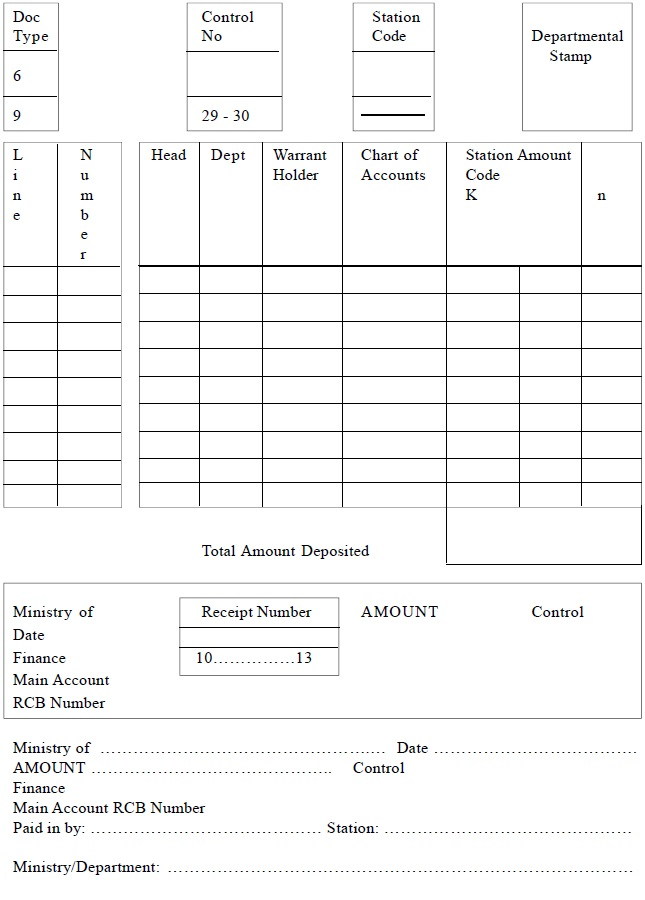
Accounts Form IX
[Regulations 141(2) and 142(1)]
(Stocked by Ministry of Finance)
|
|
|
REPUBLIC OF ZAMBIA |
|
The Public Finance Management Act, 2018 |
|
The Public Finance Management (General) Regulations, 2020 |
|
SPECIMEN |
|
A. APPLICATION FOR OPENING/RENEWAL OF GOVERNMENT BANK ACCOUNT AND CONFIRMATION OF SIGNING ARRANGEMENTS |
|
(To be forwarded in triplicate to the Office of the Accountant-General, Ministry of Finance) |
|
1. It is desired, in public interest to make new banking arrangements on: |
|
|
Institution: |
|
|
Bank Account Name: |
|
Bank Account Number: |
|
(Only complete for Renewal or Amendment) |
|
At (Bank Name): |
|
Branch Name: |
|
Town: |
|
Category Code: |
|
(A list of valid codes is at the |
|
This banking Arrangement is (mark with a ‘x’ as appropriate): |
|||||
|
New |
|
Renewal |
|
Amendment |
|

|
2. I appoint and authorise any two of the following Officers, one from each panel, to authorise transactions debiting this Account in accordance with provisions of the Public Finance Management Act, 2018 and Subsidiary Regulations thereof. |
||
|
PANEL I (ACCOUNTING OFFICERS) |
||
|
Surname |
Other Names |
Rank |
|
|
|
|
|
|
|
|
|
|
|
|
|
|
|
|
|
|
|
|
|
|
|
|
|
PANEL II (NON-ACCOUNTING STAFF) |
||
|
Surname Other Names |
|
Rank |
|
|
|
|
|
|
|
|
|
|
|
|
|
|
|
|
|
|
|
|
|
|
|
|
|
Note: Specimen signatures of authorised officers is at part (C). If more than three officers are proposed for either panel, please also complete Annex A. |
||
|
3. The purpose/justification for making new banking arrangements is described in: |
|
|
|
(Insert the reference for the covering minute under which this Form 49 is submitted in accordance with regulations 143(2) and 144(1) of the Public Finance Management (General) Regulations, 2020) |
||
|
Date Stamp |
|
|
|
Signature: |
……………………………………..………………… |
|
|
Name: |
||
|
Organisation: |
||
|
MOF Ref No.: |
|
|
|
|
|
|
|
B. MANDATE TO MAKE NEW BANKING ARRANGEMENTS |
||
|
Bank |
|
|
|
Branch |
|
|
|
|
||
|
Dear Sir/Madam, |
||
|
Yours faithfully, |
|
Address for Submission of Statement of Affairs |
|
|
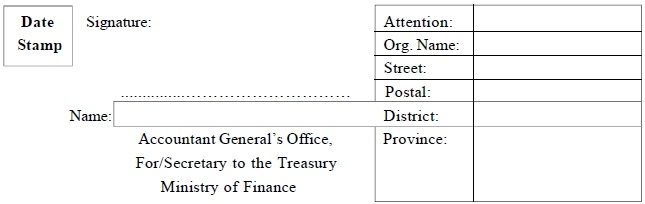
|
C. SPECIMEN SIGNATURES |
|
Each Panel Member must provide three (3) specimen signatures below. If this form is not printed double-sided (with the Controlling Officers’ signature on the face of the main form) the Controlling Officer must also certify this page. |
|
Specimen Signatures for Panel I (Accounting Officers) |
|
|
|
Specimen Signatures for Panel II (Non-Accounting Staff) |
|
|
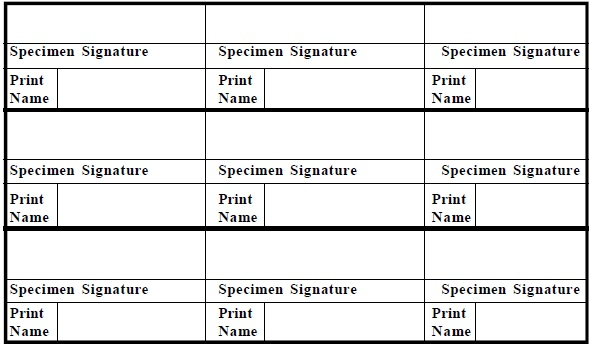
|
Date Stamp |
Signature: |
…………………………………………………….. |
|
Annex A: |
||
|
To be used where there are Panels of greater than three (3) members |
||
|
PANEL I (ACCOUNTING OFFICERS) |
|
Surname |
Other Names |
Rank |
|
|
|
|
|
|
|
|
|
|
|
|
|
|
|
|
|
|
|
|
|
Specimen signatures for Panel I (Accounting Officers) – Each panel member must provide three (3) specimen signatures below. |
||
|
|
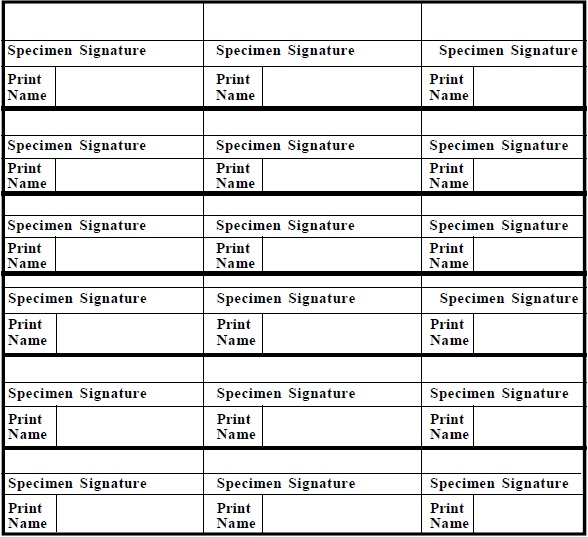
|
Date |
Signature: |
…………………………………………………….. |
|
PANEL II (NON-ACCOUNTING STAFF) |
|
Surname |
Other Names |
Rank |
|
|
|
|
|
|
|
|
|
|
|
|
|
|
|
|
|
|
|
|
|
Specimen signatures for Panel I (Accounting Officers) – Each panel member must provide three (3) specimen signatures below. |
||
|
|
|
Date |
Signature: |
………………………………………………………. |
Accounts Form X
[Regulations 179(1) and 180]
(Stocked by Ministry of Finance)
|
|
|
REPUBLIC OF ZAMBIA |
|
The Public Finance Management Act, 2018 |
|
The Public Finance Management (General) Regulations, 2020 |
|
REPORT ON A LOSS OF PUBLIC MONEY OR STORES |
|
(To be used for losses of money, stamps or stores; damage to Government property, buildings, equipment and vehicles; losses caused by failure to collect revenue; unauthorised or unvouched payment of public money). NOT to be used for damage to the person or property of third parties; these will be dealt with by memorandum. |
|
To be completed in TRIPLICATE and distributed as follows: |
|
MINISTRY/DEPARTMENT ……………………………………………… |
|
PART A – REPORT BY SUPERVISING OFFICER TO CONTROLLING OFFICER UNDER FINANCIAL REGULATION |
|
No. 193 |
|
1. Full name of Supervising Officer |
|
1 .……………………………………………………… |
|
2. Official designation and address |
|
2 …………………………………………………….. |
|
3. Office and/or place where the loss occurred |
|
3 ……………………………………………………… |
|
4. Date on which the loss occurred |
|
4 ……………………………… 20…… |
|
5. Date loss was reported to me |
|
5 ……………………………… 20……. |
|
6. Name of Loss: Money |
|
|
|
7. Police Report: |
|
(a) Was the loss reported to the police? (a) Yes/No |
|
(b) If it was, give the date of report |
|
(b) …………………………………..……………, 20…… |
|
(c) If it was not reported, explain why |
|
(c) ……………………………………………………………. |
|
Not, e.g., Petty loss already made good |
|
……………………………………………………………………….. |
|
(d) If Police Report available |
|
(d) 3 copies to be attached |
|
(e) If not available, give date of written ……………………….., 20…….. |
|
Request for a report |
|
8. Court Proceedings: |
|
(a) Was anyone prosecuted? Yes/No |
|
(b) If so who? ………………………………………… |
|
(c) With what result? ………………………………… |
|
(d) If court record available (d) 3 copies to be attached |
|
(e) If not available, give date of written ……………………………, 20…… |
|
Written request for court record |
|
9. Result of Investigation: |
|
(a) What were the precise circumstances in which the loss occurred? |
|
(b) Were normal precautions taken to prevent it? |
|
(c) If not, why not and which offices were involved? |
|
(d) What checks were carried out and when? |
|
(e) What security arrangements were in existence and were they adequate? |
|
(f) Give any further information which is relevant, including measures taken to prevent a recurrence |
|
NOTE – The test of negligence is whether an officer deals with public property and money as carefully as he would deal with his own private property or money. |
|
10. Recommendation: |
|
Give the full names and official designations of officers involved in the loss |
|
……………………………….…………………………………………………. |
|
|
|
|
|
|
|
|
|
Signature of Supervising Officer ……………………………………………. |
|
PART B – REPORT BY CONTROLLING OFFICER TO PERMANENT SECRETARY, MINISTRY OF FINANCE UNDER FINANCIAL REGULATIONS No. 195 |
|
(To be submitted to the Permanent Secretary for Finance for consideration, with a copy to the Auditor-General, for all losses of K50 or more and in all cases in which a surcharge is recommended. In the case of a loss of less than K50, if the controlling officer’s decision is that it should “stand as a charge to public funds”, a copy will be sent to the Permanent Secretary for Finance and the Auditor-General for information, endorsed to that effect in 11(c) below.) |
|
Controlling Officers’ File No. …………………… |
|
11. |
|
|
|
……………………………………………………………………………………………………… |
|
……………………………………………………………………………………………………… |
|
……………………………………………………………………………………………………… |
|
……………………………………………………………………………………………………… |
|
(c) My recommendations are: |
|
……………………………………………………………………………………………………… |
|
……………………………………………………………………………………………………… |
|
……………………………………………………………………………………………………… |
|
……………………………………………………………………………………………………… |
|
……………………………………………………………………………………………………… |
|
Signature of Controlling Officer ……………………………………….. |
|
Official Designation ……………………………………………………. |
|
Date: …………………………………..…….…………………………. |
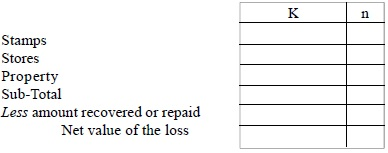
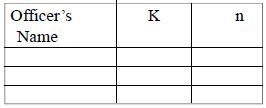
Accounts Form XI
[Regulations 189(5)(a)]
(Stocked by Ministry of Finance)
|
|
|
REPUBLIC OF ZAMBIA |
|
The Public Finance Management Act, 2018 |
|
The Public Finance Management (General) Regulations, 2020 |
|
APPLICATION FOR ADVANCE OF SALARY |
|
PART I |
|
(To be completed by the applicant) |
|
Full name of applicant ………………………………………………………………………………………………….. |
|
Designation ………………………………. Present Salary K………………………………………… per annum |
|
Department/Ministry/Province ……………………………………………………………………………………….. |
|
………………………………………………………………………………………………………………………………. |
|
Man Number……………………………………………………………………………………………………………… |
|
TO: The Controlling Officer ……………………………………………………………………………………… |
|
Ministry/Department/Province ……………………………………………………………………………. |
|
P.O. Box ………………………………………………………………………………………………………. |
|
……………………………………………………………………………………………………………………. |
|
I hereby apply for a advance/special advance of salary amount to K…………………………….. |
|
(Kwacha) in accordance with the provisions of General Order |
|
|
|
I request that the advance be recovered in ……………………………………………………………… monthly instalments commencing the month of ……………………………….. 20…… |
|
Station: ………………………………………… ………………………………………….. |
|
Signature of Applicant |
|
Date: …………………. |
|
PART II |
|
(To be completed by the Salaries or Accounts section of the applicant’s Ministry/Department/Province). |
|
I have verified the officer’s salary slip for the month of …………………………… 20…….. and the officer’s gross salary is K……………… per month. |
|
The deductions which are being made from |
|
………………………………………. |
|
Name ………………………….. |
|
Designation ………………………… |
|
Date ……………………… |
|
PART III |
|
(To be completed by the officer authorised to approve the advance of salary) |
|
|
|
……………………………………….. |
|
Name ………………………………. |
|
Designation …………………………… |
|
Date …………………. |
|
PART IV |
|
(To be completed by the Salaries Officer responsible for making payment and arranging recoveries) |
|
|
|
|
|
…………………………….. |
|
Name ………………………….. |
|
Designation ………………………. |
|
Date ……………………….. |
|
Checked by |
|
…………………………………….. |
|
Name ………………………….. |
|
Date …………………………… |
|
Copy sent to the Auditor-General on ……………………. (Date) |
|
|
|
NOTES: |
|
(1) The application should be completed and submitted in triplicate. |
|
(2) An applicant for salary advance may be required to furnish documentary proof of the application’s application. |
|
(3) No application for advance of salary will be considered whilst there is an outstanding balance to be recovered in respect of an earlier advance. For this purpose an advance ill not be deemed to have been recovered until the last day of the month in which the final recovery instalment is made. |
|
(4) After approval all the three copies should be submitted to the paying officer. |
|
(5) The paying officer shall arrange to recover the advance in not more than six instalments as directed by the approving system, the necessary input shall be submitted to the computer before it closes for the next run. In all cases recovery shall be arranged through the appropriate authority responsible for paying salary to the officer and a copy of the approved application will be sent to such authority to facilitate this to be done. On no account shall recoveries be postponed or delayed. |
|
(6) A copy of the approved application form should be sent to the Auditor-General for his record after payment of the advance has been made. |
|
(7) A copy of the approved application will be filed in the officer’s salary file for record and audit. |
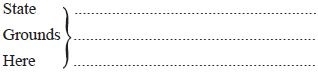
Accounts Form XII
[Regulation 189(5)(b)]
(Stocked by Ministry of Finance)
|
|
|
REPUBLIC OF ZAMBIA |
|
The Public Finance Management Act, 2018 |
|
The Public Finance Management (General) Regulations, 2020 |
|
TUITION ADVANCE |
|
PART I |
|
(To be completed by the applicant) |
|
To: The Permanent Secretary |
|
………………………………………. |
|
………………………………………. |
|
………………………………………. |
|
APPLICATION FOR AN ADVANCE FOR THE COST OF TUITION FEES AND TEXTBOOKS FOR A CORRESPONDENCE, DAY OR NIGHT SCHOOL COURSE |
|
I hereby apply for an advance of ………………………….. kwacha (K……………) to cover the cost of tuition fees and textbooks for a correspondence, day or night school course as shown in 4 below. |
|
2. Personal details |
|
(a) Name in full …………………….………….………….………….………….…………………….. |
|
(b) Date of birth …………………….………….………….………….………….……………………. |
|
(c) National Registration Number …………………….………….…………….…………………….. |
|
(d) Married/Single …………………….………….………….……….………….…………………… |
|
(e) If married, number of dependent children ………………………………….…………………… |
|
(f) Department …………………….….………….………….……….………….…………………… |
|
(g) Ministry of Province …………………….….………….…………………….…………………… |
|
(h) Personal division file number …………………….….………….………….…………………… |
|
(i) Man number ……………………………..……………. Department …………………………… |
|
(j) Substantive appointment …………………….….….…………..………….……………………. |
|
(k) Basic or substantive appointment K……………………. per annum ………………………… |
|
(l) Education qualifications (state where obtained and give dates) |
|
……………………………………………………………………………………………………………………….. |
|
……………………………………………………………………………………………………………………….. |
|
3. Conditions of service |
|
(a) |
|
(b) |
|
(c) |
|
(d) |
|
4. Details of proposed course |
|
(a) Title of proposed course |
|
(b) Subject to be included in the syllabus: |
|
i …………………….………………………………………. |
|
ii …………………….………………………………………. |
|
iii …………………….………………………………………. |
|
iv …………………….………………………………………. |
|
(c) Name of institute which is to provide the course. |
|
……………………………………………………………………………….. |
|
(d) The cost of: |
|
i. Tuition fees K…………………………………………….. |
|
ii. Textbooks …………………….………………………….. |
|
5. I attach a letter from the institute for the Permanent Secretary, Ministry of Education in the case of classes controlled by the Permanent Secretary in support of the above. |
|
Date: …………………… |
|
………………………………………… |
|
PART II |
|
(To be completed by the officer’s Head of Department) |
|
(a) I have verified the details given in 2 and 3 above and confirm that they are correct. |
|
(b) I confirm that repayment instalments when taken together with other deductions normally made from the applicant’s salary will not total more than 50 per cent of his monthly basic substantive salary. |
|
(c) In my opinion the applicant is able to afford the repayment instalments and these should not cause the applicant any financial hardship. |
|
(d) In my opinion the proposed studies are likely to interfere with the performance of the applicant’s normal studies. |
|
(e) I consider or do not consider that the course will increase the applicant’s efficiency or usefulness to Government in his present duties. (Cross out what is not appropriate) |
|
(f) I consider or do not consider that the course will benefit the applicant by undertaking more responsibilities. (Cross out what is not appropriate) |
|
(g) I recommend— |
|
(i) that the advance should be granted as applied for; or |
|
(ii) that an advance should be made for the following subjects only. |
|
………………………………………………………………………………………………………………………….. |
|
……………………………………… |
|
PART III |
|
(To be completed by the applicant’s Permanent Secretary) |
|
An advance of ……………… kwacha is approved for the course/single subjects as in 7(c) above. |
|
………………………………………… |
 On probation with effect from …………………….………….………….………….………….
Accounts Form XIII
[Regulations 189(5)(c)]
(Stocked by Ministry of Finance)
|
|
|
REPUBLIC OF ZAMBIA |
|
The Public Finance Management Act, 2018 |
|
The Public Finance Management (General) Regulations, 2020 |
|
APPLICATION FOR HOUSEHOLD LOAN |
|
(To be submitted to the Ministry of Finance) |
|
PART I |
|
Name in full ………………………………………………………………………………………………… |
|
Establishment Number ………………………………………… Finance Man No. …………………….. |
|
Ministry/Department ……………….………………………………………………………………….…… |
|
Station ………………………………………………………………………………………………………. |
|
Basic salary: K……………………..………………………………………………………………………. |
|
Appointment/Rank …………………………………………………………………………………………. |
|
Service conditions: Permanent Establishment–Contract/Gratuity |
|
Amount of loan required: K……………………..……………………………………………………………. |
|
New or second-hand goods .…………………………..……………………………………………………. |
|
(If second-hand, the proforma invoice must be endorsed by a senior officer to the effect that the goods are apparently in good condition and should outlast the period of the loan). |
|
PART II |
|
(Head of Department) |
|
|
|
PART III |
|
THE PERMANENT SECRETARY |
|
I attach a completed form of agreement for an advance to purchase furniture, supported by a proforma invoice. |
|
The application is |
|
………………………………….. |
Accounts Form XIV
[Regulation 189(5)(c)]
(Stocked by Ministry of Finance)
|
|
|
REPUBLIC OF ZAMBIA |
|
The Public Finance Management Act, 2018 |
|
The Public Finance Management (General) Regulations, 2020 |
|
FORM OF AGREEMENT FOR HOUSEHOLD LOAN |
|
AGREEMENT made this …………….. day of …………………………… BETWEEN the Government of the Republic of Zambia (hereinafter called ‘the Government’) and |
|
………………………………………………………………………………………………………………………………… |
|
WHEREAS IT IS AGREED AS FOLLOWS: |
|
(1) The Purchaser agrees to purchase household goods of the maximum value of K……………… |
|
(2) The Government agrees to advance to the Purchaser a sum not exceeding K…………………. |
|
(3) The Purchaser agrees to repay any sum so advanced, not exceeding K………………… as and when directed by the Government. |
|
(4) The Purchaser hereby agrees not to sell or dispose of the said household goods until the whole of the moneys advanced hereunder, not exceeding K………………… be paid. |
|
(5) The Purchaser also agrees that interest at the rate of 15 per centum shall be paid upon any balance of the said sum of K…………………………… as shall be outstanding on the last day of each month before deduction of any instalment paid upon such day. The said interest shall be calculated as aforesaid upon the last day of each month and shall be paid on the last day of November and the last day of May in each year upon the payment of the instalment whichever shall be the earlier. |
|
If the Purchaser shall die or leave the Government service before the sums advanced by the Government are paid in full then and in that case the whole of the balance of the said advance then outstanding shall forthwith be payable by the Purchaser or his executors or administrators and it shall be lawful for the Government in the event of the Purchaser or his executors or administrators not repaying the said advance to take possession of the said household goods and sell and dispose of the same and to deduct from the proceeds of such sale the balance of the amount so advanced. |
|
|
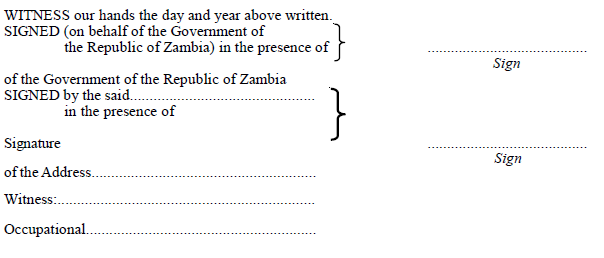
Accounts Form XV
[Regulations 189(5)(d)]
(Stocked by Ministry of Finance)
|
|
|
REPUBLIC OF ZAMBIA |
|
The Public Finance Management Act, 2018 |
|
The Public Finance Management (General) Regulations, 2020 |
|
To: The Senior Finance Officer (Salaries) |
|
APPLICATION FOR ADVANCE TO PURCHASE A MOTOR VEHICLE |
|
1. I hereby apply for an advance of …………………………………………………………………………………. ………………………………………… Kwacha (K…………………………………………………….) purchase a motor vehicle. |
|
2. Personal details |
|
(a) Name in full …………………….……………………………………………………………………… |
|
(b) National Registration Number ………………………………………………………………………… |
|
(c) Department …………………….………………………………………………………………………. |
|
(d) Ministry or Province …………………….…….………………………………………………………. |
|
(e) Personal Division File No. ..………………….……………………………………………………….. |
|
(f) Man Number ………………. Department ………………. Pay point ……………………. (as they appear on my salary slip) |
|
(g) Substantive appointment ……………………………………………………………………………….. |
|
Basic salary of substantive appointment K……………………..…. per annum. |
|
(h) I hold provision or full driving licence No. ……………..…. issued at ……………………… on ………………………. 20……. which is currently valid in Zambia for class as defined in the Roads and Road Traffic Act. |
|
3. Service conditions |
|
(a) On probation with effect from |
|
(b) On the pensionable establishment. |
|
(c) On contract for a specified period of service which is due to expire on ………….…. 20…. |
|
(d) On contract or gratuity terms for a period of……………….. years which is due to expire on …………………. 20….. |
|
4. Details of vehicle to be purchased |
|
(a) Type of vehicle (state vanette, car, motor cycle, etc.) ……………………………………………. |
|
…………..…………………………….……………………………………………………………….…… |
|
(b) Make ………………….…………………………….…………………………….……………………. |
|
(c) Cubic capacity (cc) of engine …………………….…………………………..……………………. |
|
(d) New or second-hand ………………………………..………………………….……………………. |
|
(e) Year of manufacture …………………………………………………………….……………………. |
|
(f) First registered ……………………………………….………………………….……………………. |
|
(g) Name and address of seller ………………………..…………………………..……………………. |
|
…………..…………………………….……………………………………………………………….…… |
|
…………..…………………………….……………………………………………………………….…… |
|
(h) Price K……………………………………………….. |
|
5. The undermentioned statements and certificates are attached |
|
(a) Statement of preparedness to provide comprehensive insurance on a motor vehicle. |
|
(b) Acknowledgement regarding insurance liability given by an applicant for an advance to purchase a motor cycle, autocycle or moped who holds a provisional driving licence. |
|
(c) Roadworthiness certificate in respect of a second-hand vehicle. |
|
(d) Proforma invoice. |
|
6. |
|
7. I have read and understand the conditions governing advances to purchase motor vehicle. |
|
Date …………………… |
|
…………………………… |
|
PART II |
|
(To be signed by the officer’s Head of Department or by an officer acting in that capacity) |
|
(a) I have verified the details given in 2 and 3 of Part I above and confirm that they are correct. |
|
(a) I confirm that repayment instalments and interest when taken together with the other deductions normally made from the applicant’s salary will not total more than 50 per cent of this monthly basic substantive salary. |
|
(b) I confirm that it would be to the advantage of Government for the officer to possess more transport. |
|
Date ……………………..…… |
|
………………………………… |
|
|
|
PART III |
|
(To be signed by the applicant’s Permanent Secretary or on the Permanent Secretary’s behalf, an officer not below the rank of Administrative Officer) |
|
In my opinion the applicant is able to afford the repayment instalments and the cost of insuring, licensing, running and maintaining the vehicle mentioned above and that this should not cause the applicant any financial hardship. I support the application |
|
……………………………… |
Accounts Form XVI
[Regulations 189(5)(d)]
(Stocked by Ministry of Finance)
|
|
|
REPUBLIC OF ZAMBIA |
|
The Public Finance Management Act, 2018 |
|
The Public Finance Management (General) Regulations, 2020 |
|
AGREEMENT |
|
AN AGREEMENT made this ………………………… day of …………………………. two thousand and ………………………………………………………………… between the government of the Republic of Zambia (hereinafter called ‘the Government’) of the one part and |
|
……………………………………………………………………………………………………………………………….. |
|
WHEREBY it is agreed as follows: |
|
(1) The Government agrees to advance to the borrower the sum of ………………………. Kwacha (K………………….) to purchase a registration number ………………………………………….. and the borrower agrees to use the sum of ……………………………………………………………………… Kwacha (K………………………….) to purchase the said ………………………………………………….. registration number …………………………. |
|
(2) If for any reason whatsoever the borrower does not purchase the said ……………………………. registration number ………………………………… within a period of one month from the date on which the paid advance of (K…………………………) is paid by the Government, then the borrower shall repay to the Government forthwith the amount of the advance of (K………………………..) |
|
(3) The said advance of ………………….. (K………………………..), shall be repaid to the Government by the borrower in ………………………. monthly instalments of (K………………..) each, the first of such instalments being payable on the last day of the month immediately following that in which the advance is made, and each of the remaining instalments shall be payable and become due upon the last day of each succeeding month thereafter. |
|
Provided that: |
|
(i) nothing herein contained shall be deemed or be taken to prohibit the borrower from repaying the sum of …………………………………. Kwacha (K………………………..) or any part thereof at any time before the date of the last of the instalments hereinbefore mentioned; |
|
(ii) should the borrower make default in the payment of any of the said instalments of fourteen days after that instalment becomes due or fail to perform any of his agreements herein contained, then the whole of the balance of the said sum of …………………….. Kwacha (K………………………..) then outstanding shall thereupon become immediately repayable to the Government. |
|
(4) The borrower hereby agrees: |
|
(a) provided the borrower is serving on an Agreement for a specified period of service, that the borrower will repay the advance plus interest in full, during the period for which the borrower has committed to serve; |
|
(b) provided the borrower is serving on contract/gratuity terms of service, that any balance of the advance outstanding shall be a charge against the borrower’s gratuity or any sums due to the borrower from the Government; |
|
(c) not to sell or dispose in any way of the property in the said …….……………. registration number ……………………. until the whole of the advance made hereunder shall be repaid; |
|
(d) to have the said vehicle registered by the Licensing Authority at …………………. in the borrower’s name; |
|
(e) to forward to the Director Finance, Ministry/Province, the certificate of registration within thirty days of the issuance of the certificate; |
|
(f) to take out, as soon as the borrower has purchased the vehicle, a certificate of insurance for a sum not less than the purchase price of the vehicle, such certificate to include coverage for civil commotion, accident, fire, riot, theft, third party risks and use by the borrower on official duty; |
|
(g) to forward to the Director Finance, Ministry/Province, the certificate of insurance for inspection— |
|
(i) within thirty days in the case of a vehicle purchase locally; |
|
(ii) within thirty days of the borrower’s return from leave in the case of a vehicle purchased outside Zambia; |
|
(h) to forward to the Director Finance, Ministry/Province, the Comprehensive Insurance Policy for scrutiny— |
|
(i) within sixty days in the case of a vehicle purchased locally; |
|
(ii) within sixty days of the officer’s return from leave in the case of a vehicle purchased outside Zambia; |
|
(i) to forward to the Director Finance, Ministry/Province, all insurance renewal receipts for inspection within fourteen days of the date of renewal; |
|
(j) to forward to the Director Finance, Ministry/Province, a receipt for the full cost of the said vehicle— |
|
(i) within thirty days from the date of payment of the advance in the case of a vehicle purchased locally; |
|
(ii) within thirty days of the officer’s return from leave in the case of a vehicle purchased outside Zambia; |
|
(k) that interest at the rate of six and a half per centum shall be paid upon any balance of the said sum of …………………..…. Kwacha (K…………………….) as shall be outstanding on the last day of each month before deduction of any instalment paid upon such day. Recovery of the said interest shall be monthly, the amount due in respect of monthly interest being calculated on an equated basis as prescribed by the Minister of Finance; |
|
(l) to use the said vehicle on official duty, as and when required. |
|
(5) If the borrower shall die or leave the Government’s service before the sum advanced by the Government under this Agreement is repaid in full, the whole balance of the said advance then outstanding shall be payable forthwith by the borrower or the borrower’s executors or administrators and, in the event of the borrower or the borrower’s executors or administrators not repaying the said amount, the borrower hereby authorises the Government to take possession of the said vehicle and to sell or dispose of the same in any manner which the Government shall think fit and to apply the proceeds of such sale or dispossession after deducting costs of the sale or dispossession and all expenses incidental thereto, towards the repayment of the said advance then outstanding and it is hereby agreed by the parties concerned that such dispossession shall be done without an order of the court. |
|
|
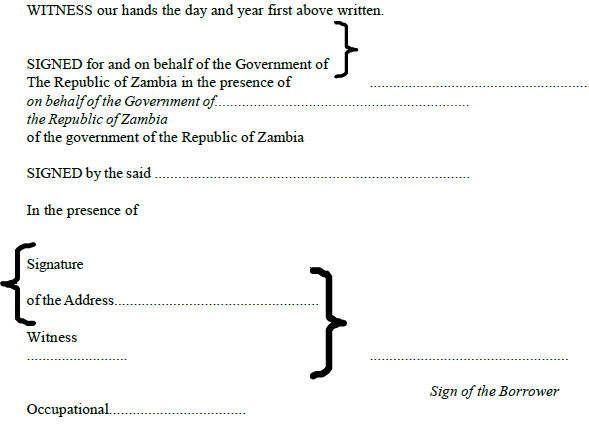
Accounts Form XVII
[Regulation 189(5)(e)]
(Stocked by Ministry of Finance)
|
|
|
REPUBLIC OF ZAMBIA |
|
The Public Finance Management Act, 2018 |
|
The Public Finance Management (General) Regulations, 2020 |
|
STAFF LOANS, ADVANCES AND REVOLVING FUNDS HOUSE LOAN |
|
To: The Permanent Secretary |
|
APPLICATION FOR A LOAN TO BUILD OR PURCHASE A HOUSE |
|
I hereby apply for a loan of …………………………. Kwacha (K……………………………………) to build/purchase a house in accordance with Personnel Division Circular No. B12 of 1988. |
|
2. Personal details: |
|
(a) Names in full ……………………………………………….……………….……………………… |
|
(b) National Registration Number …………………………….……………….……………………… |
|
(c) Department ……………………………..…………………….……………….……………………… |
|
(d) Ministry or Division File No. …………………………………….……………….……………….. |
|
(e) Personnel Division File No. …………………………………….……………….………………… |
|
(f) Man Number ……………………. Department …………… Pay Point ………………………. |
|
(g) Substantive appointment ………………………………………………………………………………. Basic Salary or substantive appointment K ………………………..……………… per annum |
|
(h) I attach a sketch plan of the proposed building and an estimate of costs duly certified by the Director of Buildings/Planning Authority. |
|
3. Service conditions: |
|
(a) On the pensionable establishment |
|
(b) On contract for a specified period of service which is due to expire on ………………… 20…. |
|
(c) On contract/gratuity terms for a period of ……………………… years which is due to expire on …………..………. 20..…. |
|
4. Details of house to be built/purchased: |
|
(a) Number of rooms …………………………………………………………………………………. |
|
(b) Number of doors ………………………………………………………………………..………… |
|
(c) Number of windows ………………………………………………………………………………. |
|
(d) Construction: |
|
(e) Kind of roofing ………………………..…..…..…..…..……………………………………..…… |
|
(f) Water borne sanitation |
|
(g) Electricity |
|
(h) Whether construction includes wall/fence and if yes dimensions and costs thereof ………………………………………………………………………………………………………………. |
|
………………………………………………………………………………………………………………. |
|
(i) Method of construction |
|
(j) If by contract, name and address of contractor, amount of contract and expected date of completion ……………………………………………………………………………………………….. |
|
5. The undermentioned statements and certificates are attached: |
|
(a) Sketch plan of proposed building showing the road layout of the area and specifications duly certified by Director of Buildings/Planning Authority; and |
|
(b) Proof of ownership of land on which to build of proforma invoice from the seller of the house together with certified copies of his title deeds. |
|
6. As an applicant for an advance to build/purchase a house I have read and understood the conditions governing loans to build/purchase houses as laid down in the relevant Circular and the appendices thereto. |
|
Date …………………………… ……………………………… |
|
PART II |
|
(To be signed personally by the officer’s Head of Department or by an officer acting in that capacity) |
|
(a) I have verified the details given in paragraphs 2 and 3 of Part I above and confirm that they are correct. |
|
(b) I confirm that repayment instalments and interest when taken together with the other deductions normally made from the applicant’s salary will not total more than 60 per cent of his monthly basic substantive salary including housing allowance. |
|
(c) I confirm that it would be to the advantage of Government for the officer to construct or purchase his own house. |
|
Date …………………………… ……………………………… |
|
PART III |
|
(To be signed by the applicant’s Permanent Secretary or on the Permanent Secretary’s behalf by an officer not below the rank of Administrative Officer) |
|
In my opinion the applicant is able to afford the repayment instalments and the cost of maintaining the house mentioned above and that this should not cause the applicant any financial hardship. I support the application. |
|
…………………………………… |
|
Date ………………… |
|
Ministry or Province ………………… |
Accounts Form XVIII
[Regulation 189(5)(e)]
(Stocked by Ministry of Finance)
|
|
|
REPUBLIC OF ZAMBIA |
|
The Public Finance Management Act, 2018 |
|
The Public Finance Management (General) Regulations, 2020 |
|
STAFF LOANS, ADVANCES AND REVOLVING FUNDS HOUSE LOAN AGREEMENT |
|
(To be filled in quadruplicate) |
|
AN AGREEMENT made this ………… day of ……………………………… Two Thousand Hundred and ……………………………………………………………..…….. Between the Government of the Republic of Zambia (hereinafter called “the Government” on the one part and |
|
………………………………………………………………………………………………………………… |
|
………………………………………………………………………………………………………………… |
|
(Hereinafter called “the borrower”) on the other part. |
|
WHEREBY it is agreed as follows: |
|
(1) the Government agrees to advance to the borrower the sum of …………..…….…… Kwacha (K……………………….) to build/purchase a house at ………………………………. |
|
…………………………………………………………………………………………………………………….. |
|
(location) and the borrower agrees to use the said sum of ………………………………………… Kwacha (K……………………..) to build/purchase the said house. |
|
(2) If for any reason whatsoever the borrower does not commence building the said house, within a period of ninety days from the date on which the said loan of (K……………………………) is paid by the Government, then the borrower shall repay to the Government forthwith the amount of the loan so far disbursed on the said loan of ……………………….. Kwacha (K……………………..). |
|
(3) The said loan of ………………………………………………… Kwacha (K…………………….), shall be repaid to the Government by the borrower in …………………………………………………… monthly instalments of (K……………………………………) each, the first of such instalments being payable on the last day of the month immediately following that in which the house is completed or purchased, and each of the remaining instalments shall be payable on become due upon the last day of each succeeding month thereafter: |
|
Provided that: |
|
(i) nothing herein contained shall be deemed, or be taken to prohibit the borrower from paying the said sum of ………………………………… Kwacha (K…………………….) or any part thereof at any time before the date of the last of the instalments hereinbefore mentioned; |
|
(ii) should the borrower make default in the payment of any of the said instalments of fourteen days after that instalment becomes due or fail to perform any of his agreements herein contained, then the whole of the balance of the said sum of ………………………… Kwacha (K……………………….…) then outstanding shall thereupon become immediately repayable to the Government. |
|
(4) The borrower hereby agrees: |
|
(a) provided the borrower is serving on an Agreement for a specified period of service, that the borrower will repay the advance in full, during the period for which the borrower has committed to serve; |
|
(b) provided the borrower is serving on contract or gratuity terms of service, that any balance of the advance outstanding shall be a charge against the borrower’s gratuity and any sums dues to the borrower from the Government; |
|
(c) to deposit the title deeds of the property with the Ministry of Finance until the loan has been repaid in full; |
|
(d) not to sell or dispose in anyway of the borrower’s property in the said house ………………… ………………………………………………………………………………………………………………………………………………………………………………………………………………………………., until the whole of the loan made hereunder shall have been repaid; |
|
(f) to have the said house registered by the Commissioner of Lands or the Local Authority in the borrower’s name with the “Government of the Republic of Zambia” entered in the records of the said Commissioner of the Local Authority as the Absolute Owner of the said house until such time as the amount of the advance is repaid in full; |
|
(g) to forward to the Permanent Secretary, Ministry of Finance, Lusaka, within thirty days, a certificate stating that the said house has been registered or re-registered as above; |
|
(h) to comprehensively insure and to pay the land rent, municipal rates etc. of the site to the authorities concerned; |
|
(i) to forward to the Permanent Secretary, Ministry of Finance insurance certificate, land rent and municipal rate receipts for inspection within fourteen days of the date of renewal or payment; |
|
(j) to use the said house for residential purposes immediately after completion. |
|
(5) If the borrower shall die or lease the Government’s service before the sum advance by the Government under the Agreement is repaid in full, the whole balance of the said advance outstanding shall be payable forthwith by the borrower or the borrower’s executor or administrator and, in the event of the borrower or the borrower’s executor or administrator not repaying the said amount, the borrower hereby authorised the Government to take possession of the said and sell or dispose of the same in any manner which the Government shall think fit and to apply the proceeds of such sale or dispossession after deducting costs of the sale or dispossession and all expenses incidental thereto, toward the repayment of the said advance then outstanding and it is hereby agreed by the parties concerned that such dispossession shall be done without an order of the court. |
|
WITNESS our hands the day and year first written above. |
|
Signed for and behalf of the Government by the Permanent Secretary: |
|
Name ………………………………………………………… Signature ………………………………………………. |
|
Witness: |
|
Name ………………………………………………………… Signature ………………………………………………. |
|
Address ………………………………………….. |
|
…………………………………………………….. |
|
Description …………………………………….… |
|
Signed by the said Borrower: |
|
Name ………………………………………………………… Signature ………………………………………………. |
|
Witness: |
|
Name ………………………………………………………… Signature ………………………………………………. |
|
Address ……………………….…………………. |
|
………………………….………………….………. |
|
|
|
Address .…………………………………………. |
|
…………………………………….………………. |
|
Description ………………………….……………. |
Accounts Form XIX
[Regulation 189(5)(f)]
(Stocked by Ministry of Finance)
|
|
|
REPUBLIC OF ZAMBIA |
|
The Public Finance Management Act, 2018 |
|
The Public Finance Management (General) Regulations, 2020 |
|
APPLICATION FORM FOR PUBLIC SERVICE EMPOWERMENT LOAN SCHEME |
|
|
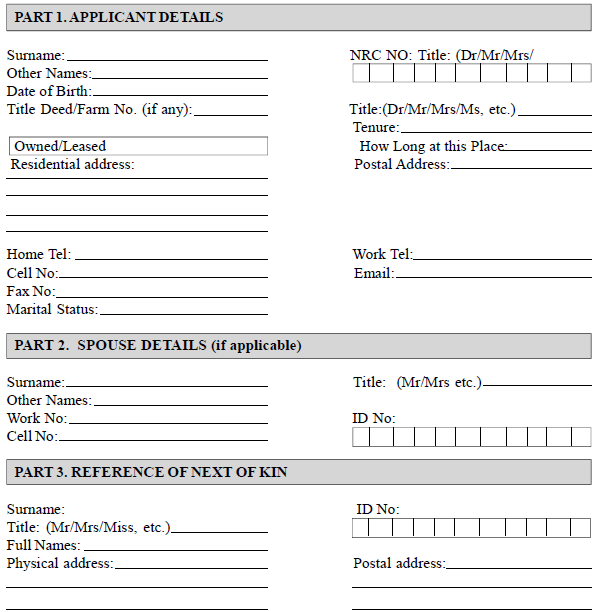
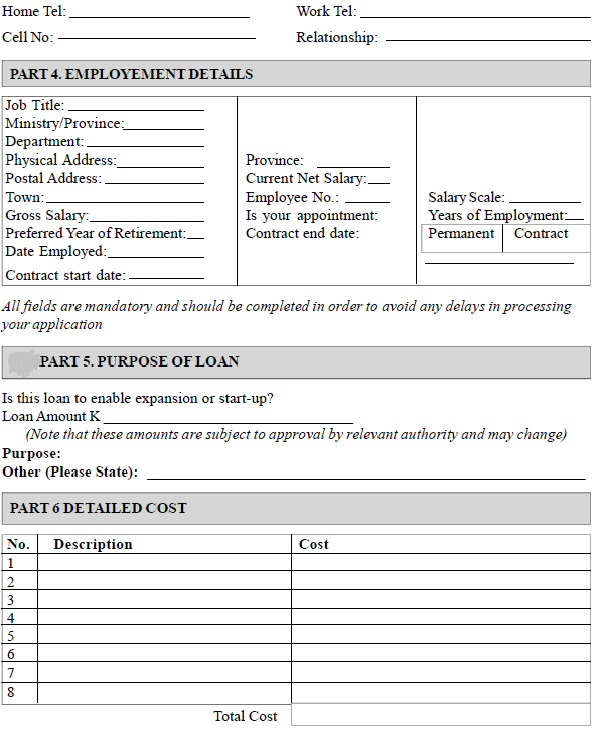
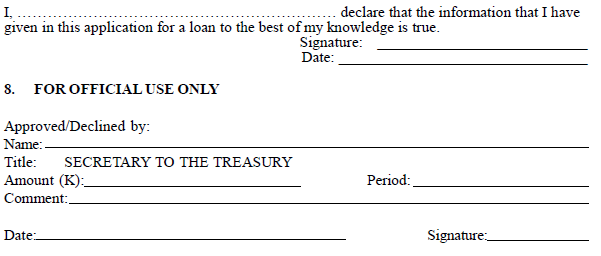
Accounts Form XX
[Regulation 190(3)]
(Stocked by Ministry of Finance)
|
|
|
REPUBLIC OF ZAMBIA |
|
The Public Finance Management Act, 2018 |
|
The Public Finance Management (General) Regulations, 2020 |
|
LETTER CONFIRMING REPAYMENT |
|
MINISTRY OF FINANCE |
|
Date: ……………………………. |
|
NO.: …………………… |
|
TO: The Commissioner of Lands/Planning Authority |
|
…………………………………………………………… |
|
…………………………………………………………… |
|
…………………………………………………………… |
|
House No.: …………………………………………….. |
|
Mr/Miss/Mrs …………………………..…….., who was granted a Government loan to finance the construction/purchase of the above mentioned house has since repaid the loan. It is, therefore, certified that the Government has no further claim on this house. |
|
|
|
Yours faithfully, |
|
OFFICIAL STAMP |
|
|
|
c.c. Mr/Miss/Mrs ………………….………………… |
|
…………………………………………………… |
|
…………………………………………………… |