
METROLOGY ACT: INDEX TO SUBSIDIARY LEGISLATION
Weights and Measures (Assize) Regulations
Weights and Measures (Assizer’s Certificate) Regulations
Weights and Measures (Sale of Articles) Regulations
Weights and Measures (Standard) Regulations
Weights and Measures (Verification Fees) Regulations
Metrology (Measuring Instruments) Regulations
Metrology (Pre-Packaged Commodities) Regulations
Metrology (Certification of Competence) Regulations
WEIGHTS AND MEASURES (ASSIZE) REGULATIONS
[Section 44]
Arrangement of Regulations
Regulation
PART I
PRELIMINARY
1. Title
2. Interpretation
3. Permitted weighting instruments
PART II
GENERAL
4. Exemptions
5. Stamp of Assize
6. Seal of Assize
7. Rejection mark
8. Maximum capacity of denomination
9. Graduations
10. Installation and use of weighing instruments
11. Balance
12. Conditions for refusal to assize
13. Description making on instrument
PART III
CLASSIFICATION OF WEIGHING INSTRUMENTS
14. Accuracy classes
15. Maximum permissible errors
PART IV
WEIGHING INSTRUMENTS
16. General requirements for electronic weighing instruments
17. Test of visual characteristics
18. Metrological test procedures
19. Poises
20. Counter poise weights
21. Knife edges
22. Automatic weighing instrument
23. Test loads
24. Beam scales
25. Counter machines
26. Crane machines
27. Platform machines and weighbridges
28. Self indicating weighting instruments
29. Spring balances
30. Steelyards and wall beams
PART V
WEIGHTS
31. Weights
32. Precision weights
PART VI
MEASURES
33. Dry measures of capacity
34. Measures of volume of liquids
35. Measures of length
36. Vehicle tank
37. Bulk-flow-metres
38. Liquid measuring device
39. Petrol pumps
40. Fabric measuring instrument
41. Automatic measuring instrument
PART VII
PUBLIC WEIGHING INSTRUMENTS
42. Provision and maintenance of public weighing instruments
43. Issue of certificate of competence
44. Assize fees
45. Determination of weights transmitted to the road by each axle
46. Qualifications for weights instrument attendants
47. Role of assizers and inspectors in over laden vehicles
48. Failure by attendants to execute their duties
49. Repeal of Weights and Measures (Assize) Regulations, 1971
SI 22 of 1998.
PART I
PRELIMINARY
These Regulations may be cited as the Weights and Measures (Assize) Regulations.
In these Regulations, unless the context otherwise requires—
“accessories” means that part of a balance which serves for the additional representation, transfer or processing of measurement values and which can be connected, added or built into the balance;
“accuracy” means that behaviour or technical qualities of a measuring instrument showing its ability to indicate with sufficient exactness, the true magnitude to be measured;
“accuracy classes of balances” means accuracy classes corresponding to international guidelines for the EEC and OIM;
“additional tare device” means a device used to weigh or compensate a tare load and does not effect the weighting range of the balance;
“adjusting” means to set or compensate a measuring instruments or the embodiment of a measure in such a way that the indicated value deviates as little as possible from the actual value or that this deviation remains within the tolerance limits;
“attendant” means a person holding a certificate or competence and authorised to operate public weighting instruments;
“automatic calibration” means electronic device for the automatic recalibration of a measuring range;
“automatic zero setting” means an automatic zero setting device which makes it possible to correct zero point or soiling of load receivers without manual intervention;
“automatic zero setting” means an automatic zero setting device which makes it possible to correct zero point or soiling of load receivers without manual intervention;
“automatic measuring instrument” means a measuring instrument for the automatic measuring and filling of liquids into containers;
“beam balance” means a balance in which a load carrier is supported by a knife edge from which it is freely suspended;
“beam scale” means an equal armed weighing instrument, pans of which are below the beam;
“bulkflow meter” includes a vehicle tank metre and means a measuring instrument designed to measure fuel for individual deliveries of 500 litres or more whether or not individual deliveries of less than 500 litres may also be made with the same instrument;
“calibration device” means a device that can be set up separately from the balance or integrated in the balance and can be of the balance individually;
“capacity” means—
(a) in relation to a weighing instrument, the maximum load which it is constructed to weigh as marked on such instrument in accordance with the provisions of these Regulations;
(b) in relation to a measure or measuring instrument, the maximum volume, qualify or length which it constructed to contain or measure as the case may be;
“certificate seal” means a stamp seal applied by the Assize Department to the tested measuring or weighing instrument to indicate that the calibration has been completed;
“commercial scale” means a scale or balance of accuracy which satisfies the certification requirements or the correspondence requirements for admission to being certified;
“confidence range” means a plus or minus range around the average x of a measuring value;
“compartment” in relation to a vehicle tank means a subdivided portion of that tank;
“counter scale” means an equal armed weighing, instrument of a capacity not exceeding 30 kilogrammes, the pans of which are above the beam;
“crane machine” means—
(a) a suspended equal armed compound lever weighing instrument fitted with a load hook suspended from knife edges and provided with poises moving over graduated scales to indicate weight; or
(b) a suspended self indicating hydraulic or spring actuated weighing instrument;
“creep error” means errors resulting when a measurement value is read, printed or processed before slowly settling to a final position;
“discrimination” means the ability of weighing instrument to react to small variations of load specified in these Regulations;
“electronic weighing machine” means any self-indicating weighing machine in which the load produces electrical signals which are processed so as to indicate or record weight;
“error” in relation to an instrument, means the extent to which such instrument indicates in excess or deficiency of standard weight or measure;
“dead weight machine” means an equal armed weighing instrument of a capacity exceeding 50kg, the pans or platform of which are above the beam;
“difference chart” in relation to a weighing instrument means a chart on which, by means of a pointer or other indicates excess or deficiency form a predetermined weight is indicated;
“fabric measuring instrument” means a measuring instrument designed and constructed to measure and indicate the length of fabric or other material passed through it;
“Liquid measuring device” means a measuring instrument provided with a measuring chamber or chambers designed for filling barrels, bottles, drums or other containers with predetermined quantities of liquid for dispensing liquids in small quantities from bulk;
“petrol pump” means a measuring instrument provided with either a metre or one or more measuring chambers, designed to measure liquid fuel or lubricating oil for individual deliveries of less than 500 litres whether or not individual deliveries of more than 500 litres can also be made by means of the same instrument;
“platform machine” means an instrument other than a weighbridge used for determining the mass of a load supported on a platform not exceeding 3m in size 500kg load capacity and shall include any instrument prescribed by the superintendent assizer as a platform machine;
“public weighing instrument” means an axle weigher or weighing meant for weighing goods’ vehicles;
“repaired” in relation to an instrument means that the instrument has, since it was last assized had an addition, replacement repair or adjustment made to a part which is essential to the use of such instrument;
“self-indicating weighing instrument” means a weighing instrument other than a spring balance on which the whole or part of the weight of the goods weighed is indicated by means of a pointer moving over a chart; or by means of a chart moving in relation to a fixed pointer, and any instrument prescribed by the Superintendent Assizer as self-indicating weighing instrument;
“sensitiveness” in relation to a weighing instrument means the actual weight which causes the beam or steelyard to turn;
“spring balance” means a weighing instrument having a capacity of less than 100kg in which weigh indications are dependent on the extension of springs and the load of which is below the spring and is suspended directly from them;
“steelyard” means—
(a) a suspended unequal single lever weighing instrument, the shorter arm of which carries a load hook suspended from the knife edges whilst the longer arm is provided with a poise moving over a graduated scale to indicate weight; or
(b) a steelyard provided on a platform machine or weighbridge or other similar weighing instrument as the context requires.
“table” means the appropriate table of allowances, verification scale intervals, permitted Mass and Volume denominations and abbreviations of denominations prescribed in the First Second and Third Schedule;
“vehicle tank” means a measure mounted on a motor vehicle or trailer and used for measurement of liquid fuel;
“vibrating weighing instrument” means a weighing instrument so constructed that the beam or steelyard returns to or oscillates about the position of equilibrium;
“wall beam” means an unequal-armed multilever weighing instrument designated to be affixed to a wall, having a load hook suspended from knife edges on the lower lever, and provided with poises moving over graduated scales to indicate weight; and
“weighbridge” means a weighing instrument for weighing a load carried by a vehicle where the load and vehicle where the load and vehicle are supported on rails or platform wither of which is linked to a system of levers or load-cells, and includes any similar instrument prescribed as a weighbridge by the Superintendent Assizer.
3. Permitted weighing instruments
A weighing instrument for use in accordance with the Act shall be—
(a) an equal oscillating arm, bean scale or beam balance, either suspended without arrestment device or otherwise supported with or without arrestment device;
(b) a counter machine of Roberval of Beranger pattern designed for equal load on each load receptor, but not a counter machine with sliding or tare weights nor a machine with unstable position of equilibrium;
(c) a steel yard or wall beam of a capacity exceeding 50kg but not exceeding 1000kg, for use only for weighing animals or bulk agricultural products; or
(d) one of the following if it complies with the specification of the competent official authority in the country of the manufacturer;
(i) a platform scale;
(ii) a weighbridge;
(iii) a precision balance;
(iv) a self indicating weighing instrument including price computing and or printing electronic weighing machine;
(v) an automatic weighing machine; and
(e) if not used for trade, indelibly and clearly marked, “NOT FOR TRADE USE”.
PART II
GENERAL
The provisions of these Regulations shall not apply to—
(a) electricity metres; and
(b) gas metres.
The stamp of assize shall be a stamp incorporating the eagle the Armorial Ensigns of Zambia, the letter “GRZ”, a letter of the alphabet and a stamp bearing a number signifying the year of assize.
(1) The seal of assize shall be a lead seal bearing a stamp incorporating the eagle of the Armorial Ensigns of Zambia, the letters GRZ, a letter of alphabet and a stamp bearing a number signifying the year of assize.
(2) Where use is made of the seal or seals of assize under these Regulations, the removal of any such seal from an assized instrument shall be deemed to render that instrument unassized.
(1) The rejection mark shall be a mark of six-pointed star design.
(2) An assizer shall reject an instrument under section 19 of the Act if—
(a) such instrument, bears a stamp of assize, by obliterating such stamp with a rejection mark;
(b) such instrument, does not bear a stamp of assize by stamping the rejection mark in a suitable position thereon; or
(c) such instrument bears a seal of assize, by removal of such seal.
8. Maximum capacity of denomination
(1) The capacity of a weighing instrument shall be clearly and conspicuously stamped on the beam, steel yard or on a metal plate permanently secured to some prominent part of the instrument.
(2) The capacity of a fabric measuring instrument shall be clearly and conspicuously stamped thereon.
(3) The denomination of weight shall, except where the small size of it renders it impracticable, be clearly and conspicuously stamped on an upper surface of the weight.
(4) The capacity of the measure shall, unless otherwise prescribed, be clearly and conspicuously stamped on the outside of the measure or on a metal plate permanently secured thereto.
(5) When an instrument is marked with its capacity or denomination, as the case may be, the denomination of the instrument shall be started in full, or in respect of a denomination specified in the Second Schedule, in the abbreviated form specified opposite thereto in Table 11 of the second column of the second schedule.
(1) The graduations on an instrument of measure shall be—
(a) indelible, clear, distinct and legible;
(b) except in respect of a graduated glass measure, be uniformly spaced; and
(c) in the case of denominated main graduation, be distinguished by longer lines than the intermediate graduations.
(2) The graduation on the steelyard shall—
(a) consist of notches or incised or embossed lines so defined that the position of the poise with respect thereto is clearly indicated; or
(b) be cut, incised, or embossed in one plane, at right angles to the steelyard and parallel to each other.
(3) A self indicating weighing machine shall have scale intervals not greater than the limit of error on initial verification stated in Tables 3, 5, and 6 in the First Schedule:
No person shall supply any new or repaired weighing or measuring instrument unless it has been assized:
Provided that any instrument which cannot be assized for any reason, shall be clearly marked “LEGAL FOR USE IN TRADE”.
(1) A weighing instrument shall be in balance—
(a) when unloaded; and
(b) where a loose receptable or frame is used in conjunction with such instrument, when the receptable or frame is attached thereto.
(2) Balance shall be indicated—
(a) in the case of vibrating weighing instrument, by the beam of steelyard returning to the position of equilibrium when disturbed therefrom;
(b) in the case of self-indicating weighing instrument or a weighing instrument provided with a graduated indicating scale or difference chart, by the pointer coming to rest at the position of equilibrium or zero graduation with the bubble of any spirit level in its true position;
(c) in the case of a counter machine constructed on the beranger principal, by two pointers, each attached to a subsidiary beam, coming to rest directly opposite each other; or
(d) in the case of an accelerating dead weight machine, by the beam, on being released from the stop under the weights pan, falling gently to the stop under the goods pan.
(3) Balance shall not be affected when the load is removed from the instrument.
(4) Where a weighing instrument is provided with a balance box, balance screw or gravity ball, such device shall be capable of adjustment only by use of a mechanical appliance.
12. Conditions for refusal to assize
(1) An assizer shall refuse to assize an instrument which—
(a) is not properly constructed or when, in the opinion of the assizer, its material or mode of construction appear likely to render it unsuitable for sue in trade;
(b) has unusual or novel features, unless it is of a design or pattern in respect of which a certificate has been issued in terms of section 15 of the Act;
(c) Is not sufficiently strong to withstand the wear and tear of ordinary use in trade;
(d) Is not in a clean state;
(e) Is not complete in itself;
(f) Bears a manufacturers or other mark which might be mistaken for the stamp of assize;
(g) Is of platform or inconvenient size to support the load being weighed on the platform machine or weighbridge; or
(h) Is so constructed and sited that the weighing of goods and the indicated weight are not simultaneously clearly visible to the purchaser.
(2) An assizer shall refuse to assize an instrument which—
(a) has interchangeable or reversible parts, unless the interchange or reversal does not affect the accuracy of the instrument;
(b) has removable parts, the removal of which would affect the accuracy of the instrument, unless the part are such that the instrument cannot be used without them;
(c) has scoop, pan, plate, or other part which is essential to its operation, broken;
(d) has a scoop, pan, or plate or plate such size or shape as may lead to incorrect weighing either through its fouling the housing the scale, or because proper contact between the knife edge and bearing is disturbed;
(e) has a good plate which is readily absorbent on account of faulty glazing or account of the extent to which it is cracked or chipped;
(f) has a friction plate, stay, hook or loop which is not of hardened steel or of an approved material; or
(g) has packing at the knife edges which, in the opinion of the assizer, is either excessive as to the number of pieces or is in other aspects unsuitable for the purpose.
(3) An assizer shall refuse to assize and accelerating weighing instrument, other than an accelerating dead weight machine.
(4) An assizer shall refuse to assize—
(a) a petrol pump driven by means of an electric motor unless the supply of electricity to such motor is controlled by switches, fuses or cut-over devices, isolated form the pump and locked securely to prevent unauthorised use or interference; or
(b) a bulk-flowmeter fitted with gravity and power delivery systems if the change-over valve leaks any quantity in excess of 0.5 litres when set in any position.
(5) An assizer shall refuse to assize any instrument alleged to conform to an international specification until such specification is approved by the Superintendent Assizer.
13. Descriptive marking on instrument
An assizer may refuse to assize a weighing instrument which does not have following descriptive marking—
(a) Manufacturers’ mark or name written in full;
(b) Indication of accuracy in the form of a Roman number;
(c) Maximum capacity indication;
(d) Minimum capacity indication;
(e) Verification scale interval “E”;
(f) Name or make of manufacturers agent for an imported instrument;
(g) Identification mark on each unit of the instrument consisting of separate but associated units;
(h) Pattern approval number;
(i) Special temperature limits;
(j) Maximum additive tare effect;
(k) Maximum subtractive tare effect; or
(l) Maximum safe load.
PART III
CLASSIFICATION OF WEIGHING INSTRUMENTS
(1) Subject to the provisions of this regulation, weighing instruments of the non-automatic type shall be identified with the verification scale intervals for different type of instruments set out in Table 1 and 2 of the First Schedule and the following accuracy classes—
(a) Special accuracy I;
(b) High accuracy II;
(c) Medium accuracy III; and
(d) Ordinary accuracy III.
(2) Different types of instrument will be as shown in Table 1 in the First Schedule.
15. Maximum permissible errors
The maximum permissible errors—
(a) for semi-self-indicating weighing instruments including price computing and printing electronic weighing instruments shall be shown in Table 3 and limits of error on trade weights shall be as shown in Table 4; and
(b) for non-self indicating weighting instruments shall be shown in table 5 and 6 of the First Schedule.
PART IV
WEIGHING INSTRUMENTS
16. General requirements for electronic weighing instruments
(1) Electronic weighing instruments shall comply with and operate according to the following conditions.
(a) design and construction of the instruments, shall preserve their metrological qualities when properly used and installed and when used in an environment for which the intended;
(b) when exposed to disturbances, electronic instruments shall not display the effects of significant faults or shall automatically detect and indicate them;
(c) upon automatic detection of a significant fault, electronic instruments shall provide a visual or audible alarm that shall continue until the user takes corrective action fault disappears;
(d) the requirements of (a) and (b) shall be met on a lasting basis during a period of time that is normal in view of the intended use of such instruments;
(e) digital electronic devices shall always exercise adequate control of correct operation of the measuring process, the indicating facility and all date storage and data transfer;
(f) the instruments shall have no characteristics likely to facilitate fraudulent use, and possibilities for unintentional misuse shall be minimal as components that may not be mantled or adjusted by the user shall be secured against such actions; and
(g) instruments shall be designed to permit ready execution of the statutory controls laid down in this regulation .
(2) The error of indicating shall not exceed the maximum permissible error of indication shown in Table 3 of the First Schedule and in case of digital indication, the error shall be corrected for the rounding error.
(3) The maximum permissible errors shall apply fto the net and tare values for the possible loads, excluding present tare values.
17. Test of visual characteristics
An assizer shall ensure that—
(a) the pattern of an instruments is permissible for verification;
(b) the pattern of instrument conforms to the requirement of international recommendations in relation to technical rules and pattern approval; and
(c) the prescribed inscriptions, markings and places for stamping are present.
18. Metrological test procedures
(1) when the instrument has been levelled to its reference position, the following test procedures shall be performed—
(a) a weighing test shall be carried out by applying test loads from zero up to and including maximum capacity and in the same way, reduce the test load back to zero:
Provided that at least 5 load steps shall be selected for the weighing tests and an instrument will pass the test when its measure deviation or error is within the maximum permissible error;
(b) except as otherwise provided, calculation of measure deviation shall be done as follows:
Measured weight value= P
Additional load = AL
Indicated Value = I
Therefore, P = I + 0.5e – Al
Where Measure deviation = E
And Load = L
E=P-L = I + 0.5 – Al – L; and
(c) Once the test has been completed, the measure deviation shall be positive when the instrument indicates too much and in addition to this test, a deviation curve shall be required to be plotted.
(2) In performing the discrimination test—
(a) with regard to a non-self indicating instrument, and extra load equivalent to 0.4 times the absolute value of the maximum permissible error shown in Table 5 or 6 of the First Schedule when gently placed on or removed from the instrument at equilibrium shall produce a visible movement of the indicating element;
(b) with regard to self and semi-self indicating weighing instruments dependent on an analogue indication, an extra equivalent to the absolute value of the maximum permissible error shown in Table 3 of the First Schedule for the applied load when gently placed on or removed from the instrument at equilibrium shall cause a permanent displacement of the indicating element corresponding to not less than 0.7 times the extra load;
(c) with regard to digital indication, an additional load equal to 1.4 times the scale interval, when gently placed on or removed from the instrument at equilibrium, shall change the initial indication; and
(d) a discrimination test shall be performed at loads equal to minimum ½ maximum and maximum capacities.
(3) A non-self-indicating weighing instrument shall have a sensitivity such that an additional load equivalent to the absolute value of the maximum permissive error shown in Table 5 or 6 of the First Schedule for the applied load when placed on the instrument at equilibrium shall cause a permanent displacement of the indicating element of at least 2mm for an instrument with maximum of less than 30kg and 5mm for an instrument with maximum greater than 30kg.
(4) In the case of an instrument with a damping device, the additional load shall be applied to eliminate the effect of the discretion threshold.
(5) The repeatability test shall be the difference between the results of several weightings of the same load which shall not be greater than the absolute value of the maximum permissible error of the instrument at the load and tests being performed at 50% and 100% maximum loads.
(6) The interchangeability test shall be complete when balanced equal armed weighing instrument, the load and working standards are interchanged on the load receptacle and the indicated weight shall not change by more than twice the absolute value of the limit of error specified.
(7) To perform the eccentric test:
(a) the receptacle shall be loaded with a load corresponding to 1/3 of the sum of the maximum capacity and corresponding maximum tare effect;
(b) in the case of the instruments with a load receptacle having not more than four points of support (n<<4), the four quarter segments roughly equal to ¼ of the surface of the load receptor shall be loaded in turn; and
(c) in both cases the indications for different positions of the load shall remain within the maximum permissible error for the applied load in Table 3, 5 and 6 of the First Schedule.
(8) To test for locking device, it should be impossible to obtain a weighing result on the indicating element once locked.
(9) To test for accuracy of zero setting—
(a) in case of a non-automatic, semi-automatic and initial zero setting devices this shall be done by setting the instrument to zero and then determining the additional load of small weights in steps of 1 at which the indication changes 10e from zero to one scale interval, and the deviation at zero shall be calculated as follows—
P = I + 0.5c – Al
|
Where measure weight value |
P |
|
Additional load |
AL |
|
Indicate value |
I |
The E = P – L = I + 0.5c – AL – L; and
Where E = Measure deviation.
L = Load; and
(b) in case of automatic zero setting device and zero tracking devices, the indication shall be brought out of the automatic range by loading with 1/10c and adding small weights in steps of 1/10c and attain change from one scale interval 1/10c to another, then the deviation shall be calculated according to sub-regulation (9)(a).
(1) Where lead is used for adjusting purposes on any poise, it shall not come into contract with the beam or steelyard.
(2) A poise shall be provided with an adjusting hole of such size, shape and design, as to permit easy adjustment.
(3) A poise shall be so constructed that no part thereof can be detached without the use of a mechanical appliance.
(1) A counterpoise weight shall be—
(a) marked in equivalents of 5kg, 10kg, 20kg, 25kg, 50kg or 100kg;
(b) made of brass, nickel-steel, or other corrosion resisting metal if used for hides and skins;
(c) have only one undercut adjusting hole containing fixed lead sufficient to cover adequately the bottom of such hole, and with room to permit future adjustments; or
(d) made of brass if its actual weight is 100 grams or less.
(2) Subject to the provisions of such sub-regulation (3) where more than one platform machine provided with counterpoise weights is kept or used by any person on any premises or on a public market, each such counterpoise weight shall be identified with the weighting instrument to which it belongs by a number conspicuously and indelibly marked and corresponding to a number similarly marked on the pillar and on the counter balance of the instrument.
(3) The provision of such-regulation (2) shall not apply to any counterpoise weight adjusted to a ratio of 50:1 or 100:1 precisely.
(4) A counterpoise weight of metric denomination shall be distinctly different from any other counterpoise weights in shape or in colour.
(1) Knife edges shall—
(a) be firmly secured in position;
(b) be properly aligned; and
(c) bear throughout the entire length of the parts designed to be in contract.
(2) Knife edges and bearing shall be a hardened steel, a gate or an approved material and the load carrying parts shall not show scratches when tested by means of the application of a superfine smooth file.
22. Automatic weighing instrument
(1) An automatic weighing instrument shall be—
(a) of a pattern brought into use after the thirtieth day of October, 1964 and certified by the Superintendent Assizer under section 15 of the Act;
(b) securely fixed in position in which it will operate;
(c) tested institute with the produce it is intended to weight;
(d) fitted with seals to protect all adjusting devices or have all such devices operable only with a special detachable key;
(e) marked with clear marks of identification on all parts that require to be dismantled for any purpose whatsoever but which marks give a clear indication of the parts which march on re-assemble;
(f) provided with suitable means of extracting from any hopper or conveyor such loads or sample deliveries as the assizer may require for the tests;
(g) tested by taking not less than 20 sample deliveries either at random or in sequence, which tests shall be repeated as many times and the assizer considers necessary; and
(h) marked with a stamp of assize upon a lead plug in a conspicuous place on the beam, main body or frame of the instrument.
(2) The limits of error allowed on an automatic weighing machine shall be 1 scale interval at a load below 2000 scale intervals and for load exceeding 2000 scale intervals, the limit of error at initial assizing shall be increased to 2 scale intervals.
(1) Except where otherwise provided in regulation 18 tests shall be carried out for all weighing instruments at the following loads—
(a) zero load;
(b) maximum load, including if possible maximum additive tare loads;
(c) half load; and
(d) loads at which the method of balancing is modified by addition or subtraction of a unit weight.
(2) Self-indicating weighing instruments shall in addition be tested at—
(a) capacity of self-indication if different from maximum load;
(b) loads at which the limit of error defined in (a) changes; or
(c) at as many loads as the assizer considers desirable in view of the particular construction.
(1) Beam scales shall be classified as follows—
(a) Accuracy class I comprising precision balance provided with means of relieving all the knife edges and bearings and shall include single pan optical projection balances and balances with weight loading devices;
(b) Accuracy class II composing cream test beams and beam scale other than class I beam scales used for testing chemicals, drugs, fine seeds or precious metals or stones; or
(c) Accuracy class III comprising beam scales other than class I or class II beam scales.
(2) A new or repaired class II or class III shall be stamped class II or class III as the case may be.
(3) Any device for adjusting the balance of a beam scale shall be permanent secured and so attached that it cannot readily be tampered with:
Provided that a class I or class II beam scale may be fitted with—
(a) threaded balancing screws at the extremities of the beam; and
(b) an approved balancing device.
(4) In a beam scale provided with a pointer moving across a graduated indicating plate or difference chart, the pointer shall travel beyond the extreme graduation on each side of the point of equilibrium or zero graduation:
Provided that if the chart is graduated on the heavy side only the pointer shall travel beyond the extreme graduation on that side and for a corresponding distance on the ungraduated side.
(5) A beam scale shall be tested—
(a) for discrimination;
(b) for sensitivity; or
(c) for eccentricity:
Provided that the error allowed shall be as specified in Table 3, 5 and 6 of the first Schedule.
(6) On a beam scale, the stamp of assize shall be stamped upon a lead plug inserted in the beam immediately under or over the fulcrum knife edge or as near therefore as it is practicable or, where the beam is totally enclosed in the housing, upon a lead securely fitted in a cup riveted to that housing.
(1) In a counter machine—
(a) the supports of the pans shall be of rigid structure; and
(b) the centre fork shall be so secured that it cannot twist or get out of place.
(2) A counter machine constructed on the beranger principle shall, if it is—
(a) a closed beranger, have—
(i) its working parts totally enclosed in a housing; and
(ii) pans which if inter changeable, do not affect the balance if interchanged;
(b) an open beranger, have—
(i) a capacity not exceeding 15kg;
(ii) a number stamped on any loose pan and on the frame or beam, which number shall commerce with the final two digits of the year in which it was manufacture;
(iii) the weights pan of integral construction or securely fixed to its cross by means of two or more rivets;
(iv) the support for the goods-pan of welded or riveted construction and without holes in its upper surface;
(v) a frame of cast iron or mild steel, which stands level upon a level plate without rocking;
(vi) in the case of a steel frame, not less than three spreaders between the two sides to stiffen them; and
(vii) if it is provided with anchor links, such links as are irremovable without the use of a mechanical appliance, and hardened taper pins as guard pins or securing the links.
(3) Material for balancing purposes shall be contained in a balance box which is—
(a) securely fixed to the under surface of a fixed weights pan or of the support for the weights-pan; and
(b) capable of containing lead to a weight not exceeding one per cent of the capacity of the machine.
(4) On a counter machine, the travel of the beam each way from the horizontal position shall be, where the capacity of the machine is—
(a) not over 2kg, not less than 6mm;
(b) over 2kg and over 5kg, not less than 7mm;
(c) over 5kg and not over 10kg, not less than 8mm;
(d) over 10kg and not over 20kg, not less than 10mm; or
(e) over 20 kg, not less than 12mm.
(5) A counter machine shall be tested—
(a) for eccentricity with a load equal to 1/3 of maximum capacity and any difference in indication due to this test shall not exceed the maximum permissible error specified in tables 3, 5 and 6 of the First Schedule;
(b) with a weight equal to 1/3 of maximum capacity of the machine placed on the goods pan anywhere within a distance from the centre equal to 1/3 the greatest length of the pan or, if the pan has a vertical side, against the middle of that side and a similar weight placed in any position on the weights pan, and the machine shall indicate the same weight within half the limit of error specified in Tables 3, 5 and 6 of the Third Schedule;
(c) at capacity, with the weights placed centrally on each pan, unless the goods pan is the form of a scoop in which case half the total weight shall be placed against the middle of the back of the scoop and the other half in any position on the scoop:
Provided that the sensitiveness and discrimination error shall be the maximum permissible errors specified in Tables 3, 5 and 6 of the First Schedule.
(6) The stamp of assize shall be stamped upon a lead plug inserted in a conspicuous and easily accessible part of the beam:
Provided that in the case of an enclosed beranger, it may be stamp upon the housing or upon a lead plug inserted therein.
(1) In a crane machine, the range of balance shall not exceed two per cent of the capacity of the machine.
(2) A crane machine shall be tested at the minimum and maximum points and at points where the maximum permissible error changes and also at all numbered scale intervals the assizer considers necessary.
(3) Subject to regulation 15, the limit of error allowed and sensitiveness required in a crane machine of a capacity specified shall be as shown in Table 5 of the First Schedule.
(4) The stamp of assize shall be stamped upon a lead plug inserted in a conspicuous part of the steel yard or, where the machine has no steelyard on the housing.
(5) An assizer shall refuse to assize a crane machine not constructed on the lever principle unless it is a design or pattern in respect of which a certificate has been issued under section 15 of the Act.
27. Platform machines and weighbridges
(1) In a platform machine or weighbridge—
(a) the upper surface or edge of the steelyard shall be in a straight plane from the zero graduation to the nose end;
(b) there shall be no readily removable parts other than the counter balance to support the counter poise weights;
(c) adequate stops shall be provided to prevent any poise from travelling behind the zero graduation;
(d) provided with a load carrying rail shall be distant from any other rail not less than 10mm:
Provided that where the load carrying rail the rail shall be overlap or have a bridging piece, a gap of 5mm shall be maintained between the over lapping parts.
(2) A weighbridge shall have—
(a) provision for adequate drainage and the pit kept free from any accumulation of water, mud or debris;
(b) it approaches smooth, straight and level for a distance of not less than the length of the platform at each of the weighbridge;
(c) the building housing the chart or steelyard so constructed that the operator has a clear view and unobstructed that the operator has a clear view and unobstructed view of the entire platform or platforms;
(d) the platform so protected as to allow vehicles to pass on and off the platform at both ends;
(e) foundations of adequate strength to support, without change of position, both the mechanism and a load equal to the capacity of the weighbridge; and
(f) provisions for adequate re-enforcement in any concrete work to resist any point loading in any direction to the satisfaction of a competent civil engineer.
(3) Where a platform machine or weighbridge is not provided with a tare beam the weight of any loose receptacle or frame used in conjunction with the instrument shall be accurately compensated for by means of a counter poise weight distinction in shape from any of the ordinary counter poise weights belong to the instrument and such compensating weight shall have words “TARE WEIGH” legibly and conspicuously stamped on it edge.
(4) The range of balance—
(a) in a platform machine, shall not exceed one-half per cent of the capacity of the machine and shall be not less than one-eight per cent of such capacity each way from the centre of travel of the ball; or
(b) in a weighbridge shall be double the range permitted in a platform machine.
(5) The travel of the steelyard each way from the horizontal position shall not be less than 10mm in both platform machine and weighbridge.
(6) A platform machine and a weighbridge shall be tested accuracy in accordance with regulation 18 and also perform additional tests as required for electronic scales.
(7) The maximum permissible errors allowed shall be as indicated in Table 3 as read with Tables 5 and 6 of the First Schedule and errors in service shall be twice those applied on initial verification.
(8) The stamp of assizer shall be stamped upon a lead plug inserted in a conspicuous and easily accessible position on the instrument and the official date stamp shall be stamped upon the lead plug in adjusting hole of any counter poise or tare weight.
(9) An assizer shall refuse to assize—
(a) an instrument of the type known as union scales; and
(b) a platform machine having counter poise weights which, when added to the full value of the steelyard reading, represents a weight greater or less than the capacity of the machine.
28. Self-indicating weighing instruments
(1) In a self-indicating weighing instrument—
(a) in which weight indications are dependent on the extension of a spring, the spring shall be iso-elastic or a temperature compensating device shall be incorporated;
(b) other than a dormant platform machine or weighbridge, weighing instrument or self indicating weighing instrument specifically designed for use in an out of level position, a circular spirit level or cross spirit level shall be provided;
(c) error due to parallax shall not exceed the value of the smaller subdivision; and
(d) the indicating wire or the extremity of the indicating pointer shall not exceed in width or thickness the width of any graduation, and the extremity of the pointer shall meet but not obscure the graduations.
(2) The graduations on the chart shall—
(a) in the case of a platform or weighbridge—
(i) not exceed 0.8mm in width in a platform machine or weighbridge respectively; and
(ii) be not less than 3mm apart measured from the centre to centre, whether or not they are on opposite sides of a dividing line:
(b) in the case of a self-indicating weighing instrument other than a platform machine or weighbridge—
(i) not exceed 0.4mm in width;
(ii) be not less than 1.5mm apart, measured from centre to centre, whether or not they are on opposition sides of the dividing lines:
Provided that a lens or other device may be fitted to the instrument for the purpose of magnifying the graduations so as to bring them into conformity with the provisions of this sub-regulation.
(3) A self-indication weighing instrument shall be tested—
(a) to ensure that the graduations indicating value are in alignment with these indicating weight and sufficient number of computations shall be checked to establish their accuracy;
(b) at as many graduations as the assizer considers necessary, and the instrument shall be correct whether the test is forward or backward;
(c) to ensure that the instrument, if fitted with two charts indicating weight, shows the same indication or both;
(d) if it specifically designed for use in an out-of-level position the absolute value of the difference between the indication of the instrument in its reference position and the indication in the titled position shall not exceed—
(i) at no load, two verification scales intervals; and
(ii) at self-indicating, capacity maximum permissible error.
(4) Where a self-indicating ticket printing instrument is designed to print tickets or provided with digital read out, any indication at zero shall show either a true zero or if the balance is incorrectly set, then a false balance shall be indicated or printed as the case may be.
(5) All self-indicating ticket printing instrument shall have an efficient stop fraud device to prevent the printing operation being performed before the indicator has come to rest or to prevent the printing of a ticket showing a weight that does not correspond with the weight indicated.
(6) Subject to the provision of regulation 15—
(a) the maximum permissible error as specified in Table 3, 5 and 6 of the first schedule shall be applicable;
(b) the maximum permissible error on a self-indicating printing or digital read out shall not exceed plus or minus 1 scale interval of the instrument; and
(c) the stamp of assizer shall be stamped upon a lead plug inserted in a conspicuous and easily accessible part of the instrument.
(1) In a spring balance—
(a) The chart shall—
(i) be clearly and indelibly marked “TRADE SPRING BALANCE” or “FOR TRADE USE”;
(ii) bear a statement of the weight “e” value; and
(iii) be made of white enamel, polished brass, or an approved material protected that the graduation and other markings are clearly visible;
(b) graduation on the chart shall not—
(i) exceed 0.8mm in width; and
(ii) be less than 3mm apart, measured from centre to centre, whether or not they are on opposite sides of a dividing line;
(c) where a temperature compensating device or iso-elastic spring is incorporated, it shall be capable of compensating temperature variations of 10 degrees Celsius in balance and at load;
(d) any ball-bearing unit shall be protected against dust and dirt;
(e) the extremity of the indicating pointer shall not—
(i) exceed in width or thickness the width of any graduation; and
(ii) be more than 2mm from the chart;
(f) a suitable balancing device of adjustment only by use of a mechanical appliance shall be provided; and
(g) be back balance with a bag, sack, pan or other means of loading, which fact shall be clearly stated on the chart.
(3) The range of balance shall not exceed one per cent of the capacity of the spring balance.
(4) A spring balance shall be tested—
(a) for accuracy of weighing at as many graduations as possible in increasing and decreasing loads;
(b) For endurance at the equal to the capacity of the balances for a period not exceeding 24 hours and after expiration of a further four hours testing for accuracy.
(5) Subject to the provisions of regulation 15, the maximum permissible error shall be as specific in Table in Tables 3, 5 and 6 of the First Schedule as applicable.
(6) The stamp of assize shall be stamped upon a lead plug inserted in the chart, or in a prominent position on the instrument.
30. Steel yards and wall beams
(1) In a steel yard or wall beam—
(a) the steelyard shall be made of wrought iron, steel or an approved metal and shall be perfectly straight;
(b) a stop to prevent excessive oscillation of the steelyard shall be proved;
(c) any load hook shall be securely attached to the instrument;
(d) end fittings to prevent the poise carrier riding off the steelyard shall be securely attached; and
(e) any poise shall move slowly without risk of injury to the notches and there shall be a stop to prevent it travelling behind the zero graduation.
(2) In a wall beam—
(a) the frame and bracket shall be of adequate strength to support, without deflection, both the wall beam and the load equal to the capacity of the wall beam;
(b) on a swivel bracket, the steelyard shall be level in all position; and
(c) the range of balance shall not exceed one half per cent of the capacity of the wall beam.
(3) The travel of the steelyard of a wall beam each way from the horizontal shall be not less than 10mm.
(4) A wall beam or steelyard shall be tested at as many graduations as the assizer considers necessary, and the instrument shall be correct whether the test is forward or backward.
(5) Subject to the provisions of regulation 15 the maximum permissible error required shall at any load not exceed the limits or error specified in Tables 3, 5 and 6 the first schedule.
(6) The stamp of assize shall be stamped upon a lead plug inserted in a conspicuous and easily accessible part of the instrument and a date stamp shall be stamped upon the lead in the adjusting hole of the poise.
(7) An assizer shall refuse to assize—
(a) a counter steelyard;
(b) a steelyard of capacity of less than 50kg; or
(c) a steelyard with three hooks.
PART V
WEIGHTS
(1) A weight for general trade shall—
(a) be a denomination specified in Table 12 of the Third Schedule and have that denomination marked on its top surface;
(b) if it is a new iron weight, be galvanised, oxidised, painted or protected by an approved process or be made of brass or bronze;
(c) if made of iron, be denomination of 100g or greater;
(d) be hexagonal or cylindrical in shape, a rectangular block shape being acceptable for weights of 5kg and higher denomination;
(e) have no part which can be removed without breaking a ring handle or seal;
(f) be free from flaws except for the marking of denomination or other identification;
(g) if marked with the manufacturers identification, have that marking—
(i) without figures; and
(ii) with no letters larger than one-half of the size of the letter or figures marking the denomination;
(h) have not more than one adjusting hole which shall—
(i) be partly filled with lead and permitting future adjustment;
(ii) be undercut so as to prevent the lead from being dislodged by shock and wear; and
(iii) have when new or re-adjusted no error greater than the limit of error for its denomination specified in the second column of Table 4 in the First Schedule.
(2) The assizer shall test the limits of error with working standard weights calibrated to National Standard weights within errors specified in the second column of Table 4 in the First Schedule.
(3) If a weight for a general trade does not conform to sub-regulation (1), an assizer shall not pass it as correct at assizing.
(4) Subject to sub-regulation (5) where an inspector passes a weight or general trade as correct at the initial assizing, an assizer shall stamp it—
(a) if the weight has an adjusting hole; and
(b) in other case on the base of the weight.
(5) It shall be permitted to use stamped weights for general trade which in service have errors not exceeding double the limit of error specified in Table 4 of the First Schedule.
(1) A weight for trade in valuable goods shall be a weight which—
(a) is of a denomination specified in Table 12 of the Third Schedule and subject to paragraph (e) has that denomination marked on its top surface;
(b) Is made of brass, bronze, stainless steel or other approved corrosion resistant material;
(c) If made of aluminium alloy, is of a denomination of 500mg or less;
(d) If it has a protective coating, this coating shall be made of corrosion and friction resistance material;
(e) If cylindrical in shape, or if of a denomination of 500mg or less, shall have a wire shaped into one, two or five sections to indicate its denomination, or shall be of a flat sheet; and
(f) Has when new or re-adjusted, no error greater than the limit of error for its denomination as specified in the third column of Table 4 in the First Schedule.
(2) The assizer shall test the limit of error with working standard weights calibrated to National Standard weights within errors less than one-third of the limit of error specified in Table 4 of the First Schedule.
(3) If a precision weight for trade in valuable goods does not conform to sub-regulations (1) and (2) of this regulation, an assizer shall not pass it as correct at the initial assizing.
(4) Subject to regulation 5, where an assizer passes a precision weight for trade with variable goods as correct at initial assizing the assizer shall stamp—
(a) the weight on its base surface if it is of denomination of 200g or more; and
(b) the identification plate on top of the storage box for weights of a denomination of 100g or less.
(5) It shall be permitted to use precision weights for trade with valuable goods which are stamped in accordance with regulation 4 and have no errors exceeding double the limits of error specified in the third column of Table 4 in the First Schedule.
PART VI
MEASURES
(1) A dry measure of capacity—
(a) shall be of aluminium, brass, bronze, copper, nickel, sheet iron, steel, tin plate, or an approved material;
(b) may be protected by electroplating, galvanisation or an approved process; or
(c) if 50 litres or under, shall be cylindrical in form with the internal diameter not differing by more than five per cent from the depth.
(2) The capacity of the dry measure of capacity shall be defined by brim of the measure.
(3) A dry measure of capacity shall be tested either with water or in the following manner with fine seed:
(a) the standard shall be filled with seed passed through a hopper, a distance of 150 mm being left between the bottom of the hopper and the top of the standard; or
(b) the seed in the standard shall then be passed into the measure being tested, a distance of 150mm being left between the bottom of the standard and the top of the measure.
(4) The limit of error allowed on a dry measure of capacity specified in the first column of Table 7 in the First Schedule is that specified opposite thereto in the second column of Table 7 of that Schedule.
(5) The stamp of assize shall be stamped near the brim of the measure directly above the position where the capacity sis marked.
(6) An assizer shall refuse to assize a dry measure of capacity not specified in paragraph 1 of Part II of the Third Schedule.
34. Measure of volume of liquids
(1) A measure of volume of liquids for trade shall—
(a) be of a denomination specified in Table 10 of the First Schedule and have that denomination indelibly marked on the on the outside of the measure in figures or letters;
(b) be provided with sub-divisions having intervals corresponding to figures 1, 2, or 5 divided or multiplied by 10 as appropriate;
(c) be made of glass, aluminium, brass, bronze, copper, nickel, sheet iron, silver and steel including stainless steel tin plate, white metal or any approved material:
Provided that for protection it may be anodised, electroplated, enamelled, galvanised, tinned or otherwise protected by an approved process;
(d) if made of brass, bronze or copper unless otherwise coated, have the inside surface well tinned with pure tine;
(e) if coated, have no sign of peeling;
(f) be made of hard and sufficiently thick material;
(g) not visibly deformed during filling;
(h) not be seriously damaged or deformed;
(i) have no false bottom;
(j) if made of metal, not have a bottom rim deeper than necessary to protect the bottom of the measure;
(k) have no lip or retaining edge which increases in capacity by more than 10%;
(l) if it has no tap, drain completely when titled to an angle of 30 below the horizontal;
(m) if provided with a tap shall drain completely without prolonged dribble when the tap is open and the measure is levelled;
(n) have its capacity marked on the upper part of its body or on a metal place permanently secured to that upper part;
(o) if it is made of glass, and has the capacity defined by a line, have the capacity indelibly marked near that line;
(p) have the capacity clearly defined in terms of sub-regulation (2);
(q) if it is a graduated glass measure conform to sub-regulation (3); and
(r) have no greater error in excess or deficiency than the limit of error for its denomination or for the graduation concerned as specified in Table 10 and 13 of the First Schedule.
(2) The capacity of the measurement of volume (other than a graduated glass measure) shall clearly be defined as follows.
|
Type of measure |
Definition of capacity |
|
(a) with lip or retaining edge |
By the bottom of lip or retaining edge |
|
(b) in form of milk can |
By the bottom of neck of can |
|
(c) glass measure not graduated |
By brim of measure; or indelible line (to mark the bottom of the meniscus of the liquid). |
|
(d) any other type not graduated |
By the brim of measure |
(3) A graduated glass measure shall—
(a) be conical or cylindrical;
(b) have a level base at right angles to the axis of the measure; and
(c) have scale marks which are—
(i) parallel to the base of the measure;
(ii) not less than 1.5mm apart; and
(iii) in the case of back scale marks on the same horizontal plane as the front scale marks when the base of the measure it horizontal.
(4) An assizer shall inspect the measure of volume other than a laboratory measure made of glass—
(a) by filling it to the capacity with the liquid for which the measure is used; and
(b) by emptying those contents into a standard test measure having limits of error not exceeding those specified in table 10 of the first Schedule and a drainage time of 10 seconds observed.
(5) If it used in a laboratory and conforms in shape, making of denomination and limits of errors to international standards, a measure made of glass or having a denomination below 50 ml shall not be subject to verification or stamping.
(6) If a measure of volume does not conform to this regulation, the assizer shall not pass it as correct during assizing.
(7) When the assizer passes a measure of volume as correct during assizing, the assizer shall stamp it:
(a) at the bottom of the inside of any lip or retaining edge of a metal measure; and
(b) in any other case near the marking of capacity.
(1) A measure of length other than callipers for use for trade shall—
(a) be made of brass, hardened steel, hard wood, woven tape or an approved material;
(b) be protected from corrosion;
(c) be subdivided only in all or any or metres, centimetres or millimetres;
(d) have all marks and inscription so arranged as not to interfere with the readings of length; and
(e) when tested in accordance with sub-regulation (2) have no limit of error greater than the limit of error for its denomination or any intermediate value graduation specified in Table 9 of the First Schedule.
(2) The assizer shall test a measure of length during assizing—
(a) against a standard measure of length having errors not exceeding one-third of the limits specified in Table 9 of the First Schedule;
(b) at a temperature of not less than 10°C;
(c) in the case of a tape measure, while it is supported horizontally over its complete length and is subjected to the tensile force indicated on that measure or if not indicated—
(i) 50 Newtons in case of a metal measure; or
(ii) 10 Newtons in the case of measure not made of metal.
(3) If a measure of length other than callipers does not conforms to sub-regulation (1) or pass the tests in sub-regulation (2) as assizer shall not pass it as correct during assizing.
(4) A calliper measure for the measurement of thickness or diameter shall—
(a) be made of steel, steel alloy or an approved material;
(b) have no more play than needed for easy movement; and
(c) except in the case of timber callipers, have limit of error no greater than—
(i) 0.2mm for callipers for measuring less than 200mm; or
(ii) 0.5mm for callipers for measuring 200mm or greater but not more than 500mm; or
(iii) for timber callipers have no error greater than 1mm.
(5) Callipers other than those used for trade shall not be subject to assizing except on request.
(1) A vehicle tank or compartment shall—
(a) be a cylindrical or elliptical section;
(b) be fitted with a fixed quantity indicator or provided with a dip stick by means of which the liquid can be measured; and
(c) if elliptical section, have the length of the major axis or the section not more than one and half times the length of the minor axis of the section.
(2) In a vehicles tank of compartment provided with bulk-flow meter—
(a) the bulk-flow metre shall—
(i) be an approved type;
(ii) incorporate an air separator for non registration of air currents;
(iii) be tested for accuracy by comparison with a master metre or any approved reference standard measure; and
(iv) be sealed to prevent adjustable devices being tampered with;
(b) the ullage indicator shall—
(i) be made of metal;
(ii) be fixed rigidly so as to indicate on the longitudinal axis and under the dome capacity situated on the top of such tank or compartment;
(iii) clearly and distinctly indicate, by means of a disc of at least 50mm in diameter, the height to which the tank or compartment must be filled in order to contain its marked capacity; and
(iv) be adjustable and so constructed that it can be sealed so as to prevent any change in its position without the seal being broken.
(3) The error allowed on a bulk-flow metre shall be 0.1% of the quantity delivered in excess or 0.05% deficiently.
(4) In a vehicle tank or compartment provided with a dipstick or T-shape measure—
(a) the tank or compartment shall have a guide tube for the dipstick or T-shape measure, fixed centrally so that the dip stick or T-shape measure indicates on the longitudinal axis; and
(b) each dipstick or T-shape measure shall be—
(i) made of metal;
(ii) graduated to indicate the actual contents of the measure in centimetres and an appropriate table of capacity shall be carried on the vehicle and identified with the vehicle tank concerned;
(iii) indelibly stamped with a number which corresponds to a number similarly stamped on the tank or compartment so as to identify so as to identify it with that tank or compartment; and
(iv) suspended from the upper rim of the guide tube by a metal cross bar or hilt.
(5) The volume of a vehicle tank or compartment shall exceed the marked capacity of the tank by not more than 0.1% of the capacity.
(6) A vehicle tank or compartment shall be tested—
(a) with the tank or compartment in level position;
(b) against standard measures or with a bulk flow metre assized immediately prior to the testing of the vehicle tank or compartment;
(c) if it is provided with an emergency valve for closing the delivery outlet, with the emergency valve open.
(7) The limit of error allowed on a vehicle tank compartment or dip stick is 0.1 per cent of capacity at the indication tested in excess or 0.005% deficiency:
Provided that the fuel level above the quantity indicator or disc when the same is sealed shall not exceed one centimetre.
(8) The stamp of assize shall be stamped—
(a) if the tank or compartment is fitted with a fixed quantity indicator, upon a lead seal attached to the indicator; or
(b) of the tank or compartment is provided with a dipstick upon the metal at the top and bottom of the dip stick.
(9) Vehicle tanks or compartment shall be permitted for trade in fuel provided that—
(a) they have been approved, verified and stamped by the Assize Department within errors not exceeding +0.1% of the entire content of tank compartments; and
(b) they are used for one individual delivery as to assume complete emptying of the compartments.
(10) Except where permitted in accordance with sub-regulation (2), no person shall sell or in a commercial transaction deliver fuel in bulk from a mobile tanker except through a bulk metre, dipstick or Ullage Mark.
(11) An assizer shall refuse to assize a vehicle tank or compartment provided with a dip stick unless an accurate chart of the capacity identified with the tank or compartment and with the dip stick has been supplied o him.
(12) An assizer shall refuse to assize a vehicle tank or compartment which is deformed, dented or otherwise damaged.
(13) An assizer shall refuse to assize a dip stick which strikes the bottom of the tank or guide tube.
(1) In bulk-flow meter—
(a) an air separator shall be provided which prevents air passing through the metre;
(b) when a pre-set mechanism is incorporated, it shall automatically stop delivery and registration and flow when the pre-set volume has been delivered;
(c) there shall be not leakage;
(d) the figures on any indicator shall be indelible, clear and legible;
(e) the makers name shall be stamped on the instrument;
(f) the maximum and minimum rates of flow in litres dekalitres or cubic metres per minutes shall be shown;
(g) an indication engraved on a metal plate of the liquid fuel the metre shall be adjusted to deliver specifying—
(i) the name in full of the liquid fuel;
(ii) one of the following code letters;
“A” Petrol;
“B” Paraffin;
“C” Turbine fuel; or
“D” Diesel or other fuel oil; or
(iii) any approved colour coding.
(2) A bulk-flow-meter shall be tested—
(a) after every dry hose has been flushed and the instrument resent to zero;
(b) using standard test measure or calibrated master metre or proving loop, or any of which having limits or error not more or less than 0.1% and comparing the indication of the metre under test with the indication of an approved master metre or approving loop or test measure;
(c) with varying loads or liquid or with varying bore by manipulation of the delivery valve so far as is practicable, and an assizer may require these tests to be carried out using different liquids:
Provided that the metre shall be correct within the allowance prescribed by these Regulations.
(3) The limit of error allowed on a bulk-flow-meter shall be 0.1% of the quantity tested in excess or 0.005% deficiency.
(4) The stamp of assize shall be stamped upon a lead plug inserted in a conspicuous and easily accessible part of the metre and a seal of assize shall be affixed to prevent access to the working parts or adjusting device without the seal being broken.
(1) In a liquid measuring device adequate provision to prevent the formation of air locks shall be made to ensure that:
(i) there shall be no leakage; and
(ii) any valve shall work freely.
(2) A liquid measuring device shall be tested after any delivery hose or measure used in the test has been flushed—
(a) by passing the liquid from the chamber into a standard measure, into the barrel, bottle, drum or other container and then into a standard measure; or
(b) where it is not practicable to test the liquid with standard measure, by ascertaining the net-weight of the liquid delivered and converting such weight into volume, basing the computations on the specific gravity or density of the liquid.
(3) The limited of error allowed on a liquid measuring device shall be 0.1 per cent in excess or 0.05% deficiency of the quantity purported to be delivered. The limit of error allowed on a 35ml dispensing or measuring tap shall be 0.5ml in excess or 0.1 ml deficiency only.
(4) The stamp of assize shall be stamped—
(a) upon lead inserted in a conspicuous and easily accessible part of the device; and
(b) if the device is provided with a metal displacer or displacers to alter the capacity of a measuring chamber, upon such displacer or displacers:
Provided that a seal shall be affixed where necessary to prevent access to the working parts or adjusting device without the seal being broken.
(1) A petrol pump shall—
(a) be of a pattern approved by the superintendent assizer;
(b) be constructed to deliver liquid fuel at one outlet only;
(c) be provided with a clear and legible volume indicator;
(d) not have a counting or totalising device which may be confused with volume indicator;
(e) not leak at any point;
(f) not, unless with the written permission from a superintendent assizer, be fitted with a delivery hose exceeding 5 metres in length;
(g) when measuring the length of the delivery hose—
(i) the length of the nozzle shall be included;
(ii) the length of any swing or radial arm shall be excluded; and
(iii) if it is retractable, the hose shall be measured from the point where it emerges from the housing and when fully extended;
(h) if it is fixed type—
(i) securely mounted on a solidly constructed level base;
(ii) be so cited as to permit the purchaser to have a clear and unobstructed view of the volume indicator or measuring chamber provided;
(iii) be so cited that the adjusting mechanism and the plug for the stamp of assize are readily accessible; and
(iv) If it is used to measure oil, have a delivery hose which is permanently filled to the nozzle.
(3) A petrol pump provided with a metre shall—
(a) not be capable of operation until the volume indicator and any price indicator are re-set to zero;
(b) if it is used to measure liquid fuel, may be—
(i) provided with a sight glass which clearly shows whether the delivery hose is completely filled before, during and after delivery; and
(ii) conspicuously marked “THIS GLASS MUST BE FULL BEFORE AND AFTER DELIVERY”;
(c) not to be fitted with a swing arm—
(i) which has a radius of swing not exceeding 2 metres; and
(ii) is provided with a sight glass of an approved pattern at the highest point of the swing arm or extension pipe immediately before the connection to the flexible hose;
(d) have a clear indication on the housing or dial of the position of the lead seals and the plug for the stamp of assize;
(e) be provided with an air separator or cut off valve which ensures non-registration when the supply of liquid fuel or oil fails; and
(f) be provided with a delivery hose which is permanently filled to the nozzle.
(4) A petrol pump provided with one or more measuring chambers shall—
(a) have any measuring chamber clearly and made of clear glass;
(b) have a delivery hose so positioned to allow complete discharge of the liquid measured from the delivery outlet of the pump;
(c) if it has more than one measuring chamber, be provided with a valve to prevent the liquid flowing from one chamber into another; and
(d) have each measuring chamber denominated.
(5) In a petrol pump provided with a price indicator, the indicator shall incorporate a device which clearly indicates the price per litre and regulates the registration on such indicator.
(6) A petrol pump shall be tested—
(a) if it is provided with one or more measuring chambers, after passing at least 5 litres of liquid through the delivery hose to prevent undue absorption during the test;
(b) by passing the liquid into the standard measures in as many deliveries and of such quantities as the assizer considers necessary;
(c) if it is provided with a metre, by a slow test which does not exceed a time limit of 30 seconds per 5 litres on any quantity delivered;
(d) to ensure that—
(i) back drainage does not exceed 25ml per hour;
(ii) it is correct, whether the pump is operated rapidly or slowly;
(iii) the indications on the volume indicator are in agreement with those on the price indicator and with the price per litre indicated by the device referred to in sub-regulation (5), and a sufficient number of computations are checked to establish their accuracy;
(iv) if it fitted with a nozzle control valve, no liquid fuel or oil is delivered when such valve is open and the pump is at rest;
(v) if it is fitted with two volume indicators, after delivery, it shows the same indications of volume on both such indicators; and
(vi) if it is fitted with two price indicators, after delivery, it shows the same indication of value in money on both such indications.
(7) The limit of error allowed on a petrol pump shall be 0.1 per cent of the quantity purported to be delivered in excess or 0.05% deficiency:
Provided that in a petrol pump used to measure lubricating oil, where a quantity of one litre or less is indicated, the limit of error allowed is 3 per cent of the quantity purported to be delivered in excess or 0.15% deficiency.
(8) The stamp of assizer shall be stamped upon a lead plug inserted in a conspicuous and easily accessible part of the pump. A seal of assize shall be affixed where necessary to prevent access to working parts or adjusting devices without the seal being broken.
(9) In this regulation—
“price indicator” means an indicator showing the value in money for the liquid fuel or oil delivered; and
“volume indicator” means an indicator showing the volume of liquid fuel or oil delivery.
40. Fabric measuring instrument
(1) A fabric measuring instrument shall—
(a) be of a pattern certified by the superintendent assizer under section 15 of the Act;
(b) have measuring rollers when in position for measuring and be in true parallelism;
(c) have a braking device fitted which ensures non-registration when the supply of fabric fails;
(d) have the rollers free when the instrument is re-set;
(e) have the chart returning to zero either automatically or by operation of a special handle or device provided for that purpose when the instrument is re-set; and
(f) have the indications by means of graduations not less than—
(i) 20mm apart in the case of graduations of a length value of 100mm; or
(ii) 3mm apart in the case of graduation of a length value of 25mm or by counters.
(2) A fabric measuring instrument shall be tested by passing the standard or the fabric normally measured by the instrument at right angles to the axis of measuring rollers.
(3) If is necessary to remove the standard or fabric, during the test this shall be done when an integral number of metres of the standard or fabric has passed through the instrument and the standard or fabric shall be re-inserted at the zero or initial graduation of the standard or fabric.
(4) The instrument shall be correct whether the test is forward or backward to ensure that—
(a) the instrument if fitted with two charts, shows the same indication of length on both;
(b) any totalising metre functions properly and correctly;
(c) the parts work freely throughout the range of the instrument;
(d) there is no backlash in the mechanism; and
(e) any over run brake fitted shall bring the indicator to a halt immediately the standard or fabric used for test leaves the measuring roller.
(5) The limit of error allowed on a fabric measuring instrument is for of each metre or portion thereof indicated, 2mm in deficiency or in excess.
(6) The stamp of assize shall be stamped upon a lead plug inserted in a conspicuous and easily accessible part of the instrument, and a seal of assize shall be affixed where necessary to prevent access to the working parts or adjusting device without the seal being broken.
41. Automatic measuring instrument
(1) An automatic measuring instrument shall be—
(a) certify by the Superintendent Assizer in terms of section 15 of the Act;
(b) securely fixed in position in which it will operate;
(c) tested institute with the liquid it is intended to measure;
(d) be fitted with seals to protect all adjusting devices or have all such devices operate only with a special detachable key;
(e) marked with clear marks or identification on all parts that require to be dismantled for any purposes whatsoever, such marks to give a clear indication of the matching parts which are to be matched on re-assembly;
(f) tested at various heads and rates of delivery where these are not uniforms;
(g) tested by taking not less than 20 samples either at random or in sequence; and
(h) marked with a stamp of assize upon a lead plug on conspicuous part of the instrument or on the main body of the machine.
(2) The limit of error allowed on an automatic measuring instrument shall be—
(a) the maximum error in excess or deficiency of the amount to be delivered into the container of 0.1 per cent; or 0.05% in deficiency;
(b) such that the average error of a sample of 20 or more deliveries does not exceed 0.1% in deficiency.
PART VII
PUBLIC WEIGHING INSTRUMENTS
42. Provision and maintenance of public weighing instruments
Without prejudice to any powers or duties conferred or imposed by any other regulation, the Minister of Works and Supply shall provide and maintain within their area for use by the public such weighing instruments as may appear expedient to the superintendent assizer.
43. Issue of certificate of competence
(1) The Superintendent Assizer shall issue a certificate of competence to competent scale repairers to carry out maintenance in the form of repair or adjustment to public weighing instruments as may be necessary.
(2) Any person refused such a certificate as provided in sub-regulation (1) by the Superintendent Assizer, may appeal against the refusal to the Minister of Commerce, Trade and Industry who may if he considers it fit direct the Superintendent Assizer to grant a certificate.
A fees as prescribed in the Weights and Measurers Act (assize fees) Regulations, shall apply.
45. Determination of weights transmitted to road by each axle
(1) An assizer or Road Traffic Inspector and any other officer of weights and measures authorised under the Act may determine and certify the weight of each axle of a loaded or the unloaded vehicle if that person has reasonable cause to believe that the vehicle axle is over loaded.
(2) In certifying the weight of each axle or a combination of more than one axle, an authorised officer will refer to such axle weight limits as prescribed for each vehicle under loading conditions by the Road Traffic Act.
(3) The decision of an authorised officer to determine and certify the weight of a loaded and unloaded vehicle shall constitute prima facie evident of the facts of a weightment of such vehicle and records relating to such weightment shall be construed accordingly.
46. Qualification for weighing instruments attendants
(1) No person shall attend to any weighing of instruments available for use by the public being an axle weighing demanded by a member of the public and for which a charge is made unless the person holds a certificate of competence from the Superintendent Assizer.
(2) In the case of weighing any article, vehicle or animal carried out by means of such instrument, the person bringing the article, vehicle or animal for weighing shall provide a name, residential address and other information as shall be requested.
(3) The person making any weighing instrument available for use by the public shall retain for a period of not less than two years any record of weighing by means of that instrument made by any officer appointed to attend thereto and an assizer on production of credentials if so requested, may require the person to produce any such record for inspection at any time it is retained by that person.
(4) If the person referred to in sub-regulation (3) fails so to retain or produce any such record or if any person wilfully destroys or defaces such records before expiration of two years from the date when it was made that person shall be guilty of an offence.
47. Role of assizers and inspectors in over laden vehicles
(1) An assizer may—
(a) inspect all records relating to axle weighment of over laden vehicles at all vehicles controlling points of entry to a weighbridge or axle weigher; and
(b) require that a suspected over laden vehicles be stopped at all points of entry other than a point on a high way and may examine and inspect all records relating to axle weighment:
Provided that an assizer shall test public weighing instruments as prescribed under section 18 of the Act and errors allowed shall be +0.5% of total load on initial testing and +1% of total load at subsequent testing in service.
48. Failure by attendants to execute their duties
(1) If any person appointed to attend to weighing by means of an instrument described in these Regulations—
(a) without reasonable cause, fails to carry out the weighing on demand;
(b) carries the weighing unfairly;
(c) fails to deliver to the person demanding the weighing or to his agent a statement in writing of the weight or other measurement found; or
(d) fails to make a record of weighing of a vehicle, such particulars of the vehicles and of any load thereon as will identify that vehicle and that load;
that person shall be guilty of an offence.
(2) If in connection with any instrument as is provided for in sub-regulation (1)—
(a) any person appointed to attend to weighing by means of the instrument delivers a false statement of any weight, or other measurement found;
(b) makes a false record of any weighing; and
(c) commits any fraud in connection with any or any purported weighing by means of that instrument;
that person shall be guilty of an offence.
49. Repeal of Weights and Measures (Assize) Regulations, 1971
The Weights and Measures (Assize) Regulations, 1971 are hereby revoked.
FIRST SCHEDULE
[Regulations 14, 15, 23, 31, 34, and 35]
TABLE 1
[Regulation 14]
VERIFICATION SCALE
|
|
Verification scale interval |
|
Type of instrument |
e = d |
|
Graduated, with auxiliary indicating device |
e is chosen by manufacturer according to requirement given in Table 2 |
|
Non graduated |
e is choose by the manufacturer according to requirements in Table 2 |
TABLE 2
[Regulation 14]
ACCURACY LEVELS
|
Accuracy Class |
Verification Scale internale |
Number of verification Scale intervals = Max |
Minimum Capacity Min |
|
|
Special I |
0.001g< |
Minimum |
Maximum- |
100e |
|
High II |
0.001g< 1,00,50,00 100,000 20e50e |
|||
|
Medium III |
0.1g< |
1,00,500 |
10,000 |
20e20e |
|
Ordinary IIII |
5g< |
100 |
1,000 |
10e |
NOTE: e is chosen by the manufacturer according to requirement below:
d < e = 10kg, k being a positive or negative whole number, or zero.
This requirement does not apply to an instrument of class 1 with d << 1mg where e = 1mg
TABLE 3
[Regulations 9 and 15]
MAXIMUM PERMISSIBLE ERRORS ON INITIAL VERIFICATION
For Loads M expressed in verification scale intervals
Class I Class II Class III Class IV +0.5e 0< 0< 0< 0< +1e 50000< 5000< 500< 50< +1.5e 200000< 20000< 2000< 200< The maximum permissible errors in services shall be twice the maximum permissible errors on initial verification.
TABLE 4
[Regulation 31]
LIMITS OF ERROR FOR WEIGHTS USED FOR TRADE
Limits of error Weights used in Trade Trade weights Precision Weights 10mg – +0.5mg 20mg – 0.5 50mg – 0.5 100mg – 1 200mg – 1 1g +10mg 1 2g 12mg 1 5g 15mg 1 10g 20mg 2 20g 25mg 2 50g 30mg 3 100g 50mg 5 200g 100mg 10 500g 250mg 25 1kg 500mg 50 2kg 1000mg 100 5kg 2500mg 250 10kg 5000mg 500 20kg 10000mg 1000 NOTE: MPE means (Maximum Permissible Error)
TABLE 5
[Regulations 9 and 15]
LIMITS OF ERRORS ON SITE VERIFICATION OF WEIGHING INSTRUMENT
Maximum Capacity Equal and Lower than or Greater than Limit of Error (MPE) 100g 500g +0.5g 500g 1kg 1 1kg 2.5kg 2 2.5kg 10kg 5 10kg 20kg 10 20kg 50kg 20 50kg 100kg 50 100kg 200kg 100 200kg 500kg 200 500kg 1000kg 500 1000kg 2000kg 1kg 2000kg 5000kg 2kg 5000kg 10000kg 5kg 10000kg 20000kg 10kg 20000kg 50000kg 20kg 50000kg 100000kg 50kg 100000kg 200000kg 100kg
TABLE 6
[Regulations 9 and 15]
LIMITS OF ERROR ON PRECISION WEIGHING INSTRUMENT FOR WEIGHING PRECIOUS METALS, PHARMACEUTICAL PRODUCTS, ETC.
Maximum Capacity equal to and lower than or greater than Limit of error (MPE) 2g 50g +2mg 50g 100g 5mg 100g 200g 10mg 200g 500g 20mg 500g 1kg 50mg 1kg 5kg 100mg 2.5kg – 200g 10kg 20kg 500g 20kg 100kg 1000g
TABLE 7
[Regulation 33]
LIMITS OF ERROR FOR MEASURES OF CAPACITY
Capacity of Measure Limit of error (MPE) Or Value of graduation Conical metal Other metal 10ml 0.25ml 0.5ml 20ml 0.5ml 1ml 25ml 0.65ml 1.5ml 35ml 1ml 1.5ml 50ml 1.25ml 2ml 100ml 1.5ml 2.5ml 200ml 2.5ml 5ml 500ml 5.0ml 10ml 11 7.5ml 15ml 21 12.5ml 25ml 51 25.0ml 50ml 101 40.0ml 75ml 201 50.0ml 100ml 501 or over 65.0ml 125 100L or over 0.1% Capacity 0.2% Capacity
NOTE: Measures other than metal measures may have an error in excess or deficiency of 5 time the allowances shown for conical measures.
TABLE 8
[Regulation 23(a)]
LIMITS OF ERROR ON CARAT METRIC WEIGHTS
Denomination Limit or error (MPE) 0.1cm 0.2mg 0.2cm 0.5mg 0.5cm=(.1kg) 0.5mg 1cm 1mg 2cm 1mg 5cm=(1g) 1mg 10cm 1mg 20cm 1mg 50cm=(10g) 2mg 100cm 2mg 200cm 5mg 500cm=(100g) 10mg
NOTE: This series of weights is limited and should be used only when precision metric weights are not suitable.
TABLE 9
[Regulation 35]
LIMITS OF ERROR ON MEASURES OF LENGTH
Denomination or value of graduation
End Measurement Line Measurement
Long Short Long Short 100m – – 20mm 20mm 60m – – 12mm 12mm 50m – – 15mm 15mm 30m – – 10mm 10mm 25m – – 8mm 8mm 20m – – 7.5mm 5.5mm 15m – – 5.5mm 5.5mm 10m – – 5.0mm 5.0mm 5m – – 2.5mm 2.5mm 4m – – 2.0mm 2.0mm 3m 3mm 1.5mm 1.5mm 1.5mm 2m 2mm 1.0mm 1.0mm 1.0mm 1.5m 1.5mm 0.8mm 0.8mm 0.8mm 0.5m 1mm 0.5mm 0.5mm 0.5mm 0.5m 0.8mm 0.4mm 0.4mm 0.4mm
TABLE 10
[Regulation 34(1), (4)]
LIMITS OR ERROR OF MEASURING VOLUME
Capacity Measure or Value per graduation Limits of error (MPE) 10ml 0.5ml 20ml 1ml 50ml +2ml 100ml 3ml 200ml 5ml 250ml 5ml 500ml 10ml 11ml 10ml 21ml 20ml 51ml 50ml 101ml 50ml 20ml or more 0.2% TABLE 11
[Regulation 33]
ABBREVIATIONS OF DENOMINATION
Denomination Abbreviation Metric Carat cm Milligram mg Centigramme cg Decigram dg Gram g Kilogram kg Cubic Metre cum or m Cubic centimetre cc or cm Millimetre mm Centimetre cm Decimetre dm Metre m Millilitre ml Centilitre cl Litre l TABLE 12
[Regulation 31]
DENOMINATION OF MASSES AND MEASURES WHICH ARE PERMITTED IN TRADE
Denomination Permitted capacity Metric carat 0.005, 0.01, 0.02, 0.05
0.1, 0.2, 0.25 and Grams 0.001, 0.002, 0.005, 0.01
0.05, 0.1, 0.2, 0.5, 1,
2 and 5 Kilograms 1,2,5,10,20
50, 100, 200, 500 Tonnes 1, 2, 5, 10, 20, and 50 Millilitre 1, 2, 5, 10, 20, 25, 50
10, 200, 250 and 500 Litre 1and 2 NON GRADUATED MEASURE
Millilitre 1, 2, 5, 10, 20, 25, 35 50 and 100 Litre 0.2, 0.5, 1, 2, 5, and 20
TABLE 13
[Regulation 34]
PERMITTED MEASURE OF VOLUME
1 Cubic Metre or Multiples of 1 Cubic metre
500 Cubic decimetre
200 Cubic decimetre
100 Cubic decimetre
50 Cubic decimetre
10 Cubic decimetre
[Section 27]
Arrangement of Regulations
Regulation
1. Title
2. Assizer’s certificate
[Regulations by the Minister]
SI 177 of 1971.
These Regulations may be cited as the Weights and Measures (Assizer’s Certificate) Regulations.
The Minister may issue an assizer’s certificate to a person who is the holder of—
(a) a certificate of qualification as an inspector of weights and measures issued by the department in the United Kingdom responsible for the administration of the Weights and Measures Act, 1963, of the United Kingdom;
(b) any other equivalent qualification accepted by the Minister.
[Section 27]
Arrangement of Regulations
Regulation
1. Title
2. Application
3. Interpretation
4. Exemption from section 19(1) of the Act
5. Exemption from section 20(1) of the Act
6. Marking of wrappers or containers
7. Standard weight per bag or pocket
8. Pre-packed articles
9. Cement
10. Coal and coke
11. Fertiliser
12. Firewood
13. Meat
14. Cheese
15. Spirituous liquor
16. Agricultural produce
17. Bread
18. Dried fish
19. Lime
20. Milk and cream
21. Cooking oil
[Regulations by the Minister]
SI 182 of 1971,
SI 209 of 1972,
SI 91 of 1985,
SI 92 of 1985,
SI 197 of 1986,
SI 121 of 1998.
These Regulations may be cited as the Weights and Measures (Sale of Articles) Regulations.
The provisions of these Regulations shall not apply to the sale of—
(a) any articles of food, other than intoxicating liquor, for consumption on the premises of the seller;
(b) any assortment of foods packed for sale as a meal and ready for consumption without cooking, heating or other preparation;
(c) articles intended for export which are so packed and marked and are consigned to a point outside Zambia;
(d) a single article, the retail price of which is not more than five ngwee.
In these Regulations, unless the context otherwise requires—
“agricultural produce” means—
(a) beans, dhal, gram, lentils, onions or peas, when not in a green state;
(b) barley, buckwheat, cassava, maize but not including green maize on the cob, millet, munga, oats, paddy, rupoko, rice, rye, sorghum, wheat, or any other cereal;
(c) bean meal, bran, crushed maize, flour, hominy chop, sorghum meal, maize cones, maize grits, maize meal, maize offals, maize seconds, mealie rice, munga meal, pollard, rupoko meal, rye meal, samp, or any other meal or milled product of grain;
(d) chaff, fodder, forage, lucerne or teff grass;
(e) castor seed, groundnuts, linseed, potatoes, seed cotton, sesame, sweet potatoes, sunflower seed, or sunnhemp seed;
(f) beetroots, carrots, parsnips, tomatoes or turnips;
“Board” means the Dairy Produce Board established under section 3 of the Dairy Produce Board (Establishment) Act;
“coke” includes any solid fuel derived from coal or of which coal or coke is a constituent;
“dried fish” means fish which has been sun-dried or smoked;
“dried fruit” includes candied peel and crystallised or glace fruits;
“fertiliser” means any substance which is intended or offered for improving or maintaining the growth of plants or the productivity of the soil, but does not include—
(a) farmyard, stable or village manure;
(b) compost;
(c) wood ash;
(d) gypsum;
(e) town refuse or night soil;
“meat” means the carcass, part of a carcass or offal of any animal or poultry being a carcass, part of a carcass or offal suitable for human consumption and whether fresh, frozen, chilled, pickled, cured, salted, dried, minced, cooked, or manufactured into brawn, polony, or sausages;
“milk” means cow’s milk, whether pasteurised, separated, skimmed, or subjected to any other process, but does not include dried, evaporated, or condensed milk;
“spirituous liquor” means brandy, gin, rum, vodka or whisky;
“weight” includes mass;
“wool” means yarns—
(a) of natural wool or synthetic fibers; or
(b) of mixtures containing natural wool and additionally or alternatively synthetic fibers;
packed and intended for hand-knitting.
4. Exemption from section 19(1) of the Act
(1) Subject to the provisions of sub-regulation (2), the provisions of sub-section (1) of section 19 of the Act shall not apply to sweets and chocolates.
(2) When sweets or chocolates are sold by weight, the weight of only the immediate wrapping, if any, of each individual sweet or chocolate shall be included in the weight of the sweets or chocolates so sold.
5. Exemption from section 20(1) of the Act
The provisions of sub-section (1) of section 20 of the Act shall not apply to—
(a) any pre-packed article specified in the First Schedule if the wrapper or container of the article is marked in accordance with the provisions of regulation 6 with the net weight, at the time that it is pre- packed, of the article and the statement of the weight is preceded or followed by the words “net weight when packed”;
(b) any groundnuts, sorghum, maize, munga or rupoko, sold in quantities of not less than 15,000 kg, if the invoice or delivery note required in terms of sub-section (2) of section 19 of the Act contains a statement similar in all material particulars to the following:
“This sale of groundnuts/sorghum/maize/munga/rupoko, which is not less than 15,000 kg, is made by total net weight and the bags in which the articles are packed do not comply with the provisions of section 20 of the Weights and Measures Act; the purchaser of these articles who resells them by weight as pre-packed articles in quantities of less than 15,000 kg shall comply with the provisions of the said section.”
6. Marking of wrappers or containers
(1) For the purposes of sections 18 and 19 of the Act, the wrapper or container of an article shall be marked with a statement of the weight or measure, as the case may be, of the article in a manner complying with the provisions of this regulation.
(2) The marking of the net weight or the measure of the article shall be clearly and legibly stamped, printed or written—
(a) in a prominent position and so placed, whether upon an inner or outer wrapper or container or upon both, that it can easily be read without detaching or unwrapping any of the wrappers or containers;
(b) in letters, or figures and letters, of a size not less than half the average size of the letters used to describe the contents nor less than 5 mm in height:
Provided that—
(i) where the wrapper or container, or the label containing a printed description of the contents and affixed thereto, is so small as to preclude the marking in letters, or figures and letters, of the size prescribed, such marking may be in smaller letters, or figures and letters, if they are clear and legible;
(ii) where the average size of the letters used to describe the contents is greater than 75 mm, it shall not be necessary for the marking to be in letters, or figures and letters, more than 40 mm in height;
(c) in terms of the largest denomination of weight or measure contained therein and, where necessary, of the next following smaller denomination.
(3) For the purposes of this regulation, denominations of weight shall be in grams or in kilograms and denominations of capacity shall be in millimeters or in liters.
(4) Subject to the provisions of regulation 5, the marking of the net weight or the measure on the wrapper or container of an article sold by weight or measure shall be without any qualification.
(5) The denomination of weight or measure shall be stated in full or, in respect of a denomination specified in the first column of the Second Schedule, in full or in an abbreviated form specified opposite thereto in the second column of the Second Schedule.
(6) For the purposes of this regulation, the wrapper or container of an article shall be deemed to be marked with a statement of weight or measure if the statement is marked on a label—
(a) securely attached to the wrapper or container; or
(b) inserted within the wrapper or container or, where more than one wrapper or container is used, within the outer wrapper or container, in such a manner that it cannot be removed without first breaking open the wrapper or container.
7. Standard weight per bag or pocket
(1) The standard weight for a bag of any article specified in the first column of Part I of the Third Schedule shall be the net weight specified opposite thereto in the second column of Part I of the Third Schedule.
(2) The standard weight for a pocket of any article specified in the first column of Part II of the Third Schedule shall be the net weight specified opposite thereto in the second column of Part II of the Third Schedule.
(1) Subject to the provisions of sub-regulation (3), no person shall sell any pre-packed article specified in the first column of the Fourth Schedule otherwise than by weight and in a quantity specified opposite thereto in the second column of the Fourth Schedule.
(2) No person shall sell any pre-packed article specified in Part I of the Fifth Schedule otherwise than by measure of capacity and in a quantity specified in Part II of the Fifth Schedule.
(3) The provisions of sub-regulation (1) shall not apply to any pre-packed article, other than wool—
(a) the weight of which does not exceed 50 g; or
(b) packed in a tube;
if the wrapper or container of the article is marked in accordance with the provisions of regulation 6, with the net weight of the article.
(4) The provisions of sub-regulations (1) and (2) shall not apply to any article pre-packed at any place outside Zambia, if the wrapper or container of the article is marked in accordance with the provisions of regulation 6—
(a) in the case of any article specified in the first column of the Fourth Schedule, with the net weight of the article; or
(b) in the case of any article specified in Part I of the Fifth Schedule, with the measure of capacity of the article.
[Am by SI 209 of 1972.]
No person shall sell pre-packed cement otherwise than by weight and in quantities of 50 kg or multiples thereof.
No person shall sell coal or coke otherwise than by weight.
(1) Subject to the provisions of sub-regulation (2), no person shall sell any fertiliser otherwise than by weight.
(2) The provisions of sub-regulation (1) shall not apply to a fertiliser sold in liquid form.
(1) Subject to the provisions of sub-regulation (2), no person shall sell firewood otherwise than—
(a) by weight; or
(b) in quantities of 1 cubic meter or an integral multiple of 1 cubic meter.
(2) The provisions of sub-regulation (1) shall not apply to firewood sold in quantities of less than 50 kg.
(1) Subject to the provisions of sub-regulation (3), no person shall sell any meat otherwise than by weight.
(2) The invoice or delivery note required in terms of sub-section (2) of section 19 of the Act shall, in respect of the sale of any meat sold by weight, specify—
(a) the name and address of the seller;
(b) the name and address of the purchaser;
(c) the weight, grade and designation of each cut of meat delivered; and
(d) the price per kilogram of, or the total price charged for, each cut of meat delivered.
(3) The provisions of sub-regulation (1) shall not apply to the sale of brains, head or feet.
(4) In the case of the retail sale of pre-packed meat, the wrapper or container shall be clearly marked showing the weight, designation and price of each cut of meat.
No person shall sell cheese otherwise than by weight.
(1) For the purposes of this regulation, “sell from bulk” means to sell from a bottle or other container any quantity which is less than the original quantity contained in such bottle or other container.
(2) Subject to the provisions of sub-regulation (3), no person shall sell from bulk for consumption on his premises any spirituous liquor otherwise than—
(a) by measure of capacity; and
(b) in quantities of 35 milliliters or 70 milliliters.
(3) The provisions of sub-regulation (2) shall not apply to spirituous liquor sold in the form of a cocktail.
(1) Subject to the provisions of sub-regulation (2), no person shall sell any agricultural produce otherwise than by weight or by measure of capacity.
(2) The provisions of sub-regulation (1) shall not apply to the sale by auction of any agricultural produce which is—
(a) not contained in a sack or container; and
(b) sold in quantities not exceeding 15 kg in weight.
(1) Subject to the provisions of sub-regulation (2) no person shall sell bread, buns and rolls otherwise than—
(a) by weight;
(b) in quantities specified in the Seventh Schedule:
Provided that the quantities may vary from the prescribed weight by not more than two per centum deficiency or four per centum in excess of the average weight of at least twenty loaves or a pan of buns or rolls taken at random form among those of the same batch of loaves or pan of buns or rolls.
(2) The provisions of sub-regulation (1) shall not apply to bread in rolls or other shapes and not exceeding one hundred grammes.
(3) No person shall sell or expose for sale any bread or loaves of bread which are not properly wrapped.
(4) For the purposes of this regulation—
“bread” shall include bread under any trade description and bread known as fancy bread, milk bread, or German bread regardless of its ingredients, additives or methods of baking, processing, colouring or preserving; and
“loaves” shall include any shape of bread and shall include sliced bread.
[Reg 17 subs by reg 2 of SI 121 of 1998.]
No person shall sell dried fish otherwise than by weight.
No person shall sell lime otherwise than by weight.
(1) Subject to the provisions of sub-regulation (2), no person shall sell milk or cream—
(a) otherwise than by measure of capacity and in quantities of 0.1 litre, 0.25 litre, 0.5 litre, 1 litre or an integral multiple of 1 litre;
(b) in a container having a capacity which exceeds the quantity of milk or cream sold in that container by more than five per centum of such quantity.
(2) The provisions of sub-regulation (1) shall not apply to—
(a) milk or cream sold to a creamery, dairy or factory for manufacturing purposes;
(b) tinned or bottled cream sold by weight.
(3) Any can used for the delivery of milk or cream sold by weight to a creamery, dairy or factory for manufacturing purposes shall have its tare weight conspicuously stamped on the side or neck thereof.
(4) Where the quantity of milk in terms of measure of capacity sold to a creamery, dairy or factory is to be determined by weighing, the basis of computation shall not exceed 1,080 grams per liter, nor be less than 1,070 grams per liter.
(1) A person shall not sell any edible oil which is pre-packed in Zambia otherwise than by measure of capacity and in a quantity specified in the Sixth Schedule.
(2) Where any edible oil is sold by decanting—
(a) a certified standard measure shall be used;
(b) the seller shall satisfy the buyer that the correct quantity is being decanted;
(c) reasonable time shall be allowed for the oil to drain out of the measure;
(d) the quantities in which such oil may be sold shall be specified in the Sixth Schedule.
[Am by SI 91 of 1985.]
[Regulation 5]
PRE-PACKED ARTICLES WHICH MAY BE MARKED “NET WEIGHT WHEN PACKED”
1. Carbonate of soda, sulphate of soda, or Epsom salts
2. Soap made in bar or tablet form and packed in cases
3. Tobacco
4. Dried fruit
5. Cheese in its original wrappings
6. Ham in its original wrappings or preserving materials
7. Fertilisers
8. Compound feeding stuffs for animals
9. Seed potatoes
10. Yeast
11. Any grade of ferrous sulphate other than the exsiccated variety, zinc sulphate, copper sulphate, sodium sulphite, sodium thiosulphate or lead nitrate
12. Wool
[Regulation 6(5)]
ABBREVIATIONS OF DENOMINATIONS
WEIGHTS
Denomination Abbreviation Kilogram kg Gram g Decigram dg Centigram cg Milligram mg Metric carat C.M. MEASURES
Litre 1 or lit Decilitre dl Centilitre cl Millilitre ml Metre m Decimetre dm Centimetre cm Millimetre mm Cubic centimetre c.c. or cm3 Cubic meter cu.m or m3 [Regulation 7]
Article Net Weight Barley 70 kg Beans, all varieties 90 kg Bran, maize 32 kg Bran, wheaten 45 kg Buckwheat 70 kg Bulrush millet 90 kg Bulrush millet meal 90 kg Coal 50 kg Coke 25 kg Cow peas 90 kg Finger millet 90 kg Flour, wheaten 90 kg Gram 90 kg Groundnut cake 70 kg Groundnut meal 90 kg Groundnuts, shelled 80 kg Groundnuts, unshelled 30 kg Hominy chop 70 kg Maize, crushed, seconds or grits 90 kg Maize, dried and off the cob 90 kg Maize flour 90 kg Maize germ meal 70 kg Maize meal 90 kg Oats, crushed 50 kg Oats, uncrushed 70 kg Pollard 45 kg Rice paddy 80 kg Rye 90 kg Rye meal 45 kg Sorghum 90 kg Sorghum meal 90 kg Sunflower seed 70 kg Sunnhemp seed 90 kg Sweet potatoes 55 kg Wheat 90 kg Article Net Weight Maize flour 45 kg Maize meal 45 kg Onions 12 kg Potatoes 15 kg Wheat flour 45 kg [Regulations 8(1) and (4)]
PRE-PACKED ARTICLES TO BE SOLD BY WEIGHT AND IN FIXED QUANTITIES
Pre-packed Articles Quantity 1. Butter, dripping, lard, margarine or any other animal or vegetable cooking fat not in liquid form, but excluding peanut butter 100 g, 250 g or an integral multiple of 500 g. 2. Tea, including bush tea, ground coffee, cocoa and other beverages in flaked, granulated or powdered form, but excluding 100 g, 250 g, 500 g or an integral multiple of 500 g. (a) dried or evaporated milk; and
(b) soluble coffee extracts; and
(c) soluble coffee and chicory extracts; and
(d) soluble tea compounds; and
(e) fruit flavoured drinks in dried form.
3. Soluble coffee extracts, soluble coffee and chicory extracts and soluble tea compounds 100 g, 250 g, 500 g, 750 g, 1 kg or an integral multiple of 500 g. 4. Honey, jam, jelly, marmalade, syrup or treacle, but excluding jelly crystals. 100 g, 200 g, 300 g, 400 g, 450 g, 500 g, 1 kg or an integral multiple of 1 kg. 5. Breakfast foods manufactured from a cereal. 100 g, 150 g, 200 g, 300 g, 500 g, or an integral multiple of 500 g. 6. Macaroni, spaghetti, vermicelli or any similar product or substitute therefore, whether flavoured or not, which is not tinned. 100 g, 200 g, 500 g, 1 kg or an integral multiple of 1 kg. 7. Cornflour, self-raising flour, rice, sago, semolina or tapioca 100 g, 200 g, 500 g, 1 kg or an integral multiple of 1 kg. 8. Flour, but excluding flour of a type specified in paragraph 7 or 9. 500 g or integral multiples of 9. Maize meal or maize flour. 20 g, 50 g, 100 g, 200 g, 500 g, 1 kg, 2 kg, 5 kg, 10 kg, 20 kg, 45 kg, or 90 kg. 10. Maize germ meal. An integral multiple of 500 g not exceeding 5 kg, 10 kg, 20 kg, 45 kg or 70 kg. 11. Meal, but excluding meal of a type specified in paragraph 9 or 10 An integral multiple of 500 g not exceeding 5 kg, 10 kg, 20 kg, 45 kg or 90 kg. 12. Salt, but excluding rock or flavoured salt. 100 g, 200 g, 500 g, or an integral not exceeding 5 kg, 10 kg, 20 kg, 50 kg, or 100 kg. 13. Castor, cube, icing, loaf or tablet sugar. 200 g, 1 kg or an integral multiple of 1 kg. 14. Sugar, but excluding sugar of a type specified in paragraph 13. 200 g, 500 g, 1 kg or an integral multiple of 1 kg up to 10 kg, 20 kg or 50 kg. 15. Dried fruit. 100 g, 200 g, 500 g, 1 kg or an integral multiple of 1 kg. 16. Peanut butter. 100 g, 200 g, 400 g, 1 kg or an integral multiple of 1 kg. 17. Nuts, including peanuts, nuts and dried fruit mixtures, potato crisps, chips and puffs 20 g, 25 g, 50 g, 100 g, 125 g 200 g, 250 g, 300 g, 500 g, 1 kg or an integral multiple of 1 kg. [Regulations 8(2) and (4)]
PRE-PACKED ARTICLES TO BE SOLD BY MEASURE OF CAPACITY AND IN FIXED QUANTITIES
1. Brake fluid
2. Benzine, paraffin, petrol, turpentine or turpentine substitute
3. Lubricating oil
4. Linseed oil
5. Creosote or creosote substitute
6. Methylated spirits
7. Liquid paint, enamel or lacquer, in a condition ready for use
8. Varnish, wood stain or wood preservative
9. Revoked by S.I. No. 91 of 1985
10. Vinegar
11. Liquid fertiliser
10 ml or an integral multiple of 10 ml not exceeding 100 ml.
20 ml or an integral multiple of 20 ml not exceeding 500 ml.
25 ml or an integral multiple of 25 ml not exceeding 375 ml.
50 ml or an integral multiple of 50 ml not exceeding 1 liter, 2 liters, 2.5 liters, 3 liters,
5 liters or an integral multiple of 5 liters.
[Regulation 21]
QUANTITIES IN WHICH EDIBLE OIL MAY BE SOLD
100 ml, 200 ml, 250 ml, 600 ml, 750 ml, one liter, 2.5 liters and 5 liters.
[Am by SI 91, 92 of 1985; 197 of 1986.]
[Section 27]
Arrangement of Regulations
Regulation
1. Title
2. National local and working standards
3. Verification of standards at certain intervals
4. Limit of error allowed in local standards
5. Adjustment of working standards
6. Location of standards
[Regulations by the Minister]
SI 176 of 1971.
These Regulations may be cited as the Weights and Measures (Standards) Regulations.
2. National local and working standards
(1) A national standard shall be authenticated by a certificate issued by the National Physical Laboratory of the United Kingdom or by the Standard Weights and Measures Department of the United Kingdom responsible for the administration of the Weights and Measures Act, 1963, of the United Kingdom, or any other equivalent authority recognised by the Minister which—
(a) describes and identifies the standard;
(b) states the actual error found on verification; and
(c) specifies any special conditions applying during the verification.
(2) A local standard shall be authenticated by a certificate issued by the Superintendent which—
(a) describes and identifies the standard; and
(b) states the actual error found on verification.
(3) A working standard shall be authenticated by a certificate issued by an assizer which—
(a) describes and identifies the standard; and
(b) states that the error found on verification is within the limits laid down by these Regulations.
3. Verification of standards at certain intervals
All working standards shall be verified in comparison with local standards at intervals not exceeding—
(a) in the case of standards of mass, one year;
(b) in the case of metric carat standards of mass, five years;
(c) in the case of standards of length, five years;
(d) in the case of measures of capacity, one year.
4. Limit of error allowed in local standards
In local standards, the limit of error allowed—
(a) on a mass of a denomination specified in the first column of Part I or II of the First Schedule, is that specified opposite thereto in the second column of Part I or II respectively of the First Schedule;
(b) on a measure of capacity of a capacity specified in the first column of Part I or II of the Second Schedule, is that specified opposite thereto in the second column of Part I or II respectively of the Second Schedule;
(c) on a measure of length of a capacity specified in the first column of the Third Schedule, is that specified opposite thereto in the second column of the Third Schedule.
5. Adjustment of working standards
(1) Subject to the provisions of sub-regulation (2), a working standard shall, when verified, be adjusted to agree with the local standard with which it is compared.
(2) The limit of error allowed on an iron working standard of mass of a denomination of 1 kg or over which is used for the testing of weighing instruments shall be 100 mg per kilogram in excess only, but the limit of error on a 500 kg roller mass shall be 100 grams in excess only.
(1) The local standards shall be kept at the Weights and Measures offices established at Lusaka and Ndola.
(2) The national standards of mass, length and capacity shall be kept at the Weights and Measures office in Lusaka.
[Regulation 4(a)]
LIMITS OF ERROR ON LOCAL STANDARDS
Denomination of mass Error allowed in excess 20 kilograms 150 milligrams 10 kilograms 100 milligrams 5 kilograms 50 milligrams 2 kilograms 30 milligrams 1 kilogram 20 milligrams 500 grams 10 milligrams 200 grams 10 milligrams 100 grams 4 milligrams 50 grams 3 milligrams 20 grams 2 milligrams 18 grams 2 milligrams 10 grams 1 milligram 9 grams 1 milligram 5 grams 1 milligram 2 grams 1 milligram 1 gram 0.4 milligram 5 decigrams 0.4 milligram 2 decigrams 0.4 milligram 1 decigram 0.4 milligram 5 centigrams 0.4 milligram 2 centigrams 0.2 milligram 1 centigram 0.1 milligram 5 milligrams or under 0.04 milligram Denomination of mass Error allowed in excess 200 metric carats or over 1 milligram 100 metric carats 0.4 milligram 50 metric carats 0.4 milligram 20 metric carats 0.2 milligram 10 metric carats 0.2 milligram 5 metric carats 0.2 milligram 2 metric carats 0.2 milligram 1 metric carat 0.2 milligram 0.5 metric carat 0.1 milligram 0.25 metric carat 0.1 milligram 0.2 metric carat 0.1 milligram 0.1 metric carat or under 0.04 milligram [Regulation 4(b)]
LIMITS OF ERROR ON LOCAL STANDARDS
Capacity Error allowed in excess
20 liters
10 milliliters
10 liters
5 milliliters
5 liters
2.5 milliliters
2 liters
1.25 milliliters
1 liter
0.5 milliliter
5000 milliliters
0.4 milliliter
200 milliliters
0.3 milliliter
100 milliliters
0.2 milliliter
50 milliliters
0.15 milliliter
20 milliliters
0.1 milliliter
10 milliliters
0.08 milliliter
5 milliliters
0.06 milliliter
2 milliliters
0.04 milliliter
1 milliliters
0.04 milliliter The above table shall apply to all forms of local standard measures of capacity excepting measures of cubic content.
Capacity of measure Error allowed in excess above 100 milliliters 0.5 milliliter above 20 milliliters and not exceeding 100 milliliters 0.3 milliliter above 5 milliliters and not exceeding 20 milliliters 0.2 milliliter above 2 milliliters and not exceeding 5 milliliter 0.1 milliliter not exceeding 2 milliliters 0.05 milliliter [Regulation 4(c)]
LIMITS OF ERROR ON LOCAL STANDARDS
Denomination Error allowed in excess 50 meters 4.0 millimeters 30 meters 4.0 millimeters 20 meters 2.5 millimeters 10 meters 2.5 millimeters 5 meters 2.5 millimeters 3 meters 2.5 millimeters 2 meters 0.5 millimeters 1 meter 0.25 millimeters 1 decimeter 0.1 millimeters 1 centimeter 0.05 millimeters [Section 44]
Arrangement of Regulations
Regulation
1. Title
2. Interpretation
3. Testing fees
4. Adjusting and service fees
5. Travelling and subsistence fees in respect of special applicant
6. Fees for the use and transport of test weights provided by Government
7. Fees for other cases
8. Fees for small scale enterprise
9. Inspection fee
10. Revocation of S.I. No. 1 of 1996
SI 29 of 2017.
These Regulations may be cited as the Weights and Measures (Verification Fees) Regulations.
In these Regulations, unless the context otherwise requires—
“applicant” means a person who makes an application to the Director for the issue of a certificate with regard to the suitability for use in trade of any instrument of a design or pattern in accordance with sections 15 and 17 of the Act;
“international applicant” means a foreign person or company engaged in manufacturing, installing, repairing, adjusting, selling or exposing for sale of weighing instruments and measuring instruments used in trade;
“local applicant” means a person or company that is based in Zambia engaged in manufacturing, installing, repairing, adjusting, selling or exposing for sale, weighing instruments and measuring instruments used in trade;
“micro business enterprise” has the meaning assigned to it in the Zambia Development Agency Act, 2006;
“small business enterprise” has the meaning assigned to it in the Zambia Development Agency Act, 2006;
“special applicant” means a person, other than a local or international applicant, who notifies a metrologist of the particulars of an instrument or measure and requests that the instrument or measure be verified at the place where it is kept, and includes an instrument maker, repairer or seller; and
“verification station” means a place or an area specified in a notice where a person called upon to do so is required to produce an instrument in that use or possession or charge for use in trade for the purpose of its being verified.
The fees payable in respect of the testing of instruments are as set out in the First Schedule.
There shall be charged in respect of—
(a) the adjustment of weights and measures, the fees set out in Part I of the Second Schedule;
(b) the services mentioned in Part II of the Second Schedule, the fees set out in that Part;
(c) the verification of an instrument for an applicant at premises other than the verification office or station, the attendance fees prescribed in Part III of the Second Schedule.
5. Travelling and subsistence fees in respect of special applicant
(1) Where a metrologist tests an instrument on the premises of a special applicant, the special applicant shall pay in respect of a journey made by the metrologist to the premises of the special applicant travelling and subsistence fees set out in Part III of the Second Schedule.
(2) The fees set out in Part III of the Second Schedule in respect of a special applicant shall not be charged if the special applicant provides suitable transportation for the journey.
(3) Where the premises of two or more special applicants are visited in one journey, the fees payable in accordance with sub-regulation (1) shall be apportioned between or among the applicants, as applicable.
(4) Where staff are required to attend at a distance exceeding 80 kilometres, such costs not exceeding the cost of the Agency of the service rendered, plus lodging and mileage shall be charged in addition to the fee prescribed for verification or adjusting assets.
6. Fees for the use and transport of test weights provided by Government
Where a metrologist tests a weigh-bridge on the premises of an applicant or special applicant with standard weights provided and carried by the Government, there shall be charged in addition to any other fee prescribed in these Regulations—
(a) the total transportation costs of moving the standard weights to and from the premises of the applicant or special applicant at the rates set out in Part III of the Second Schedule; and
(b) a fee equal to the current daily remuneration and overtime for the transportation personnel.
(1) Where any testing is carried out for the mutual benefit of the owners or users of an instrument on one hand and the Agency on the other hand, other than upon request made by the applicant, the fees payable are the testing fees, travel and subsistence fees and fees for carriage of standards set out for the applicants or special applicants.
(2) Where any person uses standard weights to test an instrument other than a weighbridge the fees shown in regulation 7(a) and (b) shall be charged.
(3) Where any instrument is tested for a Government Department using standard weights, that Government Department shall pay the testing fees, travel and subsistence fees, or fees for the carriage standards set out for applicants or special applicants.
8. Fees for small scale enterprise
Subject to the grant of prior authorisation by the Director, the fees payable by a micro or business enterprise are 50 per cent of the applicable fees.
The fees set out in the Third Schedule are payable for inspections.
10. Revocation of S.I. No. 1 of 1996
The Weights and Measures (Assize Fees) Regulations, 1996, are revoked.
[Regulation 3]
PRESCRIBED FEES
TESTING FEES
Capacity Fee Units 1.0 Weighing Instruments
1.1 A weighing instrument other than an automatic weighing instrument or a specified spring balance— (a) less than 5 kilogram 225 (b) 5 kilograms or over but under 10 kilograms 300 (c) 10 kilograms or over, but under 20 kilograms 375 (d) 20 kilograms or over, but under 50 kilograms 450 (e) 50 kilograms or over, but under 100 kilograms 525 (f) 100 kilograms or over, but under 500 kilograms 750 (g) 500 kilograms or over, but under 2 tons 825 (h) 2 metric tons or over, but under 5 tons 1500 (i) 5 metric tons or over, but under 10 tons 1750 (j) 10 metric tons or over, but under 20 tons 3750 (k) 20 metric tons or over, but under 50 tons 5000 (l) 50 metric tons or over and under 100 tons 7500 (m) 100 metric tons or over 11250 1.2 Laboratory scales and other delicate balances of a capacity of—
(a) less than 1 microgram 500 (b) 1 microgram or more but less than 10 milligrams 625 (c) 10 milligrams or more but less than 500 milligrams 750 (d) 500 milligrams or more but less than 1 gram 875 (e) 1 gram or more but less than 100 grams 1000 (f) 100 grams or more but less than 500 grams 1125 (g) 500 grams or more but less than 1 kilogram 1250 (h) 1 kilograms or more but less than 5 kilograms 1375 (i) 5 kilograms or more but less than 10 kilograms 1500 (j) 10 kilograms or more but less than 20 kilograms 1625 (k) 20 kilograms or more 1750 1.3 A self-indicating scale, including a spring self-indicating or a spring balance, other than a suspended spring balance listed in paragraph 2, shall be the fees specified above increased by 100 per centum. 1.4 The fees for an optical or electronic self-indicating price-computing counter scale or an optical or electronic digital heavy duty scale, shall be the fees specified above increased by 200 per centum. 1.5 A crane weigher or a suspended spring balance of a capacity of—
(a) less than 50 kilograms 500 (b) 50 kilograms, or more but less than 100 kilograms 625 (c) 100 kilograms, or more but less than 200 kilograms 1375 (d) 200 kilograms, or more but less than 1,000 kilograms 1750 (e) 1,000 kilograms or over 2500 1.6 An automatic conveyor type weigher 3000 1.7 An automatic weighing machine when the capacity of each individual unit is— (a) less than 5 kilograms 1500 (b) 5 kilograms or more but less than 100 kilograms 1750 (c) 100 kilograms or more but less than 500 kilograms 2000 (d) 200 kilograms or more but less than 1,000 kilograms 2250 (e) 1,000 kilograms and more 2500 2.0 Weights
(a) any high precision weight of 1 kilogram and under 500 (b) any high precision weight of over 1 kilograms 1000 (c) any weight under 5 kilograms 500 (d) any weight of 5 kilograms but under 200 kilograms 1500 (e) any weight of 200 kilograms and over 2000 3.0 Measures of Capacity
3.1 Any graduated measure 500 3.2 Any ungraduated measure of a capacity of—
(a) 500 millilitres or more but less than 1 litre 375 (b) 1 litre or more but less than 10 litres 500 (c) 10 litres or more but less than 20 litres 625 (d) 20 litres or more but less than 50 litres 750 (e) 50 litres or more but less than 100 litres 875 (f) 100 litres or more but less than 200 litres 1000 (g) 200 litres or more but less than 500 litres 1125 (h) 500 litres or more but less than 1,000 litres 1250 (i) 1,000 litres or more 1375 3.3 Precision measure of capacity for use as a working standard—
Any precision measure of a capacity of—
(a) less than 20 litres 2500 (b) 20 litres or more but less than 50 litres 5000 (c) 50 litres or more but less than 100 litres 7500 (d) 100 litres or more 10000 3.4(1) A vehicle tank or compartment when tested, of a capacity of—
(a) 500 litres 1000 (b) Over 500 litres—
(i) for the first 500 litres 1000 (ii) for each additional 500 litres or part thereof 300 (c) the fee for replacement of a valid vehicle tank certificate shall be 50% of the fee in paragraph (4)(1) (d) when a tanker certificate is issued, the certificate number of that certificate shall be reflected on the verification fees receipt so issued to the owner of the vehicle tanker 3.5 Calibration of a storage tank of a capacity of—
(a) less than 5,000 litres 25000 (b) 5,000 litres or more but less than 20,000 litres 37500 (c) 20,000 litres or more but less than 40,000 litres 62500 (d) 40,000 litres or more but less than 60,000 litres 87500 (e) 60,000 litres or more but less than 100,000 litres 125000 (f) 100,000 litres or more but less than 200,000 litres 200000 (g) 200,000 litres or more but less than 500,000 litres 250000 (h) 500,000 litres or more but less than 1,000,000 litres 375000 (i) 1,000,000 litres or more 625000 4.0 Measure of Length
4.1 Measure of length of—
(a) 3 metres or less 250 (b) more than 3 metres 500 4.2 A fabric-measuring instrument with or without a price computing unit—
(a) able to measure less than 50 metres 750 (b) able to measure more than 50 metres or over 1000 5.0 Bulk-flow Meters
5.1 Type—
(a) a bulk-flow meter with manual billing system 7500 (b) a bulk-flow meter with automatic or set stop mechanism 7500 (c) a bulk-flow meter of 90 millimetre bore or less 7500 (d) a bulk-flow meter with automatic set stop billing mechanism 7500 (e) a bulk-flow meter with temperature compensation device 8750 (f) a bulk-flow meter of more than 90 millimetre bore 11250 (g) a master meter of over 90 millimetre bore 15000 (h) a master metre of more than 90 millimetre bore 18750 (i) a proving loop 20000 (j) a turbine meter 22500 (k) a data recording pulsate or print-out device 22500 (i) a remote read-out device 23750 5.2 A liquid fuel or lubricating-oil measuring instrument other than a bulk meter—
(a) incorporating a flow meter 1000 (b) incorporating a flow meter and price computer 1250 (c) incorporating blending system 2000 (d) electronic digital read-out fuel pump 2500 5.3 (a) An instrument for measuring spirituous liquor for consumption on the premises 750 (b) beer measuring instrument 750 5.4 A water meter—
(a) domestic water meter 150 (b) an industrial water meter 8000 (c) water meter test bench 24,000 5.5 An electricity meter—
(a) domestic electricity meter 250 (b) an industrial electricity meter 20000 (c) electricity meter test bench 60000 [Regulations 4, 5 and 6]
PRESCRIBED FEES
1. Any high precision weight of 1 kilogram and under 500 2. Any high precision weight of over 1 kilogram 1000 3. Any weight under 5 kilograms 500 4. Any weight of 5 kilograms but under 200 kilograms 1500 5. Any weight of 200 kilograms and over 2000 6. A poise 500 7. Any measure of capacity— (a) 500 millilitres or more but less than 1 litre 375 (b) 1 litre or more but less than 10 litres 500 (c) 10 litres or more but less than 20 litres 625 (d) 20 litres or more but less than 50 litres 750 (e) 50 litres or more but less than 100 litres 875 (f) 100 litres or more but less than 200 litres 1000 (g) 200 litres or more but less than 500 litres 1125 (h) 500 litres or more but less than 1,000 litres 1250 (i) 1,000 litres or more 1375 1. Denominating a weight or measure 500 2. Affixing a solder pad, stud plug or seal 500 3. Permit for use of an unverified instrument – twice the testing fees
4. Examination of instrument for approval under section 15 in addition to the appropriate fees, plus attendance fee, travelling allowance etc. 10000 5. (i) Examination for and issue of service licence to a local applicant 7500 (ii) Examination for and issue of a service licence to a foreign applicant 25000 6. Renewal of service licence 7500 7. Replacement of a die 5000 8. Inspection of net content at—
(i) small or medium enterprise 1500 (ii) large enterprise 2250 9. Where an instrument has not been re-verified since the last verification, a fee equal to the current verification fee for such an instrument shall be charged for each period the instrument had not been submitted for re-verification in addition to the current verification fees. 1. Within the area of an urban council 800 2. Outside the area of an urban council, but not more than 20 kilometres from its boundary 800 3. Outside an urban council, but not more than 40 kilometres from its boundary 1000 4. Where staff are required to attend at a distance exceeding 80 kilometres, such costs not exceeding the cost to the Agency of the service rendered, plus lodging and mileage shall be charged in addition to any fee as set out for verification or adjusting as set out herein. The mileage shall be charged as follows— 1. Where a contractor, scale-maker, erector, repairer, fitter or any person contracts to hire the testing equipment belonging to the Government, without the attendance of a metrologist, a charge of 3000 fee units per day, hire charge for the first five days and 4000 fee units per day, shall be charged in addition to any subsequent test fees.
2. Where the journey is made by air, road or rail, a fee equal to the cost of a return economy air fare, or first class return bus or train fare from the verification office at which the metrologist is stationed to the airport, bus station or railway station nearest to the premises, plus any costs incurred by the metrologist in travelling from the airport, bus station or railway station, as the case may be, to the premises.
3. A fee of 1,700 fees units or the cost of accommodation, whichever is greater, where the metrologist obtains sleeping accommodation away from the situation of the verification office at which the metrologist is stationed.
Where a contractor, scale-maker, erector, repairer, fitter or any person contracts to hire the testing equipment belonging to the Government, without the attendance of a metrologist, a charge of 3000 fee units per day, hire charge for the first five days and 4000 fee units per day, shall be charged in addition to any subsequent test fees.
1. When a contractor, scale-maker, erector, repairer or any person acting for a local applicant or foreign applicant fails to complete the submission and verifying of a single weighbridge in a full working day a delay charge of 2,000 penalty fee units per day shall be charged for each day the work is not completed.
2. A full working day is a period of eight hours whether continuous or not on consecutive days.
3. The hirer shall have the services of a competent driver and crane handyman and shall insure both equipment and staff for all risks during the period they are engaged on the hirer’s premises.
[Regulation 9]
INSPECTION FEES
For goods manufactured, produced, made or packed in Zambia, fees shall be charged as follows—
Category Lot size Sampling No. of product denomination Fees units Goods manufactured, produced, made or packed in Zambia 0-100 00% Each 500
101-500 50 Each 2000
501-3200 80 Each 4000
3201 and above 125 1-5 each 6000
6-10 each 4000
11 and above each 2000 1. For purpose of charging fees, all items which are above 50g or 50ml but not exceeding 200g or 200ml shall be compounded to form single package approximately or equal to 1000g or 1000ml as single package for purpose of determining lot size.
2. For imported goods, fees shall be 0.2% of free on board of imported goods.
[Section 59]
Arrangement of Regulations
Regulation
1. Title
2. Type approval and verification
3. Cost of travel to premises of responsible person
4. Fees for use and transportation of test standards
5. Fees payable by micro business enterprise
6. Inspection fees
SI 52 of 2020.
These Regulations may be cited as the Metrology (Fees) Regulations.
2. Type approval and verification
A person shall apply to the Agency for a type approval, adjustment or verification of a measuring instrument on payment of that applicable fee set out in the First and Second Schedules.
3. Cost of travel to premises of responsible person
(1) A responsible person shall, where a metrologist tests an Instrument on the premises of that responsible person, pay the travelling expenses of that metrologist to the premises as set out in Part III of the Second Schedule.
(2) Where a metrologist, in a single journey, tests an instrument on the premises of two or more responsible persons the fees payable under sub-regulation (1) shall be apportioned among those responsible persons, as applicable.
4. Fees for use and transportation of test standards
(1) Where a metrologist tests an instrument on the premises of a responsible person with a standard provided by the Agency, the responsible person shall pay, in addition to any other fees specified—
(a) the total cost of transportation of the standard to and from the premises of the responsible person as set out in Part III of the Second Schedule; and
(b) a fee equal to the current daily remuneration and overtime for the transportation of personnel.
(2) Where a person intends to use a standard to test an instrument without the assistance of the metrologist, that person shall pay a fee payable by a responsible person under sub-regulation (1).
5. Fees payable by micro business enterprise
(1) A micro business enterprise registered by the Zambia Development Agency shall, on production of a certificate of registration, pay 50 per cent of the applicable fees in respect of the matters specified in the Schedules.
(2) In this regulation—
“micro business enterprise” has the meaning assigned to the words in the Zambia Development Agency Act, 2006.
The fees set out in the Third Schedule are payable in respect of the matters specified therein.
[Regulation 2]
The Metrology Act, 2017
(Act No. 6 of 2017)
The Metrology (Fees) Regulations, 2020
VERIFICATION FEES
1.0 Weighing instruments 1.1 A weighing instrument other than an automatic weighing instrument or a specified spring balance of a capacity of— (a) Less than 5 kilogram 225 (b) 5 kilograms but under 10 kilograms 300 (c) 10 kilograms or over, but under 20 kilograms 375 (d) 20 kilograms or over, but under 50 kilograms 450 (e) 50 kilograms or over, but under 100 kilograms 525 (f) 100 kilograms or over, but under 500 kilograms 750 (g) 500 kilograms or over, but under 2 metric tonnes 825 (h) 2 metric tonnes or over, but under 5 metric tonnes 1,500 (i) 5 metric tonnes or over, but under 10 metric tonnes 1,750 (j) 10 metric tonnes or over, but under 20 metric tonnes 3,750 (k) 20 metric tonnes or over, but under 50 metric tonnes 5,000 (l) 50 metric tonnes or over, but under 100 metric tonnes 7,500 (m) 100 metric tonnes or over 11,250 1.2 Laboratory scales and other delicate balances of a capacity of— (a) less than 1 microgram 500 (b) 1 microgram or more but less than 10 milligrams 625 (c) 10 milligrams or more but less than 500 milligrams 750 (d) 500 milligrams or more but less than 1 gram 875 (e) 1 gram or more but less than 100 grams 1,000 (f) 100 grams or more but less than 500 grams 1,125 (g) 500 grams or more but less than 1 kilogram 1,250 (h) 1 kilograms or more but less than 5 kilograms 1,375 (i) 5 kilograms or more but less than 10 kilograms 1,500 (j) 10 kilograms or more but less than 20 kilograms 1,625 (k) 20 kilograms or more 1,750 1.3 The fees for a self-indicating scale, including a spring self-indicating or a spring balance, other than a suspended spring balance is two times the fees specified under paragraph 1.1. 1.4 The fees for an optical or electronic self-indicating price-computing counter scale or an optical or electronic digital heavy duty scale, is three times the fees specified in paragraph 1.1. 1.5 A crane weigher or a suspended spring balance of a capacity— (a) less than 50 kilograms 500 (b) 50 kilograms, or more but less than 100 kilograms 625 (c) 100 kilograms, or more but less than 200 kilograms 1,375 (d) 200 kilograms, or more but less than 1,000 kilograms 1,750 (e) 1,000 kilograms or over 2,500 1.6 An automatic conveyor weigher (weightometer) 3,000 1.7 A gravimetric (automatic packer) machine where the capacity of each individual unit is— (a) less than 5 kilograms 1,500 (b) 5 kilograms or more but less than 100 kilograms 1,750 (c) 100 kilograms or more but less than 500 kilograms 2,000 (d) 200 kilograms or more but less than 1,000 kilograms 2,250 (e) 1,000 kilograms and more 2,500 1.8. An automatic volumetric filling machine where the capacity of each individual unit is— (a) less than 5 litres 1,500 (b) 5 litres or more but less than 100 litres 1,750 (c) 100 litres or more but less than 500 litres 2.000 (d) 200 litres or more but less than 1,000 litres 2,250 (e) 1,000 litres and more 2,500 2.0 Weights
(a) A high precision weight of 1 kilogram and under 500 (b) A high precision weight of over 1 kilogram 1,000 (c) A weight under 5 kilograms 500 (d) A weight of 5 kilograms or more but under 200 kilograms 1500 (e) A weight of 200 kilograms and over 200 3.0 Measures of capacity 3.1 A graduated measure 500 3.2 An ungraduated measure of a capacity of— (a) 500 millilitres or more but less than 1 litre 375 (b) 1 litre or more but less than 10 litres 500 (c) 10 litres or more but less than 20 litres 625 (d) 20 litres or more but less than 50 litres 750 (e) 50 litres or more but less than 100 litres 1,875 (f) 100 litres or more but less than 200 litres 1,000 (g) 200 litres or more but less than 500 litres 1,125 (h) 500 litres or more but less than 1,000 litres 1,250 (i) 1,000 litres or more 1,375 (j) A dry measure of any brim capacity 6.7 3.3 Precision measure of capacity for use as a working standard: Any precision measure of a capacity of— (a) less than 20 litres 2,500 (b) 20 litres or more but less than 50 litres 5,000 (c) 50 litres or more but less than 100 litres 7,500 (d) 100 litres or more 10,000 3.4 A vehicle or rail tank or compartment of a capacity of— (a) 500 litres or less 1,000 (b) Over 500 litres—
(i) for the first 500 litres 1,000 (ii) for each additional 500 litres or part thereof 300 3.5 Calibration of a storage tank of a capacity of— (a) Less than 5,000 litres 25,000 (b) 5,000 litres or more but less than 20,000 litres 37,500 (c) 20,000 litres or more but less than 40,000 litres 62,500 (d) 40,000 litres or more but less than 60,000 litres 87,500 (e) 60,000 litres or more but less than 100,000 litres 125,000 (f) 100,000 litres or more but less than 20,000 litres 200,000 (g) 200,000 litres or more but less than 500,000 litres 250,000 (h) 500,000 litres or more but less than 1,000,000 litres 375,000 (i) 1,000,000 litres or more 625,000 4.0 Measure of length 4.1 Measure of length of— (a) 3 metres or less 250 (b) More than 3 metres 500 4.2 A fabric-measuring instrument with or without a price computing unit— (a) able to measure less than 50 metres 750 (b) able to measure more than 50 metres 1,000 4.3 Brick and block construction moulds 100 4.4 Land surveying length equipment 1,500 5.0 Flow meter
5.1 Bulk-flow meter—
(a) A bulk-flow meter with manual billing system 750 (b) A bulk-flow meter with automatic or set stop mechanism 750 (c) A bulk-flow meter of 90 millimetre bore or less 750 (d) A bulk-flow meter with automatic set stop billing mechanism 7,500 (e) A bulk-flow meter with temperature compensation device 8,750 (f) A bulk-flow meter of more than 90 millimetre bore 11,250 (g) A master meter of less than 90 millimetre bore 15,000 (h) A master of 90 or more millimetre bore 18,750 (i) A proving loop 20,000 (j) A turbine meter 22,500 (k) A data recording pulsate or print-out device 22,500 (l) A remote read-out device 23,750 5.2 A fuel dispenser, edible oil filler, lubricating-oil measuring instrument other than a bulk-flow meter— (a) incorporating a flow meter 1,000 (b) incorporating a flow meter and price computing device 1,250 (c) incorporating blending system 2,000 (d) electronic digital read-out 2,500 5.3 An instrument for measuring beverages for consumption on the premises— (a) Less than 50ml 200 (b) 50ml but less than 100ml 250 (c) 100ml but less than 500ml 500 (d) 500ml or more 750 5.4 A water meter of bore size—
(a) less but not more than 20mm 100 (b) 20mm but less than 50mm 150 (c) 50mm and above 300 (d) Potable water meter testing standard 5,000 (e) Water meter test bench 24,000 5.5 An electricity meter—
(a) Electromagnetic induction energy meter 200 (b) Electronic meter 250 (c) Smart meter 350 (d) Potable electricity meter testing standards 6,000 (e) Electricity meter test bench 60,000 5.6 Speed enforced camera 15,000 5.7 Breath analyser 4,500 5.8 Environmental and safety measuring instruments— (a) Gas emission meter 4,500 (b) pH meter 167 (c) Atomic absorption spectrophotometer 667 (d) Inductively coupled plasma 4,500 (e) Temperature probe 167 5.9 Pressure gauge 1,000 5.10 Taxi meter 225 5.11 Calibration fee per cubic metre for each vehicle for carrying sand and other ballast 400 NOTES In this Schedule— “verification fees” means the fees payable to the Agency in respect of the verification of measuring instruments as specified in these Regulations; and “verification station” means a place where verification of an instrument used for purposes of commercial transactions, law enforcement, health, safety and environmental management is carried out by the Agency. [Regulations 2, 3, 4 and 5]
The Metrology Act, 2017
(Act No. 6 of 2017)
The Metrology (Fees) Regulations, 2020
PRESCRIBED FEES
PART I
Fee Units 1. A high precision weight of 1 kilogram and under 500 2. A high precision weight of over 1 kilograms 1,000 3. A weight under 5 kilograms 500 4. A weight of 5 kilograms but under 200 kilograms 1,500 5. A weight of 200 kilograms and over 2,000 6. A poise 500
A measure of capacity—
(a) 500 millilitres or more but less than 1 litre 375
(b) 1 litre or more but less than 10 litres 500
(c) 10 litres or more but less than 20 litres 625
(d) 20 litres or more but less than 50 litres 750
(e) 50 litres or more but less than 100 litres 875
(f) 100 litres or more but less than 200 litres 1,000
(g) 200 litres or more but less than 500 litres 1,125
(h) 500 litres or more but less than 1,000 litres 1,250
(i) 1,000 litres or more 1,375 PART II
Fee Units 1. Denominating a weight or measure 500 2. Affixing a solder, stud plug or seal 500 3. Permit for use of an unverified instrument – Twice the verification fees
4. Examination of an instrument for type approval shall be twice the verification fees stipulated in these Regulations of that particular weighing or measuring instrument
5. (i) Examination for, and issue of service licence to a local applicant 7,500
(ii) Examination for and issue of a service licence to a foreign applicant 25,000 6. Renewal of service licence 3,500 7. Issuance and replacement of a die 5,000 8. Company registration and renewal for permit to manufacture, pre-packaged commodities 1,666 9. Company registration for permit to manufacture, repair, service, supply and sale weighing and measuring instruments 8,500 10. Renewal for permit to manufacture, repair, service, supply and sale weighing and measuring instruments 8,500 11. New instrument installations or repaired instruments currently subjected to bi-annual verification shall be subjected to pro-rata verification upon initial submission or re-submission for verification
12. Replacement of valid certificate shall be 10% of the verification fee
13. Replacement of certificate due to change of ownership shall be 10% of the applicable verification fees for that instrument
PART III
Fee Units 14. Within the area of an urban council 300 15. Outside the area of an urban council, but not more than 20 kilometres from its boundary 800 16. Outside an urban council, but not more than 40 kilometres from its boundary where staff are required to attend at a distance exceeding 40 kilometres, such costs not exceeding the cost to the Agency of the service rendered, verification or adjusting asset out herein. 1,000 17. The mileage shall be charged as follows—
(a) 4×4 vehicles
Mileage cost per kilometre = (Fuel price X 1.1 X 2)/5
(b) Saloon vehicles
Mileage cost per kilometre = (Fuel price X 1.1 X 2)/10
(c) Test truck
Mileage cost per kilometre = (Fuel price X 1.1 X 3)/1
PART IV
Unit Fee 18. Where a contractor, scale-maker, erector, repairer, fitter or any person contracts to hire the testing equipment belonging to the Agency, without the attendance of a Metrologist, the following fees shall be charged for each day—
A. Use of the Agency’s weighbridge facility—
(a) Total load under 10 ton 750
(b) Total load of 10 ton but under 20 ton 1,000
(c) Total load of 20 ton but under 40 ton 1,750
(d) Total load 40 ton and above 2,500 B. Weights—
(a) A high precision weight set of 10 kilogram and under 3,500
(b) A weight under 5 kilograms 500
(c) A weight combination sum of 5 kilograms but under 100 kilograms 1,500
(d) A weight combination sum of 100 kilograms but under 1000 kilograms 2,000
(e) Any weight combination sum of 1000 kilograms but under 5000 kilograms 3,500
(f) Any weight combination sum of 5000 kilograms but under or equal to 10000 kilograms 5,000
(g) each additional 1000 kilograms hired above 10000 kilograms shall attract 750 C. Measures of capacity—
(a) less than 1 litre 3,000
(b) 10 litre or more but less than 10 litres 4,000
(c) 10 litres or more but less than 20 litres 4,500
(d) 20 litres or more but less than 50 litres 5,000
(e) 50 litres or more but less than 100 litres 6,250
(f) 100 litres or more but less than 200 litres 7,500
(g) 200 litres or more but less than 500 litres 8,000
(h) 500 litres or more but less than 1,000 litres 9,500
(i) 1,000 litres or more 11,500 D. A master bulk flow meter standard 8,500 [Regulation 6]
The Metrology Act, 2017
(Act, No. 6 of 2017)
The Metrology (Fees) Regulations, 2020
INSPECTION FEES
1. The Inspection fees for local manufacturers and packers of pre-packaged goods shall be charged as follows— Category Lot size Sampling No. of product denominations and brands Fees Units Goods manufactured/produced/made or packed in Zambia 0-100 100% each 500 101-500 50 each 2,000 501-3200 80 each 4,000 3201 and above 125 1-5 each 600
6-10 each 4,000
11 and above each 2,000 2. For imported pre-packaged goods, inspection fees shall be 0.2% of Free on Board (F.O.B) of imported pre-packaged goods. 3. For imported weighing and measuring instruments, inspection fees shall be 0.2% of Free on Board (F.B.O) of imported weighing and measuring instruments. [Section 59]
Arrangement of Regulations
Regulation
PART I 1. Title
2. Interpretation
PART II 3. Verification mark
4. Rejection mark
5. Capacity marking
6. Graduation balance
PART III 7. Compulsory metrological mark
8. Type approval evaluation
9. Initial and subsequent verification of measuring instrument for mass
10. Permissible error limit for non-automatic measuring instrument for mass
11. In-service inspection
12. Specification of steelyard and wall beam
13. Test of steelyard and wall beam
14. Permissible error of steelyard and wall beam
15. Counterpoise weight
16. Knife edge
17. Automatic measuring instrument for mass
18. Test load
19. Beam scale
20. Counter machines
21. Crane scale
22. Platform machine and weighbridge
23. Self-indicating measuring instrument for mass
24. Spring balance
25. Accuracy class
PART IV 26. Volumetric measures
27. Transportable measuring tank
28. Construction and installation of bulk flow meters
29. Calibration device
30. Quantity indication
31. Quantity marking on dispensing pump
32. Graduation on bulk flow meter
33. Numbering on bulk flow meter
34. Pre-requisite to testing bulk flow meter
35. Maximum permissible error for bulk flow meter
36. Securing bulk flow meter from unauthorised adjustment
37. Liquid measuring device
38. Automatic measuring instrument for volume
39. Liquid dispensing pump
40. Zero setting dispensing pump and mechanism
41. Calibration device for dispensing pump
42. Price indication for dispensing pump
43. Graduation for dispensing pump
44. Numbering on dispensing pump
45. Discharge indicator for dispensing pump
46. Sight glass of measuring instrument for volume
47. Swing arm and drainage of hose
48. Length of hose of dispensing pump
49. Drainage of hose on dispensing pump
50. Nozzle for dispensing pump
51. Testing of dispensing pump
52. Pre-requisite to testing dispensing pump
53. Correct delivery within maximum and minimum flow rates
54. Price computing for dispensing pump
55. Liquid for testing dispensing pump
56. Leakage and priming
57. Maximum permissible error
58. Securing of dispensing pump from unauthorised adjustment
59. Measure of length
60. Length measuring instrument for fabric
SI 55 of 2021.
These Regulations may be cited as the Metrology (Measuring Instruments) Regulations.
In these Regulations, unless the context otherwise requires—
“accuracy” means the behaviour or technical quality of a measuring instrument showing its ability to indicate with sufficient exactness, the true magnitude to be measured;
“adjusting” means to set or compensate a measuring instrument or the embodiment of a measure in a way that minimises the indicated value deviation from the actual value or that the deviation remains within the tolerance limits;
“automatic zero setting” means an automatic zero setting device which enables the device to correct zero point or soiling of load receivers without manual intervention;
“beam scale” means an equal armed measuring instrument for mass, whose pan is below the beam;
“bulk flow meter” means a measuring instrument designed to measure volume of liquids at a minimum flow rate of delivery equal to or more than 100 litres per minute;
“calibration” means an operation required for the purpose of determining—
(a) the value of the error of a weight or measure;
(b) other metrological property of that weight or measure including the actual weight or measure; or
(c) in the case of certain principal mathematics, the corresponding volume of the quantity to be measured or the use of a weight or measure as a standard;
“calibration device” means a device that can be used to calibrate a measuring instrument;
“compartment” in relation to a transportable measuring tank, means a subdivided portion of that tank;
“counter poise” means a weight piece used in ratio counting or weighing operation;
“crane machine” means—
(a) a suspended equal armed compound lever measuring instrument for mass fitted with a load hook suspended from a knife edge and provided with poise moving over graduated scales to indicate weight; or
(b) a suspended self-indicating hydraulic or spring actuated measuring instrument for mass;
“discrimination” means the ability of a measuring instrument for mass to react to small variations of load specified in these Regulations;
“dead weight machine” means an equal armed measuring instrument for mass of a capacity exceeding 50 kilogrammes whose pan or platform is above the beam;
“difference chart” in relation to a measuring instrument for mass, means a chart on which, by means of a pointer or other indicator, an excess or deficiency of a pre-determined weight is indicated;
“error” in relation to an instrument, means the extent to which an instrument indicates an excess or deficiency of a standard weight or measure;
“fabric measuring instrument” means a measuring instrument designed and constructed to measure and indicate the length of fabric or other material passing through that fabric measuring instrument;
“liquid measuring device” means a measuring instrument for volume provided with a measuring chamber designed for filling barrel, bottle, drum or other container with pre-determined quantity of liquid for dispensing liquid in small quantities from bulk;
“liquid dispensing pump” means a measuring instrument for volume designed to measure liquids at the flow rate of delivery of less than 100 litres per minute;
“measuring instrument” has the meaning assigned to the word in the Act;
“OIML” has the meaning assigned to the abbreviation in the Act;
“platform machine” means a measuring instrument for mass, other than a weighbridge, used to determine the mass of a load supported on a platform not exceeding 5000 kilogrammes load capacity;
“self-indicating measuring instrument” means a measuring instrument for mass, other than a spring balance, on which the whole or part of the weight of the goods weighed is indicated by means of a pointer moving over a chart or by means of a chart moving in relation to a fixed pointer;
“sensitivity” in relation to a measuring instrument for mass, means the actual weight which causes the beam or steelyard to turn;
“spring balance” means a mechanical measuring instrument for mass in which the weight is determined by the extension or compression of the spring, which is indicated by a pointer on a dial or by a moving graduated scale;
“steelyard” means—
(a) a suspended unequal armed single lever measuring instrument for mass, whose shorter arm of which carries a load hook suspended from a knife edge with the longer arm is provided with a poise moving over a graduated scale to indicate weight; or
(b) a steelyard provided on a platform machine or weighbridge or other similar measuring instrument for mass as the context requires;
“transportable measuring tank” means a container suitable for use as a volume measuring device for liquids fixed on a truck or on a rail car or detachably connected to it which may be subdivided into several measuring compartments;
“verification mark” means a sticker, stamp or seal placed on a measuring instrument to show proof that the instrument is verified;
“wall beam” means an unequal armed multi-lever measuring instrument for mass designed to be affixed to a wall, having a load hook suspended from a knife edges on the lower lever, and provided with poise moving over graduated scales to indicate weight; and
“weighbridge” means a measuring instrument for weighing a load carried by a vehicle where the load and vehicle are supported on rails or platform either of which is linked to a system of levers or load cells.
(1) A verification mark of a design approved by the Agency shall be placed on a measuring instrument.
(2) Where a verification mark approved under these Regulations, is removed from a verified measuring instrument, the measuring instrument shall be considered to be unverified.
(3) A person, other than a metrologist who removes a verification mark, from a measuring instrument without permission from the Agency commits an offence and shall on conviction be liable to a fine not exceeding fifteen thousand penalty units.
(4) The metrologist may, where a person admits the commission of an offence under sub-regulation (3) summarily demand from a person payment of a fine not exceeding fifteen thousand penalty units.
A rejection mark of a design approved by the Agency shall be placed on a measuring instrument that does not comply with these Regulations.
(1) The capacity of a measuring instrument shall be conspicuously stamped on a beam, steelyard or on a metal plate permanently secured on a prominent part of the measuring instrument.
(2) The capacity of a fabric measuring instrument shall be clearly and conspicuously stamped on the measuring instrument.
(3) The denomination of a weight shall, except where the small size of it renders it impracticable, be clearly and conspicuously stamped on the upper surface of the weight.
(4) The capacity of a measure shall, unless otherwise prescribed, be clearly and conspicuously stamped on the outside of the measure or on a metal plate permanently secured.
(5) Where a measuring instrument is marked with that measuring instrument’s capacity or denomination, the denomination of the measuring instrument shall be stated in full, or in an abbreviated manner set out in the Second Schedule.
(1) A graduation on a measuring instrument shall be—
(a) indelible, clear, distinct and legible;
(b) except in respect of a graduated glass measure, uniformly spaced; and
(c) in the case of a denominated main graduation, distinguished by longer lines than the intermediate graduations.
(2) A graduation on a steelyard shall—
(a) consist of well defined notches, incised or embossed lines clearly indicating the position of the poise; or
(b) be cut, incised, or embossed in one plane, at the right angle to the steelyard and parallel to each other.
(3) A self-indicating measuring instrument for mass shall have scale intervals not greater than the limit of error on initial verification as set out in the First Schedule.
7. Compulsory metrological mark
(1) A measuring instrument for mass shall bear the following inscription marks—
(a) the manufacturer’s mark, or name written in full; and
(b) metrological markings which shall include—
(i) indication of accuracy class in the form of a roman number in an oval;
(ii) maximum and minimum capacity;
(iii) verification scale interval “e” or “d”;
(iv) type approval mark;
(v) serial number;
(vi) rated operating conditions; and
(vii) make and model.
(2) A descriptive marking shall be indelible and of a size, shape and clarity which allows easy reading.
(3) A measuring instrument for mass shall bear a provision for a seal or stamp.
(4) Where a seal is provided electronically by use of a password, that password shall be kept by the Agency.
(1) In conducting type approval evaluation, the Agency shall assess compliance of measuring instrument for mass by evaluating—
(a) the metrological characteristics of the measuring instrument for mass;
(b) descriptive documents of the instrument set out in the First Schedule; and
(c) a test carried out on the measuring instrument for mass under regulation 9(1).
(2) The Executive Director shall cause to be kept any confidential document received by the Agency for purposes of type approval of a measuring instrument for mass under sub-regulation (1).
(3) A suitability check shall be performed by the Agency to establish that the function of a measuring instrument for mass is performed correctly in accordance with the documents submitted.
9. Initial and subsequent verification of measuring instrument for mass
(1) A metrologist shall, at the initial verification of a measuring instrument for mass, perform the following procedures and tests, where applicable—
(a) measuring instrument for mass type approval status;
(b) visual inspection for metrological characteristics on all design components;
(c) errors of indication test;
(d) accuracy of zero-setting and tare devices test;
(e) repeatability test;
(f) eccentric loading test;
(g) discrimination test;
(h) tilt tests in case of mobile measuring instrument for mass; or
(i) sensitivity of non-self-indicating measuring instrument for mass.
(2) A measuring instrument for mass shall be subjected to a subsequent verification after every 12 months.
(3) A metrologist shall, during the subsequent verification of a measuring instrument for mass, perform procedures and tests as those carried out during the initial verification.
10. Permissible error limits for non-automatic measuring instrument for mass
The permissible errors for a measuring instrument for mass at an initial and subsequent verification carried out under regulation 9 are set out in the First Schedule.
(1) A metrologist shall, during an in-service inspection, test a measuring instrument for mass and carry out any procedure and test conducted at an initial verification.
(2) Subject to sub-regulation (1), the maximum permissible error limit shall be twice that on initial verification.
12. Specification of steelyard and wall beam
(1) A steelyard or wall beam shall—
(a) be made of wrought iron, steel or an approved metal beam and straight;
(b) provide for a stop to prevent excessive oscillation of the steelyard;
(c) have a load hook securely attached to a measuring instrument for mass;
(d) provide for end fittings securely attached to prevent the poise carrier riding off the steelyard;
(e) provide for a slow movement to avoid poise risk of injury to the notch; and
(f) provide for a stop to prevent the steelyard or wall beam from travelling behind the zero graduation.
(2) A wall beam shall provide for a—
(a) frame and bracket of adequate strength to support, without deflection, both the wall beam and the load equal to the capacity of the wall beam; and
(b) a range of balance not exceeding 0.5 per cent of the capacity of the wall beam.
(3) The travel of the steelyard of a wall beam each way from the horizontal shall be not less than 10 mm.
13. Test of steelyard and wall beam
A metrologist shall test a steelyard or wall beam at as many graduations as the metrologist considers necessary, and the measuring instrument for mass shall be correct whether the test is forward or backward.
14. Permissible error of steelyard and wall beam
The maximum permissible error required for a steelyard and wall beam shall not exceed a load or, the limit of error specified in the First Schedule.
(1) A counter poise weight shall—
(a) be marked in equivalent of 5 kg, 10 kg, 20 kg, 25 kg, 50 kg, 100 kg or 200 kg;
(b) be made of corrosion resistant material;
(c) have one undercut adjusting hole containing fixed lead sufficient to cover adequately the hole, and with room to permit future adjustments;
(d) be made of brass if the counter poise’s actual weight is 100 grammes or less; or
(e) have a sealing provision.
(2) A counter poise balance shall be used on a measuring instrument for mass bearing the same identification mark.
(1) A knife edge shall be firmly secured in position, properly aligned and bear the load throughout the entire length of the parts designed to be in contact.
(2) A knife edge and bearing shall be made of hardened steel, a gate or an approved material and the load carrying part shall not show scratches when tested by means of the application of a superfine smooth file.
17. Automatic measuring instrument for mass
(1) An automatic measuring instrument for mass shall be—
(a) securely fixed in position in which the automatic measuring instrument for mass shall operate;
(b) tested on site with the produce the automatic measuring instrument for mass is intended to weigh;
(c) fitted with seals to protect adjusting devices;
(d) marked with clear marks of identification on parts that require to be dismantled, for any purpose whatsoever but which marks give a clear indication of the parts which match on reassembly;
(e) provided with suitable means of extracting from any hopper or conveyor a load or sample delivery that the Agency may require for the tests; and
(f) marked with a stamp of verification on a lead plug in a conspicuous place on the beam, main body or frame of the instrument.
(2) A metrologist shall test an automatic measuring instrument for mass as many times as the metrologist considers necessary by using sample deliveries either at random or in sequence.
(3) A limit of error allowed on an automatic measuring instrument for mass shall be one scale interval at a load below 2000 scale intervals and for load exceeding 2000 scale intervals, the limit of error at initial verification shall be increased to two scale intervals.
(1) Subject to regulation 17, a test shall be carried out for all measuring instrument for mass at the following loads—
(a) zero load;
(b) maximum load, including if possible maximum additive tare loads;
(c) half load; or
(d) loads at which the method of balancing is modified by addition or subtraction of a unit weight.
(2) A self-indicating measuring instrument for mass shall, in addition to the tests under sub-regulation (1) be tested at—
(a) the capacity of self-indication if different from maximum load;
(b) the load at which the limit of error defined in paragraph (a) changes; or
(c) as many loads as the metrologist considers necessary in view of a particular construction.
(1) A beam scale shall be classified as follows—
(a) accuracy class I comprising precision balances provided with means of relieving all the knife edges and bearings and shall include single pan optical projection balances and balances with weight loading devices;
(b) accuracy class II comprising cream test beams and beam scales other than class I beam scales used for testing chemicals, drugs, fine seeds or precious metals or stones; or
(c) accuracy class III comprising beam scales other than class I or class II beam scales.
(2) A device for adjusting the balance of a beam scale shall be permanently secured and so attached that it shall not readily be tampered with.
(3) Where a beam scale is provided with a pointer moving across a graduated indicating plate or difference chart, the pointer shall travel beyond the extreme graduation on each side of the point of equilibrium or zero graduation except that if the chart is graduated on the heavy side, the pointer shall travel beyond the extreme graduation on that side and for a corresponding distance on the ungraduated side.
(4) A stamp of verification on a beam scale shall be stamped on a lead plug inserted in the beam immediately under or over the fulcrum knife edge or as near as is practicably possible or, where the beam is totally enclosed in the housing, on a lead plug securely fitted in a cup riveted to that housing.
(1) A counter machine’s—
(a) support of the pan shall be of rigid structure; and
(b) centre fork shall be so secured to avoid twisting or getting out of place.
(2) A counter machine constructed on the Beranger principle shall—
(a) in the case of a closed Beranger, have—
(i) its working parts totally enclosed in a housing; and
(ii) parts which, where interchangeable, do not affect the balance when interchanged;
(b) in the case of an open Beranger have—
(i) a capacity not exceeding 15 kg;
(ii) a number stamped on any loose pan and on the frame or beam, which number shall commence with the final two digits of the year in which it was manufactured;
(iii) a weights pan of integral construction or securely fixed to the Beranger’s cross by means of two or more rivets;
(iv) the support for the goodspan of welded or riveted construction and without holes in its upper surface;
(v) a frame of cast iron or mild steel, which stands level on a level plate without rocking;
(vi) steel frame, not less than three spreaders between the two sides for a steel frame;
(vii) if the Beranger is provided with anchor links, links that are irremovable without the use of a mechanical appliance, and hardened taper pins as guard pins or securing the links where it is provided with another link; and
(viii) pans of a shape that no tipping of the pan occurs when weights equal to half the capacity of the machine are placed in any position on the other pan.
(3) Material used for purposes of balancing a counter machine shall be contained in a balance box which is—
(a) securely fixed to the under surface of a fixed weights pan or of the support for the weightspan; and
(b) capable of containing lead to a weight not exceeding one per cent of the capacity of the machine.
(4) The travel of a beam of a counter machine, on each side from a horizontal position shall be, where the capacity of the machine is—
(a) not over more than 2 kg and not less than 6 mm;
(b) more than 2 kg, but not exceeding 5 kg, and less than 7 mm;
(c) over 5 kg and not over 10 kg, not less than 8 mm;
(d) over 10 kg and not over 20 kg, not less than 10 mm; and
(e) over 20 kg, not less than 12 mm.
The range of balance of a crane machine shall not exceed two per cent of the capacity of the machine.
22. Platform machine and weighbridge
(1) A platform machine or weighbridge shall have—
(a) an upper surface or edge of the steelyard with a straight plane from the zero graduation to the nose-end;
(b) non-removable parts other than the counter balance to support the counter poise weight;
(c) adequate stops to prevent any poise from travelling behind the zero graduation; and
(d) a load carrying rail whose distance from any other rail shall be not less than 10 mm, except that where the load carrying rails overlap or have an abridging piece, a gap of 5 mm shall be maintained between the overlapping parts.
(2) A weighbridge shall have—
(a) provision for adequate drainage and the pit kept free from any accumulation of water, mud or debris;
(b) its approaches smooth, straight and level for a distance of not less than the length of the platform at each end of the weighbridge;
(c) a building housing the chart or steelyard constructed to provide an operator a clear and unobstructed view of the entire platform;
(d) a protected platform that allow vehicles to pass on and off the platform at both ends;
(e) a foundation with strength to support, without change of position, both the mechanism and a load equal to the capacity of the weighbridge; and
(f) a provision for a readout indicator of measurement results output which are clearly visible to both the operator and the driver of the truck being weighed or trading parties.
(3) Where a platform machine or weighbridge is not provided with a tare beam the weight of any loose receptacle frame used in conjunction with the instrument shall be accurately compensated for by means of a counter poise weight distinctive in shape from any ordinary counter poise weight belonging to the instrument and that compensating weight shall have the words “TARE WEIGHT” clearly and conspicuously stamped on its edge.
(4) The range of balance—
(a) in a platform machine, shall not exceed 0.5 per cent of the capacity of the machine and shall be not less than one-eighth per cent of that capacity each way from the centre of travel of the ball; or
(b) in a weighbridge shall be double the range permitted in a platform machine.
(5) The travel of a steelyard each way from the horizontal position shall be not less than 10 mm for both the platform machine and weighbridge.
(6) A platform machine and a weighbridge shall be tested for accuracy in accordance with regulation 9 and perform additional tests as required for electronic scales.
23. Self-indicating measuring instrument for mass
(1) The Agency shall ensure that self-indicating measuring instrument for mass meets the following specifications—
(a) in the case of a measuring instrument for mass whose weight indication is dependent on an extension of a spring, the spring of the self-indicating measuring instrument for mass shall be isoelastic spring or a temperature compensating device incorporated;
(b) in the case of a measuring instrument for mass, other than a dormant platform machine, weighbridge, weighing instrument or self-indicating weighing instrument specifically designed for use in an out of level position, a circular spirit level or cross spirit level shall be provided;
(c) in the case of an error due to parallax, the error shall not exceed the value of the smallest subdivision; and
(d) the indicating wire or the extremity of the indicating pointer shall not exceed in width or thickness the width of any graduation, and the extremity of the pointer shall meet but not obscure the graduations.
(2) The graduations on the chart shall—
(a) in the case of a platform or weighbridge—
(i) not exceed 0.8 mm in width in a platform machine or weighbridge respectively; and
(ii) be not less than 3 mm apart measured the centre to centre, whether or not the graduations are on opposite sides of a dividing line;
(b) in the case of a self-indicating measuring instrument for mass other than a platform machine or weighbridge—
(i) not exceed 0.4 mm in width; and
(ii) be not less than 1.5 mm apart, when measured from centre to centre, whether or not graduations are on opposite sides of the dividing line, except that a lens or other approved device may be fitted to the instrument for the purpose of magnifying the graduations for purposes of conformity with the provisions of this sub-regulation.
(3) Where a self-indicating ticket printing instrument is designed to print tickets or provided with digital read out, any indication at zero shall show either a true zero, or if the balance is incorrectly set, then a false balance shall be indicated or printed.
(4) A self-indicating ticket printing instrument shall have an efficient stop fraud device to prevent the printing operation being performed before the indicator has come to rest or to prevent the printing of a ticket showing a weight that does not correspond with the weight indicated.
(1) In a spring balance—
(a) the chart shall be made of white enamel, polished brass, or an approved material so protected that the graduation and other markings are clearly visible;
(b) the graduation on the chart shall not—
(i) exceed 0.8 mm in width; and
(ii) be less than 3 mm apart, measured from the centre to centre, whether or not the graduations are on opposite sides of a dividing line;
(c) where a temperature compensating device or isoelastic spring is incorporated, it shall be capable of compensating temperature variations of 10 degrees celsius in balance and at load;
(d) any ballbearing unit shall be protected against dust and dirt;
(e) the extremity of the indicating pointer shall not—
(i) exceed in width or thickness the width of any graduation; and
(ii) be more than 2 mm from the chart;
(f) a suitable balancing device capable of adjustment only by use of a mechanical appliance shall be provided; and
(g) it be back balanced with a bag, sack, pan or other means of loading, which fact shall be clearly stated on the chart.
(2) The range of balance of a spring balance shall not exceed one per cent of the capacity of that spring balance.
(3) The maximum permissible error shall be as set out in the First Schedule.
The accuracy class for a measuring instrument for mass shall be as set out in the First Schedule.
(1) A measure of volume of a liquid for a commercial transaction, law enforcement, health, safety and environmental management shall—
(a) be of a denomination specified in First Schedule and have that denomination indelibly marked on the outside of the measure in figures or letters;
(b) be provided with subdivisions having intervals corresponding to figures one, two, or five divided or multiplied by ten as appropriate;
(c) be made of glass, aluminium, brass, bronze, copper, nickel, sheet iron, silver and steel including stainless steel tin plate, white metal or any approved material, except that for protection it may be anodised, electroplated, enamelled, galvanised, tinned or otherwise protected by an approved process;
(d) if made of brass, bronze or copper unless otherwise coated, have the inside surface well tinned with pure tine;
(e) if coated, have no sign of peeling;
(f) be made of hard and sufficiently thick material;
(g) not visibly deform during filling;
(h) not be seriously damaged or deformed;
(i) have no false bottom;
(j) if made of metal, not have a bottom rim deeper than necessary to protect the bottom of the measure;
(k) have no lip or retaining edge which increases its capacity by more than 10 per cent;
(l) if it has no tap, drain completely when tilted to an angle of 30 below the horizontal;
(m) if provided with a tap shall drain completely without prolonged dribble when the tap is open and the measure is levelled;
(n) have its capacity marked on the upper part of its body or on a metal place permanently secured to that upper part;
(o) if it is made of glass, and has the capacity defined by a line, have the capacity indelibly marked near that line;
(p) have the capacity clearly defined in accordance with sub-regulation (2);
(q) if it is a graduated glass measure, conform to sub-regulation (3); and
(r) have no greater error in excess or deficiency than the limit of error for its denomination or for the graduation concerned as set out in the First Schedule.
(2) The capacity of the measurement of volume other than a graduated glass measure shall clearly be defined as follows—
(a) with lip or retaining edge by the bottom of lip or retaining edge;
(b) glass measure not graduated by brim of measure or indelible line;
(c) any other type not graduated by the brim of measure.
(3) A graduated glass measure shall—
(a) be conical or cylindrical;
(b) have a level base at right angles to the axis of the measure; and
(c) have scale marks which are—
(i) parallel to the base of the measure;
(ii) not less than 1.5 mm apart; and
(iii) in the case of back scale marks on the same horizontal plane as the front scale marks when the base of the measure is horizontal.
(4) A measure made of glass or having a denomination below 50 ml shall not be subject to regulations if that measure is used in a laboratory and conforms in shape, marking of denomination and limits of error to international standards, be subject to verification or stamping.
27. Transportable measuring tank
(1) A transportable measuring tank or compartment shall—
(a) be of cylindrical or elliptical section;
(b) be fitted with a fixed quantity indicator or provided with a dipstick by means of which the liquid can be measured; and
(c) if an elliptical section, have the length of the major axis or not more than one and half times the length of the minor axis of the section.
(2) In a transportable measuring tank of compartment provided with bulk flow meter—
(a) the bulk flow meter shall be—
(i) of an approved type;
(ii) incorporate an air separator for non-registration of air currents;
(iii) tested for accuracy by comparison with a master meter or any approved reference standard measure; and
(iv) sealed to prevent adjustable devices being tampered with;
(b) the ullage indicator shall—
(i) be made of rigid metal and not easy to bend;
(ii) be fixed rigidly so as to indicate on the longitudinal axis and under the dome centrally situated on the top of such tank or compartment;
(iii) clearly and distinctly indicate, by means of a disc of at least 50 mm in diameter, the height to which the tank or compartment must be filled in order to contain its marked capacity;
(iv) be adjustable and so constructed that it can be sealed so as to prevent any change in its position without the seal being broken; and
(v) not exceed a length of 70 cm when measured from the rim of the tanker compartment to the disc.
(3) In the transportable measuring tank or compartment provided with a dipstick or Tshape measure—
(a) the tank or compartment shall have a guidetube for the dipstick or Tshape measure, fixed centrally so that the dipstick or Tshape measure indicates on the longitudinal axis;
(b) each dipstick or Tshape measure shall be—
(i) made of metal;
(ii) graduated to indicate the actual contents of the measure in centimetres and an appropriate table of capacity shall be carried on the vehicle and identified with the transportable measuring tank concerned;
(iii) indelibly stamped with a number which corresponds to a number similarly stamped on the tank or compartment so as to identify it with that tank or compartment; and
(iv) suspended from the upper rim of the guide tube by a metal cross bar or hilt.
(4) The volume of a transportable measuring tank or compartment shall exceed the marked capacity of the tank by not more than 0.1 per cent.
(5) A transportable measuring tank or compartment shall be tested—
(a) with the tank or compartment in level position;
(b) against standard measures or with a bulk flow meter verified immediately prior to the testing of the transportable measuring tank or compartment; and
(c) if it is provided with an emergency valve for closing the delivery outlet, with the emergency valve open.
(6) The limit of error allowed on a transportable measuring tank compartment or dipstick is 0.1 per cent of capacity at the indication tested in excess or 0.05 per cent deficiency, provided that the fuel level above the quantity indicator or disc when the same is sealed shall not exceed two centimetres.
(7) The seal of verification shall be stamped—
(a) if the transportable measuring tank or compartment is fitted with a fixed quantity indicator, on a lead seal attached to the indicator; or
(b) if the transportable measuring tank or compartment is provided with a dipstick on the metal at the top and bottom of the dipstick.
(8) A transportable measuring tank or compartment shall be permitted for commercial transactions, law enforcement, health, safety and environmental management in fuel except that transportable measuring tank or compartment—
(a) is approved, verified and stamped by the verifying authority within errors not exceeding 0.1 per cent of the entire content of tank compartments;
(b) is used for one individual delivery of the entire content of one or more compartments; and
(c) is so positioned during delivery as to assume complete emptying of the compartments.
(9) Except where permitted in accordance with sub-regulation (2), no person shall sell or in a commercial transaction deliver fuel in bulk from a transportable measuring tank, except through a bulk flow meter, dipstick or ullage mark.
(10) A transportable measuring tank registered under the Energy Regulation Act, 2019 or any other written law whether used for local or foreign transportation shall be subject to these Regulations.
28. Construction and installation of bulk flow meters
(1) A bulk flow meter shall be constructed of aluminium alloys, bronze, brass, stainless steel or any suitable alloy capable to maintain the metrological performance and safety.
(2) A bulk flow meter shall have a device which removes from the liquid being measured particles which are injurious to the bulk flow meter and which may impair its accuracy and prevent air from passing through the meter to such an extent as to affect the accuracy of delivery.
(3) A bulk flow meter shall have a zero reset mechanism—
(a) where a flow control valve is fitted, installed at the outlet of the bulk flow meter, or where installed on the inlet side of the bulk flow meter, located at a sufficient distance on the upstream side to ensure a uniform steady flow through the bulk flow meter;
(b) installed in a manner that the register is clearly readable by the operator from the control point and bulk flow meter shall not be installed on the suction side of the pump; and
(c) installed in a manner that ensures safety of operation.
(1) A bulk flow meter shall be provided with a calibration device designed in a manner that permits adjustment of the ratio between indicated quantity and the actual quantity of liquid passing through the bulk flow meter.
(2) Where a calibration device modifies the ratio in a digital manner, the consecutive value of the relationship shall not differ by more than 0.002 interval divisions.
(1) A bulk flow meter shall be provided with an individual quantity indicator graduated in a manner that indicates possible deliveries and any other counting or totalising device that may be provided shall be arranged in order to avoid any possibility of confusion with the individual quantity indicator.
(2) Where a bulk flow meter is provided with more than one individual quantity indicator, the indicators shall give the same or equivalent quantity readings.
(3) A quantity indicator, shall be arranged in a manner in which the indication is only advanced by the flow of liquid through the measuring instrument and registration shall not take place when the supply of the liquid fails.
(4) Any electronic individual indicator shall be constructed in a manner that the indications of the quantity delivered up to the time of power failure, can be recalled on at least one display panel where the quantity indicator has more than one for a total time of at least 5 minutes over a period of at least 30 minutes after the power failure.
31. Quantity marking on dispensing pump
(1) An indication of volume on a dispensing pump shall be marked either in full or by means of one or other of the permissible abbreviation set out in the Second Schedule.
(2) The indication may be shown by figures only where the unit of measurement is boldly marked on the display panel of the instrument and the unit of measurement is in immediate association with figures from which confusion cannot arise from it.
(3) Where a bulk flow meter which is designed to deliver predetermined quantities by using presetting devices, the position for the proper setting of each setting device shall be positively and accurately defined and marked and adequate provision against inadvertent displacement from this position shall be made.
(4) A delivery for which the quantity indicator is set shall be clearly and conspicuously indicated and shall automatically stop when the preset volume is delivered.
32. Graduation on bulk flow meter
(1) An indicating device on a bulk flow meter shall be graduated and numbered in numerical sequence in one direction.
(2) The graduations shall be straight and of uniform thickness and the thickness shall not exceed one-fourth of the smallest scale division.
(3) The actual or optically magnified width of the smallest scale division shall not be less than 2 mm.
(4) The value of the scale division shall be equal to one, two or five litres or decimal multiple thereof.
33. Numbering on bulk flow meter
(1) A figure associated with a graduation line on an indicating device shall be uniformly placed in reference to that line and shall be as close to the line as practicable but not so close as to interfere with the accuracy of the reading.
(2) Where a measuring instrument is fitted with an analogue indicator, the actual or optically magnified height of the figures shall not be less than 4 mm.
(3) Where a measuring instrument is fitted with digital indicator, the figure shall not be less than 18 mm in height.
(4) A bulk flow meter used for preset deliveries and the height of the figures shall not be less than 9 mm.
(5) Where an indicator has an analogue scale only part of which is visible through an aperture or window, the size of an aperture measured parallel to the direction of the scale shall be at least equal to 1.5 times the distance between two numbered graduation lines.
34. Pre-requisite to testing bulk flow meter
A metrologist shall before testing a bulk flow meter ensure—
(a) that the bulk flow meter has been run for several minutes to ensure that all units are functioning smoothly;
(b) that safeguarding mechanism and other automatic devices are functioning satisfactorily;
(c) that in the case of a measuring instrument fitted with an automatic temperature compensator, the compensator has been disconnected so that the basic accuracy of the flow meter may be determined; and
(d) that in the case of an instrument used for the measurement of liquefied petroleum gas, that the vapour pressure between the prover and the supply transportable measuring tank or compartment is balanced.
35. Maximum permissible error for bulk flow meter
The maximum permissible error on a bulk flow meter shall be ascertained by at least one minute’s run of an instrument and shall not exceed—
(a) on initial verification, 0.1 per cent of the quantity delivered in excess only; and
(b) on reverification or inspection, 0.1 per cent of the quantity delivered in excess or 0.05 per cent of the quantity delivered in deficiency.
36. Securing bulk flow meter from unauthorised adjustment
(1) A bulk flow meter shall be provided with suitable sealing arrangement to protect all adjustable parts affecting the quantity delivered or with alternative sealing arrangement that may be authorised by the Executive Director.
(2) A stamp of verification shall be placed on seals and sealing devices.
(1) In a liquid measuring device, adequate provision to prevent the formation of air locks shall be made to ensure that there shall be no leakage and any valve shall work freely.
(2) A liquid measuring device shall be tested after any delivery hose or measure used in the test is flushed—
(a) by passing the liquid from the chamber into a standard measure, into the barrel, bottle, drum or other container and then into a standard measure; or
(b) where it is not practicable to test the liquid with standard measure, by ascertaining the net weight of the liquid delivered and converting weight into volume, basing the computations on the specific gravity or density of the liquid.
(3) The limit of error allowed on a liquid measuring device shall be 0.1 per cent in excess or 0.5 per cent deficiency of the quantity purported to be delivered.
(4) The limit of error allowed on a 35 ml dispensing or measuring tap shall be 0.5 ml in excess or 0.1 ml deficiency only.
38. Automatic measuring instrument for volume
(1) An automatic measuring instrument for volume shall be—
(a) securely fixed in position in which it will operate;
(b) tested in situ with the liquid the automatic measuring instrument for volume is intended to measure;
(c) be fitted with seals to protect all adjusting devices or have devices operate only with a special detachable key;
(d) marked with clear marks of identification on all parts that require to be dismantled for any purposes whatsoever, that give a clear indication of the matching parts which are to be matched on reassembly; and
(e) tested at various heads and rates of delivery where these are not uniform.
(2) The limit of error allowed on an automatic measuring instrument for volume shall be—
(a) the maximum error in excess or deficiency of the amount to be delivered into the container of 0.1 per cent in excess or 0.05 per cent in deficiency; and
(b) such that the average error of sample deliveries does not exceed 0.1 per cent in deficiency.
(1) A dispensing pump for use in the presence of a buyer shall not—
(a) have more than one outlet for measured liquid unless an automatic mechanism is provided to ensure that liquid can flow from one outlet at a time; and
(b) be installed in a manner that the nozzle or delivery outlet of the instrument delivers measured liquid fuel directly into any storage, transportable measuring tank or compartment of the instrument.
(2) A dispensing pump which forms part of a fixed installation shall be positioned in a manner that allows a buyer to readily obtain a clear and an unobstructed view of—
(a) operations carried out by any person using the instrument to measure the liquid fuel being supplied to the buyer; and
(b) any device on the instrument which indicates the quantity supplied or the amount payable or the amount delivered, is being effected.
(3) Where a dispensing pump is connected to two or more fixed or transportable measuring tanks, suitable valves shall be fitted in each suction line or at the junction of the suction lines so that any line can be closed when the corresponding transportable measuring tanks or compartments are empty.
40. Zero setting dispensing pump and mechanism
(1) A dispensing pump, other than a piston or container type instrument, shall have a zero reset mechanism constructed in a manner showing that a delivery is completed and the solenoid valve de-energised.
(2) For the purposes of a manually operated instrument, the motor shall be switched off or the starter switch shall be in an off position it to prevent further delivery until individual sales indicator are reset to zero.
(3) Sub-regulation (2) shall not apply to any instrument intended for measurement of lubricating oils or other liquids of high viscosity.
(4) The starting mechanism of a measuring instrument shall constructed in a manner that prevents the delivery nozzle from being hung up in its normal position or what appears to be its normal position until—
(a) the solenoid valve is de-energised; or
(b) in the case of a manually operated instrument, when the motor is switched off or the starter switch is in the off position.
(5) A measuring instrument shall be constructed in a manner that the reset mechanism cannot be operated while the solenoid valve is energised or in the case of a manually operated instrument, the motor is switched off or the starter switch is in the off position.
(6) The housing of every dispensing pump other than a piston or container type instrument shall be constructed so as to permit ready access to the interior of the instrument for the purpose of inspection and stamping.
(7) For the purposes of this regulation, “normal position” means a nozzle of a measuring instrument which is properly located on the nozzle’s hung up hook with that nozzle’s spout in the holster.
41. Calibration device for dispensing pump
(1) A dispensing pump shall be provided with a calibration device designed in a manner that permits adjustment of the ratio between indicated quantity and the actual quantity of liquid passing through the meter.
(2) Where a calibration device modifies the relation in a digital manner, the consecutive value of the relationship shall not differ by more than 0.002 digital division.
(3) Adjustment of a measuring instrument by means of bypass valve on the meter shall not be permitted.
42. Price indication for dispensing pump
A liquid dispensing pump of the price computing type shall display the words “price per litre” on display panel and the indications of price.
43. Graduation for dispensing pump
(1) An indicating device on a dispensing pump shall be graduated and numbered in numerical sequence in one direction.
(2) A graduation shall be straight and of uniform thickness not exceed one-fourth the smallest scale division.
(3) An actual or optically magnified width of the smallest scale division shall not be less than 2 mm.
(4) The value of the scale division shall be equal to one, two or five litres or decimal multiple or sub-multiple.
44. Numbering on dispensing pump
(1) A figure associated with a graduated line on an indicating device shall be uniformly placed in reference to those lines and shall be as close to the lines as practicable but not so close as to interfere with the accuracy of the reading.
(2) The actual or optically magnified height of a figure shall not be less than 4 mm.
(3) Where an instrument is fitted with a digital indicator, the figure shall not be less than 18 mm in height.
(4) Where an indicator has an analogue scale, part of which is visible through an aperture or window, the size of the aperture measured parallel to the direction of the scale shall be at least equal to 105 times the distance between two numbered graduation lines.
(5) Where a dispensing pump is fitted with a ticket printing mechanism, any letter, symbol or digit indicating the quantity, unit price and total price shall be—
(a) clear and legible;
(b) not less than 4 mm in height; and
(c) if the mechanism prints the total price on the ticket, printed and the words “total price” and price per litre shall appear in appropriate positions in letters of less than 3 mm in height.
45. Discharge indicator for dispensing pump
A dispensing pump, other than an instrument for the measurement of lubricating oil or other liquids of high viscosity, shall be fitted either—
(a) with a device to show that the container is properly filled or discharged; or
(b) with a device to show that the instrument is properly primed before use and that the liquid is flowing through the instrument.
46. Sight glass of measuring instrument for volume
(1) A measuring instrument for volume of the container type shall be provided with an adequate sight glass or observation window for the purpose of showing clearly that the container is properly charged and discharged.
(2) A measuring instrument for volume of the piston displacement type or flow meter type in which the flexible discharge hose is arranged to drain on delivery shall be fitted with an adequate sight glass for the purpose of showing that the measuring instrument for volume is properly primed before use and shall bear adjacent to the sight glass a notice in one or other of the following forms indicating the priming level.
(3) A measuring instrument for volume in which the discharge hose remains permanently filled shall be fitted with an adequate sight glass incorporating a spinner motivated by flow of liquid.
(4) A notice with the words “sight glass” shall be exhibited adjacent to the sight glass.
47. Swing arm and drainage of hose
(1) Where a dispensing pump is provided with a swing arm or other form of rigid extension pipe, the arm or pipe shall be constructed to either—
(a) empty the dispensing pump completely through the delivery outlet; or
(b) remain permanently filled up to the nozzle, in which case the sight glass shall be fitted at the highest point of the swing arm or extension pipe.
(2) A flexible discharge hose, together with any swing arm or extension pipe, which empties on delivery, shall be so arranged as to facilitate drainage of the liquid.
48. Length of hose of dispensing pump
(1) A dispensing pump shall not be fitted with a flexible discharge hose exceeding five metres in length.
(2) Sub-regulation (1) shall not apply to a dispensing pump used for the delivery of liquid fuel and lubricants to ships or aircraft.
49. Drainage of hose on dispensing pump
Except in the case of a dispensing pump in which the discharge hose remains permanently filled, every flexible discharge hose, together with any swing arm or extension pipe, which empties itself on delivery shall be arranged in a manner that provides for ready and adequate drainage of the liquid.
50. Nozzle for dispensing pump
Where the flexible discharge hose is—
(a) intended to be drained on delivery, the nozzle shall be of a form that does not trap any or part of the measured quantity when open; and
(b) intended to remain permanently filled with liquid, the nozzle shall function in a manner that prevents leakage of liquid when it is in a closed position and shall be constructed so as to permit smooth and even control of delivery of liquid and permit effective cut off.
51. Testing of dispensing pump
(1) A dispensing pump shall be tested using the liquid that the dispensing pump is intended to deliver or a liquid having similar characteristics.
(2) A dispensing pump shall not be tested unless—
(a) it is complete with the parts and attachments concerned in the operation of measurement and delivery; and
(b) the packing glands, coupling and joints are free from leaks.
(3) A dispensing pump intended to be permanently fixed in the position in which the dispensing pump is to be used shall be tested and stamped only when completely erected ready for use and installed at the place where it is to be used.
(4) Where a verified liquid dispensing pump is moved from its original location of verification, the verified liquid dispensing pump’s certificate shall cease to be valid.
(5) A repair that shall result in replacement of any parts and attachments concerned in the operation of measurement and delivery of a liquid shall render that instruments certificate invalid.
52. Pre-requisite to testing dispensing pump
A metrologist shall before testing a dispensing pump ensure that—
(a) the dispensing pump is colour coded in accordance with the product being dispensed in line with the provisions of the Energy Regulation Act, 2019 or any other written law;
(b) liquid is passed through the instrument; and
(c) that any safeguarding interlock or limiting mechanism and other automatic devices are functioning satisfactorily.
53. Correct delivery within maximum and minimum flow rates
(1) A dispensing pump shall deliver correctly when it is operated at any speed between its minimum and maximum speed of operation.
(2) Where an instrument is found to have a maximum speed of operation lower than 40 litres per minute, the test at minimum speed shall be carried out at a rate of not less than 25 per cent of the maximum speed obtained with the instrument.
(3) The speed of operation for any single delivery during testing shall be as uniform as possible.
(4) Where an instrument is connected to two or more storage transportable measuring tanks or compartments, any quantity of liquid delivered shall be within the maximum permissible error where—
(a) each suction line is opened in turn and the remainder closed; and
(b) where practicable, all suction lines are opened, regardless of the fact that some storage transportable measuring tanks or compartments may be empty.
(5) Sub-regulation (4) shall not apply to instruments arranged to blend liquids drawn from two or more storage transportable measuring tanks or compartments into a liquid which is then measured and delivered at a single delivery point.
54. Price computing for dispensing pump
A metrologist shall ascertain that any dispensing pump which is constructed in a manner that calculates and indicates price, number or any other dependent function of the quantity functions correctly.
55. Liquid for testing dispensing pump
(1) A person in charge of a dispensing pump, for the purposes of the performance of a test on a liquid by a metrologist, shall when requested by that metrologist provide that liquid for the purpose of verification.
(2) A liquid drawn from any transportable measuring tank or compartment for the purpose of the performance of a test shall, on conclusion of the test be returned to the transportable measuring tank or compartment from which it was drawn.
(3) A metrologist shall on the request of a person in charge, of a dispensing pump furnish that person with a signed and dated statement of the quantity of liquid withdrawn from the transportable measuring tank or compartment and returned.
(1) A dispensing pump shall be tested for leakage.
(2) A dispensing pump shall be fully primed before a test for accuracy is undertaken.
(3) The speed of operation of any single delivery from dispensing pump shall be maintained as uniform as practicable.
(1) The maximum permissible error on a dispensing pump shall not exceed on verification or inspection, 0.1 per cent in excess and 0.05 per cent deficiency of the quantity delivered.
(2) The dilation error of the delivery hose of a dispensing pump in normal conditions of use shall not exceed 50 ml.
58. Securing of dispensing pump from unauthorised adjustment
(1) A dispensing pump shall be provided with one or more plugs, seals or sealing material to protect adjustable parts affecting the quantity delivered.
(2) A stamp of verification shall be placed on the plugs, seals and sealing devices.
(1) A measure of length, other than callipers for use for commercial transactions, law enforcement, health, safety and environmental management shall—
(a) be made of brass, hardened steel, hard wood, woven tape or an approved material;
(b) be protected from corrosion;
(c) be subdivided only in all or any of metres, centimetres or millimetres;
(d) have all marks and inscriptions so arranged as not to interfere with the readings of lengths; and
(e) when tested in accordance with sub-regulation (2), not have a limit of error greater than the limit of error for its denomination or any intermediate value graduation set out in the First Schedule.
(2) A metrologist shall test a measure of length during verification—
(a) against a standard measure of length having errors not exceeding one-third of the limits set out in the First Schedule;
(b) at a temperature of not less than 10°C but not exceeding 30°C; and
(c) in the case of a tape measure, while it is supported horizontally over its complete length and is subjected to the tensile force indicated on that measure or if not indicated—
(i) 50 Newtons in case of a metal measure; or
(ii) 10 Newtons in the case of a measure not made of metal.
(3) A metrologist shall not pass a measure of length during verification, if that measure other than callipers, does not conform to sub-regulation (1) or pass the tests in sub-regulation (2).
(4) A calliper measure for the measurement of thickness or diameter shall—
(a) be made of steel, steel alloy or an approved material;
(b) not have more play than is required for easy movement; and
(c) except that in the case of timber callipers, have a limit of error no greater than—
(i) 0.2 mm for a calliper measuring less than 200 mm;
(ii) 0.5 mm for a calliper for measuring 200 mm or greater but not more than 500 mm; or
(iii) 1 mm for a calliper measuring 500 mm or more.
(5) Callipers other than those used for commercial transactions, law enforcement, health, safety and environmental management shall not be subject to verification.
60. Length measuring instrument for fabric
(1) A length measuring instrument for fabric shall—
(a) have measuring rollers when in position for measuring and be in true parallelism;
(b) have a braking device fitted which ensures non-registration when the supply of fabric fails;
(c) have the rollers free when the length measuring instrument for fabric is reset;
(d) have die chart returning to zero either automatically or by operation of a special handle or device provided for that purpose when the length measuring instrument for fabric is reset; and
(e) have an indication by means of a graduation not less than—
(i) 20 mm apart in the case of a graduation of a length value of 100 mm; or
(ii) 3 mm apart in the case of a graduation of a length value of 25 mm or by counters.
(2) A length measuring instrument for fabric shall be tested by passing the standard or the fabric normally measured by that length measuring instrument for fabric at right angles to the axis of measuring rollers.
(3) If it is necessary to remove the standard or fabric, during the test under sub-regulation (2) this shall be done when an integral number of meters of the standard or fabric has passed through a length measuring instrument for fabric and the standard or fabric shall be reinserted at the zero or initial graduation of the standard or fabric.
(4) A length measuring instrument for fabric shall be correct whether the test is forward or backward to ensure that—
(a) a length measuring instrument for fabric if fitted with two charts, shows the same indication of length on both charts;
(b) any totalising meter functions properly and correctly;
(c) the parts work freely throughout the range of the fabric measuring instrument;
(d) there is no backlash in the mechanism; and
(e) any over run brake fitted shall bring the indicator to a halt immediately the standard or fabric used for test leaves the measuring roller.
(5) The limit of error allowed on a fabric measuring instrument is for each metre or portion thereof indicated, 2 mm in deficiency or in excess.
(6) The stamp of verification shall be stamped on a lead plug inserted in a conspicuous and easily accessible part of a fabric measuring instrument, and a seal of verification shall be affixed where necessary to prevent access to the working parts or adjusting device without the seal being broken.
[Regulations 6, 8, 10, 14, 24, 25 and 26]
TABLE 1 VERIFICATION SCALE Type of instrument Verification scale interval e = d Graduated, with auxiliary indicating device e is chosen by manufacturer according to requirement given in Table 2 Non-graduated e is chosen by the manufacturer according to requirements in Table 2 TABLE 2 ACCURACY LEVELS Accuracy class Verification scale interval e Number of verification scale intervals n = Max/e Minimum capacity min Special I 0.001 g << e Minimum Maximum 100e High II 0.001 g << e << 0.05 g 100 100,000 20e
0.1 g << e 5,000 100,000 50e Medium III 0.1 g << e <<2 g 100 10,000 20e
5 g << e 500 10,000 20e Ordinary IV 5 g << e 100 1,000 10e NOTE: e is chosen by the manufacturer according to requirements below: d << e << 10d e = 10k kg, k being a positive or negative whole number, or zero. This requirement does not apply to an instrument of class I with d << 1 mg where e = 1 mg. TABLE 3 MAXIMUM PERMISSIBLE ERRORS ON INITIAL VERIFICATION For Loads M expressed in verification scale intervals Class I Class II Class III Class IV ±0.5e 0 <<< 50 000 0 << m << 5000 0 << m << 500 0 << m << 50 ±1e 50 000 << m << 200 000 5000 << m << 20 000 500 << m << 2000 50 << m << 200 ±1.5e 200 000 << m 20 000<< m << 100 000 2000 << m << 10 000 200 << m << 1000 NOTE: The maximum permissible errors in service (inspections) shall be twice the maximum permissible errors on initial verification. TABLE 4 LIMITS OF ERROR FOR WEIGHTS USED FOR TRADE Weights used in trade Limits of error Trade weights Precision weights
— +0.5 mg 10 mg — 0.5 20 mg — 0.5 50 mg — 1 100 mg — 1 200 mg +10 mg 1 1 g 12 mg 1 2 g 15 mg 1 5 g 20 mg 2 10 g 25 mg 2 20 g 30 mg 3 50 g 50 mg 5 100 g 100 mg 10 200 g 250 mg 25 500 g 500 mg 50 1 kg 1000 mg 100 2 kg 2500 mg 250 5 kg 5000 mg 500 10 kg 10000 mg 1000 20 kg
NOTE: MPE means (Maximum Permissible Error) TABLE 5 LIMITS OF ERRORS ON SITE VERIFICATION OF WEIGHING INSTRUMENT Maximum permissible errors for weights (mg) Nominal value Class E1 Class E2 Class F1 Class F2 Class M1 Class M1-2 Class M2 Class M2-3 Class M3 5000 kg
25000 80000 250000 500000 800000 1600000 2500000 2000 kg
10000 30000 100000 200000 300000 600000 1000000 1000 kg
1600 5000 16000 50000 100000 160000 300000 500000 500 kg
800 25000 8000 25000 50000 80000 160000 250000 200 kg
300 1000 3000 10000 20000 30000 60000 100000 100 kg
160 500 1600 5000 10000 16000 30000 50000 50 kg 25 80 250 800 2500 5000 8000 16000 25000 20 kg 10 30 100 300 1000
3000
10000 10 kg 5 16 50 160 500
1600
5000 5 kg 2.5 8 25 80 250
800
2500 2 kg 1 3 10 30 100
300
1000 1 kg 0.5 1.6 5 16 50
160
500 500 g 0.25 0.8 2.5 8 25
80
250 200 g 0.1 0.3 1 3 10
30
100 100 g 0.05 0.16 0.5 1.6 5
16
50 50 g 0.03 0.1 0.3 1 3
10
30 20 g 0.025 0.08 0.25 0.8 2.5
8
25 10 g 0.02 0.06 0.2 0.6 2
6
20 5 g 0.016 0.05 0.16 0.5 1.6
5
16 2 g 0.012 0.04 0.12 0.4 1.2
4
12 1 g 0.01 0.03 0.1 0.3 1
3
10 500 mg 0.008 0.025 0.08 0.25 0.8
2.5
200 mg 0.006 0.02 0.06 0.2 0.6
2
100 mg 0.005 0.016 0.05 0.16 0.5
1.6
50 mg 0.004 0.012 0.04 0.12 0.4
20 mg 0.003 0.01 0.03 0.1 0.3
10 mg 0.003 0.008 0.025 0.08 0.25
5 mg 0.003 0.006 0.02 0.06 0.2
2 mg 0.003 0.006 0.02 0.06 0.2
1 mg 0.003 0.006 0.02 0.06 0.2
TABLE 6 LIMITS OF ERROR ON PRECISION WEIGHING INSTRUMENT FOR WEIGHING PRECIOUS METALS, PHARMACEUTICAL PRODUCTS, ETC. Maximum capacity equal to and Limit of error (MPE) 2 g 50 g 2 mg 50 g 100 g 5 mg 100 g 200 g 10 mg 500 g 1 kg 50 mg 1 kg 5 kg 100 mg 2.5 kg – 200 g 10 kg 20 kg 500 g 20 kg 100 kg 1000 g TABLE 7 LIMITS OF ERROR FOR MEASURES OF CAPACITY Capacity of measure or Limit of error (MPE) Conical metal Other metal 10 ml 0. 25 ml 0. 5 ml 20 ml 0.5 ml 1 ml 25 ml 0.65 ml 1.5 ml 35 ml 1 ml 1.5 ml 50 ml 1.25 ml 2 ml 100 ml 1.5 ml 2.5 ml 200 ml 2.5 ml 5 ml 500 ml 5.0 ml 10 ml 11 7.5 ml 15 ml 21 12.5 ml 25 ml 51 25.0 ml 50 ml 101 40.0 ml 75 ml 201 50.0 ml 100 ml 501 or over 65.0 ml 125 ml 1001 or over 0.1% capacity 0.2% capacity NOTE: Measures other than metal measures may have an error in excess or deficiency of five times the allowances shown for comical measures. TABLE 8 LIMITS OF ERROR ON CARAT METRIC WEIGHTS Denomination Limit of error (MPE) 0.1 cm 0.2 mg 0.2 cm 0.2 mg 0.5 cm = (.1 g) 0.5 mg 1 cm 1 mg 2 cm 1 mg 5 cm = (1 g) 1 mg 10 cm 1 mg 20 cm 1 mg 50 cm = (10 g) 2 mg 100 cm 2 mg 200 cm 5 mg 500 cm = (100 g) 10 mg NOTE: This series of weights is limited and should be used only when precision metric weights are oat suitable. TABLE 9 LIMITS OF ERROR ON MEASURES OF LENGTH Denomination or values of graduation Limit of error (MPE) End measurement Line measurement
Long Short Long Short 100 m – – 20 mm 20 mm 60 m – – 12 mm 12 mm 50 m – – 15 mm 15 mm 30 m – – 10 mm 10 mm 25 m – – 8 mm 8 mm 20 m – – 7.5 mm 5.5 mm 15 m – – 5.5 mm 5.5 mm 10 m – – 5.0 mm 5.0 mm 5 m – – 2.5 mm 2.5 mm 4 m – – 2.0 mm 2.0 mm 3 m 3 mm 1.5 mm 1.5 mm 1.5 mm 2 m 2 mm 1.0 mm 1.0 mm 1.0 mm 1.5 m 1.5 mm 0.8 mm 0.8 mm 0.8 mm 1.0 m 1 mm 0.5 mm 0.5 mm 0.5 mm 0.5 m 0.8 mm 0.4 mm 0.4 mm 0.4 mm TABLE 10 LIMITS OR ERROR OF MEASURING VOLUME Capacity measure or value per graduation Limits of error (MPE) 10 ml 0.5 ml 20 ml 1 ml 50 ml 2 ml 100 ml 3 ml 200 ml 5 ml 250 ml 5 ml 500 ml 10 ml 1 l 10 ml 2 l 20 ml 5 l 50 ml 10 l 50 ml 20 l or more 0.2% [Regulations 5(5) and 31(1)]
Denomination Abbreviation Metric Carat cm Milligram mg Centigram cg Decigram dg Gram g Kilogram kg Cubic Metre cum or m Cubic Centimetre cc or cm Millimetre mm Centimetre cm Decimetre dm Metre m Millilitre ml Centilitre cl Litre l [Section 59]
Arrangement of Regulations
Regulation
PART I 1. Title
2. Interpretation
PART II 3. Identity of the commodity
4. Contents of label of pre-packaged commodity
5. Declared net quantity of pre-packaged commodity
6. Presentation of information
7. Prescribed quantities
8. Misleading practices
9. Exemptions
PART III 10. General requirements
11. General measurements and measurements of commodities at time of sale
12. Pre package made up for sale on retail premises
13. Suitability of instruments
14. Pre packages other than those made up for sale using suitable instrument on retail premises
15. Pre-packaged foodstuffs with drained mass
16. Tolerable deficiencies
17. Standard reference temperatures for pre-packaged liquid commodity
18. Frozen or glazed commodities
19. Inspection procedures
20. Notice of conformity
21. Notice of non-conformity
22. Accuracy of measurement
23. Characteristics of inspection lots and sampling plans
24. Inspections
SI 56 of 2021.
These Regulations may be cited as the Metrology (Pre-Packaged Commodities) Regulations.
In these Regulations, unless the context otherwise requires—
“aerosol container” means a dispenser that holds a substance under pressure and that may be released as a fine spray;
“complaint based inspection” means inspection activities undertaken to respond to complaints of the public as it relate to products regulated under these Regulations;
“consumer package” means a package that is customarily produced or distributed for sale to final purchasers through a retail sales agency or other means;
“importer” means, in relation to a package or outer container, a person by whom, or on whose behalf, the package or outer container is brought into the Republic;
“inadequate pre package” means a pre package with an individual pre package quantity less than the nominal quantity and includes—
(a) a pre package that contains an actual quantity less than the nominal quantity minus the applicable tolerable deficiency (T) but not less than twice the applicable tolerable deficiency (2T) for the nominal quantity, considered to have a T1 error; and
(b) a pre package that contain an actual quantity less than the nominal quantity minus twice the applicable tolerable deficiency (T) for the nominal quantity considered to have a T2 error;
“individual pre package error” means the difference between the actual quantity of product in a pre package and its nominal quantity;
“in service maximum permissible error” means the maximum permissible error allowed by an instrument when in service and used for measurements regulated by the Agency;
“inspection” means an act of examining a pre-packaged commodity to ascertain compliance of that commodity to the metrological requirements;
“inspection lot” also referred to as a “batch” means a definite quantity of a pre package produced at a specified time under conditions that are presumed uniform and from which a sample is drawn and inspected to determine conformity with a specified criteria for acceptance or rejection of the inspection lot;
“label” means any written, printed, or graphic matter affixed to, applied or attached to, blown, formed or moulded into, embossed, or appearing on a pre package containing any product for purposes of branding, identifying, or giving any information with respect to the product or to the contents of the pre package, except that an inspector’s tag or other non-promotional text affixed to or appearing on a product shall be excluded;
“liquid medium” means a commodity in a mixture whether frozen or quick frozen, except that the liquid is merely an adjunct to the essential elements of that preparation and is thus not a decisive factor for the purposes of purchase;
“negative error” means the quantity by which the contents of a pre package is less than the nominal quantity;
“nominal quantity” means the quantity of product in a pre package declared on the label;
“non automatic instrument” means an instrument that requires the intervention of the operator during the measurement process to determine the measurement result or to decide what is acceptable and includes—
(a) an electronic or a mechanical instrument or a combination of the two, as applicable;
(b) a graduated or non-graduated instrument; and
(c) a self indicating, semi self indicating or non-self indicating instrument;
“non consumer package” means any pre package intended solely for industrial or institutional use or for wholesale distribution, but excludes use for retail;
“outer container” means a container which contains two or more items, at least one of which is a pre package to which these Regulations apply, except that items—
(a) are placed in the container without the purchaser being present; and
(b) cannot be removed from the container without the container being opened or undergoing a noticeable modification;
“packer” means a person who places a product in a pre package or the pre package in an outer container;
“packing material” also referred to as “tare”, “packaging” or “packaging material” means material of a pre package left over after consumption or treatment or use of the product, except for items naturally in the product;
“pre package” means combination of a product and any packing material;
“pre-packaged commodity” has the meaning assigned to the word in the Act;
“principal display panel” means the part of a package to be displayed, presented, shown or examined under normal and customary conditions of display;
“random inspection” means inspection activities randomly undertaken by the Agency;
“random sampling” means a sample pre package which is chosen randomly, and has the same probability for inclusion in the sample;
“risk based inspection” means a criteria for management of inspection activities on a product based on the compliance history of the product, manufacturer, importer or seller;
“sample size (n)” means the required number of pre packages taken from an inspection lot and used to provide information required to determine the commodity conformance of the inspection lot with these Regulations;
“tolerable deficiency (T)” also referred to as the “tolerable negative error” means the deficiency in quantity of product permitted in a pre package; and
“valid verification status” means the status of a measuring instrument that conforms to the legal metrology requirements for initial and/or subsequent verification.
(1) A pre-packaged commodity shall be identified by the—
(a) principal display panel on a pre package bearing a description of the identity of the product unless the wrapper is transparent for ease of identity;
(b) panel of a type size that is easy to read and understand;
(c) identity of the commodity in any one or more of the following designations in the order of preference listed—
(i) name specified in accordance with any relevant written law or Regulations;
(ii) common or usual name of the product; and
(iii) generic name or other appropriate specification which includes a statement of function.
(2) The requirements in sub-regulation (1) shall not apply to a consumer pre package which is packed on the retail premises at which the pre package is being sold, except that the consumer pre package is displayed in a manner that provides the purchaser self service and there is a sign clearly displayed in close proximity to the pre package which identifies the commodity in accordance with sub-regulation (1).
4. Contents of label of pre-packaged commodity
(1) A label of a pre-packaged commodity shall specify conspicuously the name and address of business of the person responsible for—
(a) manufacture;
(b) package;
(c) distribution; or
(d) import or retail of the product.
(2) Where a commodity is not manufactured or packaged by the person whose name appears on the label, the name may be qualified by a phrase that reveals the connection that person has with the product.
(3) A statement of the name and address of business shall under sub-regulation (1) include a complete physical address and may include an address of a head office, except that the responsible person at that head office is able to identify the address of the packaging plant.
(4) A manufacturer shall, where a code is used to identify a packaging plant, on the request of a metrologist disclose the meaning of the code.
(5) The requirements in sub-regulations (1), (2), (3) and (4) do not apply to a consumer pre package that is packed at a retail premise at which the consumer pre package is being sold.
5. Declared net quantity of pre-packaged commodity
(1) A label of a pre-packaged commodity, except a label on a surface clearly intended as a base, shall bear a declaration of the net quantity of the commodity in a unit of measurement and according to the requirements set out in the First Schedule or by number, as applicable.
(2) A consumer pre-packaged commodity shall not bear a declaration of the pre-packaged commodity gross mass which includes the mass of wrappers or any other material packaged with the commodity.
(3) A net quantity of a pre package shall be marked on the pre package at the initial place of packaging or at importation, except that a—
(a) consumer pre package may be marked at the place of retail sale if there is a written agreement between a packer or importer and the seller for the pre package to be marked by the seller;
(b) pre package contained in a correctly marked outer container which is likely to be opened in the retail of the pre package, shall each be marked with a quantity indication according to this requirement unless exempted;
(c) consumer pre package required to bear a quantity declaration, which is packed on the retail premises at which the consumer package is being sold, shall not be marked when the consumer package is displayed for sale in close proximity to a conspicuous notice clearly identifying the article and stating its quantity.
(4) A suitable verified weighing and measuring instrument shall be made available to a consumer at the retail premises for purposes of checking the quantity of that unmarked package.
(5) Where a pre package contains a number of items, which are pre-packed in accordance with requirements of these Regulations, the outer container shall—
(a) indicate the number of items and individual quantity; and
(b) comply with the requirements for commodity identification and details of the final packer.
(6) A non consumer pre package may be sold unmarked, except that a total quantity shall be marked on the outer packaging or disclosed on an invoice or delivery note.
(7) The net quantity of a pre package shall be expressed in terms of the largest whole unit of mass, volume, length, area, or a combination of the units as set out in the First Schedule, except that where the quantity is indicated on a label printed by a measuring instrument approved for trade use, the quantity may be expressed as a decimal fraction of a measuring unit.
(8) The net quantity statement for a specific commodity shall be expressed in the most appropriate measuring unit subject to the following rules unless otherwise set out in the Fifth Schedule—
(a) where the commodity is liquid or viscous in its normal state of use at a temperature of 20°C—
(i) when packed in a consumer pre package, a commodity sold by volume, which requires chilling to maintain consistency or composition in which the commodity is normally used, shall be marked with the volume at the temperature at which the commodity is required to be kept;
(ii) where a reference temperature is specified in requirements for determining net content, the reference temperature shall not appear on the label;
(b) for mass, where the commodity is solid, semi solid or viscous or a mixture of solid and liquid, or the solid part of a mixture of a solid and liquid; and
(c) length in micrometres if the thickness is less than 1 mm.
(9) In the case of a product packed in a container designed to deliver the product under pressure—
(a) the statement shall declare the net quantity in mass or volume to be expelled when the instructions for use are followed;
(b) where the propellant is expelled with the product, the net quantity shall be included in the statement.
(10) The statement of size expressed in measuring units of length or area or in respect of any manufactured commodity shall make known the finished dimensions.
(11) Where cylinders are used for the sale of liquefied or gaseous commodities by mass—
(a) the cylinders shall be marked with the maximum filling mass unless a label attached to the cylinder clearly indicates the net mass of the contents; and
(b) subject to paragraph (a) the maximum filling mass shall be marked on a cylinder and where the net mass is not specified on a label, the mass shall be deemed to be the net mass of the contents of a prepacked cylinder.
(12) Sub-regulation (12) does not apply to cylinders filled at the time of retail sale where the purchaser is present and the actual mass of product filled into the cylinder is paid for.
(13) A responsible person shall for the purposes of sale of liquified or gaseous commodities, ensure that a verified weighing and measuring instrument is available at all times.
(14) A pre package may contain, as an integral part of the contents, a free quantity of the same type of product provided that the following conditions are fulfilled—
(a) the quantity excluding the free quantity, and the total quantity contained in the package shall each be declared on the package according to the requirements in these Regulations;
(b) the quantities declared in paragraph (a) shall be in the same measuring unit and multiples or submultiples;
(c) the total quantity contained in the package as declared in paragraph (a) shall conform to applicable requirements for accuracy of measurement; and
(d) where specific quantities are specified for a product as set out in the Fifth Schedule, the quantity excluding the free quantity shall be the specified quantity.
(15) A statement of quantity on a package to which a free quantity of goods is attached as a separate component shall make known the quantity of that package exclusive of that free quantity.
(16) A statement of a quantity in terms of count shall be expressed in whole numbers.
(17) An exemption from or relating to special requirements indicating the quantity on a pre package under sub-regulation (7) shall be as set out in the Third and Fourth Schedules.
6. Presentation of information
(1) A statement of the net quantity shall appear in easily legible boldface type or print that contrasts conspicuously with the background and with other information on a package.
(2) Sub-regulation (1) does not apply to a pre package where the value of the net quantity is blown, embossed, or moulded on the surface of the pre package, except that other required label information is provided conspicuously on the surface or label.
(3) A statement of net quantity shall be in letters and numerals in a minimum type size determined according to the requirements as set out in the Second Schedule.
(1) A commodity shall when contained in a consumer package be packed in the sizes as set out in the Fifth Schedule.
(2) A responsible person shall not pack a consumer package that has been packed on the retail premises at which it is sold, in the quantity set out in the Fifth Schedule, except that the responsible person shall ensure that a verified weighing and measuring instrument is available at all times.
(1) A package of a commodity shall be manufactured, constructed or displayed in a manner that a purchaser may not reasonably be misled with respect to the quantity or identity of the commodity contained therein.
(2) A package of a commodity shall be filled in a manner that a purchaser may not reasonably be misled with respect to the quantity or identity of the commodity.
(3) Where a consumer cannot fully view the commodity in a pre package, it shall be considered to be filled, and shall be misleading if it contains non-functional slack fill.
(4) A pre package shall not have a false bottom, sidewalls, lid or covering, or be otherwise so constructed or filled, wholly or partially so as to deceive the consumer.
(5) Where a pre-packaged commodity is labelled on more than one location of its package, the quantity information on all labels shall be equivalent and in accordance with the requirements of these Regulations.
(6) A pre-packaged commodity which is permitted to be sold other than by reference to a measuring unit or number shall not bear direct or indirect reference alluding to quantity in terms of any measuring unit by number or numbers which might be construed by reference, except where the indication conforms to these Regulations.
(7) An aerosol container filled with a commodity packaged by mass or volume—
(a) shall where the aerosol container in which a propellant is expelled with the commodity, be filled to at least 60 per cent of its available capacity, with a propellant and a commodity in liquid phase;
(b) if bi-compartmental and the propellant is separated from the commodity, be filled to at least 50 per cent of the available capacity with a commodity.
(8) A meat commodity shall not be injected with any liquid or substance for the purpose of increasing the mass of the commodity.
The exemptions specified in the Fourth Schedule apply to matters set out in that Schedule.
Metrological requirements for sale of a pre-packaged commodity in accordance with these Regulations are that—
(a) all commodities shall be sold by net quantity excluding the quantity of any packaging material unless an exemption is given for a specific type of commodity in these Regulations or any other relevant written law; and
(b) all quantities marked on a pre package in accordance with any written law prescribing requirements for the labelling of a pre package or otherwise indicated at the time of measurement including any supplementary statements of quantity unless appropriately qualified.
11. General measurements and measurements of commodities at time of sale
A general measurement and measurements of a commodity at the time of sale shall be as follows—
(a) a suitable instrument shall be used for any measurement of quantities regulated under these Regulations including quantities of commodities when taken from bulk and measured at the time of sale; and
(b) the quantities referred to in paragraph (a) shall not be deficient of the quantity represented, indicated or marked unless that deficiency is due to an error on the instrument used and is within the permitted maximum error for that instrument at the point of measurement.
12. Pre package made up for sale on retail premises
(1) The net quantity of the commodity in a pre package, made up for sale on the retail premises from which a pre package is sold by individually measuring each package, shall be determined by means of a suitable measuring instrument conforming to the requirements of regulation 13, unless the requirements of sub-regulation (2) apply.
(2) Where the instrument used for pre packaging is not available to a consumer, a suitable measuring instrument shall be made available to the consumer for checking the quantity of that pre package.
13. Suitability of instruments
(1) The following conditions shall apply for an instrument used for measurements under regulations 11 and 12 and the checking of quantity of a pre package under regulation 12—
(a) the instrument shall be type approved by the Agency; and
(b) the instrument shall have a valid verification status issued by the Agency.
(2) The permitted in service maximum permissible error for the instrument shall not exceed the applicable tolerable deficiency (T) of the commodity as set out in the Sixth Schedule.
(3) An instrument for measuring commodities shall not be used below any minimum quantity permitted to be measured as specified in type approval documentation or any other written law.
14. Pre packages other than those made up for sale using suitable instrument on retail premises
(1) A pre package, other than those referred to in regulation 12, including pre packages made up on a retail premises for which the requirements apply, shall meet the applicable requirements of these Regulations at any level of distribution including at the point of pack, import, distribution, wholesale transactions and retail sale.
(2) Subject to sub-regulation (1), a packer shall make allowance for a possible shrinkage or loss of quantity after packing.
(3) An average requirement for a pre package with a constant nominal quantity shall have the average actual quantity of the commodity in an inspection lot not less than the nominal quantity.
(4) For a pre package with a random nominal quantity the total actual quantity of the commodity in a pre package in an inspection lot shall be at least equal to a total nominal quantity.
(5) For individual pre package requirements, the actual quantity of a commodity in a pre package shall accurately reflect the nominal quantity except, where deviations shall not exceed the prescribed permissible errors as set out in the Sixth Schedule.
(6) A pre package commodity for which tolerable deficiencies are prescribed shall conform to the following requirements—
(a) not more than 2.5 per cent of the pre-packaged commodity shall have a negative error greater than the tolerable deficiency as set out in the Sixth Schedule;
(b) where the actual quantity of a pre-packaged commodity is estimated by sampling of an inspection lot according to the requirements of regulation 24, the relevant criteria for acceptance of the inspection lot is as set out in the First Schedule; and
(c) a pre package shall not have a negative error greater than twice the tolerable deficiency as set out in the Sixth Schedule.
15. Pre-packaged foodstuffs with drained mass
(1) Where a solid foodstuff is packed in a liquid medium, the drained net mass of the foodstuff shall be indicated on the label in addition to the total net mass and the drained net mass shall conform to the requirements in regulation 14.
(2) The method of determining the drained mass shall be as set out in the Eighth Schedule.
The tolerable deficiency on a pre package shall be as set out in the Sixth Schedule.
17. Standard reference temperatures for pre-packaged liquid commodity
A liquid pre-packaged commodity packed in accordance with the requirements of these Regulations and marked with a quantity by volume shall comply with applicable requirements at a specified temperature in these Regulations.
18. Frozen or glazed commodities
(1) Where a pre-packaged commodity is frozen with added water or glazed to preserve the quality, any excess ice or the glaze shall be regarded as packing material when determining the net quantity of the pre-packaged commodity.
(2) The method of determining the net quantity of a pre-packaged commodity in which the pre-packaged commodity is frozen or glazed is set out in the Ninth Schedule.
(3) The actual moisture loss between the frozen and unfrozen pre-packaged commodity up to the maximum specified limit, shall be taken into consideration when the error on that pre-packaged commodity is determined.
(4) Sub-regulation (3) applies in cases where the commodity is pre-packaged according to the requirements specified in the Ninth Schedule before inspection.
(5) Where water is not added at the time of freezing for frozen commodity, the net mass shall be determined in the frozen state exclusive of the packing material.
(1) A test set out in the Seventh, Eighth, Ninth and Tenth Schedules shall be performed in accordance with quality acceptance inspection by sampling pre packages at any level of distribution including at the point of pack, import, distribution, wholesale and retail sale.
(2) Subject to sub-regulation (1), the relevant test procedures as set out in the Seventh, Eighth, Ninth and Tenth Schedules and these Regulations do not preclude a metrologist from conducting any other test at any level of distribution for the purpose of verifying pre-packaged commodity that meets the requirements of these Regulations.
A metrologist shall, after inspecting and testing a pre-packaged commodity and on determining that the pre-packaged commodity complies with the requirements of these Regulations, issue a notice of conformity.
A metrologist shall, after inspecting and testing a pre-packaged commodity and on determining that the pre-packaged commodity does not comply with the requirements of these Regulations, issue a notice of non-conformity.
(1) An inspection measuring instrument shall have a resolution of not more than one-tenth of the tolerable deficiency of a pre-packaged commodity being measured in the case of instruments with digital indication and not more than one-fifth of the tolerable deficiency of the pre-packaged commodity being measured for instruments with analogue indication that permits interpolation between discreet divisions.
(2) Any error on the measuring instrument shall be taken into consideration when measurements are made.
(3) Subject to sub-regulation (2), irrespective of the method used the uncertainty of measurement when measuring the actual content of a pre-packaged commodity shall not exceed one-fifth of the tolerable deficiency of the pre-packaged commodity being measured.
(4) When inspecting measurements under regulation 11 or a pre-packaged commodity made up in compliance with regulation 12, the errors on the instruments used for the respective measurements shall be taken into consideration.
(5) Subject to sub-regulation (4), where an instrument comply with the requirement of regulation 13, the instrument shall be used to measure a commodity being inspected, where practicable.
23. Characteristics of inspection lots and sampling plans
(1) Where compliance of a pre-packaged commodity is determined by means of sampling an inspection lot, the following criteria shall be used to determine the characteristics of the inspection lot—
(a) the sample size;
(b) sample correction factor; and
(c) number of pre-packaged commodity permitted to have tolerable deficiency errors.
(2) The criteria for determining the characteristics in sub-regulation (1) for inspection conducted at the premises other than the manufacturer shall be as set out in the First Schedule.
(3) Where a sample of a pre-packaged commodity is—
(a) collected from the production line, the size of the inspection lot shall be equal to the maximum hourly output of the production line without any restriction as to the inspection lot size; or
(b) not collected from the production line at the premises of the packer, and where the production line output—
(i) exceeds 10000 pre-packaged commodities per hour, the size of the inspection lot shall be equal to the maximum hourly output of the production line without any restriction as to the inspection lot size; or
(ii) where the production line output is less than or equal to 10000 pre-packaged commodities per hour, the size of the inspection lot shall not exceed 10000 pre-packaged commodities.
(4) A sample of a pre-packaged commodity shall be collected after the point of final checking by the packer.
(1) In undertaking compliance inspection activities for commodities regulated, the Agency may conduct—
(a) risk based inspection;
(b) complaint based inspection; and
(c) random inspections inspection.
(2) The frequency of inspection of pre-packaged commodities shall be based on the risk profile of that commodity.
(3) The Agency shall develop and maintain from time to time a risk profile for all products regulated under these Regulations.
(4) The Agency may where necessary engage other regulatory Agencies and other authorities to undertake inspection activities on it.
[Regulations 5(1) and (7), 14(6) and 23(2)]
The Metrology (Pre-packaged Commodities) Regulations, 2021
Table A1 Unit Symbol milligram mg gram g kilogram Kg tonne t hectolitre hl or hL Litre L, or l centilitre cL or cl millilitre mL or ml micrometre µm millimetre mm centimetre cm decimetre dm metre M square millimetre mm2 square centimetre cm2 square metre m2 cubic centimetre cm3 cubic decimetre dm3 cubic metre m3 A.2 Neither a period (full stop) nor the letter “s” shall be used after any of the symbols. A.3 A single space shall be used to separate the number from the unit of measurement. A.4 Appropriate phrases such as “net”, “net mass”, “net content”, “net weight”, “content”, “quantity mass” or “net quantity” may be used in connection with the net quantity declaration. Such phrases may appear either before or after the net quantity declaration. A.5 The words “approximately”, “standard” and “when packed” shall not be used in the declaration of the net quantity unless specifically permitted for certain products. A.6 The unit used depends on the type of measure and net quantity of product. Table A2 indicates the correct unit to use for a variety of measures and quantities subject to the provisions of regulation 5(8). A.7 The decimal indicator shall be either the comma or a dot on the line. A.8 A pre-packaged commodity may be marked with an equivalent quantity statement in a non-SI unit except that the equivalent statement may not be more prominent or appear more times than the required metric statement. Table A2 Type of measure Net quantity of product (q) Units Volume (liquids) q<<1000 mL mL (ml) or cL (cl) Volume – Cubic q<<1000 cm3(1 dm3) cm3, mL (ml) Mass q<<1g Mg Length q<<1 mm µm or mm Area q<<100 cm2(1 dm2) mm2 or cm2
Table A3 Column 1 Column 2 Column 3 Column 4 Inspection Lot Size Sample Size Sample Correction Factor Sample Correction Factor X Standard Deviation of the sample(s) = No. of Pre packages in a Sample Allowed to have T1 Errors 100 to 500 50 0.379 3 501 to 3200 80 0.295 5 More than 3200 125 0.234 7
Table A4 Column 1 Column 2 Column 3 Column 4 Inspection Lot Size Sample Size Sample Correction Factor Sample Correction Factor X Number of Pre packages in a Sample Allowed to have T1 Errors 100 and above 20 0.640 1 [Regulation 6(3)]
TYPE SIZE OF LETTERS AND NUMERALS FOR STATEMENTS OF NET QUANTITY ON CONSUMER PACKAGES
Table B1 Net contents (C) Minimum height of numbers C <<50 g or mL 2 50 g or mL <<C<<200 g or mL 3 200 g or mL <<C<< 1 kg or L 4 1 kg or L <<C 6 B.2 Where the net content appears on a stick on label printed for a measuring instrument approved for use in trade, the height of the indication shall not be less than or exceed 2 mm irrespective of the quantity of the contents. If the label also bears a price description that description shall not exceed twice the height of the net quantity indication. B.3 For pre-packaged commodities bearing a net quantity indication in units other than those in Table B1, the minimum height of the letters and numerals used in the net quantity indication shall be based on the longest dimension of the pre package, either diameter, height, length or width, according to Table B2, except if regulation B.4 applies. Table B2 Maximum package dimension (D) Minimum height of numbers and letters in millimeters D << 200 3 200 <<< 300 5 300 << D << 500 10 500 << D 20 B.4 Where the net content appears on a stick on label printed for a measuring instrument approved for use in trade the height of the indication shall not be less than or exceed 2 mm irrespective of the size of the package. If the label also bears a price description such description shall not exceed twice the height of the net quantity indication. [Regulation 5(7)]
SPECIAL REQUIREMENTS FOR CERTAIN PRODUCTS
C.1 Net quantity indications requiring supplementation Where significant in order to make the net content indication meaningful and informative to the purchaser a product shall bear supplementary indications that comply with these requirements. These indications include but are not limited to length, width, thickness, bore and diameter. C.2 Alternative positioning of markings C.2.1 Where a label or ticket is attached to a product which bears no other information or markings on the packaging, such label or ticket is regarded as the principal display panel and should it have more than one surface area containing information, the identity of the product, if required by regulation 3(a), shall be placed on the surface most likely to be displayed. When in the form of a sticker, the label shall be placed on any surface of the package except any surface clearly intended as the base. C.2.2 Barrels or drums with a volume not less than 100 L may have their net quantity indication marked on the head irrespective of where the other required information is marked except that the quantity marking is legible and conspicuous. C.3 Products on which the drained mass shall be marked C.3.1 When a solid foodstuff is packed in a liquid medium the drained net mass of the foodstuff shall be indicated on the label in addition to the total net mass. C.3.2 The drained mass shall be indicated in close proximity to the total net mass in the same character size as the total net mass and must be clearly visible and legible. C.3.3 Requirements for the determination of the drained mass of specified products are contained in the requirements for determining the net content of pre packages. [Regulations 5(7) and 9]
PRE-PACKAGED COMMODITIES EXEMPTED FROM QUANTITY INDICATION
1. A quantity of goods in pre-packaged form, being a free sample, except that either the words “free sample” or the words “not for sale” are prominently marked on the package. 2. The under-mentioned solid or liquid goods pre-packaged in quantities less than those specified— (a) General merchandise not otherwise specified 10 g or mL; (b) Medicines and drugs 5 g or mL; (c) Cosmetics and toiletries 5 g or mL; (d) Seeds excepting tobacco seed when sold by mass 20 g; (e) Tobacco seed 5 g; (f) Ice cream and similar frozen goods 200 mL; (g) Sugar or chocolate confectionery when sold by mass 50 g; (h) Potable spirits including liqueurs, cream liqueurs and spirit cocktails 5 mL. 3. A transparent package, being a combined pack, containing units of goods of the same kind and of the same quantity: Except that— (a) the number of those units in a combined pack does not exceed 12 and are all clearly visible; and (b) where those units should bear a quantity statement, that statement is marked as specified with the relevant requirements of these Regulations and is clearly visible on at least one such unit. 4. A transparent package, being a combined pack, containing units of goods of different kinds and/or different quantities, except that— (a) the number of those units in a combined pack does not exceed 12 and all are clearly visible; and (b) where those units should bear a quantity statement, that statement is marked as specified with the relevant requirements of these Regulations and is clearly visible on each such unit. 5. Eggs in the shell when packed in a quantity not exceeding 12. 6. Sugar or chocolate confectionery being easter eggs, figurines or novelty shapes if the number of those articles in a package is clearly visible and does not exceed 12 units. 7. Flour confectionery and yeast-raised goods not exceeding 200 g per unit, other than biscuits and bread, including sausage rolls and pies when cooked and made up for sale in the retail trade in a transparent package through which all items are clearly visible and which contains not more than 12 units. 8. Fresh fruit, vegetables and other agricultural produce when packed in packaging through which all items are clearly visible and containing not more than 12 units or when exempted in terms of Fifth Schedule. 9. Bread of a mass not exceeding 100 g and when in whole units including when sliced and wrapped with quantities as specified in the Fifth Schedule. 10. Cheese when kept or displayed in the retail to be portioned out and weighed at the time of sale. 11. Milk or cream sold by the producer to a factory, dairy or cream or milk depot. 12. Split or log firewood, when sold other than by mass in bags or bundles. 13. Coal, anthracite, coke or charcoal— (a) Coal, anthracite, coke or charcoal: When sold in bags or like containers holding 40 kg, 50 kg, 70 kg or 90 kg in the case of coal or anthracite, and 20 kg, 40 kg or 50 kg in the case of coke or charcoal. (b) Coal or anthracite when sold in the retail trade in open tins of a nominal volume of 20 L or 25 L filled to the brim. (c) Coal, anthracite, coke or charcoal delivered to an end-user in quantities of 10 or more bags holding quantities other than the respective masses prescribed in (a) or (b), except that such goods are accompanied on delivery by a delivery note in which the total number of bags and the net mass of the total consignment are clearly indicated. 14. Bolts, nuts, nails, screws, tacks when sold other than by mass and packed in a transparent package through which all items are clearly visible and which contains not more than 12 units. 15. Any goods not mentioned in this Part, that are permitted to be sold by number, and which are packed in packaging through which all items are clearly visible and containing not more than 12 units. 16. Containers used for keeping goods in bulk for retail sale. 17. (a) A quantity of a potable spirituous liquor, liqueur or a wine, excluding beer, when served from a bulk container for consumption on the premises. (b) Where served from a bulk container, spirituous liquor shall be measured using a verified instrument at the time of sale and beer, if not measured by a verified instrument shall be served in a container filled to a datum line and marked with the quantity represented by such datum line. 18. Any quantity of milk or other liquid, other than intoxicating liquor, when served as a refreshment and when made up on retail catering premises where it is consumed or from where it is served. 19. (a) A quantity of foodstuff prepared as a meal or part of a meal ready for human consumption without further cooking, heating or other preparation when made or served from a catering premises. (b) A quantity of raw meat when sold at a catering premises for cooking by the purchaser shall be marked with the net mass if not weighed at the time of sale. 20. Meat and fish products— (a) A pre-packaged bulk quantity of a processed or manufactured meat product when kept or displayed in the retail to be portioned out and weighed at the time of sale. (b) Dressed or undressed carcasses of beef, calf, lamb, sheep, goat, pork or venison intended to be weighed at the time of sale except where kept or exposed for sale with a price marked or displayed thereon. (c) Packages of meat or fish when prepared for delivery or when being delivered to a purchaser, except that— (a) the net mass of each separate kind or cut contained in a package shall be shown separately on the delivery note accompanying that meat or fish when being delivered; and (b) only the total net mass of the whole package of meat or fish need be shown on the delivery note in cases where the purchaser was present during the measuring of the mass of the separate kinds or cuts of meat or fish. (d) Whole units of salami and similar items known in the trade as continental products which are subject to ageing and loss of moisture and single pieces of dried meat and dried sausage of random size and mass intended to be measured at the time of sale except where kept or exposed for sale with a price marked or displayed thereon. (e) Dressed poultry kept or displayed in the retail to be weighed at the time of sale except where kept or exposed for sale with a price marked thereon and dressed poultry displayed for sale at a fixed price, irrespective of mass, when displayed for sale in close proximity to a conspicuous notice clearly indicating the fixed price and the minimum mass of the poultry offered for sale at that price and the unit price calculated at the fixed price and minimum mass. (f) Freshly caught fish sold to purchasers other than fish factories. 21. Fresh fruit and vegetables when sold loose or in open receptacles, bunches or groups which form a unit or when chosen and placed in a receptacle by the purchaser. 22. Laundry soap in bars or tablets when removed from its original packaging by a retail dealer except that individual bars or tablets met the requirements for accuracy of quantity when originally packed. 23. Single candles, which in their original pre-packaged condition met all requirements, when sold in the retail or ornamental candles in the form of figurines or with fancy or novelty shapes. [Regulation 5(9)]
MANNER OF EXPRESSING THE QUANTITY AND PRESCRIBED QUANTITIES FOR CERTAIN PRE-PACKAGED COMMODITIES
Subject to the requirements of regulation 5(8) and regulation 7 the quantity of the products in column 2 shall be expressed as prescribed in column 3 and, when packed in consumer packages, they shall be packed in the quantities prescribed in column 4. If no quantity is prescribed in column 4 they may be packed in any quantity. Any product that is required to bear a quantity statement but is not specified in the Fifth Schedule shall bear a quantity statement expressed by number or in the measuring unit most suitable to inform a purchaser of its value or fitness for purpose. Products which are not packed and which are measured at the time of sale shall be sold in the manner prescribed in column 3. The products specified in the Table shall be sold in a manner prescribed in column 3 and be packed in the quantities prescribed in column 4. 1 2 3 4 Item Product Quantity to be Expressed By Prescribed Quantities 1 Adhesives and sealants
(a) Liquids, pastes or gels Mass or volume –
(b) Solids Mass – 2 Aerosol Mass or volume – 3 Baby foods Mass when in the form of solids – Volume when in the form of pastes or semi solids – 4 Biscuits Mass, except that when packed in transparent packaging containing twelve or less biscuits and non-consumer packages containing biscuits intended to be sold individually in the retail, the package may be marked with the quantity by number. – 5 Breakfast foods (excluding baby foods) manufactured from cereals and grains including muesli Mass – 6 Butter, margarine, emulsified or non-animal and vegetable fats (low fat spreads), dripping, lard and animal or vegetable cooking fats Mass Any quantity less than 10 g, then in integral multiples of 5 g from 10 g up to and including 100 g, then 125 g, 150 g, 200 g, 250 g, 300 g, 400 g, 500 g, 1 kg and integral multiples of 0.5 kg above 1 kg 7 Cakes and similar confectionery items excluding biscuits, bread sweets, waffles, wafers and food snacks Mass or number – 8 Candles
(a) All excluding candles mentioned in (b); Mass except that the number in a pre package is also marked and except further when packages of candles are broken open in the retail, individual candles may be sold by number –
(b) Ornamental candles in the form of figurines or with fancy or novelty shapes Mass or Number – 9 Construction materials
(a) Cement, tile, liquid adhesive, tile grout, rhino lite, aluminum products, steel products and other related products Mass 1 kg, 2 kg, 5 kg, 10 kg, 20 kg, 10 Cleaning materials Mass when in the form of solids and powders Any quantity less than 10 g, then in integral multiples of 5 g from
(a) Solids, powder, liquid or paste format being: washing powder (including soap flakes) laundry detergents, household cleaners including for dishwashing, fabric softener, industrial detergents, germicidal detergents, window cleaners, scouring powders, bleaches, hand cleaning pastes and disinfectants but excluding polishes, toilet soaps and the items in (b) and (c) below Volume when in the form of liquids and pastes Any quantity less than 10 mL, then in integral multiples of 5 mL from 10 mL up to and including
Mass 1 L above 5 L
Number, except that a statement of net quantity by mass in the case of solids and powders, or by volume in the case of liquids and pastes, is also indicated on each unit or on an outer container which contains several such units, according to relevant requirements – 11 Coffee and chicory – beans or ground, pure, mixtures and instant Mass Any quantity up to and including 100 g, then 125 g, 150 g, then in integral multiples of 50 g above 150 g up to and including 1 kg and integral multiples of 0.25 kg above 1 kg 12 Compost, potting soil and similar products for garden use excluding fertiliser Mass or volume in cubic measure – 13 Condiment, seasoning, relish and flavouring liquids, sauces and pastes with or without solid components including mayonnaise, chutney, mustard and ketchup Mass or volume – 14 Cosmetics and toiletries Fourth Schedule Part I, –
(a) In the form of pastes, cremes and viscous or other liquids Volume –
(b) In the form of solids or powders Mass –
(c) Deodorant sticks Mass or volume – 15 Cotton wool and pads used for surgical, medical, first aid and toilet purposes Mass except that when made up in regular shapes for single application excluding cotton balls these may be sold by number. Articles such as pads used for facial, first aid or medical purposes shall also be marked with a supplementary indication of finished size – 16 Dried beans, dried peas, pea flour, lentils, pearl barley and similar pulses Mass Any quantity less than 10 g, then in integral multiples of 5 g from 10 g up to and including 100 g, then 125 g, 200 g, 250g, 300 g, 400 g, 500 g, 1 kg, 2 kg, 2.5 kg, 3 kg, 4 kg, 5 kg, 10 kg and integral multiples of 1 kg above 17 Edible Oil Volume Any quantity less than 10 mL, then in integral multiples of 5 mL from 10 mL up to and including 100 mL, then in integral multiples of 25 mL above 100 mL up to and including 1 L and integral multiples of 250 mL above 1 L 18 Eggs Grade and number – 19 Flour confectionery including meat pies and sausage rolls but excluding biscuits, bread and cakes Mass except that single units of less than 200 g may be sold by number – 20 Honey, jams, syrups including jellies (jam type), grape syrup and treacle Mass – 21 Ice cream Mass or volume – 22 Knitting, crocheting and similar yarns Mass or length, except that the unstretched length is indicated in the case of quantity indication by length – 23 Liquid Petroleum Gas (LPG) Mass when packed in cylinders – 24 Pasta products Mass Any quantity less than 10 g, then in integral multiples of 5 g from 10 g up to and including 100 g, then in integral multiples of 50 g from 150 g up to and including 25 Meat including when processed or enhanced in any manner Mass – 26 Milk
(a) Fresh milk including long life milk but excluding flavoured milk and cream align Volume except that wholesale quantities may be sold by mass (See Fourth Schedule, Part 1, Clause 11 and Part 2, Clause 3) Any quantity less than 10 mL then 100 mL, 125 mL, 200 mL, 250 mL, 350 mL, 500 mL,
(b) Powdered milk Mass 750 mL, 1 L, 1.5 L, 2 L and integral multiples of 1 L above
(c) Condensed milk Mass – 27 Paint
(a) Liquid Volume –
(b) Aerosol Mass or volume –
(c) Powder Mass –
(d) Paste Mass or volume – 28 Peanut butter Mass – 29 Polishes in paste, wax or liquid form Mass or volume Any quantity less than 10 g or mL, then in integral multiples of 30 Polyolefin compounds in the form of coloured membrane for damp-proofing, water-proofing or agricultural use and similar polyolefin based products which have the appearance of such membranes excluding made up articles produced from such membrane Length: except that the width, minimum thickness and net mass shall also be indicated and except further that no point on the surface of the membrane shall be thinner than the minimum thickness indicated – 31 Poultry including when processed or enhanced in any manner Mass except that whole birds may be packed in mass bands and marked with the lowest mass of each band. Bands shall be as follows: – 31 Poultry including when processed or enhanced in any manner Mass except that whole birds may be packed in mass bands and marked with the lowest mass of each band. Bands shall be as follows: – 32 Rice Mass Any quantity less than 10 g, then in integral multiples of 5 g from 10 g up to and including 100 g, then 125 g, 200 g, 250 g, 500 g, 1 kg, 2 kg, 2.5 kg, 4 kg, 5 kg, 33 Rope, cordage and twine Mass or length – 34 Salads Mass except that if sold as part of a meal in terms of Fourth Schedule, Clause 4, salads may be sold per portion without reference to the mass – 35 Salt Mass Any quantity less than 10 g, then in integral multiples of 5 g from 10 g up to and including 100 g, then 125 g, 200 g, 250 g, 500 g, 750 g, 1 kg and integral multiples of 1 kg above 1 kg 36 Seeds including maize seeds Mass or number, except that packages of seed marked by mass may also be marked with a supplementary statement of the average or approximate number of seeds and packages of seed marked by number may also be marked with a supplementary statement of the average or approximate mass of the seeds, for information only and except further that such supplementary statements shall not be more prominent than the primary indication – 37 Sewing thread Length, except that the unstretched length is indicated and except further that non-consumer packages may be sold by mass – 38 Spices and herbs used for seasoning and flavouring of food, whether ground or whole including flavoured salt and Mass –
mixtures of spices and/or herbs and salt but excluding such spices or herbs when packed for industrial use or when in a formula pack Volume when in the form of ground spices and herbs only 100 mL and 200 mL when packed in transparent self supporting containers of nominal volume 100 mL and 200 mL except that containers are completely filled at the time of packing 39 Spreads being meat extracts, vegetable extracts and fish paste Mass Any quantity less than 10 g, then in integral multiples of 5 g from 10 g up to and including 100 g, then 125 g, 225 g, 250 g and 40 Sugar Mass Any quantity less than 10 g, then in integral multiples of 5 g from 10 g up to and including 100 g, then 125 g, 250 g, 500 g, 750 g, 1 kg and integral multiples of 41 Sugar or chocolate confectionery Mass except that non-consumer packages containing articles intended to be sold individually in the retail and confectionery of a novelty shape or in the form figurines such as easter eggs may be sold by number – 42 Tea
(a) All types including herbal and flavoured except when packed in the form of tea bags Mass Any quantity less than 75 g, then 75 g, 100 g, 125 g, 150 g, 250 g, 300 g, 500 g, 750 g, 1 kg and integral multiples of 0.25 kg above 1 kg
(b) All types when packed in the form of tea bags Number except that the total mass of the tea bags, shall also be marked – 43 Toilet soap when in the form of bars, tablets or cakes Mass Any quantity less than 10 g, then in integral multiples of 5 g from 10 g up to 100 g, then in integral multiples of 25 g up to 1 kg and in integral multiples of 250 g above 1 kg 44 Toothpaste Mass or volume Any quantity less than 10 g or mL, then in integral multiples of 45 Vinegar, excluding flavoured or speciality vinegars Volume Any quantity less than 10 mL, then in integral multiples of 5 mL from 10 mL up to and including 100 mL, then 125 mL, 200 mL, 250 mL, 375 mL, 500 mL, 46 Wire (all types) Mass or length – 47 Animal feed Mass or volume
48 Alcoholic beverages
(a) When packaged Fourth Schedule, Clause 2
(1) Wine, including sparkling wine, vermouth, wine cocktails and flavoured grape liquors Volume 187 mL, 200 mL, 250 mL, (2) Potable spirits including liqueurs, cream liqueurs and spirit cocktails Volume Any quantity up to and including 50 mL, 200 mL, 250 mL, 300 mL, 375 mL, 500 mL, 750 mL, 1 L then 150 L and integral multiples of 1 L above 150 L (3) Beer including grain sorghum or a mixture of beer and lemonade or other mixer, containing more than 0.5 per cent by volume of alcohol Volume
(4) Other, including spirit coolers, alcoholic fruit beverages, alcoholic fruit beers/ales Volume Any quantity up to and including 100 mL, then 275 mL, 300 mL, 330 mL, 340 mL, 375 mL,
(b) When served from bulk containers in the retail for consumption on the premises Fourth Schedule, Clause 2
(1) Wine, including sparkling wine, vermouth, wine cocktails and flavoured grape liqueurs By the glass except that no reference is made to volume
(2) Potable spirits Volume measured by an approved instrument except that where two or more potable spirits are taken from their bulk containers and mixed at the time of serving such mixture may be sold by the glass except that no reference is made to volume _ mL or multiples thereof (3) Liqueurs, cream liqueurs and spirit cocktails By the glass except that no reference is made to volume
(4) Beer including grain sorghum or a mixture of beer and lemonade or other mixer, containing more than 0.5 per cent by volume of alcohol Volume measured by an approved instrument or filled to a clearly marked datum line on the container conforming to requirements for such containers, or if exempted by the glass
(5) Other, including spirit coolers, alcoholic fruit beverages, alcoholic fruit beers/ales Volume measured by an approved instrument or filled to a clearly marked datum line on the container conforming to requirements for such containers or, if exempted by the glass
49 Bread Mass Any quantities from 100 g, then in integral multiples of 50 g then not exceeding 1 kg 50 Coal, anthracite, coke or charcoal Mass except that when sold in open tins of a nominal volume of 20 L or 25 L, it may be sold per container (a) Coal or anthracite: Any mass except that quantities of 40 kg,
(See Fourth Schedule, Clause 13) (b) Coke or charcoal: Any mass except that quantities of 20 kg,
That any unmarked quantity more than 10 per cent in excess of the above quantities for coal, anthracite, coke and charcoal shall be deemed to be efficient of the next higher quantity 51 Fertiliser Mass
(a) in solid form Volume
(b) in liquid form
52 Fruit and vegetables (See Fourth Schedule,
(a) Fresh Mass, number or unit
(1) When sold loose or in open receptacles, bunches or groups which form a unit (i) Produce permitted to be sold by mass only
(2) When pre-packed (ii) Produce permitted to be sold by mass, unit or number
(b) Frozen All produce not falling under (i) above mass
(c) Canned Mass volume except that concentrates may be sold by mass
(d) Pure fruit or vegetable juices
53 Maize in the following forms: whole, meal, flour, crushed, samp, maize rice and grits Mass Any quantity less than 10 g, then in integral multiples of 5 g from 10 g up to and including 100 g then 200 g, 250 g, 500 g, 1 kg, 54 Paper products
(a) Tissue paper which is sold as or under the name of toilet paper or which has the appearance of toilet tissue paper when wound in the form of a roll with a width not exceeding 140 mm Sheet count, paper ply and length and width of individual sheets 200 sheets and a multiple of 55 Sorghum meal Mass Any quantity less than 10 g then in integral multiples of 5 g from 10 g up to and including 100 g then 250 g, 500 g, 1 kg, 2 kg, 56 Wheaten meal and wheaten flour including self-raising flour, rye meal and rye flour Mass Any quantity less than 10 g then in integral multiples of 5 g from 10 g up to and including 100 g then 250 g, 500 g, 1 kg, 2 kg, 57 Yoghurt and sour milk (eating or drinking) Mass or volume [Regulations 13(2) and 14(5), (6)(a), (c) and (16)]
TOLERABLE DEFICIENCIES FOR PRE PACKAGES AND PRODUCTS WITH SPECIAL REQUIREMENTS
Table A. 1a) Tolerable deficiencies in actual content for pre packages containing general products not otherwise specified in Table A.1b) Nominal Quantity of Product Tolerable Deficiency (T) Per cent of Qn g or mL 0 to 50 9 – 50 to 100 – 4.5 100 to 200 4.5 – 200 to 300 – 9 300 to 500 3 – 500 to 1 000 – 15 1 000 to 10 000 1.5 – 10 000 to 15 000 – 150 Above 15 000 1 – T values are to be rounded up to tenth of a g or ml for Qn less than or equal to 1,000 g or mL and to the next whole g or mL for Qn higher than 1,000 g or mL.
Nominal Quantity of Product (Qn) for all linear dimensions Per cent of Qn Qn of 5 m or less No tolerable deficiency allowed Qn greater than 5 m 2 Include all dimensions
Nominal quantity of product (Qn) in area Per cent of Qn All Qn 3 Nominal Quantity of product (Qn) in count Per cent of Qn Qn of 50 items or less No tolerable deficiency allowed Qn greater than 50 items 1 C Compute the T value by multiplying the nominal quantity by 1 per cent and rounding the result up to next whole number. The value may be larger than 1 per cent due to the rounding but this is accepted because the products are whole items and not be divided. Nominal quantity of solids (Qn) sold by cubic measure Per cent of Qn All Qn 2 Item Product Tolerable Error
Deficiency Excess 1 Bread (all types) 5% 10% applicable only to bread required to be sold by mass but exempted from a quantity indicator 2 Fresh fruits and vegetables 5% Unrestricted 3 Poultry packed in mass bands and with the nominal mass declared as the lowest mass in the band 0 Unrestricted 4 Industrial and medical gases including dissolved gases but excluding liquid petroleum gases 5% Unrestricted 5 Seed sold by number Quantities not greater than Unrestricted 6 Coal, anthracite, coke and charcoal As prescribed in table A.1a 10% applicable only when required to be sold by mass but exempted from a quantity indicator 7 Liquid petroleum gases (propane and butane and mixtures thereof) 3% Unrestricted 8 Sheet width and length for perforated rolls and width and total length for perforated rolls of tissue paper which is sold as or under the name of toilet paper or which has the appearance of toilet paper when wound in the form of roll with a width not exceeding 140 mm 2% Unrestricted [Regulation 19(1) and (2)]
INSPECTION PROCEDURE OUTLINE FOR THE DETERMINATION OF THE QUANTITY IN PRE PACKAGES
B.1 General This Schedule gives inspection procedures for checking the quantity of product in pre packages packed in accordance with regulation 14 and incorporates the applicable requirements of regulations 19, 20, 21, 22, 23 and 24. It may be used as it is with due consideration of specific requirements prescribed for individual products or groups of products or to develop equivalent procedures more suitable to identified circumstances. This applicable requirement shall be used when inspecting pre packages packed as specified in regulation 12. B.2 Procedure B.2.1 Define the inspection lot according to regulation 24. B.2.2 Where sampling of the inspection lot to determine compliance is to be used, determine a sample size appropriate for the inspection lot from Column 1 of Table A3, A4 or A5. B.2.3 Determine the tolerable deficiency (T), if any, appropriate for the nominal quantity(ies) of the pre packages according to the Sixth Schedule. Where random quantity pre packages are inspected the random quantities may fall within different ranges of tolerable deficiency and each pre package shall need to be compared with its respective tolerable deficiency in B.2.7. B.2.4 Determine the number of pre packages equal to 2.5% of the inspection lot that are allowed to have a T1 error if sampling shall not be used. Where sampling is used to determine the number of pre packages allowed to have a T1 error from Column 4 of Table A3, A4 or A5 as applicable. This regulation is ignored if the pre packages are allowed no deficiency. B.2.5 Measure and record the net quantity of each pre package. To determine the net quantity of certain pre packages the following procedures are applicable— (a) B.3 gives requirements for inspection by gravimetric means including the determination of tare masses. (b) B.4 gives requirements for inspection by volumetric means. (c) B. 5 gives requirements for inspecting linear measurements. (d) Appendix H gives requirements for determining the drained mass of a foodstuff that is packed in a liquid medium. (e) Appendix I gives requirements for determining the net quantity of pre packages containing frozen products with added water or glazed products. B.2.6 Determine the individual pre package error (see B.3, B.4 or B.5 as applicable). B.2.7 Determine if the inspection results comply with an individual pre package as specified in regulation 14(4) as follows. B.2.7.1 For pre packages where no tolerable deficiency is allowed, the inspection lot fails if any pre package is found to have a negative error in B.2.6. If the pre packages measured pass this requirement the average of the sample will be correct and there is no need to carry out any further evaluation. B.2.7.2 For pre packages where a tolerable deficiency is prescribed, compare all negative individual pre package errors obtained in B.2.6 with the value(s) for T determined in B.2.3 and the number of pre packages allowed to have a T1 error as determined in B.2.4. (a) If the number of pre packages having a T1 error exceeds the number determined in B.2.4, the inspection lot fails. (b) If any pre package has a T2 error the inspection lot fails. If the pre packages for which a tolerable deficiency is prescribed pass this requirement, the pre package proceeds to B.2.8. B.2.8 Determine if the inspection results comply with the average pre package as specified in regulation 14(3). B.2.8.1 Where sampling is not used and all pre packages in the inspection lot were measured, calculate the total pre package error by adding together the individual pre package errors determined in B.2.6 and evaluate for compliance. If the total pre package error is— Equal to zero or a positive number the inspection lot passes. (a) A negative number the inspection lot fails. B.2.8.2 Where sampling of the inspection lot is used to determine compliance, carry out the following procedure as specified in regulation 24— (i) calculate the total pre package error by adding together the individual pre package errors determined in B.2.6. (ii) divide the total pre package error by the sample size to calculate the average error. (iii) evaluate the sample for compliance. If the average error in item II is— (a) equal to zero or a positive number the inspection lot passes. (b) if the average error is a negative number proceed to IV. (iv) Compute the standard deviation of the individual pre package errors determined in B.2.6. (v) Compute the sample error limit by multiplying the standard deviation determined in IV by the sample correction factor given in column 3 of Table A3, A4 or A5, as applicable, for the relevant sample size given in column 2. (vi) Correct the average error by adding the sample error limit determined in V to the average error and evaluate the sample for compliance— (a) if the corrected average error is zero or a positive number the inspection lot passes; or (b) if the corrected average error is a negative number the inspection lot fails. B.3 Special procedures for quantity determination by gravimetric means B.3.1 Determination of net quantity and average mass of packing material When non-destructive testing is undertaken, it is necessary to subtract the mass of the packing material from the actual gross mass of the pre package to determine the net quantity of product therein. The average mass of the packing material is used if the criteria in Table B.1 is complied with. Actual Quantity of Product = Mass of the pre package – Average mass of the packing material The following requirements apply to the determination of the average mass of packing material— B.3.1.1 Use may be made of unused packing material of the same type used for the pre packages being inspected or use may be made of packing material that has been used as part of a pre package and has been separated from the product and cleaned using normal household procedures used by consumers of the product (e.g., the material should not be dried in an oven). B.3.1.2 Packing material used for the average mass determination shall be clean and dry. B.3.1.3 Randomly select an initial tare sample of 10 or more packing materials (e.g., from the sample taken from an inspection lot or from a lot of unused packing materials at the point-of-pack) and measure the mass of each packing material. When packing material from the inspection lot is used, first measure and record the gross mass of each pre package to be opened for tare determination, for use in B.3.1.5. B.3.1.4 Where pre packages are filled with a protective gas this forms part of the packing material and where pre packages are sealed under a vacuum this shall affect the actual net mass determination. In both cases each pre package in the sample selected as a tare sample in B.3.1.3 shall first be measured with the packing material in its normal state ready for sale. The pre package (packing material) shall then be punctured to allow the contents to attain atmospheric pressure and each pre package in the sample shall again be measured. Determine the effect of the gas or vacuum, as applicable, by subtracting the mass of each punctured pre package from the mass of the respective sealed pre package. Effect of gas or vacuum = Mass of sealed pre package – Mass of punctured pre package Determine the average mass of the effect of the gas or vacuum and add this algebraically to the mass of the average tare value determined according to B.3.1.5 and Table B.1, as applicable (i.e. added gas will increase the tare value and vacuum will reduce the tare value). B.3.1.5 Add together the individual packing material masses determined in B.3.1.3 and divide by the number of samples to determine the Average Tare Mass (ATM). Calculate the sample standard deviation of the initial tare sample and proceed according to one of the criteria in Table B.1: Table B.1 If Then The ATM is equal to or less than 10 per cent of nominal quantity of product Use the ATM to determine the actual quantity of product in the pre packages according to B.3.1.6. The ATM is greater than 10 per cent of the nominal quantity and the standard deviation determined in B.3.1.5 is equal to or less than 0.25T Use a total of 25 packing materials to compute the ATM and determine the actual quantity of product in the pre packages according to B.3.1.6. The ATM is greater than 10 per cent of the nominal quantity and the standard deviation determined in B.3.1.5 is greater than 0. 25T An ATM cannot be used. It is necessary to determine and use each individual tare mass (destructive testing). Determine the actual quantity of product in each pre package according to B.3.1.6 B.3.1.6 Measure the individual pre package gross mass and subtract the average mass of the packing material determined in B.3.1.5 or the actual mass of each packing material, as applicable, (see Table B.1 for criteria) to determine the actual net mass of the pre packages. Where the average mass of the packing material is used for pre packages with a constant nominal quantity an alternative procedure is to add the average mass of the packing material to the nominal quantity to obtain a calculated gross mass and subtract this from the individual gross masses to determine the individual pre package errors in B.3.1.7. B.3.1.7 Determine the actual error of each pre package by subtracting the nominal quantity from the actual net mass of each pre package. B.3.2 Determination of the quantity of liquid by gravimetric means When gravimetric testing is used to determine the actual contents of pre packages containing liquids labelled in units of volume, calculate the nominal mass of liquid product in the pre package taking air buoyancy into consideration by using the following formula. The density of the liquid shall be at the specified reference temperature. Liquid products shall comply with applicable requirements when at the reference temperatures specified in regulation 5.
Mass of the product (g) X 0.99985 Nominal volume calculated from mass (g) = Liquid density (g/mL) – 0.0012
Volume (mL) X [Liquid density (g/mL) – 0,0012] Calculated nominal mass (g) = 0,99985 The above formulae compensates for the effect of the difference in air buoyancy between the liquid being measured and mass pieces used to calibrate inspection scales and having a density equal to 8 g/mL. When errors are determined by comparing the actual masses of the liquid with the calculated nominal mass, the tolerable deficiencies (T) shall be determined from table A.1a) according to the marked nominal volume and then also converted to the calculated mass, using the above formula, before checking the errors for compliance. B.4 Special procedures for quantity determination by volumetric means If necessary and the required accuracy of measurement may be achieved, the net quantity of individual pre packages in B.2.5 may be determined by making use of a certified volumetric measure. This method is not recommended for liquids with characteristics that do not allow complete draining from the packing material. The following requirements apply when this method is used— B.4.1 Requirements for use of volumetric measures B.4.1.1 Volumetric measures calibrated as wet (delivery) measures (usually marked “Ex” on the measure to indicate that it was wetted with water before calibration)— (a) before initial use wet the measure by filling it at least to the pre package nominal quantity with water, empty and drain for the drainage period specified on the calibration certificate. (b) after every measurement, empty the liquid that has been measured, rinse the volumetric measure with water and drain for the drainage time specified on the calibration certificate, before each subsequent measurement. In this case the liquid being measured should preferably be compatible with water to avoid an unwanted reaction with the water used to wet the measure prior to testing. B.4.1.2 Volumetric measures calibrated as a dry (container) measures (usually marked “In” on the measure to indicate that it was dry when calibrated)— (a) before initial use, ensure that the volumetric measure is completely dry. (b) after every measurement empty the liquid that has been measured, rinse the volumetric measure with water and dry before the next measurement. B.4.2 Temperature of measurement Before measurement the liquid should be stabilised at the reference temperature as specified in regulation 17. Should this not be practical, the co-efficient of expansion of the liquid being measured shall be used to correct the volume at the temperature of measurement to volume at the specified reference temperature. B.4.3 Emptying of pre packages The contents of pre packages shall be drained into the volumetric measure as completely as possible. Any method may be used to facilitate draining except that it does not effect the characteristics or quantity of the liquid and that any change in temperature is taken into account. B.4.4 Determination of individual pre package error Determine the individual pre package error by subtracting the nominal quantity (Qn) of the pre package from the actual net quantity as measured using the volumetric measure. B.5 Special procedures for quantity determination of linear measurements B.5.1 When an article is marked with more than one dimension (e.g. timber marked with its length, width and thickness) each dimension shall be inspected separately for compliance. If any dimension on the articles in the inspection lot being inspected fails either the individual pre package or average requirement, the inspection lot fails. B.5.2 Where the actual dimension of an article appears to be inconsistent (e.g. the width varies), at least five measurements at approximately equal intervals along the length of the dimension being inspected shall be made to determine the average dimension for each article. The average value of the dimension shall then be used to evaluate compliance. In cases where a minimum value (of a dimension) is marked (e.g. minimum thickness) the average dimension does not apply and none of the measurements made shall be less than the marked minimum value. B.6 Use of templates to determine volume Templates designed for use with measuring container bottles may be used to determine the volume of liquid contained therein except that bottles and associated templates are manufactured according to a controlled process that will ensure the accuracy of measurement required as specified in regulation 20, as applicable. [Regulations 15(2) and 19(1) and (2)]
DRAINED QUANTITY OF FOODSTUFFS PACKED IN A LIQUID MEDIUM
The following test method shall be used when determining the actual quantity of foodstuffs (drained mass) when packed in a liquid medium to check for compliance as specified in regulation 15. C.1 Time of inspection The drained mass shall be determined after the equilibrium of solution process is completed. C.1.1 An inspection may be carried out from the time indicating that the pre packages are ready to be marketed according to the manufacturer or that distribution has taken place. C.1.2 An inspection shall not be carried out prior to the elapse of the period given in the second column of Table C.1 should the manufacturer indicate that the pre packages are not ready to be marketed. Table C.1 Product Period of time of inspection for matters specified in C.1.2 From To Fruit, vegetables and other vegetable foodstuffs (except for strawberries, raspberries, blackberries, kiwis, loganberries) 30 days after packaging Tenability Strawberries, raspberries, blackberries, kiwi fruit, loganberries 30 days after packaging 2 years after packaging Products made from salted fish, anchovies, sardines, marinades, stewed fish goods, preserved fish, mussels, shrimps and such like immediately after packaging 14 days after packaging Marinades of fried fish 48 hours after packaging 14 days after packaging Sausages and other meat products 5 days after packaging Tenability Other products 14 days after packaging Tenability C.2 Inspection sample The sample determined in B.2.2 and used to check for compliance of the net quantity of pre packages, shall be used. C.3 Temperature of sample The samples shall be stored within the temperature range specified by the packer or between 20°C and 24°C, inclusive, for a period of 12 hours before testing. C.4 Apparatus required C.4.1 For draining the product from a pre package, use a flat sieve with a square mesh having a nominal aperture size of 2.8 mm and a nominal wire thickness of 1.2 mm. The diameter of this sieve should be 20 cm for use with pre packages of 850 mL or less, and 30 cm for use with containers over 850 mL. If the nominal quantity is 2.5 kg or more, the quantity may, after weighing the whole amount, be divided among several sieves. C.4.2 For determination of mass, the weighing instrument shall meet the requirements as specified in regulation 20. C.5 Determination of the actual quantity of product C.5.1 Determine the mass of the sieve and its drip pan. C.5.2 Open the pre package and pour the product and liquid medium across the sieve. Distribute the product and liquid medium over the surface of the sieve but do not shake the material on the sieve. Tilt the sieve to an angle of approximately 17 to 20 degrees from horizontal to facilitate draining. Carefully invert by hand all solid product, or parts thereof, with cups or cavities if they fall on the sieve with cups or cavities up. Drain the cups or cavities in soft products (e.g., sliced fruit) by tilting the sieve. Drain for two minutes. C.5.3 Weigh the pre-weighed drip pan and sieve containing the product and calculate the drained mass of the product as follows: P = Pe2- Pe1 where: P = drained mass of the product Pe1 = mass of the clean sieve and drip tray Pe2 = mass of the sieve and drip tray plus product after draining C.5.4 Before the sieve is again used ensure that it is clean and free of product debris. The sieve need not be dry as long as it is weighed accurately immediately before being used. [Regulations 18(2) and (4) and 19(1) and (2)]
TEST PROCEDURES FOR DETERMINING THE ACTUAL QUANTITY OF FROZEN PRODUCTS WITH ADDED WATER AND GLAZED PRODUCTS
The following test methods, as applicable, shall be used when determining the net quantity of pre packages in B.2.5 when the contents of the pre packages are frozen with added water or glazed. In the case of frozen products, if no water is added at the time of freezing this procedure is not used and the net mass shall be determined in the frozen state exclusive of packing material. If a product does not fall within one of the categories of products as specified in the Ninth Schedule the most appropriate method for removing excess ice from the outside of the product, shall be used. D.1 Apparatus required D.1.1 For draining the water from a product, use a flat sieve with diameters as prescribed in the relevant procedures and having square mesh openings with a nominal aperture size of 2.8 mm and a nominal wire thickness of 1.2 mm. D.1.2 For determination of mass, the weighing instrument shall meet the requirements as specified in regulation 20. D.2 Frozen fruits and vegetables D.2.1 Determine the mass of the appropriate sieve and its drip pan after wetting the sieve and draining for two minutes. For pre packages with a nominal quantity not greater than 1.4 kg the sieve shall have a diameter of 20 cm. For pre packages with a nominal quantity greater than 1.4 kg, the sieve shall have a diameter of 30 cm. D.2.2 Immerse the pre package in water maintained at 25°C ± 10°C with a continuous water flow. If the pre package is not water-tight, place it in a plastic bag and remove any excess air using a vacuum and then seal it securely. Avoid agitating the pre package while it is thawing. When all of the ice has melted remove it from the water bath and wipe it dry. Open the pre package with care and a minimum of agitation. D.2.3 Transfer the product to the sieve by distributing evenly in one sweeping motion. Incline the sieve to approximately 17 to 20 degrees from the horizontal to facilitate drainage without shifting the product. Drain for two minutes. D.2.4 Weigh the pre-weighed drip pan and sieve containing the product and determine the actual net quantity of the product. D.3 Glazed fish and fishery products (products covered with a film of ice to preserve their quality) D.3.1 Determine the mass of the appropriate sieve and its drip pan after wetting the sieve and draining for two minutes. For pre packages with a nominal quantity not greater than 900 g, the sieve shall have a diameter of 20 cm. For pre packages with a nominal quantity greater than 900 g the sieve shall have a diameter of 30 cm. D.3.2 Remove the product from the pre package and place it in a wire mesh basket large enough to hold the contents. Subject the product to a gentle spray of cold water until the ice glaze is removed. Agitate the product with care to avoid damage or loss of any natural water contained in the product. D.3.3 Transfer the product to the sieve and incline the sieve to approximately 17 to 20 degrees from the horizontal to facilitate drainage without shifting the product. Drain for two minutes. D.3.4 Weigh the pre-weighed drip pan and sieve containing the product and determine the actual net quantity of the product. D.4 Frozen fish and fishery products D.4.1 Determine the mass of the appropriate sieve and its drip pan after wetting the sieve and draining for two minutes. For pre packages with a nominal quantity not greater than 450 g, the sieve shall have a diameter of 20 cm. For pre packages with a nominal quantity greater than 450 g, the sieve shall have a diameter of 30 cm. D.4.2 Open a pre package and place the product in a wire mesh basket large enough to hold the contents of the pre package and with openings small enough to retain the product while thawing. Immerse the wire mesh basket in a water bath (e.g., a 15 L container of water) at 25°C ± 10°C so that the top of the basket extends above water level. Introduce water at 25°C ± 10°C at the bottom of the container in a continuous flow until all excess ice has melted. Care shall be taken not to remove any water occurring naturally in the product and it is recommended that the frozen core of each item is not completely defrosted unless this contains added water. D.4.3 Transfer the product to the sieve and incline the sieve to approximately 17 to 20 degrees from the horizontal to facilitate drainage without shifting the product. Drain for two minutes. D.4.4 Weigh the pre-weighed drip pan and sieve containing the product and determine the actual net quantity of the product. D.5 Frozen poultry If the poultry being inspected is encompassed with ice or it is suspected that water was added to the abdominal cavity before or during the freezing process, the following method is used to thaw the product: D.5.1 Remove the carcass from the packing material and place it in a strong waterproof plastic bag with the abdominal cavity facing towards the closed end of the bag. The bag shall be big enough to ensure that it can be sealed properly but shall not be unduly large. Remove as much air as possible from the bag by compressing and close securely. Until such time as this test is carried out the samples should be kept frozen under the conditions in which they were stored before selection as the inspection sample. D.5.2 Immerse the bag containing the frozen carcass in a bath of water maintained at 42°C ± 1°C with the closed end positioned such that water from the bath cannot leak into the bag. It may be held in position by means of weights if necessary. D.5.3 The bag shall be left in the bath of water until all excess ice is melted. If necessary to check that all excess ice has melted, the bag may be opened and the temperature in the abdominal cavity measured. To prevent the loss of natural water in the product, the flesh of the poultry should remain frozen as far as possible, and only surrounding ice should be melted. D.5.4 Determine the mass of a drip pan and 20 cm sieve after wetting the sieve and draining for five minutes. D.5.5 Remove the carcass from the bag and place in the sieve with the abdominal cavity facing down and allow to drain for five minutes. If the abdominal cavity contains offal packed in separate packing material, take the offal out of the packing material and place it in the sieve with the carcass to drain. D.5.6 Weigh the pre-weighed drip pan and sieve containing the carcass and offal, if applicable, and determine the actual net quantity of the product.
[Regulation 19(1) and (2)]
STATISTICAL PRINCIPLES OF CONTROL
The requirements of this document are based on the following statistical principles of control. E.1 Uncertainties The expanded uncertainties at the 95 per cent confidence level associated with measuring instruments and test methods used for determining quantities shall not exceed 0.2T. Examples of the source of uncertainty include the maximum permissible error and repeatability in measuring instruments, variations in packing materials, and fluctuations in density determinations caused by the differing amounts of solids in the liquid or temperature changes. E.2 Significance levels E.2.1 The significance level for Type I risk (the value which is the upper limit of this type of error) shall be 0.005. The tests shall determine if the average of the quantity of product in a pre package has a one-sided significance level of 99.5 per cent using coefficients as derived from student’s T distribution— That is, the probability of rejecting a correctly filled inspection lot with µ = Qn shall not exceed E.2.2 The test for Type II risk shall have a significance level that is, the probability (p) of rejecting an inspection lot containing 2.5 per cent of inadequate pre packages shall not exceed 5 per cent. E.2.3 Significance level of the tests for percentage of inadequate pre packages (Type II risk) shall detect inspection lots in at least 90 per cent of the cases— (a) for which the average fill is less than (b) lots that contain 9 per cent inadequate pre packages. [Sections 44 and 59]
Arrangement of Regulations
Regulation
1. Title
2. Interpretation
3. Prohibition of manufacture, repair, installation or service of measuring instrument without certificate of competence
4. Application to operate as manufacturer service technician, fitter or contractor
5. Certificate of competence
6. Duplicate certificate of competence
7. Renewal of certificate of competence
8. Display of certificate of competence
9. Suspension or revocation of certificate of competence
SI 59 of 2021.
These Regulations, may be cited as the Metrology (Certification of Competence) Regulations.
In these Regulations, unless the context otherwise requires—
“certificate of competence” means a certificate issued to a person to manufacture, install, repair and service a measuring instrument;
“manufacturer” means a person responsible for the manufacture of a measuring instrument; and
“service technician, fitter or contractor” means a person who is examined and issued with a competence certificate by the Executive Director to install, repair and service a measuring instrument.
3. Prohibition of manufacture, repair, installation or service of measuring instrument without certificate of competence
A person shall not manufacture, repair, install or service a measuring instrument unless that person holds a certificate of competence issued by the Executive Director.
4. Application to operate as manufacturer service technician, fitter or contractor
(1) A person who intends to operate as a manufacturer, service technician, fitter or contractor shall apply to the Executive Director for a certificate of competence in Form I set out in the Schedule.
(2) A manufacturer, service technician, fitter or contractor shall not be issued with a certificate of competence unless that technician, fitter or contractor is identified with a registered business entity.
(3) Sub-regulation (2) shall not apply to a trainee technician working under the supervision of a certified technician for a period not exceeding six months.
(4) An applicant of certificate of competence shall be examined for technical competency to operate as a service technician.
(5) The Executive Director shall, on receipt of an application under sub-regulation (1), accept or reject an application and notify the applicant in Form II set out in the Schedule.
(1) The Executive Director shall, where the Executive Director accepts an application, issue the applicant with a certificate of competence in Form III set out in the Schedule.
(2) The Executive Director shall, in addition to the certificate of competence issue a manufacturer service technician, fitter or contractor with an identification stamp.
(3) A certificate of competence is valid for a year.
6. Duplicate certificate of competence
(1) A holder of a certificate of competence whose certificate is destroyed or lost shall apply to the Executive Director for a duplicate certificate of competence in Form IV set out in the Schedule.
(2) The Executive Director shall, on receipt of an application under sub-regulation (1), issue a duplicate certificate of competence in Form V set out in the Schedule.
7. Renewal of certificate of competence
(1) A holder of a certificate of competence shall apply for renewal of certificate of competence in Form VI set out in the Schedule.
(2) A certificate of competence shall be renewed annually subject to an assessment procedure as the Executive Director may determine.
(3) A certificate of competence that is not renewed shall lapse on expiry.
8. Display of certificate of competence
A holder of a certificate of competence issued under these Regulations shall display the certificate or a certified copy of the certificate in a conspicuous place at the principle place of practice.
9. Suspension or revocation of certificate of competence
The Executive Director shall suspend or revoke a certificate of competence from the holder if that person contravenes the provisions of the Act or any other relevant written law.
[Regulation 4(1)]
Latest passport size photo
THE ZAMBIA METROLOGY AGENCY
The Metrology Act, 2017
The Metrology (Certification of Competence) Regulations, 2021
APPLICATION FOR ISSUE OF CERTIFICATE OF COMPETENCE [Please tick] Citizen Applicant Category applied for ………………………………………………………………………………………………… Please write in BLOCK LETTERS 1 Personal Information Please complete
Surname
Forename
Maiden name
ID/NRC Number
Passport Number
ZMA – CC Number (where applicable)
Employee Number (where applicable)
Permit Number (where applicable)
Date of birth
Nationality
Sex
Postal address
Fax
Mobile Phone Number(s)
E-mail Address
2 Residential Address
House Number
Street
District
Province/State
Country
Particulars of next of kin
Name
Relationship
Postal address
Town
Phone Number
Fax
E-mail Address 3 Academic Qualifications
Qualification/ Level Name of Institution Examining Body Year Obtained District, Province/State Country
Primary
Secondary
College
Universities
Other
If you need more space, write and attach on a separate sheet EMPLOYMENT STATUS Employed: ………………………….. Unemployed: …………………………..
Position/Designation
Name of employer (Organisation or Institution)
Current field of practice
Postal address
Town
Phone Number
Fax
E-mail address FOR INTERNATIONAL (NON-CITIZEN) APPLICANTS, THE FOLLOWING MUST BE SUBMITTED: 1. Academic and professional qualifications 2. Proof of legal entry into the country 3. Professional reference letter(s) from immediate former supervisor(s) 4. Attach recommendation letter from a recognised institution 5. Application forms must be accompanied by an offer of employment DECLARATION I ………………………………………………………………………… hereby declare that the information given above is true and correct to the best of my knowledge. Should the information be verified to be false, this application shall be rendered invalid. Signed: ………………………………..………………… Date: ………………………………………… Contact(s) number (Cell) ………………………………………………………………………..……….. Please return the duly completed form including proof of payment of fees to: The Executive Director E-mail: info@zma.org.zm FOR OFFICIAL USE ONLY Comments by the Zambia Metrology Agency ……………………………………………………………………………………………………………………………. ……………………………………………………………………………………………………………………………. ……………………………………………………………………………………………………………………………. ……………………………………………………………………………………………………………………………. ……………………………………………………………………………………………………………………………. ……………………………………………………………………………………………………………………………. ……………………………………………………………………………………………………………………………. ……………………………………………………………………………………………………………………………. ……………………………………………………………………………………………………………………………. ……………………………………………………………………………………………………………………………. ……………………………………………………………………………………………………………………………. ……………………………………………………………………………………………………………………………. Application granted/rejected
Dated this …….. day of ………………… 20….. Signed: ………………………….. [Regulation 4(5)]
THE ZAMBIA METROLOGY AGENCY The Metrology Act, 2017 The Metrology (Certification of Competence) Regulations, 2021 NOTICE OF ACCEPTANCE OR REFUSAL TO GRANT CERTIFICATE OF COMPETENCE To ……………………………………………………………………………………………………………. IN THE MATTER OF………………………………………………………………………………… you are notified that your application for ………………………………………………………………………. has been accepted/rejected on the following grounds: ……….……………………………………………… ……………………………………………………………………………………………………………………………. ……………………………………………………………………………………………………………………………. ……………………………………………………………………………………………………………………………. ……………………………………………………………………………………………………………………………. ……………………………………………………………………………………………………………………………. ……………………………………………………………………………………………………………………………. ……………………………………………………………………………………………………………………………. ……………………………………………………………………………………………………………………………. ……………………………………………………………………………………………………………………………. ……………………………………………………………………………………………………………………………. ……………………………………………………………………………………………………………………………. …………………………………………………………………………………………………………………………….
Dated this …..….. day of ……………………… 20….. Signed: ………….……………….. [Regulation 5]
THE ZAMBIA METROLOGY AGENCY The Metrology Act, 2017 The Metrology (Certification of Competence) Regulations, 2021 CERTIFICATE OF COMPETENCE This is to certify that …………………………………………………………………………………………………..……………….
Dated this …..….. day of ………………….…… 20…. Signed: ………………………………….. [Regulation 6(1)]
Latest passport size photo
THE ZAMBIA METROLOGY AGENCY
The Metrology Act, 2017
The Metrology (Certification of Competence) Regulations, 2021
APPLICATION FOR ISSUE OF DUPLICATE CERTIFICATE OF COMPETENCE [Please tick] Citizen Applicant Category applied for: ……………………………………………………………………………………………….. Please write in BLOCK LETTERS 1 Personal Information Please complete
Surname
Forename
Maiden name
ID/NRC Number
Passport Number
ZMA – CC Number (where applicable)
Employee Number (where applicable)
Permit Number (where applicable)
Date of birth
Nationality
Sex
Postal address
Fax
Mobile Phone Number(s)
E-mail address
2 Residential Address
House Number
Street
District
Province/State
Country
Particulars of next of kin
Name
Relationship
Postal address
Town
Phone Number
Fax
E-mail Address 3 Academic Qualifications
Qualification/ Level Name of Institution Examining Body Year Obtained District, Province/State Country
Primary
Secondary
College
Universities
Other
If you need more space, write and attach on a separate sheet EMPLOYMENT STATUS Employed: ………………………….. Unemployed: …………………………..
Position/Designation
Name of employer (Organisation or Institution)
Current field of practice
Postal address
Town
Phone Number
Fax
E-mail address FOR INTERNATIONAL (NON-CITIZEN) APPLICANTS, THE FOLLOWING MUST BE SUBMITTED: 1. Academic and professional qualifications 2. Proof of legal entry into the country 3. Professional reference letter(s) from immediate former supervisor(s) 4. Attach recommendation letter from a recognised institution 5. Application forms must be accompanied by an offer of employment DECLARATION I …………….………………………………………………………. hereby declare that the information given above is true and correct to the best of my knowledge. Should the information be verified to be false, this application shall be rendered invalid. Signed: ………………………………..………………… Date: …………….………………………… Contact(s) number (Cell) …………………………………………………………………..………….. Please return the duly completed form including proof of payment of fees to: The Executive Director E-mail: info@zma.org.zm FOR OFFICIAL USE ONLY Comments by the Zambia Metrology Agency ……………………………………………………………………………………………………………………………. ……………………………………………………………………………………………………………………………. ……………………………………………………………………………………………………………………………. ……………………………………………………………………………………………………………………………. ……………………………………………………………………………………………………………………………. ……………………………………………………………………………………………………………………………. ……………………………………………………………………………………………………………………………. ……………………………………………………………………………………………………………………………. ……………………………………………………………………………………………………………………………. ……………………………………………………………………………………………………………………………. ……………………………………………………………………………………………………………………………. ……………………………………………………………………………………………………………………………. Application granted/rejected
Dated this ………….. day of ……………… 20……. Signed: …………………………….. [Regulation 6(2)]
THE ZAMBIA METROLOGY AGENCY The Metrology Act, 2017 The Metrology (Certification of Competence) Regulations, 2021 DUPLICATE CERTIFICATE OF COMPETENCE This is to certify that …………………………………………………………………………………………………..………………
Dated this ……….. day of …………………… 20…… Signed: ………………………….. [Regulation 7(1)]
Latest passport size photo
THE ZAMBIA METROLOGY AGENCY
The Metrology Act, 2017
The Metrology (Certification of Competence) Regulations, 2021
APPLICATION FOR RENEWAL OF COMPETENCE CERTIFICATE [Please tick] Citizen Applicant Category applied for: ……………………………………………………………………………………………….. Please write in BLOCK LETTERS 1 Personal Information Please complete
Surname
Forename
Maiden name
ID/NRC Number
Passport Number
ZMA – CC Number (where applicable)
Employee Number (where applicable)
Permit Number (where applicable)
Date of birth
Nationality
Sex
Postal address
Fax
Mobile Phone Number(s)
E-mail address
2 Residential Address
House Number
Street
District
Province/State
Country
Particulars of next of kin
Name
Relationship
Postal address
Town
Phone Number
Fax
E-mail address 3 Academic Qualifications
Qualification/ Level Name of Institution Examining Body Year Obtained District, Province/State Country
Primary
Secondary
College
Universities
Other
If you need more space, write and attach on a separate sheet EMPLOYMENT STATUS Employed: ………………………….. Unemployed: …………………………..
Position/Designation
Name of employer (Organisation or Institution)
Current field of practice
Postal address
Town
Phone Number
Fax
E-mail address FOR INTERNATIONAL (NON-CITIZEN) APPLICANTS, THE FOLLOWING MUST BE SUBMITTED: 1. Academic and professional qualifications 2. Proof of legal entry into the country 3. Professional reference letter(s) from immediate former supervisor(s) 4. Attach recommendation letter from a recognised institution 5. Application forms must be accompanied by an offer of employment DECLARATION I …………….………………………………………………………. hereby declare that the information given above is true and correct to the best of my knowledge. Should the information be verified to be false, this application shall be rendered invalid. Signed: ………………………………..………………… Date: ………………………………………… Contact(s) number (Cell) …………………………………………………………………….………….. Please return the duly completed form including proof of payment of fees to: The Executive Director E-mail: info@zma.org.zm FOR OFFICIAL USE ONLY Comments by the Zambia Metrology Agency ……………………………………………………………………………………………………………………………. ……………………………………………………………………………………………………………………………. ……………………………………………………………………………………………………………………………. ……………………………………………………………………………………………………………………………. ……………………………………………………………………………………………………………………………. ……………………………………………………………………………………………………………………………. ……………………………………………………………………………………………………………………………. ……………………………………………………………………………………………………………………………. Application granted/rejected
Dated this ……..….. day of ………………… 20…… Signed: ……………………………..
[Regulation 9]
THE ZAMBIA METROLOGY AGENCY The Metrology Act, 2017 The Metrology (Certification of Competence) Regulations, 2021 NOTICE OF INTENTION TO SUSPEND OR REVOKE A CERTIFICATE OF COMPETENCE (1) Here insert name of holder of certificate of competence To (1) …………………………………………………………………………………………. …………………………………………………………………………………………………. IN THE MATTER OF (2) ………………………………………….. you are hereby notified that the Executive Director intends to suspend/revoke your certificate of competence on the following grounds: (2) Here insert certificate of competence number (a) ……………………………………………………………………………………. (b) ……………………………………………………………………………………. (c) ……………………………………………………………………………………. (d) ……………………………………………………………………………………. (3) Here insert number of days Accordingly, you are requested to show cause why your certificate of competence should not be suspended and to take action to remedy the breaches set out in paragraphs ……………….. (above) within (3) ………… days of receiving this notice. Failure to remedy the said breaches shall result in the suspension or revocation of your certificate of competence.
Dated this …………. day of …………………. 20……
…………………………..
[Regulation 9]
THE ZAMBIA METROLOGY AGENCY The Metrology Act, 2017 The Metrology (Certification of Competence) Regulations, 2021 NOTICE OF SUSPENSION OR REVOCATION CERTIFICATE OF COMPETENCE (1) Here insert name of holder of certificate of competence To (1) …………………………………………………………………………………………. …………………………………………………………………………………………………. IN THE MATTER OF (2) …………………………… you are hereby notified that your certificate of competence has been suspended/revoked for (3) ……………. on the following grounds: (2) Here insert certificate of competence number (a) ……………………………………………………………………………………. (b) ……………………………………………………………………………………. (c) ……………………………………………………………………………………. (d) ……………………………………………………………………………………. (3) Here insert period of suspension or revocation Accordingly, you are requested to take action to remedy the breaches set out in paragraphs ……………………………………. (above) within (4) ……………. days of receiving this notice. Failure to remedy the said breaches shall result in the revocation of your certificate of competence.
(4) Here insert number of days Dated this ………… day of …………………… 20……..
……………..……………..
[Regulation 10(3)]
THE ZAMBIA METROLOGY AGENCY The Metrology Act, 2017 The Metrology (Certification of Competence) Regulations, 2021 NOTICE OF RESTORATION OF CERTIFICATE OF COMPETENCE (1) Here insert name of holder of certificate of competence To (1) …………………………………………………………………………………………. ………………………………………………………………………………………………….
(2) Here insert certificate of competence number IN THE MATTER OF (2) ……………………………………………….. you are hereby notified that your certificate of competence has been restored. Note that you are required to comply with the terms and conditions attached to the certificate of competence.
Dated this ………… day of ………………….. 20…….
…………………………..
SECOND SCHEDULE
THIRD SCHEDULE
WEIGHTS AND MEASURES (ASSIZER’S CERTIFICATE) REGULATIONS
WEIGHTS AND MEASURES (SALE OF ARTICLES) REGULATIONS
FIRST SCHEDULE
SECOND SCHEDULE
THIRD SCHEDULE
PART I
STANDARD WEIGHT PER BAG
PART II
STANDARD WEIGHT PER POCKET
FOURTH SCHEDULE
500 g, not exceeding 5 kg, 10 kg, 20 kg, 45 kg or 90 kg.
FIFTH SCHEDULE
PART I
PRE-PACKED ARTICLE
PART II
QUANTITY
SIXTH SCHEDULE
WEIGHTS AND MEASURES (STANDARD) REGULATIONS
FIRST SCHEDULE
PART I
MASSES
or deficiency
PART II
METRIC CARAT MASSES
or deficiency
SECOND SCHEDULE
PART I
MEASURES OF CAPACITY
or deficiency
PART II
GRADUATED GLASS MEASURES
or deficiency
THIRD SCHEDULE
MEASURES OF LENGTH
or deficiency
WEIGHTS AND MEASURES (VERIFICATION FEES) REGULATIONS
FIRST SCHEDULE
SECOND SCHEDULE
PART I
ADJUSTING FEES
PART II
FEES FOR MISCELLANEOUS SERVICES
PART III
ATTENDANCE FEE
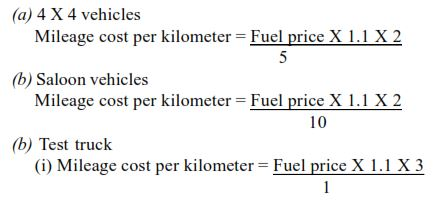
PART IV
TRAVEL AND SUBSISTENCE FEES IN RESPECT OF SPECIAL APPLICANT
PART V
HIRE CHARGES AND DELAY CHARGES
PART VI
WEIGH BRIDGE
THIRD SCHEDULE
METROLOGY (FEES) REGULATIONS
FIRST SCHEDULE

SECOND SCHEDULE

ADJUSTING FEES
FEES FOR MISCELLANEOUS SERVICES
ATTENDANCE FEE
HIRE CHARGES AND DELAY CHARGES
THIRD SCHEDULE

METROLOGY (MEASURING INSTRUMENTS) REGULATIONS
PRELIMINARY
REQUIREMENTS FOR MEASURING INSTRUMENTS
MEASURING INSTRUMENT FOR MASS
MEASURE OF VOLUME AND LENGTH
PART I
PRELIMINARY
PART II
REQUIREMENTS FOR MEASURING INSTRUMENTS
PART III
MEASURING INSTRUMENT FOR MASS
PART IV
MEASURE OF VOLUME AND LENGTH
FIRST SCHEDULE
50,000
–
lower than or greater than
value of graduation
SECOND SCHEDULE
ABBREVIATIONS OF DENOMINATIONS OF MEASURES
METROLOGY (PRE-PACKAGED COMMODITIES) REGULATIONS
PRELIMINARY PROVISIONS
LABELLING REQUIREMENTS FOR PRE-PACKAGED COMMODITY AND GENERAL REQUIREMENTS FOR SALE OF GOODS
TOLERANCES FOR PRE-PACKAGED COMMODITIES
PART I
PRELIMINARY PROVISIONS
PART II
LABELLING REQUIREMENTS FOR PRE-PACKAGED COMMODITY AND GENERAL REQUIREMENTS FOR SALE OF GOODS
PART III
TOLERANCES FOR PRE-PACKAGED COMMODITIES
FIRST SCHEDULE

Units of measurement
Choice of units
1000 mL<<q<< 100 L
100 L<<q
L (1)
L (1) or hL (hl)
(Solids)
1 dm3<
1000 dm3<<q
dm3, L (1)
m3
1 g<<q<< 1000 g (1 kg)
1 kg<<q<< 1000 kg
1000 kg <<q
G
Kg
kg or t
1 mm<<q<< 1000 mm (100 cm)
100 cm<<q
mm or cm
M
1 dm2<
1m2<<q
dm2
m2
Sampling plan for non-destructive testing
Sample error limit
(See 5.3.6)
Sampling plan for destructive testing
Standard Deviation of the sample(s) = Sample error limit
(See 5.3.6)
SECOND SCHEDULE
Minimum height of numbers and letters
and letters in millimeters
Minimum height of numbers and letters
in millimeters
THIRD SCHEDULE
FOURTH SCHEDULE
FIFTH SCHEDULE
(Fourth Schedule)
(Fourth Schedule)
25 kg and 50 kg
10 g up to and including 100 g, then 150 g, 200 g, 250 g, 300 g, 350 g, 400 g, 450 g, 500 g, 750 g, 800 g, 1 kg, 1.25 kg, 1.5 kg, 2 kg, 2.5 kg, 3 kg, 3.5 kg, 4 kg, 4.5 kg, 5 kg and integral multiples of 1 kg above 5 kg
100 mL, then 125 mL, 150 mL, 175 mL, 200 mL, 250 mL, 300 mL, 350 mL, 375 mL, 400 mL,
450 mL, 500 mL, 750 mL,
800 mL, 1 L, 1.25 L, 1.5 L, 2L, 2.5 L, 3 L, 3.5 L, 4 L, 4.5 L, 5L and integral multiples of 1 L above 5 L
any quantity less than 10 g, then in integral multiples of 5 g from
10 g up to and including 50 g, then 75 g, 100 g, 125 g, 150 g, 200 g, 250 g, 300 g, 350 g,
375 g, 500 g, 1 kg, and integral multiples of 1 kg above 1 kg
Clause 2
10 kg
Note: Mass requirements for the size of eggs, for example “Large”, and mass tolerance per size, may be prescribed in other relevant national legislation
(See Fourth Schedule, Part 1, Clause 5)
(See Fourth Schedule, Part 1, Clause 7)
(See Fourth Schedule, Part 1, Clause 2)
Volume or mass when sold other than in portable cylinders
1 kg and integral multiples of
0.5 kg above 1 kg
(See Fourth Schedule, Part 2, Clause 5)
2 L any quantity less than 10 g, then in integral multiples of 5 g from 10 g up to and including 100 g, then 125 g, 150 g, then in integral multiples of 50 g from 150 g up to and including 1 kg, 1.8 kg, 2 kg and any quantity above 2 kg
5 g or mL from 10 g or mL up to and including 100 g or mL, then in integral multiples of 25 g or mL above 100 g or mL up to and including 1 kg or L and integral multiples of 250 g or mL above
1 kg or L
– Below 1.1 kg in 50 g bands starting with either 100 g or 50 g for example birds marked 900 g shall weigh between 900 g and 949 g
– 1.1 kg and above in 100 g bands starting from 1.1 kg for example birds marked 1.2 kg shall weigh between 1.2 kg and 1.299 kg
– Below 1.1 kg in 50 g bands starting with either 100 g or 50 g for example birds marked 900 g shall weigh between 900 g and 949 g
– 1.1 kg and above in 100 g bands starting from 1.1 kg for example birds marked 1.2 kg shall weigh between 1.2 kg and 1.299 kg
10 kg and integral multiples of
1 kg above 10 kg
(See Fourth Schedule Part 1, Clause 2)
500 g
0.5 kg above 1 kg
(See Fourth Schedule, Part 1, Clause 6)
5 g or mL from 10 g or mL up to and including 100 g or mL, then in integral multiples of 25 g or mL above 100 g or mL
625 mL, 750 mL, 1 L, 1.5 L, 2 L, 5 L, 20 L, 25 L, and integral multiples of 1 L above 25 L
Except that the thickness shall also be marked on pre packages
300 mL, 340 mL, 375 mL,
400 mL, 500 mL, 750 mL, 1 L, 1.5 L, 2 L, 3 L, 4 L, 4.5 L, 5 L and integral multiples of 1 L above
5 L
450 mL, 500 mL, 750 mL, 1 L and 1.5 L
(See Fourth Schedule, Clause 9)
50 kg, 70 kg or 90 kg need not be marked with a statement of net mass
40 kg or 50 kg need not be marked with a statement of net mass and;
Clause 8)
2 kg, 2.5 kg, 3 kg and integral multiples of 1 kg up to and including 12 kg, 12.5 kg, 13 kg and integral multiples of 1 kg above 13 kg
100 sheets above 200 sheets
2.5 kg, 3 kg, and integral multiples of 1 kg up to and including 12 kg, 12.5 kg, 13 kg and integral multiples of 1 kg above 13 kg
2.5 kg, 3 kg and integral multiples of 1 kg up to and including 12 kg, 12.5 kg, 13 kg and integral multiples of 1 kg above 13 kg
SIXTH SCHEDULE
(Qn) in g or ml
Per cent of on
50 items = 0 greater than
50 items but not greater than
1 000 items = 4% (refer to table A.1a)
SEVENTH SCHEDULE
Criteria for determination of tare masses
_______________________________________
EIGHTH SCHEDULE
Period of time for inspection
NINTH SCHEDULE
TENTH SCHEDULE

0.5 per cent.
 of:
of:

 is the sample standard deviation of the quantity of product in the pre packages of the inspection lot; and
METROLOGY (CERTIFICATION OF COMPETENCE) REGULATIONS
SCHEDULE
FORM I

(Act No. 6 of 2017)
 Non-Citizen Applicant
The Zambia Metrology Agency
P.O. Box 30989
LUSAKA, ZAMBIA
Tel. +260 211 222294
Executive DirectorFORM II
(Act No. 6 of 2017)
Executive DirectorFORM III
(Act No. 6 of 2017)
has been granted certificate to practice as a ……..………………………………..………………………..
for the period …………..…………………..……….. to …………………………….…………………………
Executive DirectorFORM IV
(Act No. 6 of 2017)
Non-Citizen Applicant
The Zambia Metrology Agency
P.O. Box 30989
LUSAKA, ZAMBIA
Tel. +260 211 222294
Executive DirectorFORM V
(Act No. 6 of 2017)
has been granted certificate to practice as a ……..………………………………..………………………
for the period ………………………..………………….. to …………………………….………………….
Executive DirectorFORM VI
(Act No. 6 of 2017)
Non-Citizen Applicant
The Zambia Metrology Agency
P.O. Box 30989
LUSAKA, ZAMBIA
Tel. +260 211 222294
Executive DirectorFORM VII
(Act No. 6 of 2017)
Executive Director
FORM VIII
(Act No. 6 of 2017)
Executive Director
FORM IX
(Act No. 6 of 2017)
Executive Director